

Shahaf, 31, and Daniel 33 Haba, moved to the southern city of Sderot five months ago. The couple, parents to three young children, welcomed their youngest just four months ago, already born in their new home city.
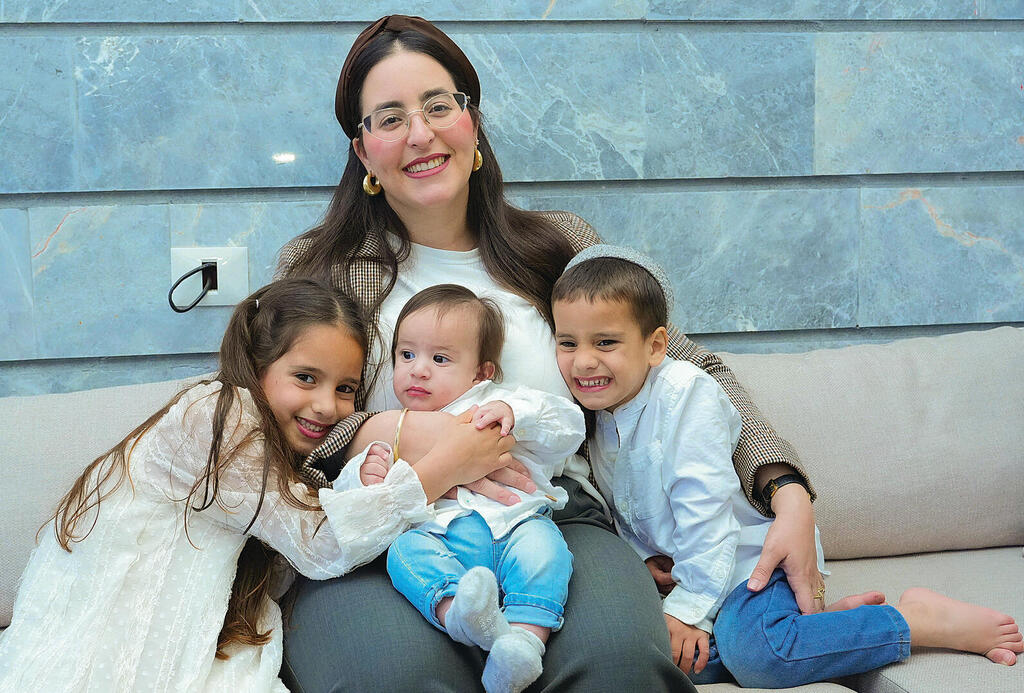
“We were told there is a very warm, young religious community here, and it was important for us to come and help resettle the city after what happened,” Shahaf said.
The Haba family is part of a striking trend. More people now live in the Gaza border region than on the eve of the war. According to data from the Central Bureau of Statistics provided by the Tkuma Administration, the region’s population currently stands at about 65,000, compared with roughly 61,500 before the October 7 terror attack. That represents an increase of around 3,500 residents, the vast majority concentrated in Sderot.
Shahaf said the family’s adjustment to life in the city was faster than expected. “The kids integrated wonderfully into their schools. Daniel, a physical education teacher, found a job at a local school and was received in an amazing way,” she said. “Everyone volunteers to help us. Sderot is wonderful, with warm people who are always eager to give."
Even communities that were among the hardest hit on October 7 have recorded high return rates. At Kibbutz Re’im, for example, more than 95% of community members have returned, alongside 10 new families who have joined. “We have long waiting lists,” residents of other kibbutzim said.
Liron, 29, and Matan Ratzon, 31, moved in October to the moshav of Yated in the Eshkol Regional Council. Liron is an architect, Matan serves as a mental health officer in the IDF, and they also have three young children. They spent October 7 in a safe room at friend's home in Kerem Shalom. “It was difficult and frightening,” Liron said. “But it was precisely there that we saw a strong community with a clear sense of togetherness. These are the kinds of people we wanted to live near.”
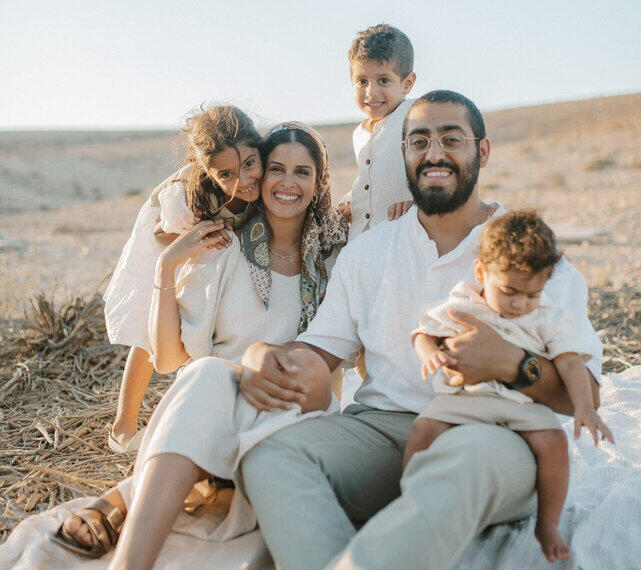
Ratzon family. 'We looked for community, open spaces and quality of life and ended up here'
(Photo: Noa Goldberg)
The couple had long wanted to leave Be'er Sheva. “We looked for community, open spaces and quality of life, and ended up here,” she said. “Everyone looks out for us, and it is heartwarming. There were concerns about distance from work, but we decided to give up some accessibility in exchange for space."
Minister Zeev Elkin, who is responsible for the rehabilitation of southern and northern Israel, said, “We will continue advancing toward our central goal, which is doubling the population of the Tekuma region to 120,000 residents."
Tkuma Administration head Aviad Friedman added, “In 2026 we will continue to meet the challenges of rehabilitation and growth and implement the strategic plan we have formulated to move the region forward.”