

Nearly 600 days have passed since Alon Ohel was kidnapped to Gaza during the October 7 massacre. For his parents, Kobi and Idit, each day is a battle—not only for their son’s return but for basic recognition of their pain and of the national and moral duty to bring him home.
“Alon is alone in captivity now,” says Idit. “He used to be held with others, friends who supported him, but he’s been completely alone for the past two and a half months. We know conditions have worsened since fighting resumed. He’s being held under the harshest conditions imaginable.”
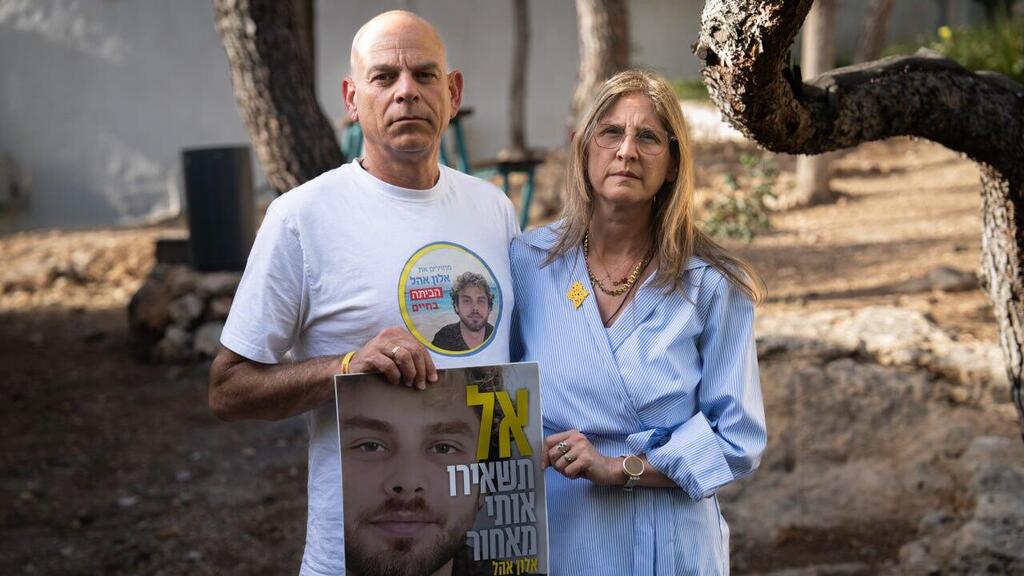
Since the release of fellow hostage Eliya Cohen, the Ohels have not received any new information about Alon’s condition. A recent testimony by freed IDF lookout Naama Levy, who described horrific conditions in captivity, has only intensified their anxiety.
“We’re in the dark,” they say. “There’s no horizon. Nothing. How can anyone live like this, knowing your son is wounded, deprived of even the most basic human needs? That he has to ask permission to use the bathroom, that he’s hungry, that he doesn’t know when he’ll eat next?”
The physical conditions are hard to fathom. “A person held underground for 600 days, 40 meters (130 feet) underground, in a narrow corridor—it’s inconceivable,” they say. “Even doctors can’t fully explain what that does to a human body and psyche.”
Get the Ynetnews app on your smartphone: Google Play: https://bit.ly/4eJ37pE | Apple App Store: https://bit.ly/3ZL7iNv
They feel the world has moved on. “Who’s talking about them anymore? Where’s the Red Cross? Where are the countries that should be demanding access to the hostages? How can anyone provide humanitarian aid or guarantees to Gaza without first verifying the hostages are even alive, let alone cared for? It’s maddening. It’s simply not present in the public discourse,” they say.
Their frustration with the government runs deep. “We’re standing alone against an insane reality,” they say. “How is it possible that we have to beg for our son, an Israeli citizen kidnapped from within Israel, to be brought home? How is it that human lives aren’t the top priority? That there’s a selection—who stays, who goes? It’s unthinkable. The state just doesn’t see us.”
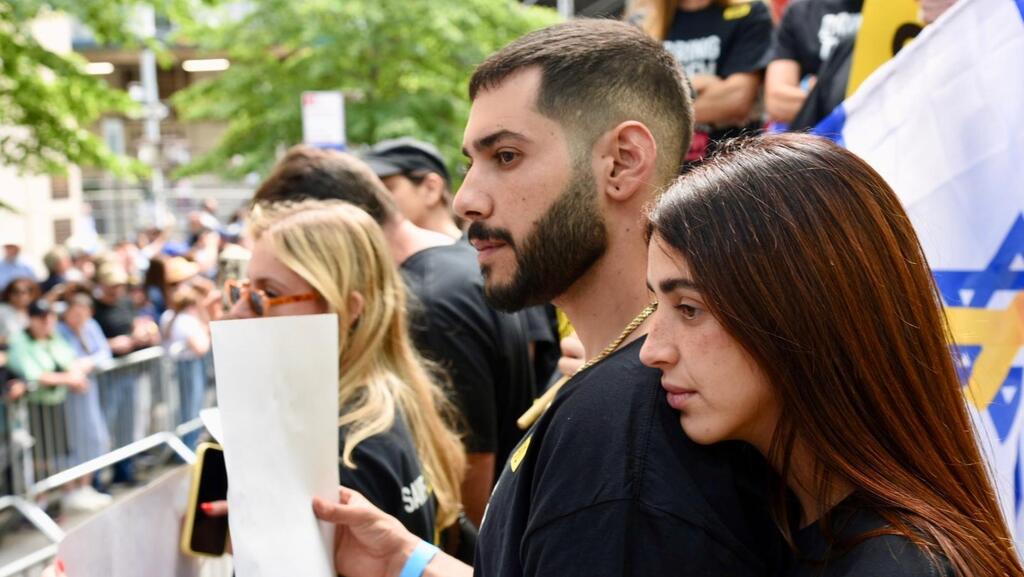
Former hostage Eliya Cohen
(Photo: Liran Agami)
Still, Idit refuses to fall into despair. “There’s sadness, a lot of it. But I’m not a victim of circumstance,” she says. “And because I’m not a victim, I’m not angry. I’m focused on action—on bringing Alon home.
"He’s alive. He’s fighting every day. We have to save him. That’s what drives us. It takes constant inner work—hope, faith, the conviction that Alon is coming back alive. That’s our compass.”
The family draws strength from the public. “There are incredible people around us—friends, family, strangers,” Idit says. “People who’ve never met Alon but feel deeply connected to him. They light our way. They give us strength. Thanks to them, we go on.”
The family of Alon, a gifted pianist, also takes comfort in music. “Music is a prayer. It’s life,” they say. “We’re working to place more and more pianos across the country, so people can play for Alon—so the music reaches him and gives him strength to believe he’ll return.”
“Don’t lose hope," they said. "Don’t normalize this situation. Don’t forget. We can’t let life return to ‘normal’ while hostages are still in captivity. It’s not just 58 hostages. It’s an entire people—eight million hostages. Because as long as they’re there, we’re not free either.”