


Qatar told U.S. officials it believes Hamas will back President Donald Trump’s plan to end the war in Gaza, but a senior Hamas figure struck a cautious note. In an interview on Monday with Al Jazeera, Mahmoud Mardawi said the proposal’s clauses were “close to the Israeli position.”
Reports in Egypt and Qatar confirmed that both Cairo and Doha shared the plan’s details with Hamas. Egyptian media quoted officials saying Hamas was reviewing the proposal “positively and objectively.”
Trump: If Hamas rejects deal, Israel will have US backing to 'finish the job'
(Video: Reuters)


On the demand to disarm Hamas, Mardawi insisted: “The resistance’s weapons have not been used to attack anyone, but for freedom and independence. What is happening is an attempt to stifle international momentum and recognition of a Palestinian state.”
He added that Trump’s plan was “vague and without guarantees,” and rejected any proposal that does not secure “the destiny of the Palestinian people and protect them from massacre.” Still, he concluded, “We will examine the American proposal and discuss it with the Palestinian factions.”
Steve Witkoff, Trump’s envoy to the Middle East, told Fox News that Qatari and Egyptian officials had relayed Hamas’s response that it would “study the plan in good faith and provide an answer.” Witkoff called it “a very positive initial reaction for a group that hasn’t yet had time to fully review our proposal.”
Palestinian Islamic Jihad leader Ziyad al-Nakhalah was far more dismissive, saying the Trump-Netanyahu announcement amounted to an “American-Israeli agreement reflecting Israel’s full position” and a recipe for “further assaults against the Palestinian people.” He warned the plan was “a recipe to ignite the region.”
By contrast, the Palestinian Authority welcomed Trump’s efforts and reiterated its commitment to work with Washington and its partners toward a comprehensive peace deal based on a two-state solution.
Foreign ministers from Saudi Arabia, Jordan, the UAE, Qatar, Egypt and other states issued a joint statement welcoming the initiative and expressing readiness to “work positively with the U.S. and all relevant parties to reach an agreement and ensure its implementation.”
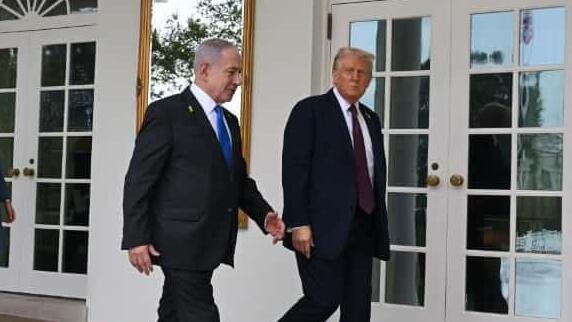
Trump’s plan was rushed and “half-baked,” possibly unveiled to boost his bid for a Nobel Peace Prize. The president pressed Prime Minister Benjamin Netanyahu to accept it, while admitting it was unclear if Hamas would agree. Still, he predicted Hamas would, citing Qatari assurances to Washington.
Trump stressed that if Hamas rejects the plan, Israel will receive full U.S. backing to “finish the job,” while Arab and Muslim states would be expected to force Hamas out of Gaza, even by deploying troops. The proposal lacked a clear timeline or deadline for Hamas’ response or its implementation. Netanyahu’s apology to Qatar for an Israeli strike in Doha was seen as an effort to bring it back into the mediation process and push Hamas to the table.
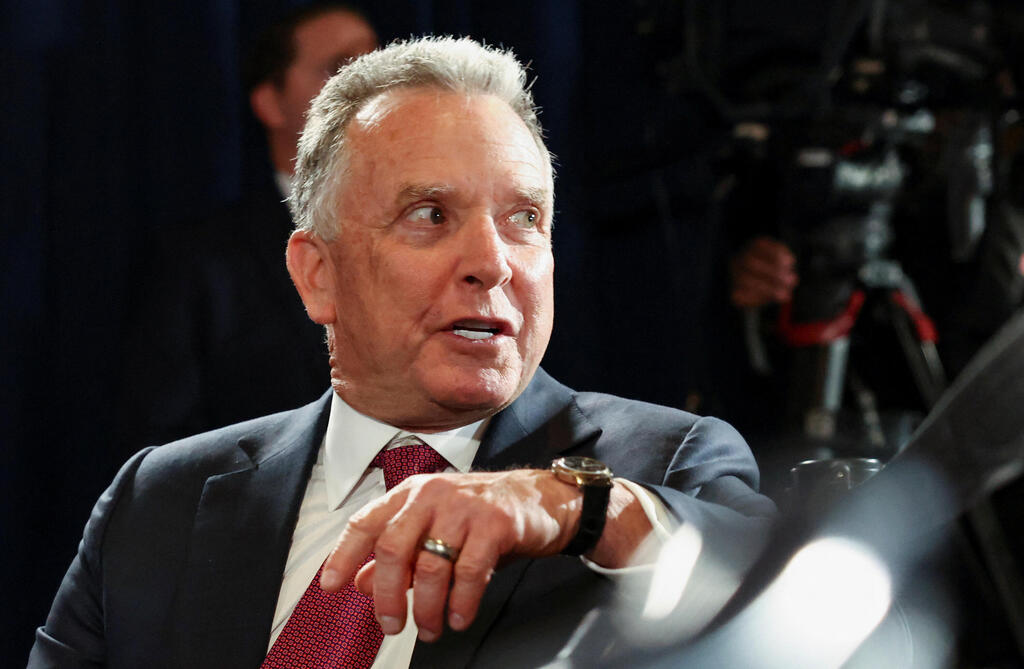
US special envoy Steve Witkoff
(Photo: Reuters)
One unresolved issue is the vision of a Palestinian state. Trump included language to win Arab support, but Netanyahu restated his opposition, and Trump said he respected it, even thanking Netanyahu for not recognizing Palestinian statehood. Another open question is whether the Palestinian Authority will play a role in governing Gaza. While the plan’s text suggests this could happen if reforms are carried out, Netanyahu downplayed that in his remarks.
The press conference itself began on a surreal note: the American team — Vice President J.D. Vance, Secretary of State Marco Rubio, special envoy Steve Witkoff, Trump’s son-in-law Jared Kushner and Chief of Staff Susie Wiles — burst into prolonged laughter for no apparent reason, as the Israeli delegation looked on stone-faced.
Trump’s jab and Qatar’s triumph
The expression on Netanyahu’s face said it all: the plan appeared forced on him. Trump told Israelis they were tired of the war and wanted the hostages returned, noting supporters hold signs urging him to bring them home. He also took a pointed swipe at Netanyahu, calling him a great fighter who finds it hard to stop the war.
Netanyahu: All hostages must come home
(Video: Reuters)
The episode was a stinging setback for Netanyahu, who may have counted on pressuring Hamas to refuse the U.S. proposal. The prime minister warned that if the terrorist group rejects or sabotages the offer, Israel would finish the job; Trump replied that if Hamas turned the plan down, the United States would fully back Israel’s efforts to eliminate the group. Trump also secured unusually broad Arab and Muslim backing for action against Hamas — a diplomatic gain Washington described as significant.
Qatar emerged as a clear winner from the episode. Doha achieved what critics in Israel had feared: it helped shape the plan and then used diplomatic leverage to force an awkward apology from Israel over an earlier strike in Qatar, a humiliation only Netanyahu could deliver, some commentators said. Many Israelis believe the Doha operation and the embarrassment over the failed assassination attempt in the Qatari capital pushed Israel into a diplomatic track it can’t easily reverse.
Trump’s proposal was hurried and, critics say, not fully worked out — possibly timed to boost his own peace credentials. The plan as presented lacked firm timetables and deadlines. Netanyahu’s apology to Qatar was widely interpreted as an attempt to draw Doha back into mediation and bring Hamas to the negotiating table.
A key unresolved issue is the question of Palestinian statehood. Trump included language aimed at winning Arab support, while Netanyahu reiterated his opposition; Trump said he respected that stance. Another open question is whether the Palestinian Authority would play a role in Gaza’s future governance. The plan suggests the PA could be involved if it implements reforms, but Netanyahu framed that point differently in his remarks.
Trump and Netanyahu on call with Qatari leader
(Video: Reuters)
For many Israelis, the plan’s most tangible promise is the release of all hostages, living and dead, if Hamas accepts. Securing Arab states’ pressure on Hamas was also viewed as an important achievement. “If the plan returns all the hostages, it will have been worthwhile even with its uncomfortable elements,” one Israeli official said.
Politically, Netanyahu faced a dilemma. With Israel increasingly isolated, he had little choice but to accept a U.S.-backed plan; Trump is one of Israel’s last staunch allies. The question now is how Netanyahu will withstand sharp criticism from the right. If hostages are returned, it could ease pressure on the prime minister and allow him to move quickly to elections and to counter hard-line ministers such as Bezalel Smotrich and Itamar Ben-Gvir.
Netanyahu’s aides have framed the Trump plan as a strategic reversal: Israel breaks out of diplomatic isolation while Hamas sinks into regional isolation. They argue the plan would secure the simultaneous release of all hostages, living and dead, while allowing Israel to continue military operations in Gaza, a claim they call a major achievement.
Still, uncertainty remains. There is no guarantee Hamas will accept. The plan does not commit to creating a Palestinian state, and it sets onerous conditions for the Palestinian Authority. A multinational force would be established to disarm Hamas, reportedly including troops from Gulf states, Indonesia and other countries, and Israel would not withdraw before Hamas is disarmed, according to Israeli descriptions of the text.
U.S. officials say they are now waiting for Qatar to deliver Hamas’s response. If Hamas replies affirmatively, delicate follow-on talks will be needed to coordinate the release of hostages and Israeli military positions. Israel’s negotiating team is reviewing the plan and is prepared, if necessary, to travel to Doha for further talks.