



Hamas is expected to return the bodies of four additional hostages to Israel late Tuesday, as part of a fragile post-ceasefire arrangement aimed at recovering the remains of Israelis killed during the Oct. 7 attacks and held in Gaza.
The handover, set to take place around 10 p.m. local time, follows the return of four bodies the day before — three Israelis and one Nepali national — a move Israeli officials said fell short of Hamas’ commitments under the deal brokered by Qatar, Egypt and the United States. At least 20 confirmed deceased hostages are believed to remain in Gaza.
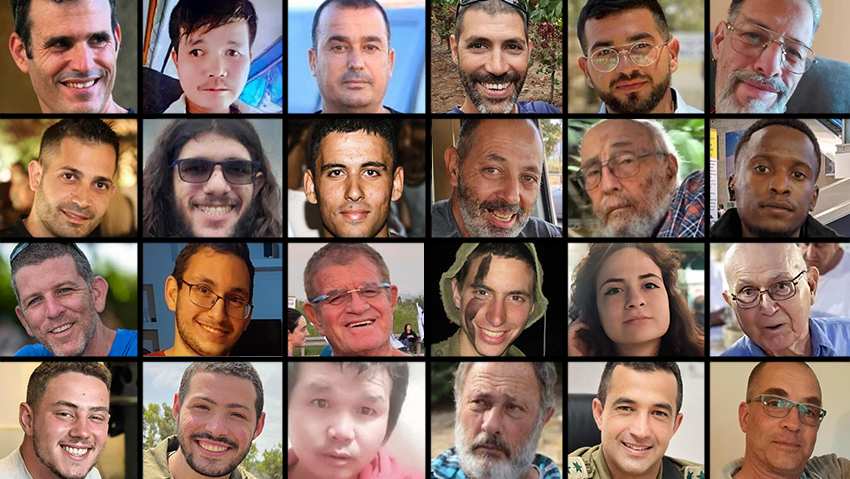
U.S. President Donald Trump, speaking Tuesday, acknowledged the return of 20 living hostages but emphasized that the process remains incomplete. “The dead have not been returned, as promised,” he said. “Phase Two begins right now.”
Trump’s remarks refer to the next stage of his administration’s peace plan, which focuses on Gaza’s reconstruction while advancing steps to disarm Hamas and bolster Israel’s security. Central to this phase is the recovery of the remaining bodies, a process Israeli officials say could take weeks or months.
Hamas initially claimed to know the locations of 14 of the 28 fallen hostages. Israeli defense officials believe the group has information on more, though possibly not all. Some remains are feared to be buried or lost amid the rubble of continuous Israeli airstrikes during the war.
Israel has so far responded with limited sanctions, closing the Rafah crossing and scaling back humanitarian aid to Gaza. Although several politicians have accused Hamas of violating the agreement by not returning all bodies within 72 hours, defense officials noted that the deal included no such deadline for the deceased, only for the living.

US President Donald Trump
(Photo: Aaron Schwartz/ Reuters, Suzanne Plunkett/ AFP)
Efforts to locate and recover the remaining bodies are now being coordinated with the help of a Qatari-Turkish-Egyptian team, formed to facilitate the search and manage continued negotiations. “We’re preparing for a long road ahead,” one Israeli official said. “But every return brings us closer to closure.”
Under the current terms, Israel returned the bodies of 45 Palestinian terrorists to Gaza, 15 for every Israeli fallen.
“We are handling the return of the fallen with the same determination, responsibility and seriousness as the living," Prime Minister Benjamin Netanyahu said during a visit to released hostages recovering at Rabin Medical Center in Petah Tikva. "We will spare no effort or means to bring them home. I believe we will soon receive word of additional returns — hopefully within hours. But our resolve is absolute: we will bring everyone back.”
A senior Israeli official warned that “failure to return the fallen could collapse the deal,” but said the government had not yet determined that Hamas had breached the agreement. “We want to fully assess where things stand,” he said. “We know this process will take longer, and we hope it will work out.”
Message to Hamas: the fallen are as important as the living
Israeli officials conveyed to Hamas that Israel insists on the return of the fallen “no less than the living.” If the terrorist group fails to cooperate fully, additional sanctions outlined in the agreement will take effect, including halting Gaza’s reconstruction.
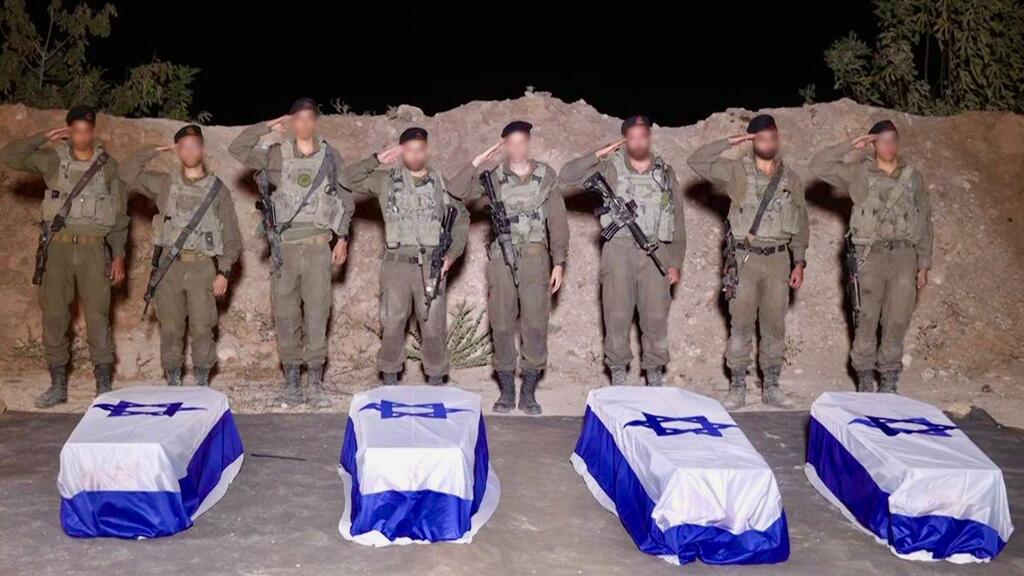
The coffins of the four fallen hostages returned Monday
(Photo: IDF)
Beyond the closure of the Rafah crossing and aid restrictions, Israel could block the entry of caravans, heavy equipment and basic materials such as bakery supplies. However, such steps could expose Israel to accusations of undermining the ceasefire deal.
Coordination channels remain open with Qatar, Egypt, the United States and Turkey, all part of the international task force working with the Red Cross to locate the fallen. The task force will pass Israel’s mapping data to Hamas, identifying sites to excavate. Hamas has agreed not to begin reconstruction in those areas until the searches are completed.
According to Qatar’s Al Araby channel, Egyptian teams are already working inside Gaza to help locate the remains in consultation with Israeli technical teams.
Anger over 'celebrations' in the Knesset
Meanwhile, the National Center of Forensic Medicine completed the identification of the remains of the four hostages returned Monday: Capt. Daniel Peretz, Yossi Sharabi, Guy Illouz and Nepali national Bipin Joshi.
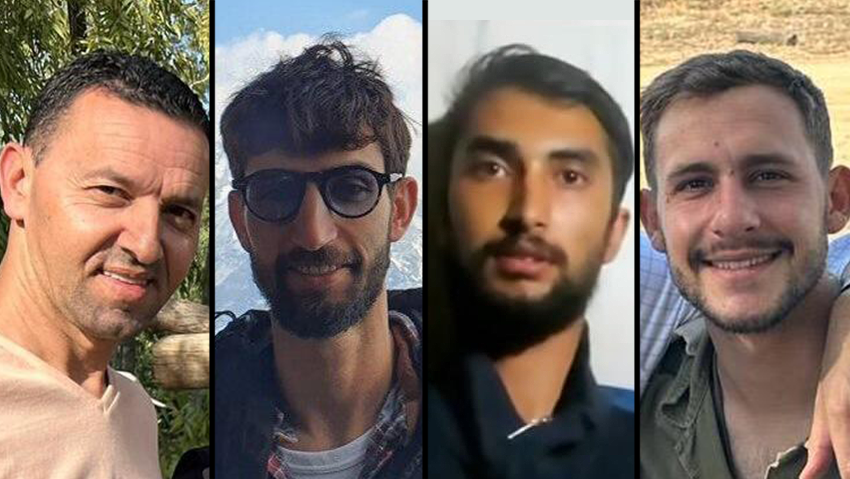
The hostage whose remains were returned Monday: Yossi Sharabi, Guy Illouz, Bipin Joshi and Daniel Perez
(Photo: IDF)
The Hostages and Missing Families Forum demanded that the government halt further implementation of the ceasefire agreement until Hamas fulfills its commitment to return all 24 remaining bodies. “The families demand that the prime minister reveal the updated understandings with Hamas and freeze all progress until every hostage and fallen soldier is brought home,” the forum said.
“The people of Israel are witnessing a revival of the same mindset that led to the October 7 disaster. A nation that abandons its people and its fallen abandons its own fate. There will be no victory and no renewal until they are all home — until the last hostage is returned.”
The forum also sent a letter to U.S. envoy Steve Witkoff, warning, “What we feared is now happening before our eyes. How can only four families be allowed to bury their loved ones while the others wait? We will not rest — and we know you won’t either — until the last hostage is home.”
Families of the fallen expressed outrage over what they described as tone-deaf celebrations in the Knesset during Trump’s visit Monday. Knesset Speaker Amir Ohana removed his hostage pin in a public gesture, even though many bodies have yet to be returned.
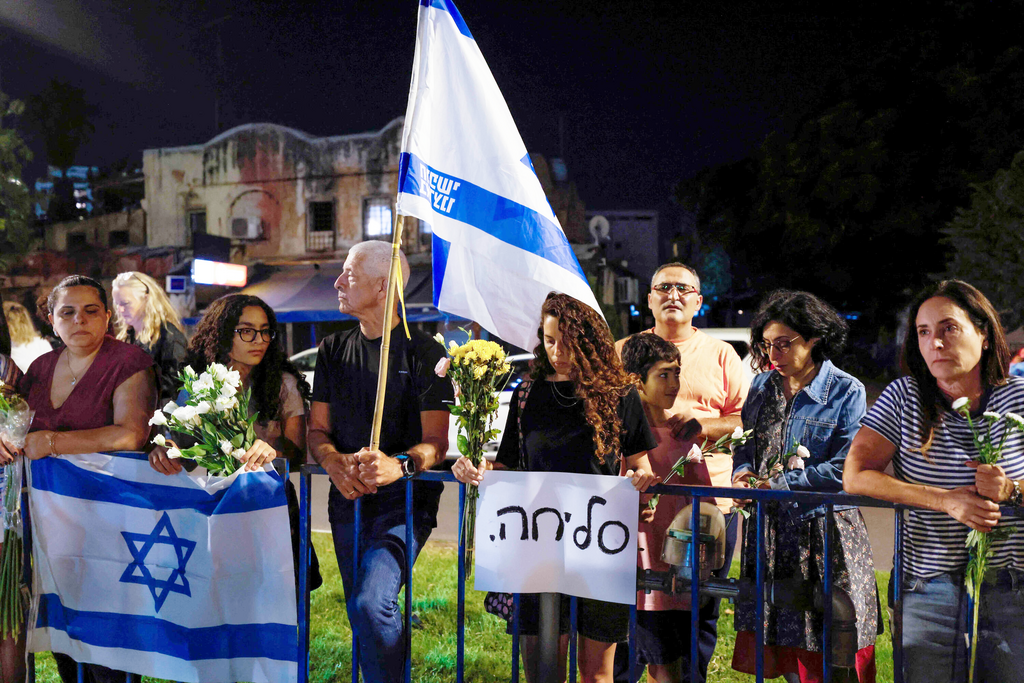
Dozens gather outside the National Center of Forensic Medicine as the remains of slain hostages arrive for identification
(Photo: Jalaa Marey/ AFP)
“It was meant to create a narrative that it’s over — but it’s not over,” Ruby Chen, father of fallen hostage Itay Chen, said, questioning why the return of the fallen was not linked to the release of Palestinian prisoners, as has been the case for the living hostages. “I told the Americans this agreement isn’t fair to the families of the fallen. The event isn’t over, despite the celebrations.”
Ronen and Orna Neutra, parents of fallen hostage Omer Neutra, also attended the session and said they were “stunned by the display of joy and endless applause. It felt like a political performance trying to paint this as a great success. We didn’t feel the presence of grief, responsibility or the pain of so many families. There was only cheerleading.”
They criticized Ohana for removing hostage photos from the Knesset, “as if they’re no longer needed, as if the story is over.” “We families sat in the gallery and felt invisible,” they said. “Twenty hostages survived two years in unimaginable conditions, and we rejoice for them — but the ordeal is not over. Yesterday’s behavior in the Knesset was shameful.”
First published: 21:28, 10.14.25