


Israel and Hamas are preparing to begin implementing the historic agreement to release all hostages and end the war in the Gaza Strip, after both sides accepted the first stage of U.S. President Donald Trump’s peace plan.
Following the Israeli government’s approval, the clock has started ticking. Here is the updated timeline of the Gaza hostage deal, including when the hostages are expected to be freed and when President Trump is due to arrive in Israel.
Government approval marks the start of implementation
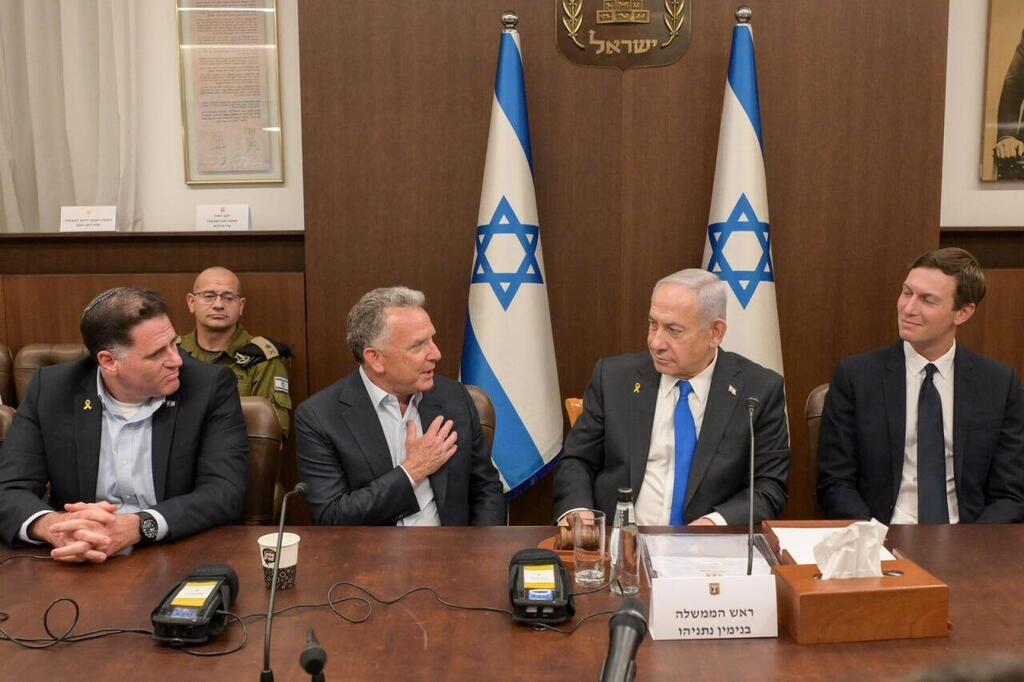
On Thursday, Israel’s Security Cabinet met, followed by a full government session, to approve the release of Palestinian prisoners in exchange for the hostages—marking the first stage of the plan. The government was originally scheduled to meet at 6 p.m., but the discussion began more than four hours late.
During the late-night meeting, ministers approved only the prisoner exchange phase. The remaining elements of the deal were not formally endorsed, as Israel maintains that the cabinet has already approved the five guiding principles for ending the war under Trump’s framework.
IDF withdrawal to finish within 24 Hours
After the government’s final vote, Israel is obligated to withdraw its forces within 24 hours to the agreed-upon line negotiated with Hamas. Following the withdrawal, the Israel Defense Forces will retain control over roughly 53% of Gaza’s territory.
The precise line of withdrawal has not been publicly revealed, but according to an Israeli official, it closely matches the “yellow line” that President Trump unveiled over the weekend, with a few Israeli-requested adjustments.
As part of this step, Israel will remove its forces from Gaza City—where it had been taking control in Operation Gideon Chariots II—as well as from Khan Younis in southern Gaza.
Hostage release expected early next week
Once the 24-hour withdrawal is completed, a 72-hour countdown will begin. By the end of that period, Hamas must release all hostages without public ceremonies.
Currently, 20 hostages in Gaza are confirmed alive, while 28 others are deceased. Hamas claims it does not know the precise locations of nine of the 28 bodies.
Initial estimates suggested the hostages could be released as early as Saturday, but the prevailing assessment now is that the hostage release will take place on Monday or Tuesday.
Trump to visit Israel and address Knesset
President Trump is expected to arrive in Israel on Monday and deliver an address to the Knesset, though the timing of his visit has yet to be finalized.
“This is a great day for the world,” Trump said. “The entire world has united around this—Israel and every country. It’s been a fantastic day, a great day for everyone.”
The White House also released a photo captioned “President of Peace.”

(Photo: White House Press)
Who will not be released in prisoner exchange
Under the agreement, Hamas’ elite Nukhba unit members who took part in the October 7 attacks will not be freed, nor will Marwan Barghouti, a high-profile Palestinian prisoner, according to the Prime Minister’s Office.
An Israeli official told CNN that the remains of Hamas leaders Yahya and Mohammed Sinwar will also not be part of the deal.
Phase one: Israel to release nearly 2,000 prisoners
According to the agreement, Israel will release about 2,000 Palestinian prisoners, including 250 serving life sentences and around 1,700 others arrested since the October 7 outbreak of the war.
Israel is preparing to deport many of those serving life sentences to Gaza or abroad, primarily to Turkey or Qatar. Security officials have opposed this, preferring that they be transferred to the West Bank, where they can be monitored more easily.
International task force to locate deceased hostages
As part of the deal, Hamas has pledged to return the remains of hostages whose locations are known. However, it continues to claim that it does not know the whereabouts of nine of the 28 deceased hostages.
Ynet has learned that an international task force will be created to locate, search for, and recover the bodies of hostages not returned within the first 72 hours. The task force will include Israel, the United States, Egypt, Turkey, and Qatar, and will work with local contacts in Gaza to gather intelligence and recover all remains.
The task force was defined during negotiations in Sharm el-Sheikh, and if needed, it will receive assistance from the International Committee of the Red Cross.