

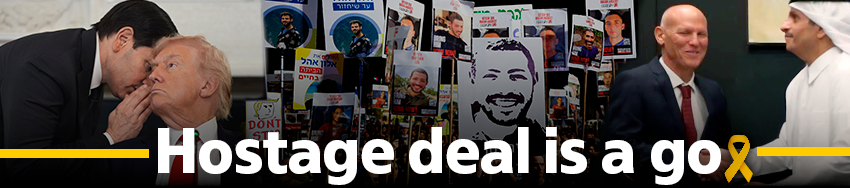
As negotiations over a hostage deal advance — and Hamas claims it has lost track of nine of the 28 bodies of hostages believed to be dead — the families of the fallen are speaking out, torn between hope, fear and unbearable loss.
“My dream now is simply for them to find Tamir’s remains,” said Yael Adar, mother of Tamir Adar, a member of Kibbutz Nirim's alert squad killed defending his community on Oct. 7.
Gallery
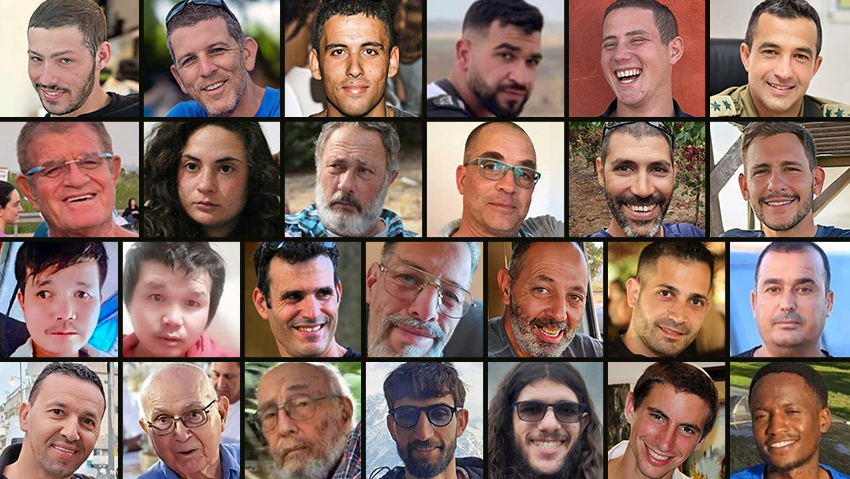
The deceased hostages whose remains are held in the Gaza Strip
(Photo: IDF, courtesy of the families)
Adar joined other bereaved parents — Ruby Chen, father of hostage fallen soldier Staff Sgt. Itay Chen; Michel Illouz, father of Guy Illouz, abducted and murdered after the Nova music festival; Ayelet Samerano, mother of Yonatan Samerano, killed and taken from the same festival; and Eli Shtivi, father of Idan Shtivi, killed trying to help others escape. Together they pleaded: “Don’t forget us — the families of the hostages who won’t come home.”
“I know I’ll end up standing before a coffin,” Adar said quietly. “Those who return alive will have a life full of meaning. We fall into emptiness. I imagine the day after, and no one speaks about what families like ours will go through.” She described the loneliness and lack of understanding they face. “For families like ours, there’s no closure. I can’t even kiss him goodbye the way I kissed my mother when she passed.”
Illouz said the uncertainty is unbearable. “When people speak of the living, they know where their children are — we don’t. We lost them but haven’t buried them,” he said. “We don’t know what to expect when they come back — I just want to see my son and know what I’m burying. I’m terrified of the identification process, terrified of the day after, of the void.”
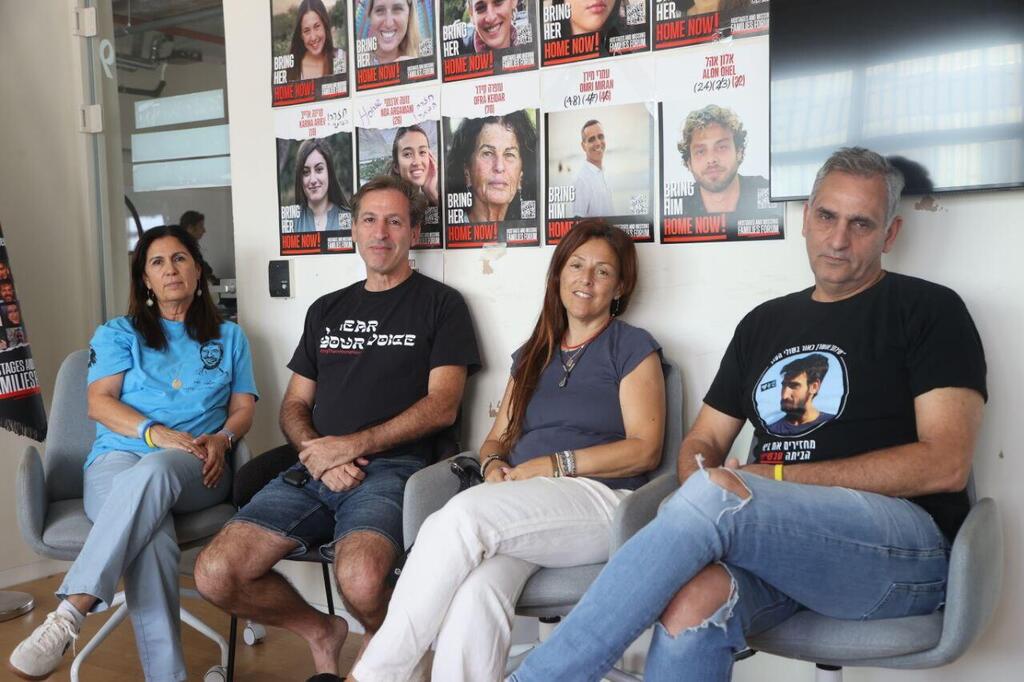
Yael Adar, Ruby Chen, Ayelet Samerano and Michel Illouz
(Photo: Moti Kimchi)
Trump: Very close to a deal in the Middle East


He and Chen said the fight to bring back the hostages had given them purpose. “Now there’s nothing,” Illouz said. “We must fight for the living — but we cannot let the dead be forgotten. It’s a different struggle.”
Chen recalled the words of Rabbi Elchanan Danino, whose son Ori was killed in Hamas tunnels: “He told me he received his son’s body within 48 hours. He calls himself privileged.”
“The fight to bring home the dead is part of Israel’s moral core,” Chen added. “We failed before Oct. 7 — soldiers like Hadar Goldin were left in Gaza for a decade, and we didn’t fight for them. I feel terrible that I didn’t go to those rallies. If not everyone returns this time, we must show the same solidarity.”
Leah and Simcha Goldin, parents of Hadar, who fell in Gaza during 2014's Operation Protective Edge, wrote Tuesday morning: “This war began 11 years ago when Israel decided to leave soldiers behind in Gaza. Hadar symbolizes the fight for true victory. Until he is returned, the battle isn’t over.”
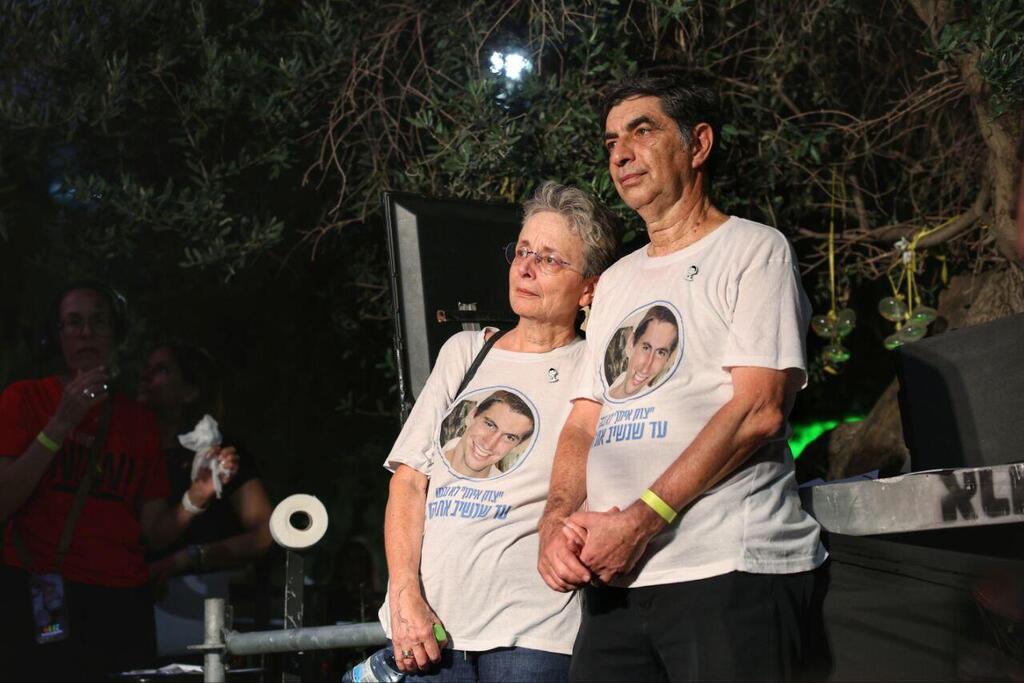
Leah and Simcha Goldin
(Photo: Dana Kopel)
Samerano, whose son Yonatan’s remains were recovered after 627 days, said she felt abandoned. “There’s a halo around those who return alive,” she said. “No one talks about those who don’t. They can’t testify — but they have families who love them. When everyone comes home, and some don’t, who will speak for them?”
Even after burying her son, she said, the pain only deepened. “I thought the suffering was before, but the real suffering started the day after. They gave me a coffin — I don’t know what’s inside and never will. I’ll always be the mother of a hostage. They robbed me of the chance to know how and when my son died.”
Shtivi recalled the torment of uncertainty. “At first, he was missing. I searched everywhere — hospitals, fields, under leaves,” he said. “Three months later, we got proof of life. That kept me going. But exactly a year later, on Oct. 7, 2024, they told us he was dead. Everything I tried to suppress came flooding back. The anniversary wasn’t closure — it was a chokehold.”
The families urged that the push to free the living hostages must not come at the expense of remembering those who won’t return. “Our struggle has always been for everyone,” they said. “We don’t separate the living from the dead. We just want them to be remembered.”
“Tamir wasn’t born dead,” Adar added. “Families of living hostages live in fear of the worst. We’re already there — in the worst. Don’t let us be forgotten.”