

With just 11 days until Israel's election, polls largely show a deadlock between the rival political blocs, leaving parties seeking to replace Prime Minister Benjamin Netanyahu struggling to find a viable path to forming a government. Senior opposition figures warn that the stalemate benefits Netanyahu, who could remain in office until another election if his rivals fail to assemble a coalition. The growing divisions erupted Friday as Yisrael Beytenu leader Avigdor Liberman launched a scathing attack on Gadi Eisenkot, accusing him of preparing to form a government with Netanyahu and the ultra-Orthodox parties.
Liberman, who had already rejected Eisenkot's proposal for a minority government, published a lengthy social media post titled "Gadi Eisenkot: Benny Gantz 2," accusing the former IDF chief of staff of putting personal political ambitions ahead of the opposition's shared goal of replacing Netanyahu. "The 'largest party' campaign Eisenkot is running is not designed to transfer a single vote from the draft-dodging bloc to the serving bloc, but to siphon votes from within the bloc itself," Liberman wrote, referring to the dispute over military service exemptions for ultra-Orthodox men. He argued that Eisenkot was seeking to surpass Likud in parliamentary seats to strengthen his negotiating position in potential coalition talks with Netanyahu.
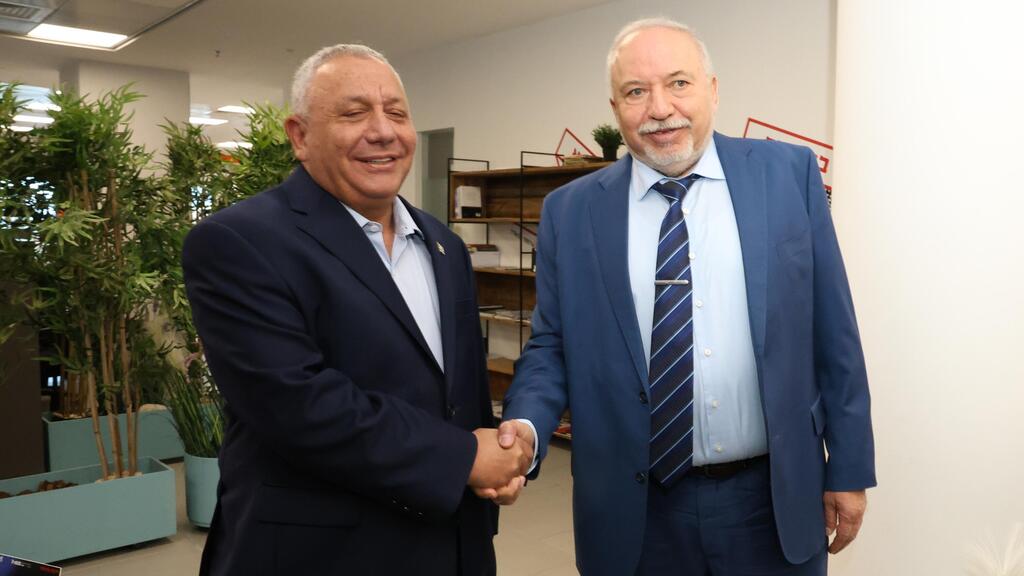
Liberman accused Eisenkot of pursuing a government with Netanyahu and ultra-Orthodox leaders Yitzhak Goldknopf and Aryeh Deri, while keeping the possibility of a minority government on the table as leverage to secure the first term in a rotating premiership. He pointed to remarks by Likud Minister Miki Zohar about possible cooperation with Eisenkot, reports of an initiative by President Isaac Herzog to establish a Netanyahu-Eisenkot government and alleged briefings from the White House. "The pieces begin to fall into place," Liberman wrote, adding that positions taken by Eisenkot's associates on military conscription and constitutional issues reinforced his suspicions.
Liberman also rejected claims that he was trying to prevent Eisenkot from becoming prime minister. "Since the October 7 massacre, I have repeatedly made it clear: We will not join a coalition that depends on Ra'am or the Joint List, whether through direct or indirect support," he wrote, referring to Arab political parties. He said the four parties in the opposition bloc must secure a solid parliamentary majority to establish a "Zionist and liberal government" and prevent Eisenkot from "saving Netanyahu for a second time."
Eisenkot responded Friday without mentioning Liberman by name, urging voters to disregard the political infighting. "We are 11 days away from the most consequential election since the establishment of the state," he wrote. "At such a historic moment for Israel, composure and focus on the objective are essential. I ask Israelis to ignore the spin." He warned that Israelis would not forgive politicians who allowed personal interests to prevent the replacement of the government. "To the people of Israel seeking change, hold your heads high. In 11 days, Israel will be a better country. I promise."
Blue and White chairman Benny Gantz also weighed in, accusing Liberman of leading Israel toward a political dead end. "In 30 years in Israeli politics, Liberman has not done 10% of what Gadi Eisenkot and I have done for the State of Israel," Gantz said. He claimed Liberman was reacting to his exposure of a plan to establish a minority government with Naftali Bennett and Arab parties, and renewed his call for a broad Zionist unity government crossing the existing political blocs.
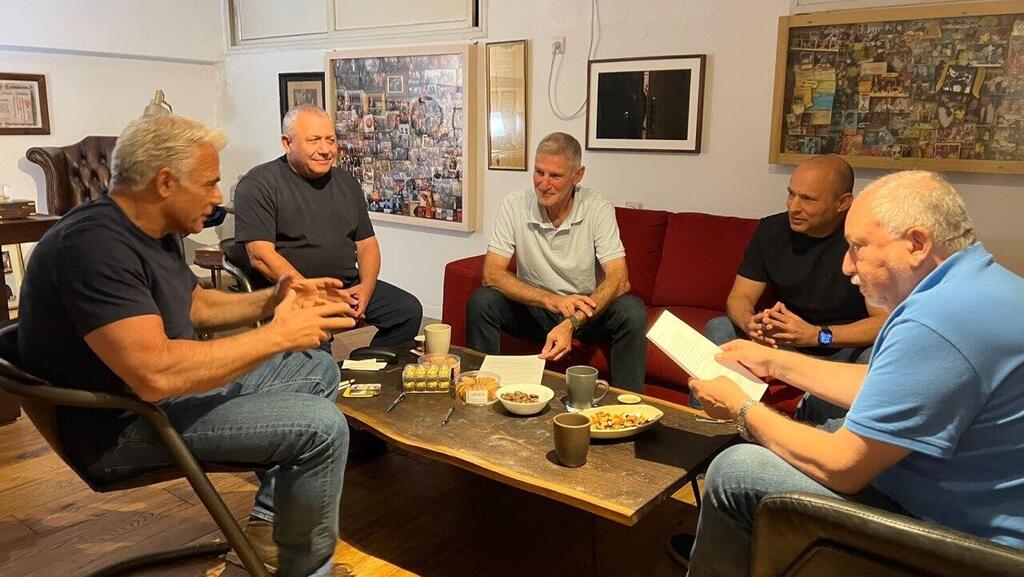
Leaders of the anti-Netanyahu bloc meeting at Yair Lapid's home three weeks ago
(Photo: Lihi Lapid)
The confrontation follows tensions over an understanding reached among opposition leaders at a meeting in Yair Lapid's home three weeks ago. A senior opposition figure told ynet and Yedioth Ahronoth that Liberman believed Eisenkot had violated the agreement by campaigning to become the bloc's largest party. "Liberman was furious about Eisenkot's largest-party campaign. He saw it as an act of deception after they had agreed that this would not happen," the official said, adding that Liberman feared the strategy could cost the entire bloc the election.
Eisenkot has argued that he could establish a minority government composed exclusively of Zionist parties without formally seeking support from Arab or ultra-Orthodox factions. The proposal was intended in part to counter Netanyahu's campaign claims that Eisenkot would rely on Arab political leaders Ahmad Tibi and Mansour Abbas. Liberman has ruled out the arrangement, reiterating that he will not participate in a government dependent on Arab parties or one that includes ultra-Orthodox factions. With neither bloc showing a clear majority in the polls, the dispute has exposed the opposition's central challenge: agreeing on a government capable of replacing Netanyahu.