

Mahmoud and Aida Tubasi can see their homes from the house where they now live, but they cannot return to them. “There, over there,” Mahmoud said, pointing toward two stone houses and a cluster of cypress trees on a hill at the northeastern edge of Jalud, a Palestinian village near Nablus where he has lived all his life.
Nearly a month has passed since the couple left. Their account is not of one sudden attack but of something slower and more systematic: months of threats, arson, stone-throwing, roadblocks and isolation that, they say, gradually made ordinary life impossible. By the time they finally walked away, Tubasi said, there was nothing left to sustain them. “No water, no flour, no rice,” he said. “We knew it was over, and we left.”
Gallery
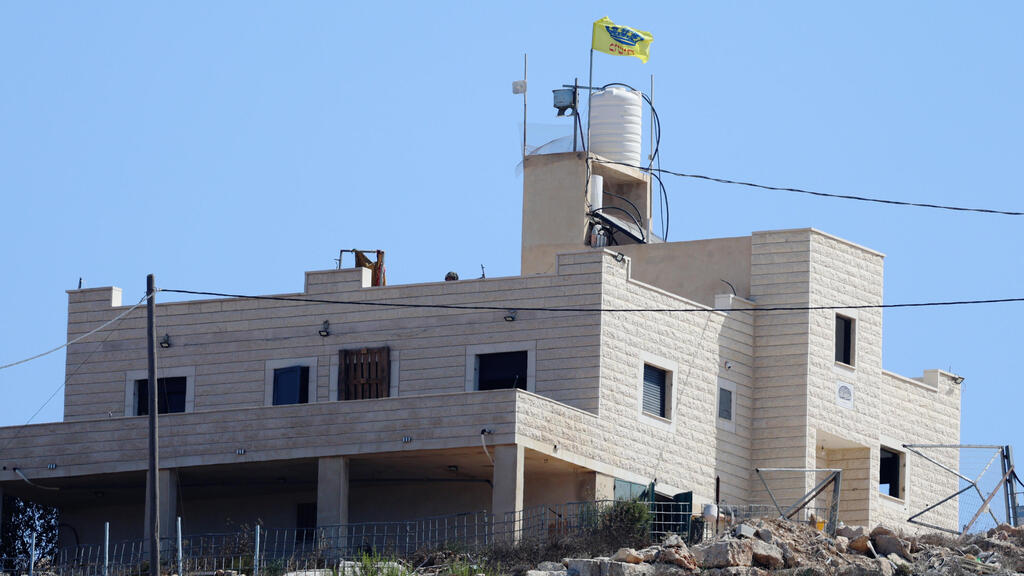
A ‘Messiah’ flag on the home of the Tubasi family’s sons in Jalud, where IDF soldiers are currently stationed
(Photo: Shaul Golan)
The Tubasis’ story is part of a broader pattern emerging across parts of the West Bank, where extremist settlers have established outposts deeper inside areas nominally under Palestinian administration. Palestinian residents and Israeli rights groups say the outposts are frequently followed by confrontations, intimidation and violence that drive residents away from farmland, isolated homes and, in some cases, entire properties.
“We are not Americans. We are ordinary Palestinians,” Tubasi said, contrasting the lack of attention his family received with the international focus on nearby Qusra, where U.S. citizen Louay Abu Rida became the center of a confrontation after settlers surrounded his home. “We have no foreign citizenship, and my wife and I don’t speak English. What happened in Qusra is nothing compared with what we went through, and almost nobody came.”
Outposts move in, violence follows
Under the Oslo framework, the Palestinian Authority exercises civil control in Area B while Israel retains overriding security responsibility. Area A is formally under Palestinian civil and security control. Yet according to mapping by Israeli anti-settlement group Peace Now, 26 settler outposts have been established in Areas A and B, some bordering Area A itself. The group estimates that settlers have taken control of about 100,000 dunams, roughly 25,000 acres, in the two areas.
A report by Israeli rights group Yesh Din suggests that the geography of settler violence has shifted in tandem with the expansion. The organization said 62.6% of the settler violence incidents against Palestinians it documented in the first half of 2026 occurred in Areas A and B. In 2025, by contrast, 67.6% of documented incidents were concentrated in Area C, which is under full Israeli control, while 32.4% occurred in Areas A and B.
Yesh Din research director Yonatan Kanonich described the trend as a pressure mechanism that pushes Palestinian residents away from agricultural land and isolated homes and toward the centers of established towns and villages. “The deeper the settlement, the deeper the violence,” he said. The incidents documented by the organization include arson attacks on homes, vehicles and crops, beatings, stone-throwing, Molotov cocktails and live fire.
U.S. Ambassador to Israel Mike Huckabee recently used unusually strong language when discussing such attacks. “When you engage in activity designed to create fear in an individual, a society or a community, that is the dictionary definition of terrorism,” he said in interviews with Israeli media.
‘They threatened to burn us’
For the Tubasi family, the pressure began on April 3. Mahmoud said he had built two houses on the family’s land, one for himself and Aida and another about 25 meters away for their sons Wael and Qais and their families. Construction began in 2017, and the family moved in two years later. Tubasi said the family owns the land and obtained permission from the village council to build.
Then a new settler outpost appeared on a nearby hill. “The first night the settlers came, they poured fuel on the doors of the houses, set them on fire and ran away,” Tubasi said. “We woke up terrified and managed to put out the flames.”
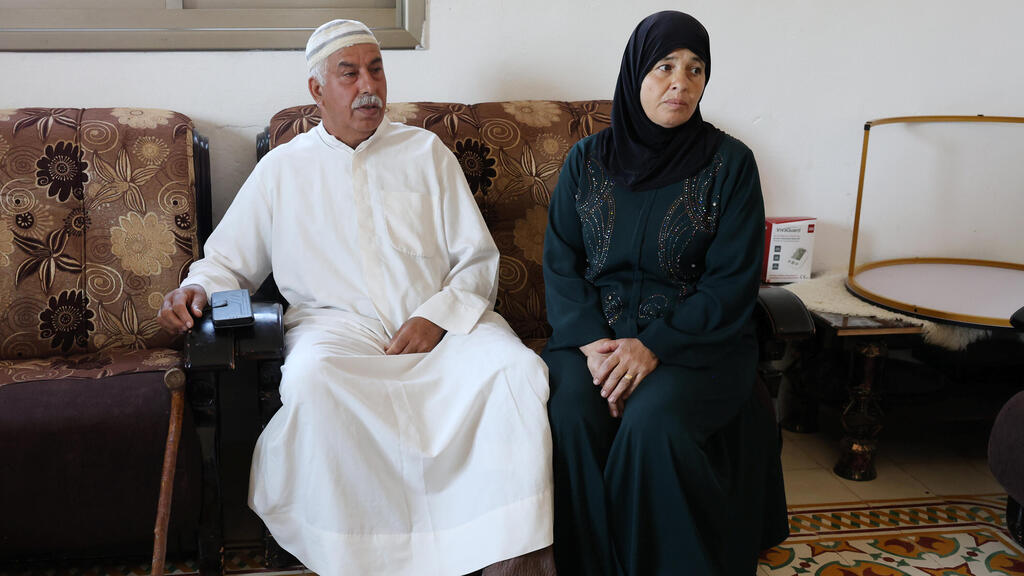
Mahmoud and Aida Tubasi
(Photo: Shaul Golan)
Two weeks later, he said, settlers erected a makeshift structure beside the homes and remained there. Stones were thrown at the houses, loud music was played at night and the family received threats. “They told us, ‘We will burn you like the Dawabshe family,’” he said, referring to the 2015 arson attack in the nearby village of Duma that killed a Palestinian toddler and his parents.
The family sent the children and their mothers away. Later, Tubasi said, settlers broke through a wall and set fire to a storage room. Israeli troops would occasionally dismantle the settlers’ structure, he said, but the settlers returned when the soldiers left.
By late June, the family’s only road to the village had been blocked with rocks and spikes. Their water and electricity were cut. Tubasi said the family repeatedly complained to Palestinian liaison officials, the Israeli Civil Administration, the army and police, but each authority pointed to another. “They passed us around like a ball,” he said.
The pressure spreads
Similar accounts have emerged from other Palestinian communities. In Jaljulia, a village north of Ramallah deep inside Area A, residents say the establishment of an outpost about 10 months ago transformed what had previously been a quiet area.
In May, settlers claimed 120 sheep had been stolen. Residents said settlers subsequently took about 900 sheep from Palestinian pens. During confrontations that followed, soldiers opened fire and killed 16-year-old Yusuf Kaabneh, according to the account provided in the report. A month later, a mosque was set on fire and the word “revenge” was spray-painted on its wall.
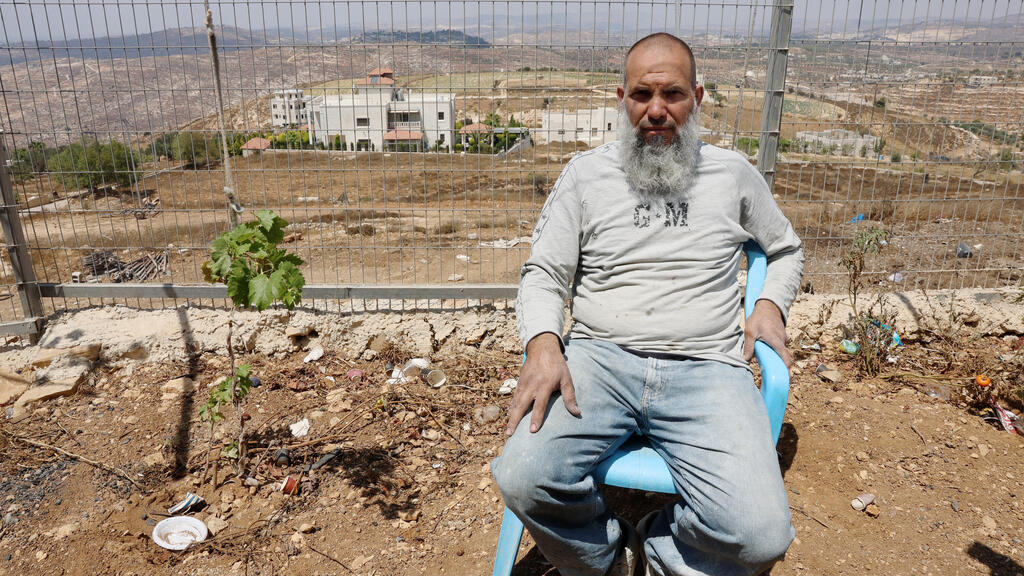
Yusuf Muzahim of Jaljulia
(Photo: Shaul Golan)
Resident Yusuf Muzahim said settlers now enter village farmland with livestock, damaging crops and confronting farmers. “They come with rifles and pistols and threaten us,” he said. “We film them, and they laugh in our faces.” Residents say they provided photographs, videos and license plate numbers to Yesh Din, but the attacks have continued.
Leaving on foot
The Tubasis held out until July 22. The day before, Mahmoud said, Israeli soldiers arrested his two sons on suspicion of throwing stones at settlers. The following day, Mahmoud and Aida decided they could no longer stay.
“There was nothing left,” he said. “No water, no flour, no rice. Nothing. Just my wife and me, and we are 60 years old. We understood it was over.”
They asked for permission to bring in a vehicle to remove their belongings, but Tubasi said the request was refused. So they walked out carrying only some clothes.
Settlers entered the houses shortly afterward, Tubasi said, before soldiers removed them. Israeli troops have since maintained a presence there, while settlers remain nearby.
The IDF said the allegations were being examined and that forces were operating around Jalud and Qusra “to prevent lawbreakers and rioters from reaching the area and to preserve the fabric of life in the region.”
For Tubasi, the larger question is what happens once the soldiers, cameras and outside attention disappear. “We thought the world would stand by us,” he said. “It turns out nobody cares about us.”