


Israel's military has completed its preparations for another confrontation with Iran, both defensive and offensive, and the country's readiness is considered exceptionally high. But while Israel is increasingly prepared for renewed fighting, the decision on whether to launch another military campaign rests with Washington, not Jerusalem.
President Donald Trump faces two options. He could continue negotiating with Tehran in an effort to secure an agreement on more favorable terms for the United States, or he could resume military strikes alongside Israel. For now, he is pursuing both tracks, keeping negotiations alive while stepping up military preparations.
What remains unclear is precisely what Trump hopes to achieve through another military campaign and, more importantly, how he intends to bring it to an end. There is still no clear indication of what military objectives would justify renewed strikes, what would constitute success or how the fighting could be brought to a close.
As previously reported, Israel's political and military leadership did not want to initiate a strike before the elections, but preparations continued at an accelerated pace. Those preparations are now complete, following close coordination with the United States. American officials are already familiar with Israel's capabilities after the IDF's performance during Operation Roaring Lion, including its strikes in Iran, where it achieved complete air superiority, and its defensive operations.
The buildup is increasingly visible. Ten U.S. military transport aircraft arrived at Israeli Air Force bases this week as part of an airlift delivering military equipment to the region. Additional American forces are also being deployed. This goes beyond political rhetoric: Equipment, supplies and military capabilities are being positioned for the possibility of renewed fighting.
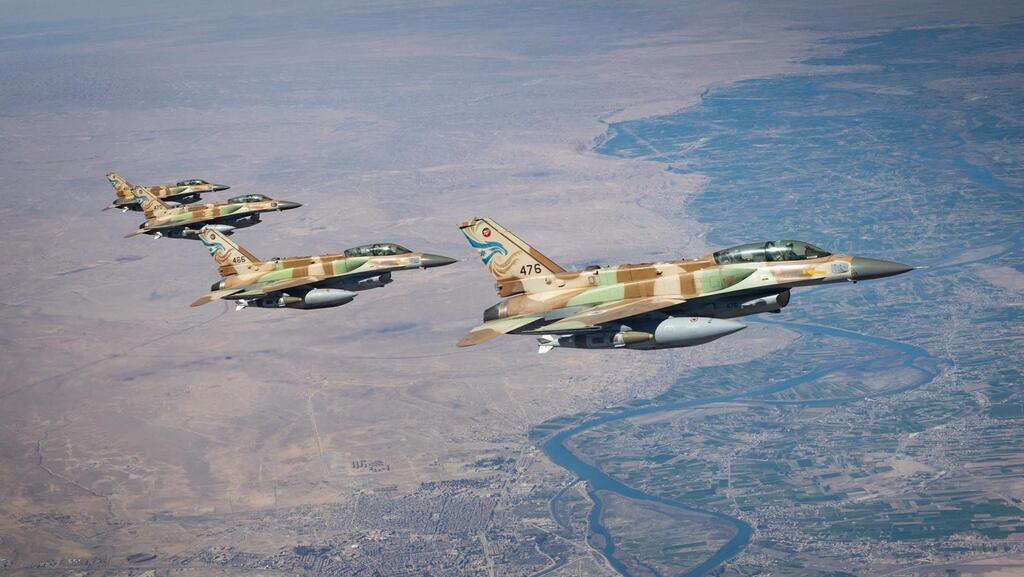
The Israeli Air Force has also been conducting exercises designed to demonstrate its readiness. According to foreign reports, dozens of Israeli fighter jets and refueling aircraft flew over Syria and Iraq, reaching an area near the Iranian border before returning to Israel.
The reports said Israel notified the Americans in advance that the flights were an exercise intended to demonstrate its capabilities to Tehran. Rather than routine training, the flights rehearsed a possible scenario for another strike. The Air Force reportedly conducted the exercise more than once.
US military options are taking shape, but the objectives remain unclear
According to The Wall Street Journal, U.S. Central Command chief Adm. Brad Cooper presented Trump with military options for renewed strikes against Iran. Defense Secretary Pete Hegseth and Chairman of the Joint Chiefs of Staff Gen. Dan Caine also attended the meeting.
The high-level discussion underscores how seriously Washington is considering military action even as diplomatic contacts continue. According to the report, however, Trump has yet to decide whether to resume the fighting.
His public statements offer another indication of his thinking. Two days ago, Trump wrote: "Everyone knows we had to strike Iran. They are not going to have nuclear weapons, and all of this is going to end very soon."
Combined with the military discussions at the White House and the buildup of forces in the region, the message suggests that Trump is preparing for the possibility of a short campaign. But there is no guarantee Iran would accept his timetable, and it remains unclear how Washington would bring such a confrontation to an end.
Both Trump and Prime Minister Benjamin Netanyahu would enter another campaign following elections in their respective countries. Netanyahu would remain in office as caretaker prime minister. Israeli law does not prohibit a caretaker government from deciding to go to war, but such a decision requires approval from the government or an authorized security Cabinet. The prime minister cannot make it alone.
A central concern is the lack of clarity about Washington's objectives. If Trump is considering a short air campaign against Iran's nuclear infrastructure, missile systems and military capabilities, even a highly effective operation would not necessarily topple the Iranian regime.
Regime change is a broader strategic objective that cannot be guaranteed through a series of successful airstrikes. Significant military achievements do not necessarily mean Iran's leadership will fall or change its policies.
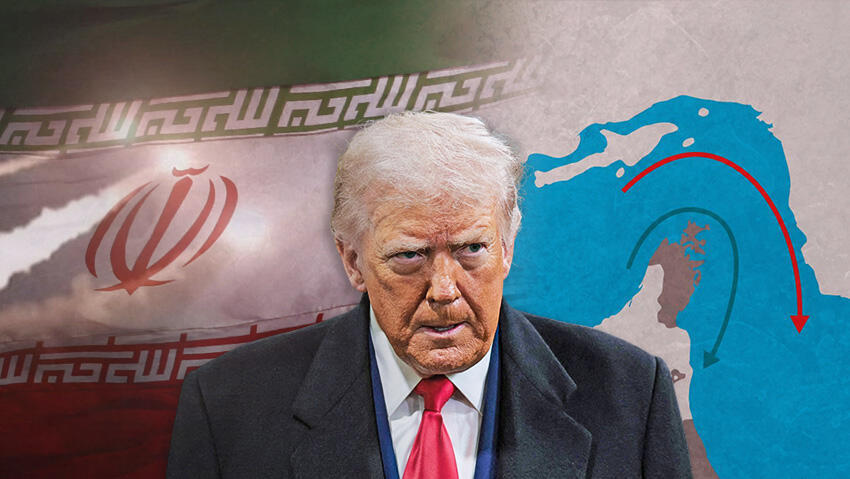
US President Donald Trump
(Photo: Anna Moneymaker/AFP, AP)
Alternatively, Trump may be seeking to use military pressure to extract better terms from Tehran at the negotiating table. If that is the objective, the details of any eventual agreement will matter as much as the pressure used to secure it. From Israel's perspective, a deal that merely postpones another confrontation without addressing Iran's principal threats would leave the underlying problem unresolved.
There is also the possibility of renewed fighting in Lebanon. Hezbollah joined the previous confrontation during Operation Roaring Lion, and another campaign against Iran could again develop into a war on two fronts.
A U.S. plan for a campaign lasting only a few days would not prevent Iran or Hezbollah from seeking to prolong it. Both could attempt to widen the conflict, target Israel and American interests in the region and extend the fighting well beyond Trump's intended timetable.
The IDF must therefore prepare for a potentially longer conflict, including the demands it would place on Israel's air defenses, interceptor stockpiles and the readiness of its forces.
Diplomatic contacts continue as Iran warns it will decide when a war ends
Meanwhile, reports suggest there may be progress in negotiations between Washington and Tehran. The Qatari newspaper Al-Araby Al-Jadeed reported a breakthrough in indirect talks and said an American delegation had joined discussions in Doha in an effort to move toward direct negotiations.
An Iranian source cited in the report said one of Iran's deputy foreign ministers was in Qatar and that the talks were being conducted through a mediator.
According to the report, discussions have focused on initial steps concerning Iran's nuclear program, the Strait of Hormuz and economic incentives for Tehran. China and Russia could also serve as guarantors of a possible agreement.
The reports do not mean a deal is imminent. They do, however, indicate that diplomacy remains active alongside the military preparations. Significant disagreements persist over three main issues: the Strait of Hormuz, Iran's nuclear program and its missiles. Trump has addressed Hormuz and the nuclear issue, while Israel is also seeking to halt Iran's military buildup.
Trump on Iran overnight: 'We have time'
(Video: The White House)


Tehran, meanwhile, is escalating its warnings. Against the backdrop of the reported negotiations, Iranian Supreme Leader Mojtaba Khamenei published a series of messages following a meeting with senior military officials.
"Any threat, at any level and of any kind, must be met with an immediate, significant response without geographical restrictions," he wrote.
Khamenei also warned that if strikes against Iran resume, the country's armed forces and people will decide "when and under what conditions they will end."
The contrast is clear. Trump says the confrontation will be over very soon. Khamenei insists Iran will determine when the fighting ends and on what terms. Between those competing positions lies the possibility of another war whose duration and scale neither side may be able to control.
Another important factor is Washington's view of Israel as a major operational partner. The IDF's performance during Operation Roaring Lion, in both offensive and defensive operations, and the close coordination between the two militaries have strengthened Israel's standing with the Americans.
The American airlift, military coordination and joint preparations all point to substantial cooperation. But close military cooperation does not mean the two countries necessarily share the same strategic priorities.
Trump will ultimately make decisions based on American interests. Israel must ensure that any renewed military campaign also serves its own long-term security needs.
The decision now rests with Trump. He must determine whether the military buildup is intended to pressure Tehran into accepting a new agreement or whether it is preparation for another joint military campaign.
But before either course is chosen, the central question needs an answer: What is the strategic objective, and what would constitute victory?
Another strike against Iran is not necessarily the problem. The greater risk is entering another war without a clear plan for ending it or a realistic understanding of what comes afterward.