

Iran’s Revolutionary Guard navy commander, Ali Reza Tangsiri, issued his first public remarks Sunday after rumors spread that he had been killed following a series of mysterious explosions across the country.
“Enemies are trying to spread despair through media warfare,” Tangsiri was quoted as saying by state-affiliated Tasnim News Agency. “Our people must preserve unity and remain consciously present in the arena,” he said. No recent images or video of Tangsiri were released.
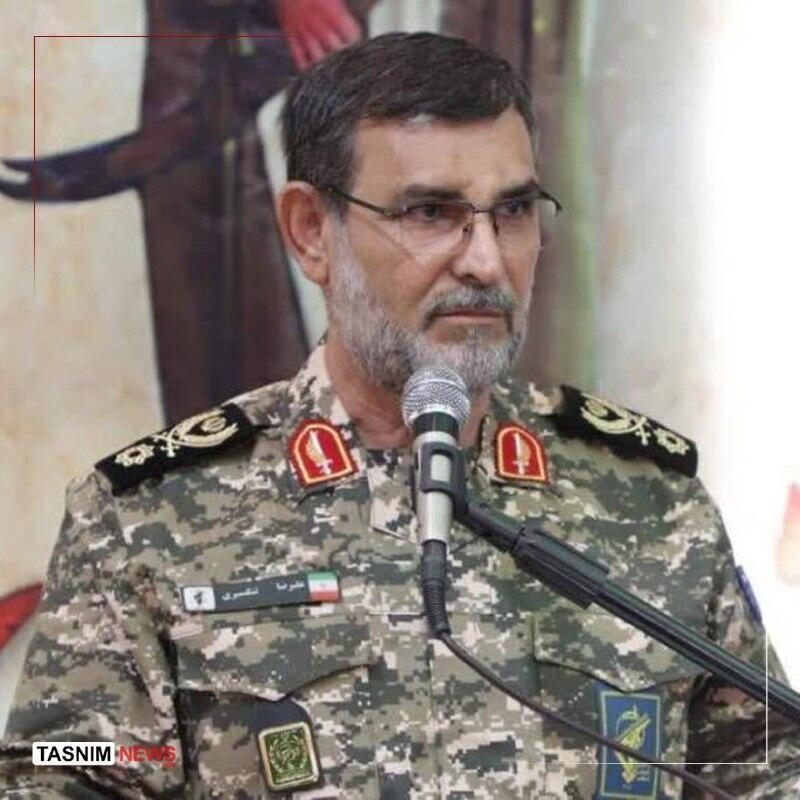
The statement followed reports Saturday of an explosion in the southern port city of Bandar Abbas, after which rumors circulated on social media claiming Tangsiri had been killed. Tasnim denied those reports, later saying a gas leak caused the blast.
Iranian authorities said one child was killed and 14 people were wounded in the explosion, which occurred in or near an eight-story residential building. Iran’s fire department chief said the cause was a gas leak.
Separately, Iranian media reported five additional deaths at a residential complex in the southwestern city of Ahvaz, near the Iraqi border. Details surrounding that incident were not immediately clear.
The explosions came amid heightened tensions in Iran over the possibility that U.S. President Donald Trump could order military action against the Islamic Republic, and amid speculation that Israel could be involved in any such strike.
An Israeli official told ynet that there was no indication the explosions were linked to Israel. Later, a U.S. official told CNN that the incidents were not connected to U.S. military activity.
US bolsters air defenses in Mideast
Amid heightened tensions with Iran, Trump has repeatedly stated that a "big, beautiful armada" is en route to the Middle East in preparation for a possible strike. The force includes the USS Abraham Lincoln aircraft carrier and six guided-missile destroyers, which Trump said outsize the force deployed off Venezuela ahead of the failed bid to oust Nicolás Maduro.
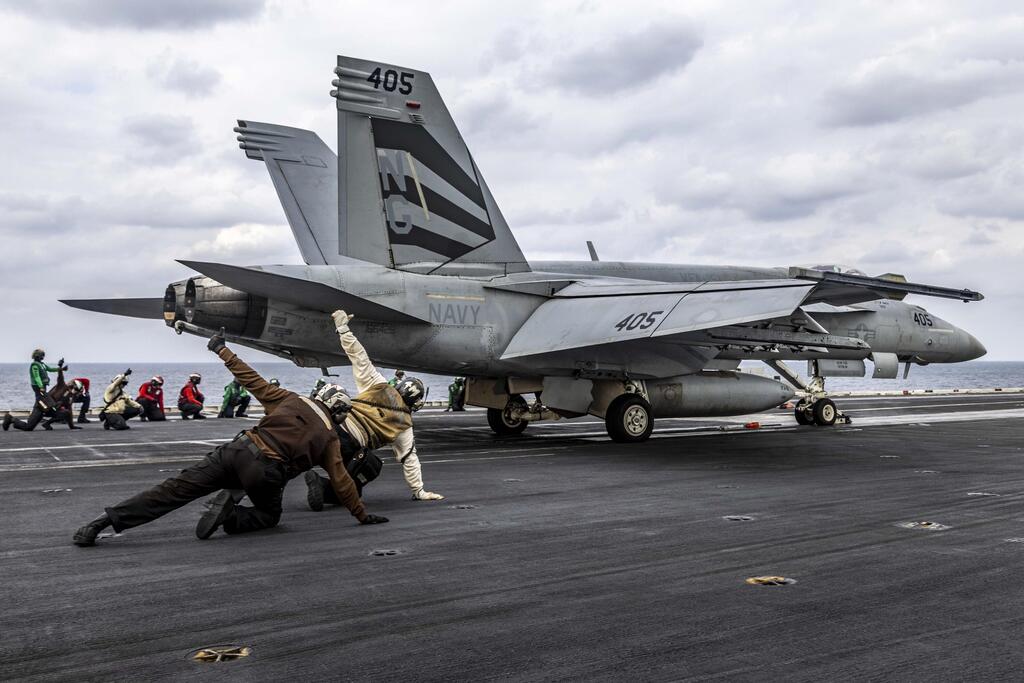
Boeing F/A-18E/F Super Hornet fighter jet
(Photo: CENTCOM)
Following a statement by Iranian official Ali Larijani suggesting progress toward a potential negotiation framework between Tehran and Washington, Trump said late Saturday that Iran is “seriously engaged in talks.”
For now, the U.S. appears to be keeping all options open. Though airstrikes are not imminent, senior American officials told The Wall Street Journal that the Pentagon is still deploying additional air defense systems to the region to better protect Israel, U.S. forces and Arab allies in the event of an Iranian response or broader conflict.
“The U.S. military could conduct limited airstrikes on Iran if the president were to order an attack today,” one official said, “But the kind of decisive attack that Trump has asked the military to prepare would likely prompt a proportional response from Iran, requiring the U.S. to have robust air defenses in place to protect Israel as well as American troops.”
The U.S. military already has missile defense assets in place across the region, including destroyers capable of intercepting aerial threats and the Abraham Lincoln carrier group. However, according to the Journal, Washington is now deploying an additional THAAD (Terminal High Altitude Area Defense) battery and Patriot missile systems at U.S. bases across the region, including in Jordan, Kuwait, Bahrain, Saudi Arabia and Qatar. The report cited American defense officials, flight tracking data, and satellite imagery.
Recent satellite images show the U.S. deployed an extra Patriot battery last week to Al Udeid Air Base in Qatar, the largest American base in the region and a previous target of Iranian retaliation after the U.S. strike on Tehran’s nuclear facilities in June of last year. THAAD systems can intercept ballistic missiles outside the atmosphere, while Patriots defend against low-altitude, short-range threats.
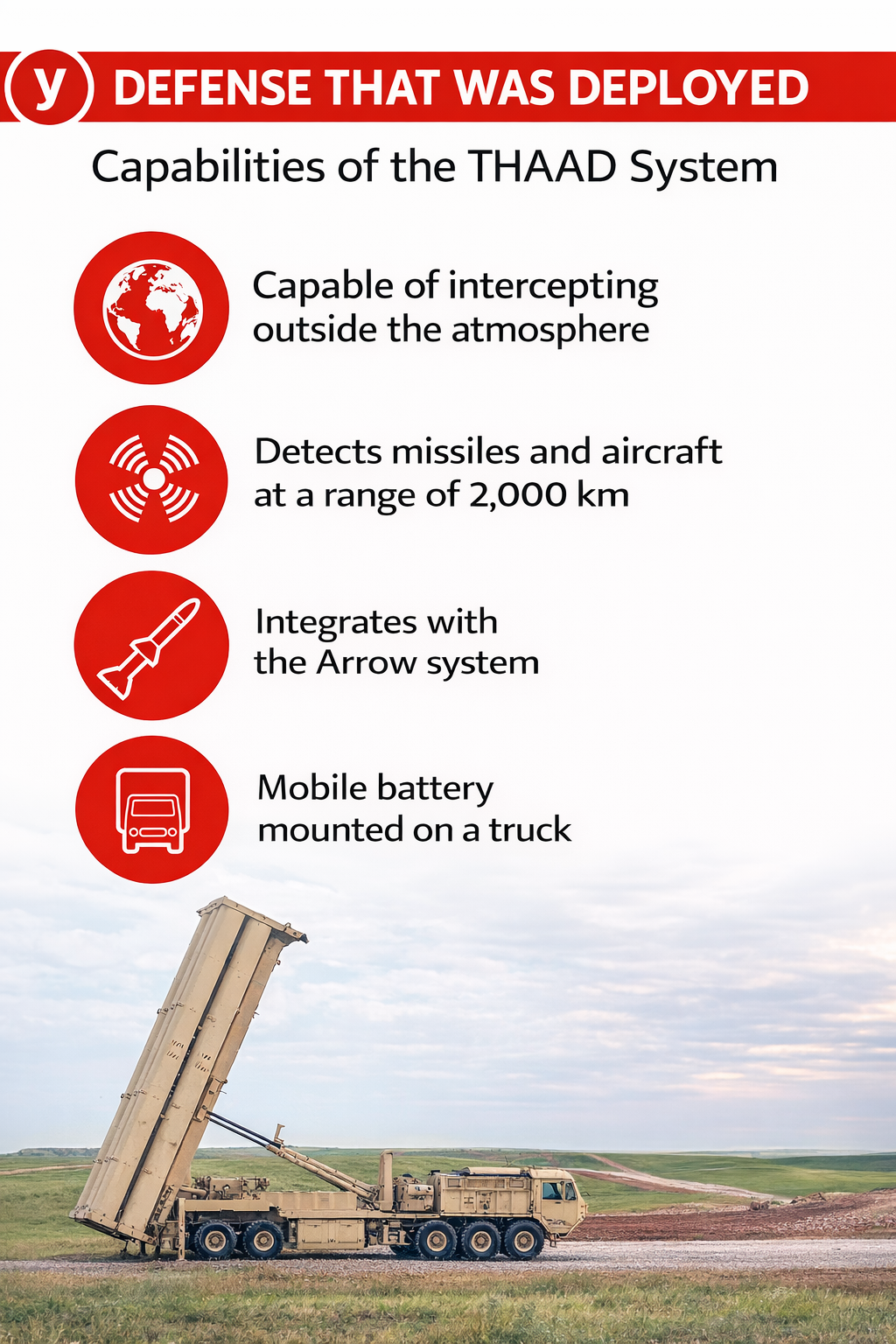
The deployment of a THAAD battery is a “particularly strong signal” that the U.S. is preparing for a potential clash with Iran, the Journal noted, especially since the U.S. possesses only seven operational batteries, which have been stretched thin over the past year — including in support of Israeli missile defense during the 12-day war. The THAAD system played a critical role in shielding Israel as its own Arrow interceptor supply dwindled. The U.S. launched over 150 interceptors in June 2024 alone — roughly a quarter of the total inventory ever purchased by the Pentagon.
“It is expensive to move Patriots and THAADs. The probability that they’re going to be used starts to go up,” said Seth Jones, a former Defense Department official.
Susan Maloney, a former State Department official specializing in Iran policy under Presidents George W. Bush and Barack Obama, added: “The air defense question is key—the extent to which we have sufficient materiel to ensure that our troops and assets in the region are going to be protected from some kind of Iranian retaliation.”
Analysts told the Journal that while the reinforcements improve protection for American facilities and population centers, they could strain logistics and readiness in the event of a wider conflict.
In addition to missile defenses, the U.S. has deployed three squadrons of F-15E fighter jets to Jordan, which could play a role in downing Iranian drones. These aircraft participated in the April 2024 Iranian assault on Israel, which the U.S. Air Force described as the “largest air-to-air enemy engagement in over 50 years.”
U.S. Navy destroyers in the region are also armed with guided missiles capable of intercepting aerial threats. The Journal reported, citing naval sources and open-source imagery, that the U.S. now has eight destroyers within strike range of Iran: two near the Strait of Hormuz, three in the northern Arabian Sea, one in the Red Sea (which docked in Eilat on Saturday) and two more in the eastern Mediterranean.
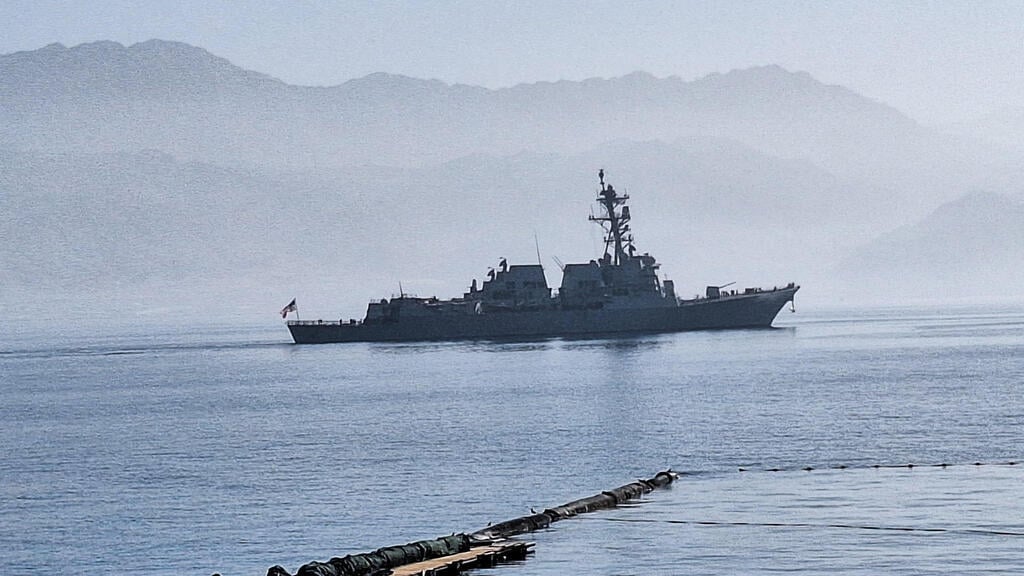
US warship docking at Port of Eilat
(Photo: REUTERS/Doron Berti)
U.S. preparations are continuing at a rapid pace, even as President Trump has yet to publicly reveal his final decision. On Thursday, six F-35 fighter jets from the Vermont National Guard landed in the Azores, a Portuguese archipelago in the Atlantic, having been repositioned from the Caribbean to bring them closer to the Middle East. The same aircraft participated in the Venezuela operation. Additionally, several EA-18G Growler electronic warfare jets recently departed Puerto Rico and landed in Spain.
Despite the ongoing U.S. military buildup in the region, Gulf nations have warned the United States that Iran’s missile program remains capable of inflicting "significant damage" on American interests in the Middle East, according to the Washington Post.
The report, based on two Western officials familiar with the matter, said that while Israel dealt heavy blows to Iran’s missile infrastructure during last June's 12-day war, a U.S. ally in the Gulf assessed that key elements of the program survived and some capabilities have since been rebuilt.
Iran has reportedly signaled to U.S. allies in the region that any retaliation it launches in response to a potential American strike would be far more severe than its restrained response on Al Udeid Air Base in Qatar in June of last year.
One Western official cited in the report said Trump's vocal support for Iranian protesters — who initially demonstrated over rising living costs and were later violently suppressed by the regime — has led Tehran to view conflict with Washington as existential. A source in contact with Iranian counterparts said that even though parts of the Iranian leadership were uneasy with the scale of the crackdown, the perceived American threat pushed the regime to close ranks.
“The regime has completely closed ranks,” the source said. “All the messages from my contacts now is ‘We are ready for total war.’”
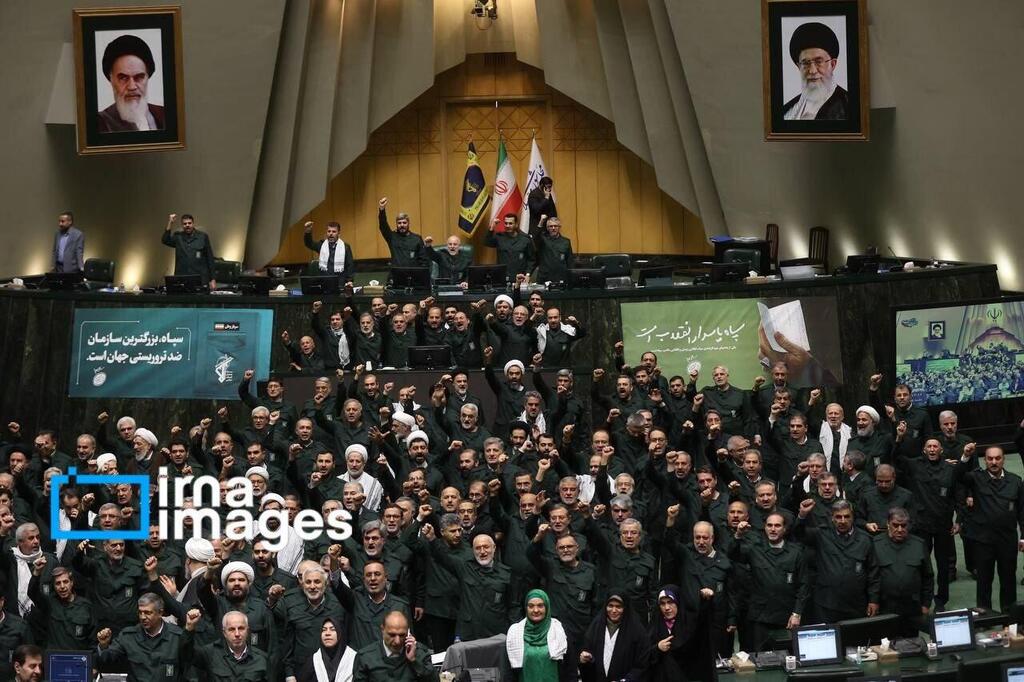
Members of the Iranian parliament appear in full Revolutionary Guard uniforms
Meanwhile, Iranian officials continue to issue threats against the U.S., Israel and Washington’s allies. On Sunday morning, members of the Iranian parliament appeared in full Revolutionary Guard uniforms — a pointed message aimed at the European Union, which designated the Islamic Revolutionary Guard Corps (IRGC) as a terrorist organization.
Iran’s Supreme Leader Ali Khamenei added to the warnings, saying: “Americans must know that if they start a war with us, this time it will be a regional war. We are not the initiators of war, but the Iranian people will strike hard at anyone who attacks them.”
Khamenei later echoed that threat in a post on his X (formerly Twitter) account — in Hebrew.