

Houthi forces have been attacking Saudi Arabia relentlessly in recent months, launching missiles and drones toward targets including the capital Riyadh and the areas of Al-Kharj, Jeddah, Yanbu, Khamis Mushait and Najran. But when it comes to alleged attacks on Mecca and Medina, Islam's two holiest cities, the facts are far less clear. In recent weeks, Saudi authorities have repeatedly reported air raid alerts in both cities, while the Houthis have vehemently denied targeting either of them. For Muslims, Sunni and Shiite alike, the religious significance of the two cities is profound, as are the implications of attacking them.
Within the broader war between Saudi Arabia and the Houthis, another battle is now unfolding over which side is violating the sanctity of Islam's holiest sites and behaving like an "enemy of Islam."
Ya Allah: Are the Houthis attacking Mecca and Medina? Saudi claims ignite battle over Islam's holiest cities


On Friday morning, the Saudi-led coalition reported intercepting a drone that it said had been launched by the Houthis toward Mecca. Hours later, Houthi military spokesman Yahya Saree dismissed the allegation as fabricated. "Our operations target their oil facilities and military bases, and no one in the world believes these lies and fabrications," he said. Later that day, the coalition announced that it had intercepted another drone in the Medina area, prompting another Houthi denial.
Mecca is Islam's holiest city, regarded as the birthplace of the Prophet Muhammad and home to the Grand Mosque, or Masjid al-Haram, the most sacred mosque in Islam. Within it stands the Kaaba, the ancient structure toward which Muslims around the world face during their daily prayers and the focal point of the annual Hajj pilgrimage. Medina, Islam's second-holiest city, is where Muhammad migrated from Mecca in an event known as the Hijra. It is also home to the Prophet's Mosque, where he is buried.
The Houthis regularly emphasize their connection to Islam and the Prophet Muhammad. In August, they held celebrations marking the Prophet's birthday in areas under their control. From the group's perspective, Saudi accusations that it is attacking Mecca and Medina amount to allegations that it is threatening Islam's most sacred places. The Houthis insist that Riyadh is exploiting the cities' religious significance for political purposes, while accusing the Saudi authorities themselves of violating their sanctity.
Claims and denials
The war of competing narratives has continued for weeks. The current round of escalation between Saudi Arabia and the Houthis began in July, while Saudi allegations of launches toward Mecca first emerged on September 15, when authorities reported alerts in several areas of the kingdom, including the holy city. The Houthi-affiliated Saba news agency quoted a military source categorically rejecting the accusation. "We strongly deny the existence of any threat from Yemen against the holy city of Mecca or any other sacred sites," the source said. "Promoting these reports is intended to tarnish our image and win sympathy from the Islamic world, a familiar tactic of the Saudi enemy."
Mohammed al-Farah, a member of the Houthi political bureau, also rejected the accusations. "The talk of an attack on Mecca from Yemen is a lie," he said. "Saudi Arabia is facing a real crisis. It is begging the international community and trying to mobilize Muslims using a false pretext to divert attention from its failure. The solution is clear: Stop the aggression, lift the blockade, leave Yemen alone and compensate Yemenis for the years of war and destruction."
The Saudi-led coalition subsequently issued a statement indicating that the alert in Mecca had been triggered by a Houthi drone launched toward the city and intercepted outside its boundaries. "This hostile attempt marks the second time Mecca has been attacked, following an initial attempt to launch a ballistic missile on July 27, 2017," the coalition said. It described the alleged attack as "a black stain on the history of the Houthis" and an attempt to provoke the religious feelings of millions of Muslims, stressing that "the security of the Two Holy Mosques is a red line."
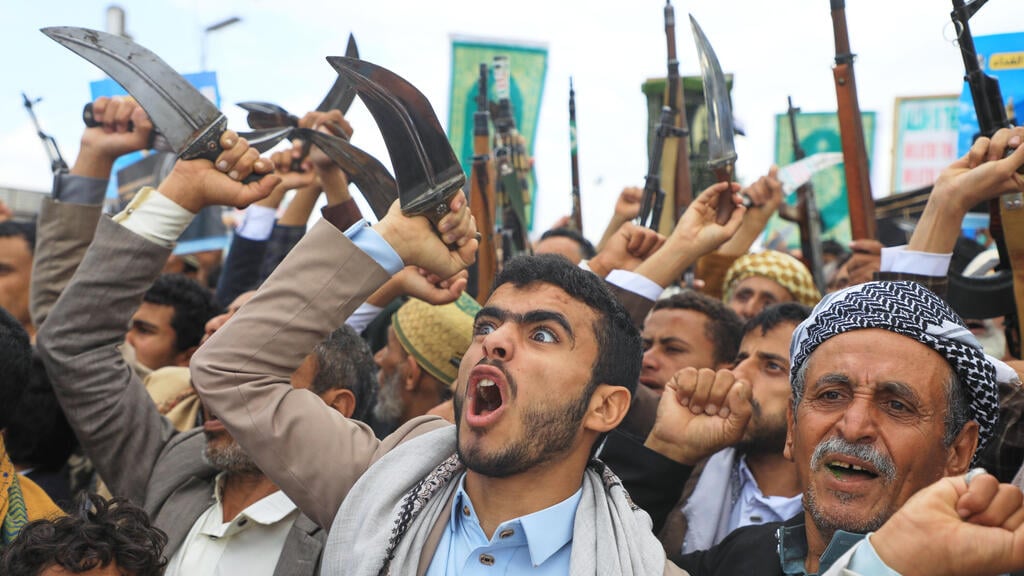
On September 17, Houthi leader Abdul-Malik Badr al-Din al-Houthi rejected the Saudi accusation, saying the alleged attack was an invention that itself violated the sanctity of Mecca, a city sacred to all Muslims, particularly Yemenis. The following day, Houthi supporters demonstrated in areas under the group's control against Saudi Arabia and what they called "the lie about attacking Mecca." The denials continued into October. In a statement on October 16, Saree said: "The lies spread by the Saudi regime about targeting holy Mecca are fooling no one. They are the ones desecrating the holy city through immorality and debauchery. Yemen poses no threat to the holy sites. Our operations are directed against the regime's oil facilities and military bases, which are far from the holy places."
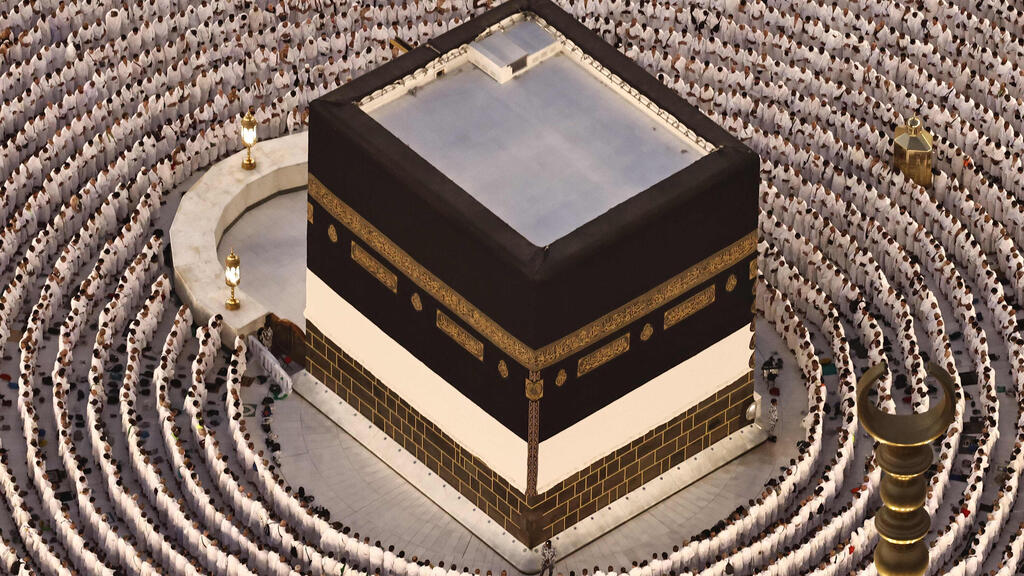
The Kaaba in Mecca, Islam's holiest site
(Photo: Zain JAAFAR / AFP)
The Houthi political bureau also denied targeting Mecca, describing the accusation as "the biggest lie of our time." It said Mecca and all Islamic holy sites hold a sacred place in the hearts of Muslim peoples, particularly Yemenis, while accusing the Saudi authorities of exploiting the cities' religious significance for warfare. The statement also alleged that Saudi Arabia was desecrating Mecca by "hosting Zionist Jews," as the Houthis put it, and organizing parties characterized by debauchery and moral corruption. "The Saudi regime remembers the sanctity of Mecca only when it needs to exploit the holy sites to serve its positions," it said. Yemeni cartoonist and Houthi supporter Kamal Sharaf joined the campaign with a cartoon and video intended to demonstrate that the Houthis were attacking Aramco, the Saudi oil company, rather than the Kaaba.
‘An unforgivable act’: Turkey and Pakistan back Saudi Arabia
Saudi Arabia's partners in the "Mecca Defense Alliance," Turkey and Pakistan, backed Riyadh in the dispute. Pakistan's Foreign Ministry issued an official statement condemning the alleged Houthi attack on Mecca, while Pakistani Prime Minister Shehbaz Sharif expressed outrage in a post on X on October 16. "The people of Pakistan feel deep sorrow and concern over this act," he wrote. "Words cannot describe the depth of the pain and grief we feel over this unforgivable act. We salute the vigilance, courage and professionalism of the Saudi forces for their swift action."
"Pakistan stands with Saudi Arabia in defending its sovereignty and territorial integrity, and in ensuring the security and sanctity of the Two Holy Mosques, a duty that every Pakistani carries deep in their heart," Sharif added. Turkey also issued official condemnations following the reports of an attempted attack on Mecca.
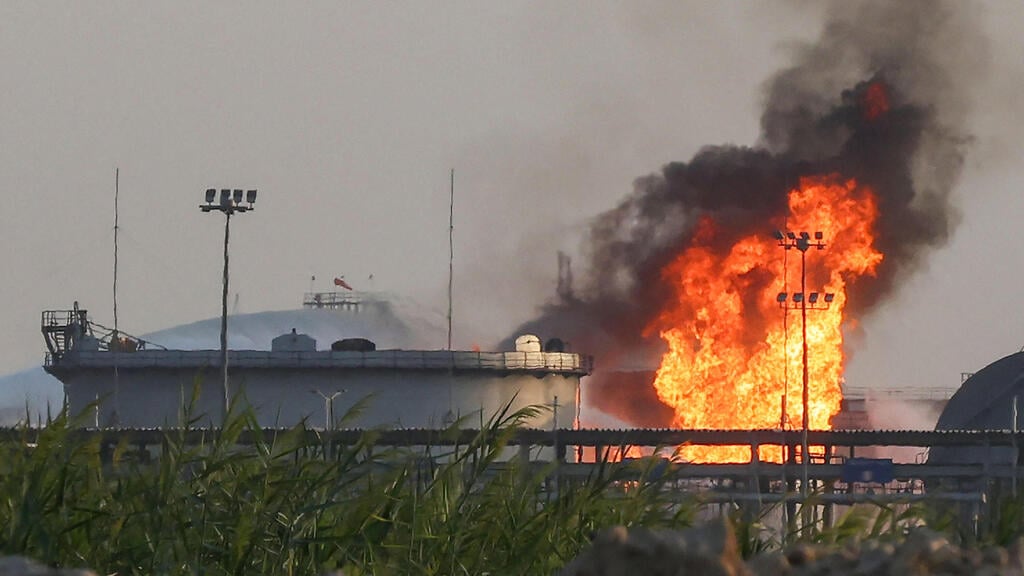
An oil facility targeted in Saudi Arabia
(Photo: AFP)
The allegations continued over the following weeks. On October 21, the Houthi military spokesman responded to a Saudi-led coalition announcement that drones had been intercepted, including in the Medina area. "The armed forces carried out no military operations deep inside Saudi Arabia today," Saree said. "The Saudi enemy's claim that drones were intercepted over Medina is a lie and a smear against our honorable and courageous people and armed forces."
On October 24, Saudi Civil Defense reported debris falling in several locations following the interception of two ballistic missiles allegedly launched by the Houthis toward the Mecca and Medina regions. According to the Saudi account, fragments fell in Wadi al-Marmas in Mecca, the Al-Nuzha neighborhood in the Jeddah area, Wadi Jalil in the Taif area and the Rabigh district. The Houthis again denied targeting the holy cities, maintaining that their military operations were directed against oil facilities and military bases. In recent weeks, Houthi officials have also repeatedly warned that Saudi airspace is "unsafe," while explicitly excluding the skies over Mecca and Medina from those threats.
On Friday, Houthi government spokesman Omar al-Buhaiti brought Israel into the dispute, alleging that Saudi Arabia and its "Zionist partner" were plotting to attack Islamic holy sites and blame Yemen. "The Saudi enemy's repeated claim that Yemen has attempted to target holy sites reveals malicious intentions already harbored by the Saudi enemy and its Zionist partner," he said. "We hold the Saudi regime fully responsible for any harm, attack or plot targeting the holy sites in Mecca and Medina." He warned that any attack on the Two Holy Mosques by what he called the Saudi enemy would have "devastating consequences" for Riyadh. The accusations against Israel were made without supporting evidence.
Where does the truth lie? ‘The Saudis have an interest’
For now, Saudi Arabia continues to accuse the Houthis, and the Houthis continue to issue categorical denials. But conclusive evidence that Mecca and Medina themselves have been targeted remains lacking. That raises a fundamental question: Are the Houthis really aiming at the two cities, and would they have any reason to attack places that hold such profound religious significance for them as well?
Dr. Yoel Guzansky, a former Israeli National Security Council official and senior researcher who heads the Gulf program at the Institute for National Security Studies (INSS), told ynet that the issue is exceptionally sensitive. He questioned whether the Houthis had actually fired toward the two cities. "It is completely contrary to the Houthis' interests, because doing so could unite the entire Islamic world in opposition to them," he said.
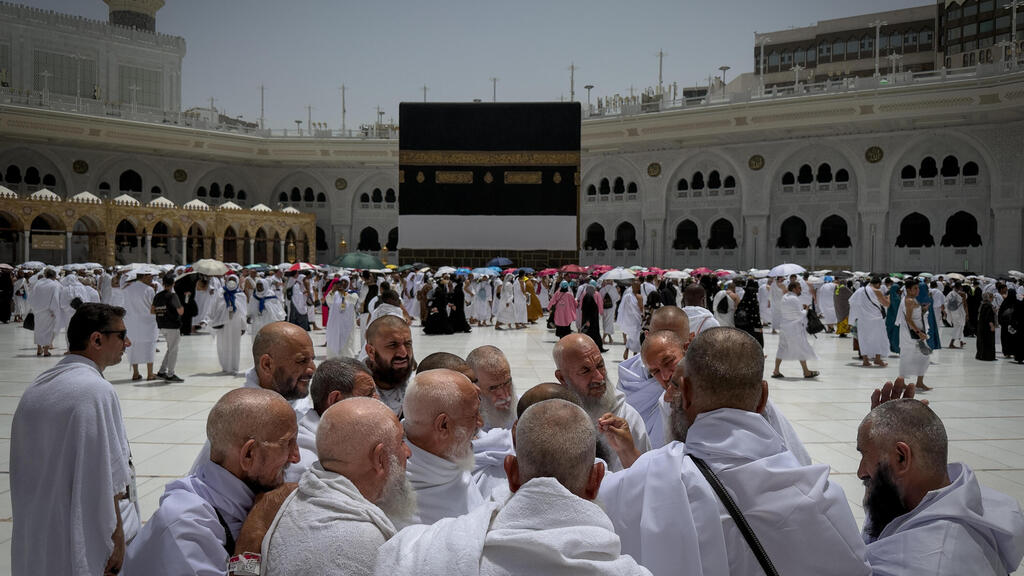
Mecca. 'There were no confirmed strikes. The Saudis are trying to portray the Houthis as infidels'
(Photo: AP Photo/Altaf Qadri)
"The Saudis have an interest in showing that the Houthis are attacking Islam's holy sites, Mecca and Medina," Guzansky explained. "That could help them mobilize legitimacy and international support, especially from Pakistan, Turkey and other countries whose assistance Saudi Arabia wants. It could be presented as, 'Here we are, coming to defend Islam's holy sites because Saudi Arabia is in trouble.'"
But he warned that repeatedly invoking the holy cities could also backfire on Riyadh. "The more the Saudis use this, the more dangerous it could become for them. It could create an image of weakness: 'Are they incapable of protecting Mecca and Medina?'"
According to Guzansky, there have been no confirmed strikes on either city. "There were warnings issued to the population, but there were no impacts in those areas, which raises further questions because there have been impacts elsewhere," he said. "The Saudis are taking their struggle with the Houthis into the religious arena as well. That's why I think they may be cautiously bringing Mecca and Medina into the picture. They want to portray the Houthis as infidels and present their actions as being directed against religion."