

National Security Minister Itamar Ben-Gvir claimed Sunday that Prime Minister Benjamin Netanyahu's office had secretly assured several European Union countries that he would not be included in Israel's next government, escalating tensions between the two coalition partners just nine days before the October 27 election.
In a special statement to the media, the far-right Otzma Yehudit party leader said he had received verified information in recent days indicating that Netanyahu's office had made formal commitments to European governments to exclude him from the next cabinet. The allegation has not been independently confirmed.
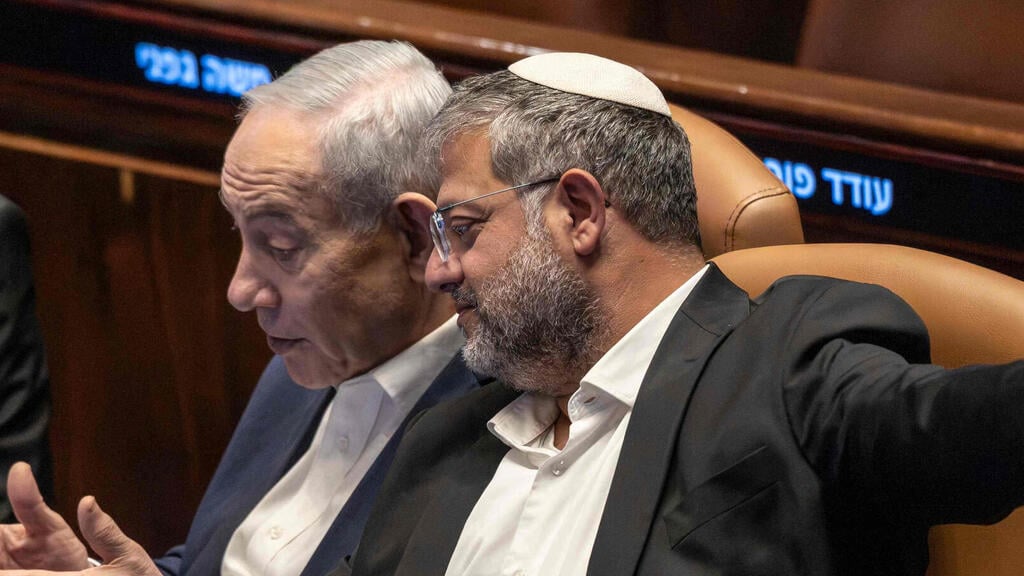
Prime Minister Benjamin Netanyahu and National Security Minister Itamar Ben-Gvir
(Photo: ilia YEFIMOVICH / AFP)
"I say these things with deep sorrow," Ben-Gvir said. "For a long time, I heard such reports, but I prayed they were not true." He claimed that explicit assurances had been conveyed to European foreign ministers and more senior officials that Netanyahu had no intention of bringing him into the next government.
Addressing Netanyahu directly, Ben-Gvir warned him against seeking international or domestic political legitimacy at his expense. "Don't count on legitimacy from the left," he said. "Don't count on the left that has been after you for decades. They will hate you forever."
He argued that Netanyahu's political future depended on maintaining a strong right-wing coalition rather than bringing in centrist parties. "Bibi needs a strong Ben-Gvir, not a strong Eisenkot," he declared, referring to former IDF chief of staff and opposition leader Gadi Eisenkot.
Growing tensions ahead of election
The accusations follow a series of confrontations between Netanyahu and Ben-Gvir over the composition of the next government. On Thursday, Netanyahu said the Defense Ministry and National Security Ministry would remain under Likud control if he wins reelection, effectively ruling out Ben-Gvir's ambitions to obtain the defense portfolio. Otzma Yehudit accused Netanyahu of preparing to replace it with Eisenkot's party.
The latest claims also contrast with earlier assurances Netanyahu reportedly gave Ben-Gvir. As ynet reported last month, Netanyahu personally sought to reassure his coalition partner that any future government he formed would be based on the current coalition and its principles, despite calls for a broader alliance.
Ben-Gvir accused Likud of deliberately trying to reduce Otzma Yehudit's representation to five Knesset seats, warning that weakening his party could ultimately cost the right-wing bloc its majority.
"If you hurt Otzma Yehudit, you could cause our voters to stay home," he said, insisting his supporters would not automatically switch to other right-wing parties.
The relationship between the two leaders has been marked by repeated confrontations. Ben-Gvir resigned from Netanyahu's government in January 2025 over the Gaza ceasefire and hostage agreement, only to return two months later following the resumption of Israeli military operations.
Despite the latest dispute, Ben-Gvir insisted he remained committed to Netanyahu becoming prime minister. He reminded Netanyahu that he had previously defended him against efforts within Likud to remove him, claiming the prime minister had once told him he trusted Ben-Gvir more than members of his own party.
"Every vote for Otzma Yehudit is automatically a vote for Benjamin Netanyahu as prime minister," Ben-Gvir said. "But to have a real, strong right-wing government, rather than a weak centrist government, Bibi needs a strong Ben-Gvir."