

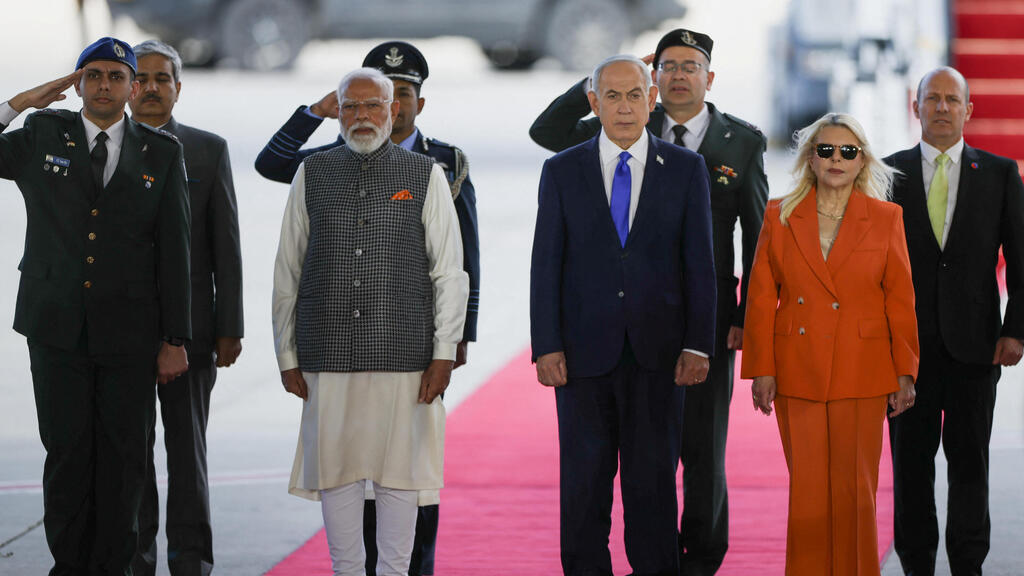
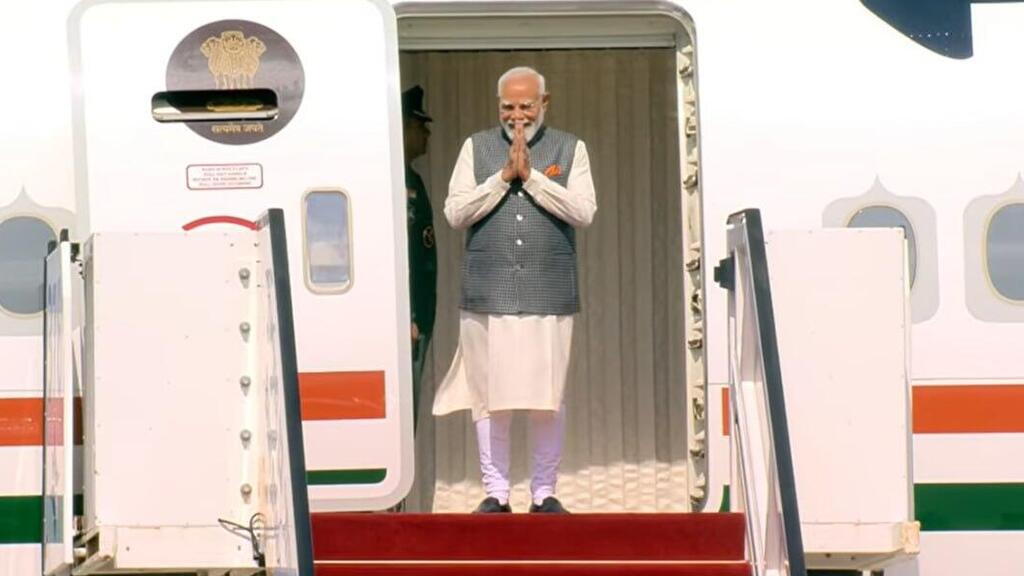
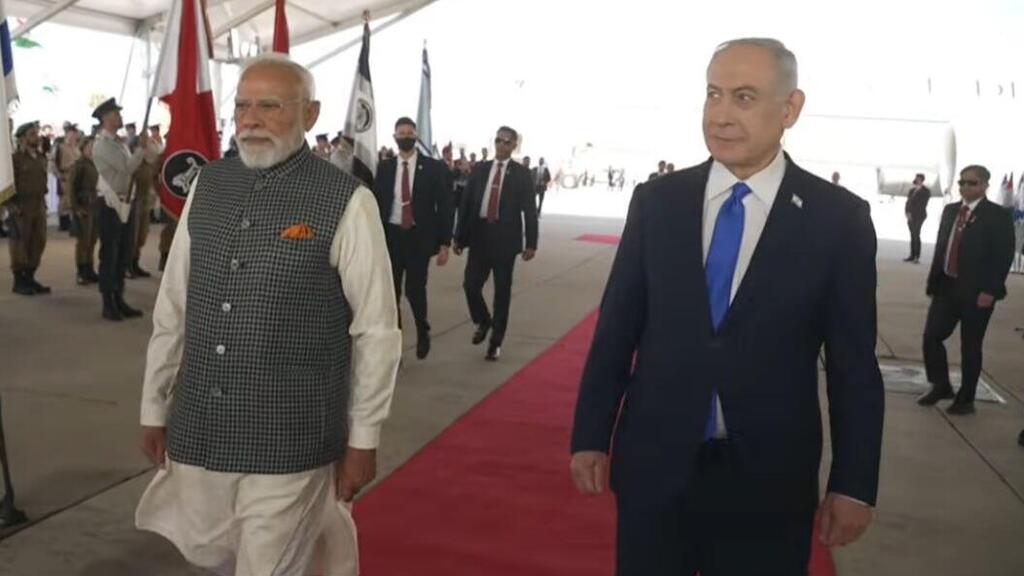
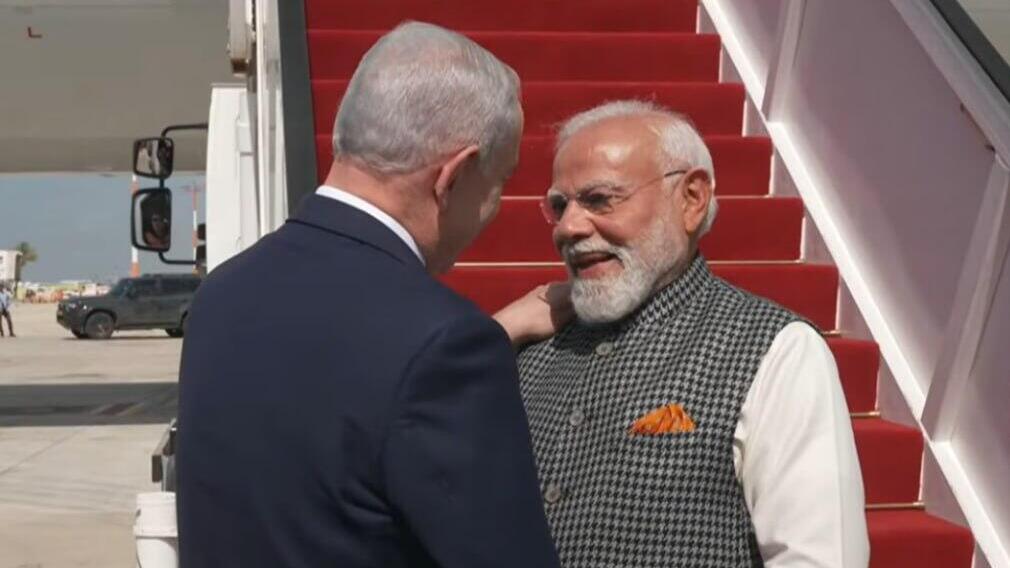
Indian Prime Minister Narendra Modi landed Wednesday afternoon at Ben Gurion Airport, where he was welcomed by Prime Minister Benjamin Netanyahu and his wife, Sara, in a large tent erected for the occasion. An Israel Defense Forces band and an honor guard took part in the ceremony.
“It’s wonderful that you’re here. We have much to discuss,” Netanyahu told Modi upon his arrival.
Welcoming ceremony for the prime minister of India at Ben Gurion Airport
(Video: Micky Schmidt, GPO)


Gallery
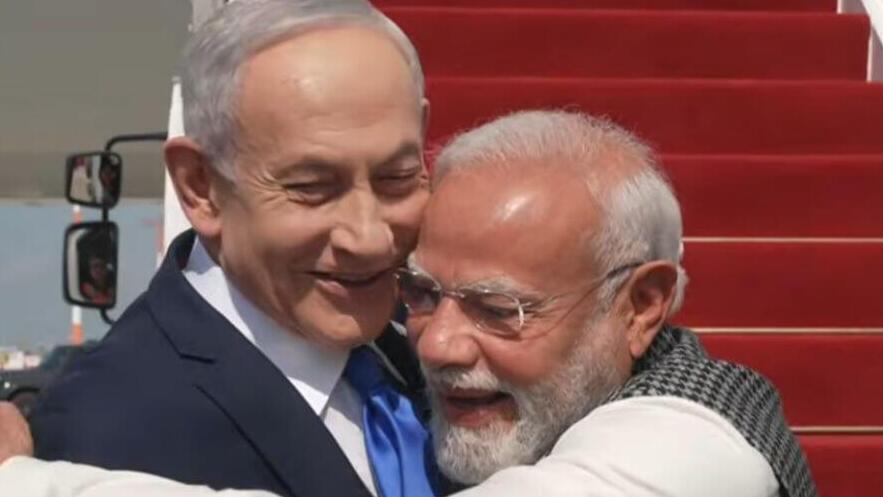
Prime Minister Benjamin Netanyahu and Indian Prime Minister Narendra Modi at the welcoming ceremony
(Photo: GPO)
(Photo: REUTERS/Shir Torem)
(Photo: GPO)
It was the first time Sara Netanyahu has been seen in public since returning to Israel from Miami after five weeks abroad. Modi was accompanied by Israeli Foreign Ministry chief of protocol Gil Haskel, while India’s foreign minister, Subrahmanyam Jaishankar, headed the Indian delegation. After the ceremony, Netanyahu and Modi moved to the airport lounge for their first meeting.
Modi’s two-day state visit to Israel will include an announcement upgrading bilateral strategic ties to the highest level. Following his meeting with Netanyahu, Modi is scheduled to meet the Indian community in Jerusalem. At 4:30 p.m., he will address the Knesset. At 6 p.m., he will attend a technology exhibition featuring 12 Israeli companies, and later hold a festive dinner with Netanyahu.
On Thursday, Modi will visit the Yad Vashem Holocaust memorial and meet President Isaac Herzog. He will then hold an expanded meeting with Netanyahu, sign agreements and deliver joint statements to the media before departing for India at 2 p.m.
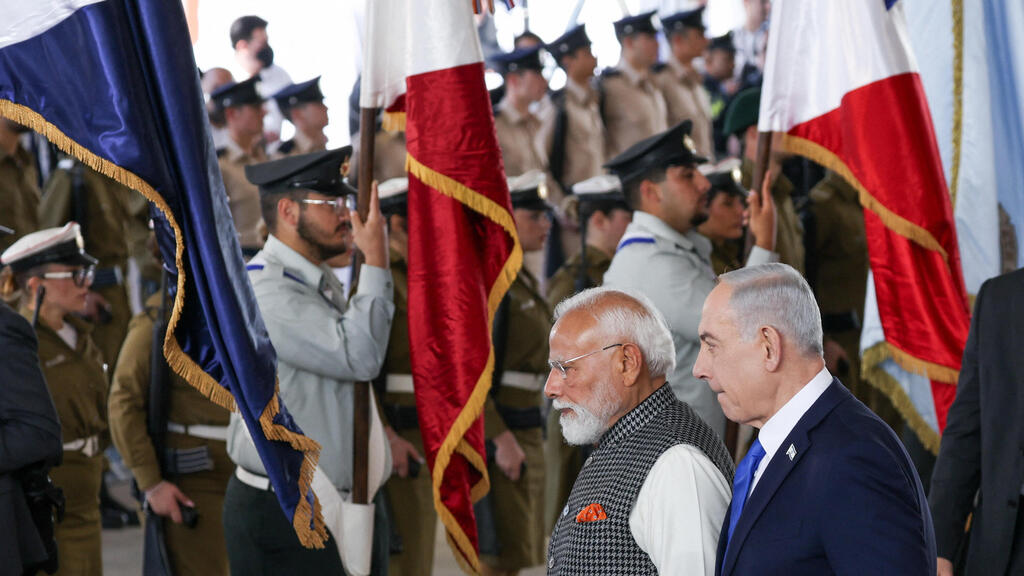
The ceremony at Ben Gurion Airport, attended by an honor guard of soldiers and an IDF band
(Photo: REUTERS/Shir Torem)
(Photo: GPO)
(Photo: GPO)
Modi’s visit carries significant regional implications, including heightened tensions between India and Turkey. Ankara has provided military assistance to Pakistan and Bangladesh, a development that concerns New Delhi. One of India’s responses has been to deepen ties with Israel and promote an alliance of moderate countries linking India to Europe through the United Arab Emirates and Israel via the proposed India-Middle East-Europe Economic Corridor, or IMEC. The goal is to strengthen what Israeli officials describe as a moderate axis in contrast to a Muslim Brotherhood-aligned bloc led by Turkey, amid concerns that Saudi Arabia could draw closer to that camp.
On Tuesday, Netanyahu said Israel is interested in forming “our own axis of countries that oppose the two axes of radical Islam.” Speaking at a conference of Shin Bet security agency officials, he said Israel faces challenges from a weakened Shiite axis and from a Sunni axis associated with the Muslim Brotherhood. He described a broader regional circle of countries stretching across the Middle East and beyond, invoking the biblical phrase “from India to Cush,” in a reference suited to the Purim holiday.
At the start of the weekly Cabinet meeting, Netanyahu elaborated on what he described as a network — “a kind of hexagon of alliances” — encompassing India, Arab states, African countries, Mediterranean states such as Greece and Cyprus and additional Asian nations he did not name. The aim, he said, is to unite countries that share a common understanding of regional challenges in opposition to both Shiite and Sunni radical axes, strengthening cooperation, resilience and long-term security.