

Israel’s expanded aid deliveries into Gaza have opened a new commercial channel for Israeli food retailers, importers and suppliers, generating hundreds of millions of shekels in sales while many of the companies involved try to keep the business out of the spotlight.
The new market emerged after ceasefires in Gaza were accompanied by Israeli commitments to allow hundreds of trucks carrying food and equipment into the Strip each day. While much of the public debate has focused on humanitarian aid, financial reports and industry sources show that Israeli companies are also selling large volumes of commercial goods to approved Gaza merchants.
Victory, the supermarket chain controlled by the Ravid family and led by CEO Eyal Ravid, sold about 100 million shekels worth of goods to Gaza merchants in one month, the company disclosed only after the Israel Securities Authority required it to clarify the source of a sharp rise in sales. The chain had previously attributed the jump to the timing of Passover and the war with Iran, without specifying the primary driver of the increase.
Mehadrin, the agriculture company controlled by Yitzhak Tshuva’s Delek Group and a marketer of avocados, citrus fruit and dates, sold about 60 million shekels worth of goods to Gaza in the first quarter.
The business is sensitive. Many companies prefer not to publicize their involvement, apparently out of concern that the exposure could damage their image amid reports that Hamas, which controls Gaza, has recovered and is rebuilding its capabilities. Others fear political criticism from the right, possible consumer boycotts or being linked to smuggling attempts involving shipments bound for the Strip.
About 30 companies have received licenses to supply goods to Gaza. They include major retailers and suppliers such as Victory, Mehadrin, Carrefour, Super Sapir, Hatzi Hinam and Maayan 2000, as well as Neto, Willi-Food, Bikurey Hasadeh, Diplomat, Schestowitz and Shaniv. Businessman Evan Neumann, formerly one of the owners of Max Stock, is also a prominent player in the Gaza goods trade.
Rami Levy’s Hashikma Marketing chain also obtained a license, but says it has not used it. “We received a license, but did not use it and did not sell goods to Gaza while the State of Israel is at war,” said Yafit Attias, the chain’s co-CEO.
Other food and beverage companies, including Jafora, which supplies Tapuzina and RC Cola, and Tempo, the maker of Pepsi Cola, also supply products to Gaza but prefer to do so through licensed suppliers rather than directly. Industry sources say this is partly due to concern over daily smuggling discoveries tied to shipments entering the Strip.
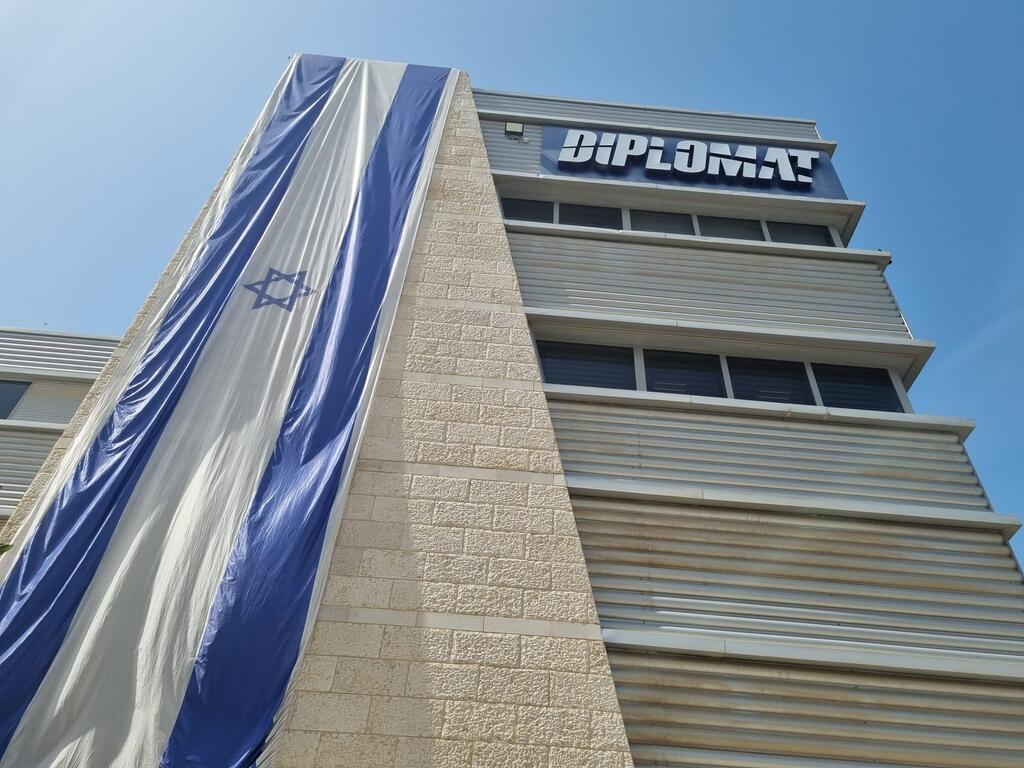
Diplomat offices
(Photo: Meirav Crystal)
In one case this week, security officers at Super Sapir discovered that cigarette packs had been hidden inside boxes of Pringles supplied by a vendor from the Arab sector for transfer to a Gaza merchant. The company immediately reported the incident to the security establishment, which began investigating. The snack packages had allegedly been emptied and refilled with cigarettes.
Another smuggling attempt was thwarted several weeks ago, when hundreds of kilograms of tobacco were found hidden inside dozens of cans of grape leaves bound for Gaza.
“In the Pringles case, the chain, which is an authorized supplier, discovered the smuggling during unloading, inspection and reloading of the boxes for transport to Gaza, and stopped it,” said a source in the Coordination of Government Activities in the Territories (COGAT), the Israeli Defense Ministry body overseeing civilian affairs in the territories.
“But there are quite a few cases where smuggling is discovered only when the truck is unloaded at the inspection point at Kerem Shalom,” the source said. “That can happen if, on the way from the warehouse to the inspection point, a driver allows someone to add goods to the shipment, or if the supplier ordered goods from a source in the West Bank and the smuggled item was inserted there.”
The ceasefire opened the door
The broader system was created as Israel sought to prevent Hamas from taking control of food supplies entering Gaza. During most of the war, which began in late 2023, the UN, international organizations and foreign countries were responsible for bringing goods into the Strip.
But ceasefire agreements that included hostage releases also required Israel to increase the number of trucks entering Gaza. In January 2025, a deal was signed based on a 42-day ceasefire, the release of 33 hostages and the entry of goods at a scale of about 600 trucks per day.
Because the UN and international aid organizations were estimated to be capable of handling only about 200 full trucks a day, the Defense Ministry looked for private-sector companies that could help close the gap. It turned to food companies that, before the war, had worked independently with Gaza merchants.
During the January 2025 ceasefire, Hamas identified an opportunity and took control of the goods-entry mechanism, collecting taxes from Gaza merchants, taking some of the goods, establishing direct contact with Israeli companies and purchasing products from them.
After the ceasefire ended, the government halted the transfer of goods for about three months. During that period, a new distribution mechanism was developed under the Gaza Humanitarian Foundation, known as GHF, which was intended to prevent Hamas from looting humanitarian aid. The system operated by distributing food boxes, though those were also looted.
In response, the security establishment created a mechanism to reduce the number of Gaza merchants to about 10 traders approved by the Shin Bet, which determined that their goods were not reaching Hamas. At the same time, Israeli customs authorities made changes on the Israeli side to prevent merchants in the West Bank and the Bedouin diaspora with alleged Hamas links from supplying goods to Gaza.
Under the customs procedure, only companies that meet the legal definition of a large supplier or large retailer under Israel’s Food Law, and that can closely supervise their supply chain, are allowed to transfer approved goods to approved Gaza merchants.
Company officials who received licenses say aid groups provide Gaza residents with staples such as flour, sugar, rice and oil, so commercial demand is focused on other consumer products. “They order salty and sweet snacks, soft drinks, Oreo cookies, Pringles, tuna, Pepsi and frozen fish,” one industry source said.
Obtaining a license requires a detailed approval process. One supplier said the company submitted the required forms and approvals, after which a Defense Ministry representative toured its warehouses for about two hours.
“He checked where the cameras are located, so that if necessary they could show who was involved in preparing the shipment, and also checked that the trucks have GPS systems, so the drivers’ route to Gaza can be tracked,” the supplier said.
Later, another representative attended a management meeting and laid out the requirements. “They made it clear that we have to be very strict and careful. If anything, even something small, is not in line with the procedures, the license will be revoked,” the supplier said.
Another company described being required to allocate a sterile area in its warehouses for picking orders and loading trucks. “We were required to set up a fenced area surrounded by cameras and 24-hour security, and to use magnetometers to inspect the goods to make sure nothing outside the approved product list was inserted into the pallets,” a company official said. The approved list includes food, shelter equipment and animal food.
There are also strict product restrictions. A senior executive at one supplier said he received a large order for Pepsi cans, but was told he could not supply cans made in Jordan for the Palestinian Authority market, even though they were cheaper than the product sold in Israel.
“I received a huge order for Pepsi cans, but when I asked to offer cans manufactured in Jordan for the Palestinian Authority territories, at a lower price than the product marketed in Israel, I was told it was forbidden to sell a product that is not marketed in Israel,” he said.
Even pallet height is regulated. “The pallets have to be up to 1.7 meters high because the truck passes through an inspection tunnel with a height limit,” another supplier said. Gaza merchants, he added, try to pack as many pallets as possible into each order because the cost of moving goods inside Gaza is very high.
At the start of the renewed trade, demand for Israeli products was intense after months of shortages. “The merchants were willing to pay almost any price and emptied our warehouses of goods at prices five times higher than in Israel,” said a manager at a food company. “But as time passed and the Strip filled with goods, demand cooled, and so did purchase prices, which reduced profitability.”
That moderation is visible in company reports. Victory’s sales jumped, but its gross profit margin fell to 23.1%, compared with 23.9% in the corresponding period. The company attributed the decline to sales to Gaza, which carries lower gross profitability.
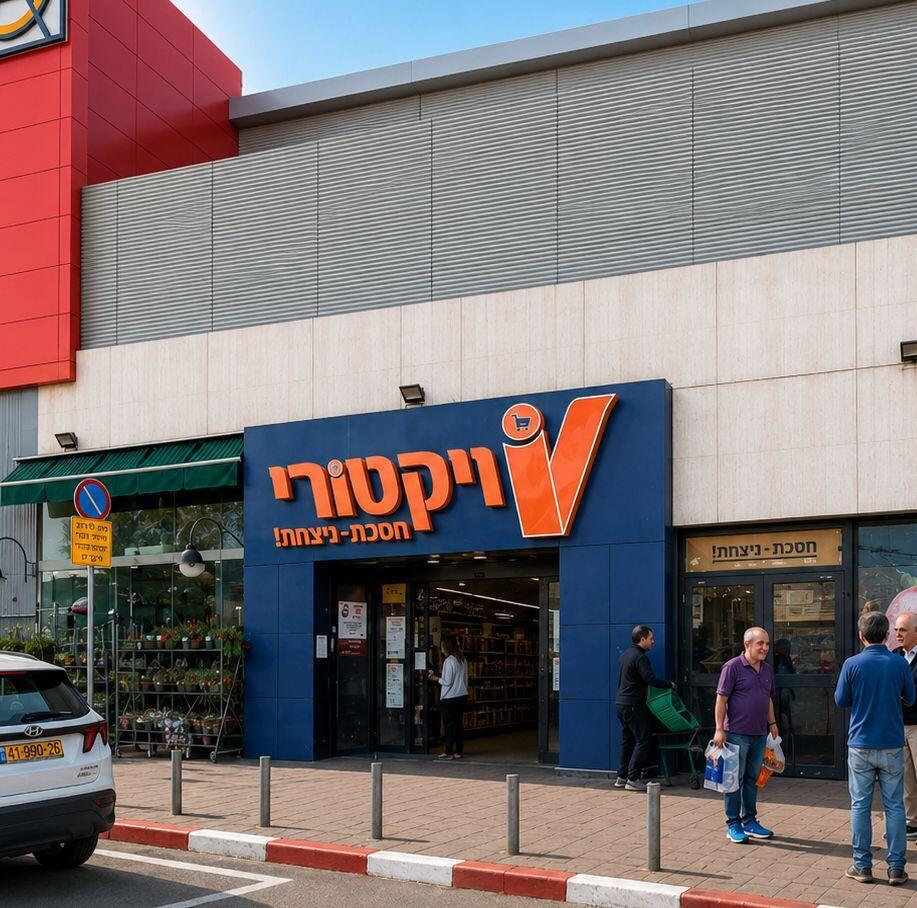
Victory
(Photo: PR)
Mehadrin’s reports also show limited profitability. Its 60 million shekels in Gaza sales generated gross profit of only 4 million shekels, a margin of 6.6%, compared with a 9.5% gross margin across the company’s overall operations.
Suppliers say the margins are pressured by competition. “We send them a price quote, and they do not always order from us, because they approach several sources and choose the most worthwhile offer,” said one supplier of leading brands.
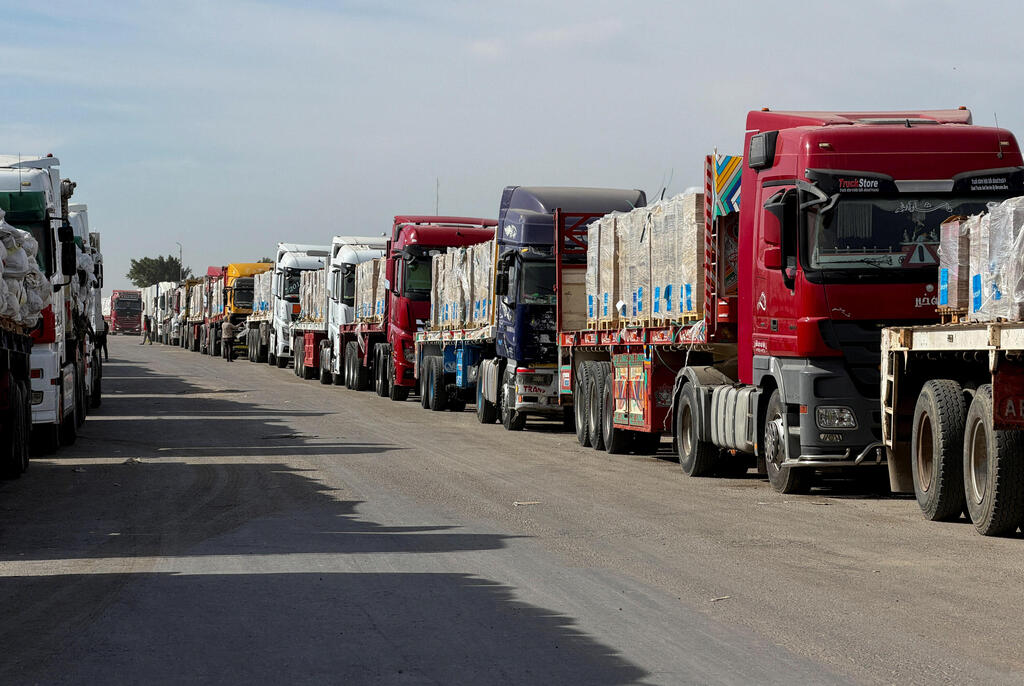
The process moves quickly. “Everything is handled fast and closes within two or three hours, because 400 to 600 trucks have to pass every day,” the supplier said. “The supplier’s truck has to arrive at the inspection point in the south, where a company hired by the Defense Ministry is also operating and is responsible for checking at least 25% of each truck’s contents. Each truck has a short window of about one hour, so the coordination has to be tight.”
For some Israeli suppliers, that close involvement is a deterrent. “I prefer to supply an Israeli retailer, and let him sell to Gaza. That way, my money is secured, and I do not fear that smuggling will be linked to my name. I supply the retailer, unload the goods at his warehouses, and from there it is his responsibility,” said one supplier who received a license but did not use it.
Another supplier said he chose not to sell into Gaza out of concern that photos might show an essential product he supplies in the hands of groups in the Gaza Strip while shortages of the same product are reported in Israel.
Even license holders such as Rami Levy and Carrefour have not rushed to use their approvals, due to a mix of ideological considerations, fear of consumer boycotts by opponents of transferring goods to Gaza, and concern that an outside party, such as a truck driver, could try to smuggle an unapproved product into a shipment.
Despite the smuggling attempts and the operational difficulties, the flow of goods is not expected to stop soon. As time passes, more companies are likely to join the small group of suppliers helping move food and consumer goods into Gaza.