

Volvo unveiled on Wednesday the EX30, a new electric luxury vehicle and announced a surprisingly low price tag - 36,000 euros in Europe. How much cheaper is it expected to be?
More stories:
Compared to standard electric models such as the Peugeot 2008 (NIS 171,000 in Israel), Hyundai Kona (NIS 153-185,000) and Jeep Wrangler, it is much cheaper in Israel.
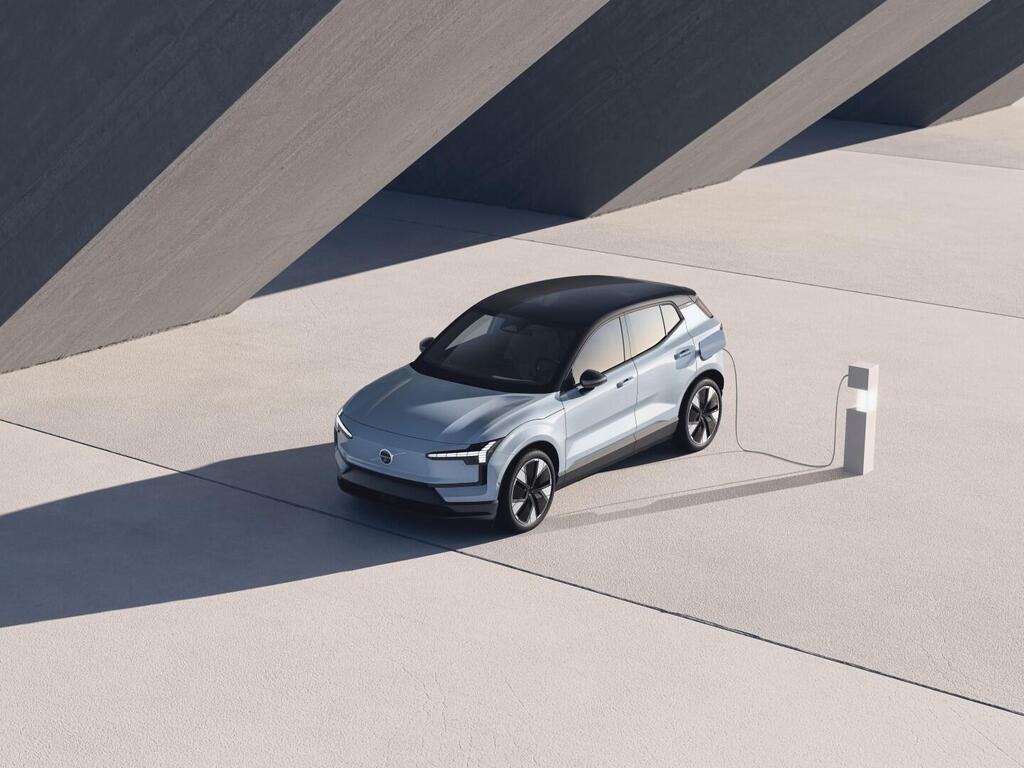
The importer updates that they will open the order book later this year, with the first vehicles arriving in early 2024. A quick calculation of its price compared to its competitors in Europe suggests that a similar price difference would place the price of the small Volvo electric vehicle at around NIS 160,000. In this case, it may be considered a game-changer in Israeli terms, although the importer refused to comment on this.
Now, onto the car. It is based on a dedicated electric platform, likely the Sustainable Experience Architecture (SEA) platform from Volvo's parent company Geely, which also serves the Zeekr 001, Smart 3, and Polestar 4.
It has relatively small dimensions, with a length of 170”, a width of 72”, and a height of 60”, making it shorter than the XC40 by 8”, narrower by 1.5”, and lower by 4”.
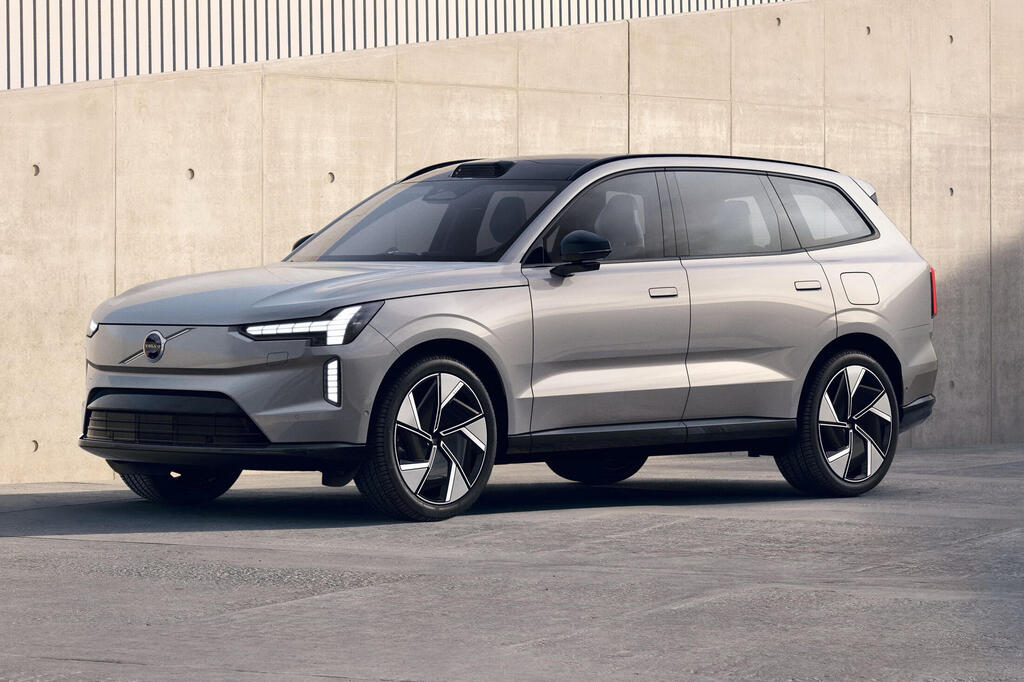
וולוו EX90
The wheelbase of the EX30 is 100” long, 2” shorter than that of its older sibling. The cargo capacity is 318 liters without a spare wheel, and there is an additional storage compartment at the front with a modest volume of only 7 liters.
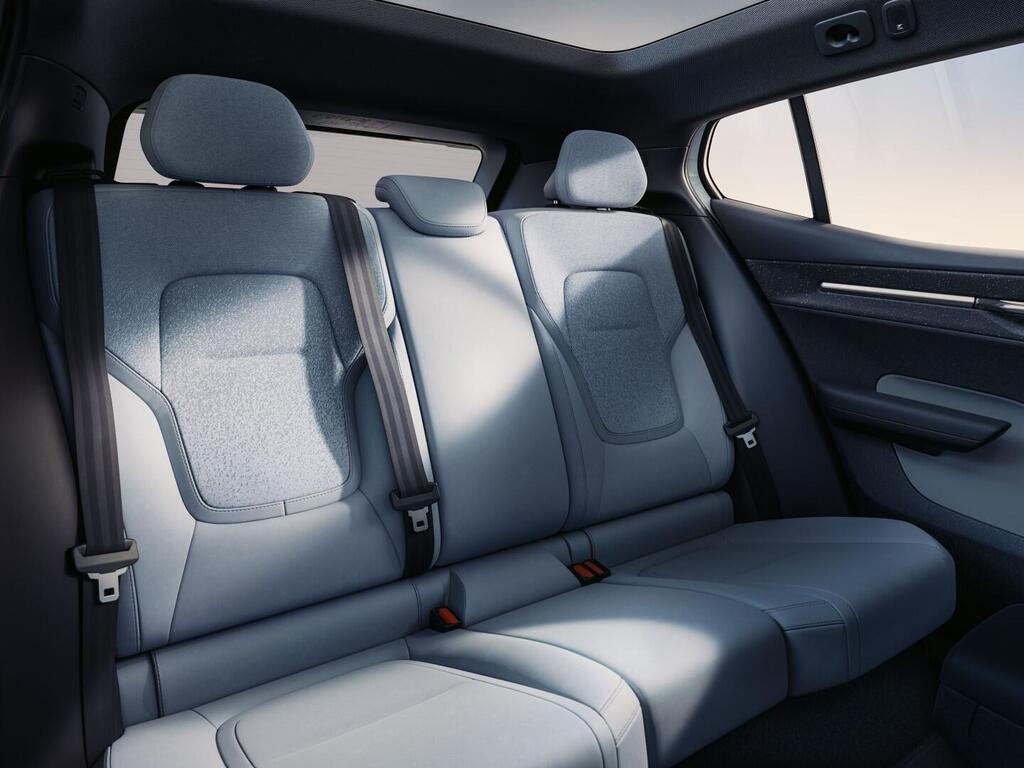
The design continues the current clean lines of the Volvo models, with "Thor's Hammer" headlights at the front, a sealed front, a two-tone paint finish, and leisurely makeup in the form of black skirts and fenders around the car.
Volvo takes pride in the widespread use of recycled materials, which make up 25% of the car's aluminum and 17% of its steel and plastic.
Starting next year, a more adventurous "Cross Country" version will also be offered, with larger ground clearance, 18 or 19-inch rims, and additional "off-road" decorations.
Powertrain: Volvo will market the EX30 with three powertrain options and two battery capacities. The base model will be equipped with a single motor at the rear with an output of 272 horsepower, accelerate to 60 mph in 5.4 seconds, and is fitted with a 51 kWh battery that provides an estimated range of 200 EPA miles.
The mid-range version will offer the same motor but with a different technology for its 69 kWh battery (nickel-manganese-cobalt instead of LFP), with a standing acceleration of 60 mph in 5.1 seconds and a range of 275 EPA miles.
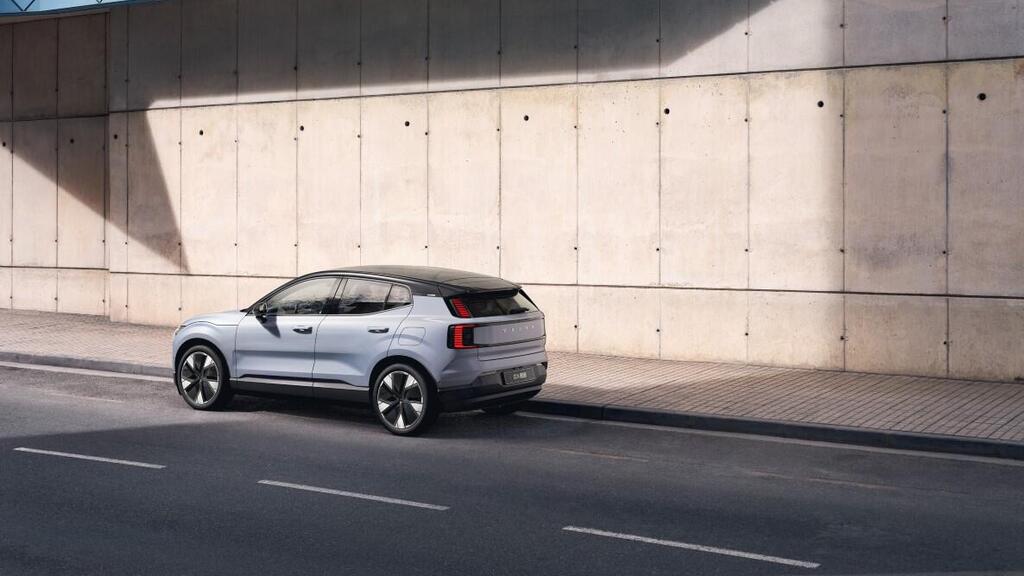
The top-of-the-line version earns the title of "the fastest Volvo in history," as a pair of motors with a power output of 428 horsepower allowing it to accelerate to 60 mph in just 3.4 seconds. The large battery is also offered here, but with a slightly shorter range of 265 EPA miles.
The fast-charging rate will be 134 kW with the small battery or 153 kW with the large battery, and in all cases, the batteries can be charged from 10% to 80% within a time frame of 26-28 minutes. All versions have an impressive towing capacity ranging from 1 to 1.6 metric tons.
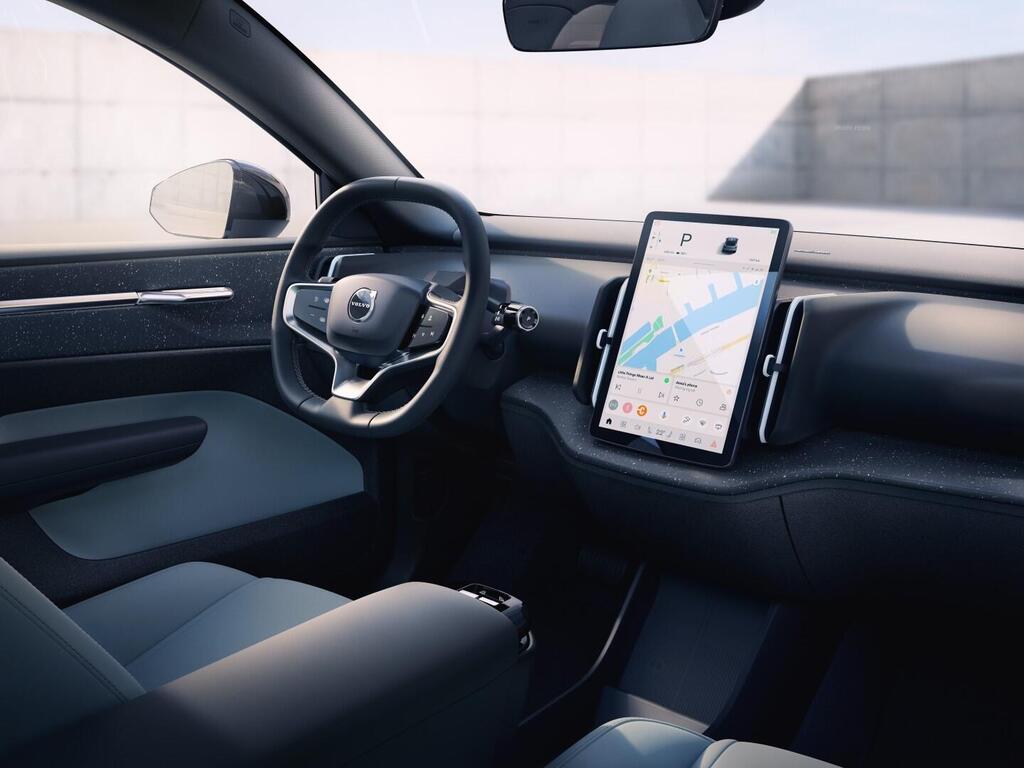
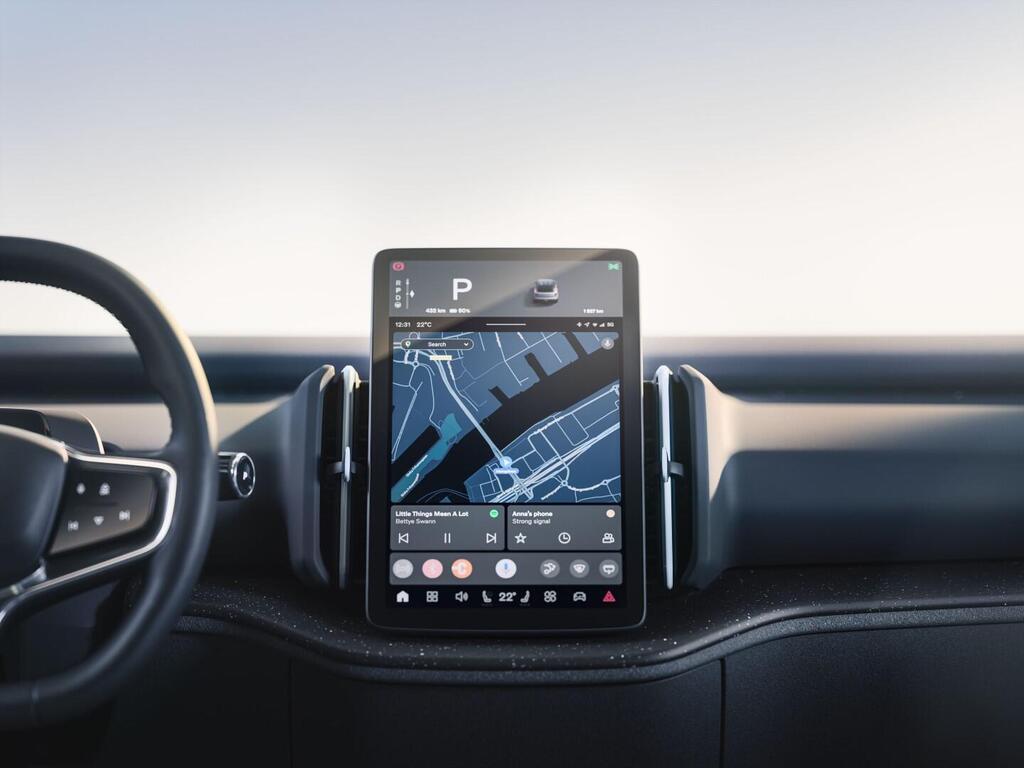
Equipment and safety: The passenger compartment will feature a single vertical touch screen with a size of 12.3 inches, with no separate screen for the instrument cluster.
The built-in Google operating system (except for models to be marketed in China) will allow the use of navigation systems and popular apps from the American technology giant, while Apple CarPlay connectivity will also be available wirelessly.
In addition, a special app will allow remote control of the charging mode, vehicle locking, or locating in parking lots, and OTA updates will be available.
Safety systems will also include a system to prevent doors from opening while passing a bicycle, a two-wheel drive vehicle or even a running person, a system for autonomous evasion with signal activation, and a new generation of automatic parking system, capable of parking the vehicle vertically next to the curb, as well as in diagonal parking spaces.
What we think: The Volvo EX30, a small electric crossover with a competitive price tag, is exactly what the Swedish manufacturer needs, as it has long been looking to rejuvenate its image and appeal to a younger target audience.
However, the EX30 enters a highly competitive arena, which includes not only electric models from European brands such as the Smart 1# or DS3, but also many determined Chinese competitors who want to capture the hearts of young customers. In order to overcome them, Volvo will need to prove that it can maintain the well-known qualities of its brand even in a small and relatively inexpensive model. A low price tag is an excellent start.