


In the middle of the ocean, in the middle of nowhere, a small island suddenly appeared through the helicopter window — the Tamar natural gas platform. A short time earlier, we had taken off from Haifa Port for a point about 90 kilometers, or 56 miles, into the Mediterranean Sea. The destination: one of the targets most threatened by Iran during the war.
After landing on the roof of the platform, crew members escorted us to the middle deck, where the offices and sleeping quarters are located. Workers live there during their shifts, which last for weeks, on the platform.
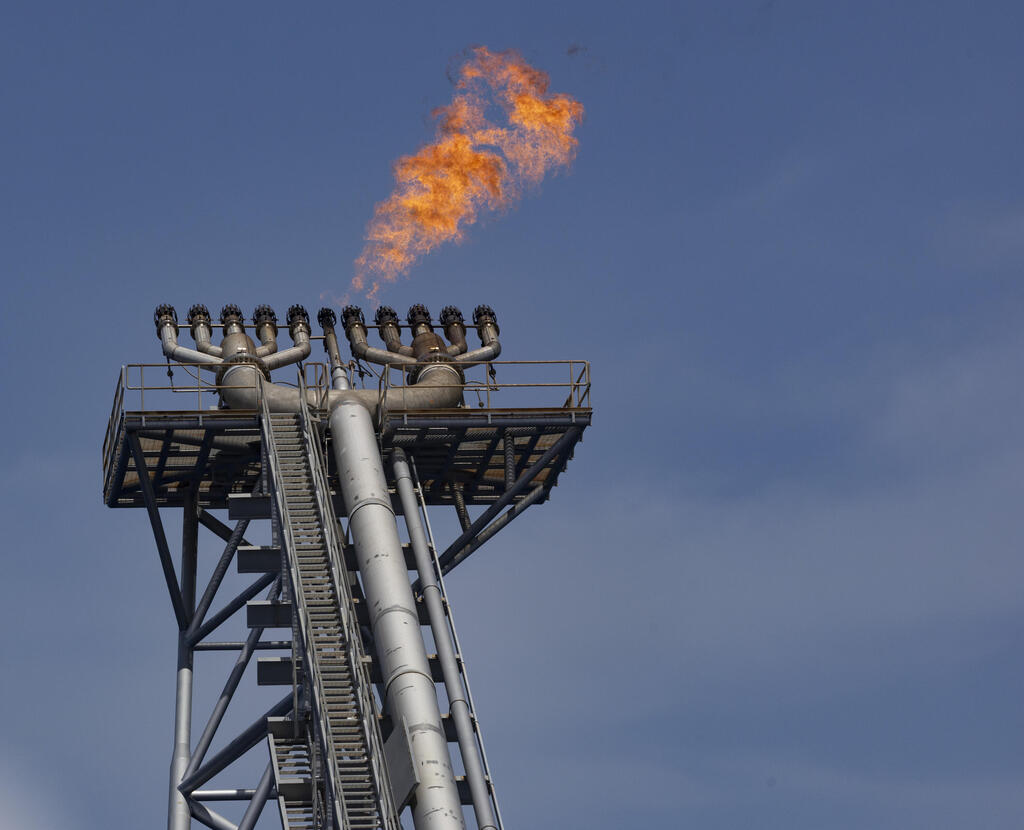
We went through a comprehensive safety briefing and were equipped with long coveralls, a helmet, heavy work boots and protective glasses. From there, we descended steep stairs — not an experience recommended for anyone afraid of heights — and came close to sea level. To cope with the noise of the machines, we put in earplugs and, through a grated floor, watched up close the complex process by which gas is produced.
The Tamar platform, built at a cost of about $3 billion and operational since 2013, has become a central anchor of Israel’s energy sector during this period. During the war, it alone supplied all of the country’s gas consumption, preventing a blackout scenario. The platform is managed by the U.S. energy giant Chevron. It is operated by a skilled team of about 40 people, including engineers, technicians and systems operators from the United States and Israel.
“When there is a drone approaching, you know it is aimed at hitting you,” one worker told us. In such a situation, the emergency system is activated immediately, gas flow is stopped and the pipelines are isolated within seconds. The action is carried out through automatic valves located on the platform and on the seabed, whose purpose is to “trap” the gas inside the reservoir and the undersea pipelines. That way, even if the platform itself is physically hit, it would prevent a massive leak of flammable gas that could lead to a huge explosion and unprecedented damage.
That capability allows the Energy Ministry and Chevron to make quick preventive shutdown decisions whenever there is concern about fire directed at the platform, as happened more than once during the latest campaign. Despite the great danger, the platform continued operating throughout the war.

Bini Zomer, General Manager for Corporate Affairs and Joint Ventures at Chevron Mediterranean
(Photo: Chevrom Mediterranean)
Bini Zomer, General Manager for Corporate Affairs and Joint Ventures at Chevron Mediterranean, described the complex reality his workers faced.
“It is hard to say no one was worried, but we had no doubt that we had to continue working,” he said. “We learned how to operate under fire since Oct. 7, and we already understood that something was going to happen with Iran, so we prepared and moved work forward. The top priority is maintaining the safety of our workers, the environment and the facility. After that, we thought about what was most needed at that moment, and those were the people who remained on the platform, so that we could supply gas to the Israeli economy and also to our partners in neighboring countries.”
Even under the missile threat, dozens of workers remained on the platform. Foreign workers stayed for 28 consecutive days before flying home to rest, while Israeli workers returned home every two weeks.
“There are logistical challenges here, such as bringing people in and out when there are no flights and bringing in foreign contractors,” Zomer said. “It is also more expensive, but mainly it is about explaining to someone coming from abroad that it is OK to be here. Chevron works in more than 100 countries around the world. It has very strong ties with contractors worldwide, and still, many foreign contractors did not want to come to Israel since Oct. 7. In the end, because Chevron is seen as a reliable company, they agreed to come and lay a 150-kilometer, or 93-mile, pipeline during wartime — which allowed us to reach Tamar’s peak production.”
Lost revenues and a surge in electricity costs
During Operation Roaring Lion, Israel’s energy sector became one of Iran’s main targets, as Tehran sought to plunge the country into darkness by striking strategic facilities.
Iranian officials clearly identified Israel’s growing dependence on natural gas, which accounts for about 70% of the country's electricity generation, and realized that hitting offshore gas platforms could paralyze the country’s economic activity. In this way, Israel’s energy abundance also became a point of vulnerability.
Bazan oil refinery complex in Haifa sustains direct hit from Iranian projectile


Last month, the Bazan oil refinery complex in Haifa sustained direct hits from Iranian barrages. At the same time, drones and missiles were launched toward the gas platforms in Israel’s economic waters.
The threat forced Israel’s defense establishment into a difficult balancing act: keeping active platforms online carried the risk of a catastrophic strike, while shutting them all down could have immediately disrupted electricity supplies and forced the country to rely on costlier, more polluting fuels.
The decision to close two of the three gas platforms for an extended period carried a heavy economic price and left open questions about Israel’s energy preparedness for future confrontations.
According to a report by the consulting firm BDO, written by chief economist Chen Herzog, the shutdown of the gas fields caused the Israeli economy about 1.5 billion shekels, or roughly $400 million, in damage in just four weeks. The main reason was a roughly 22% surge in electricity costs as a result of the shift to more expensive and polluting fuels such as coal and diesel.
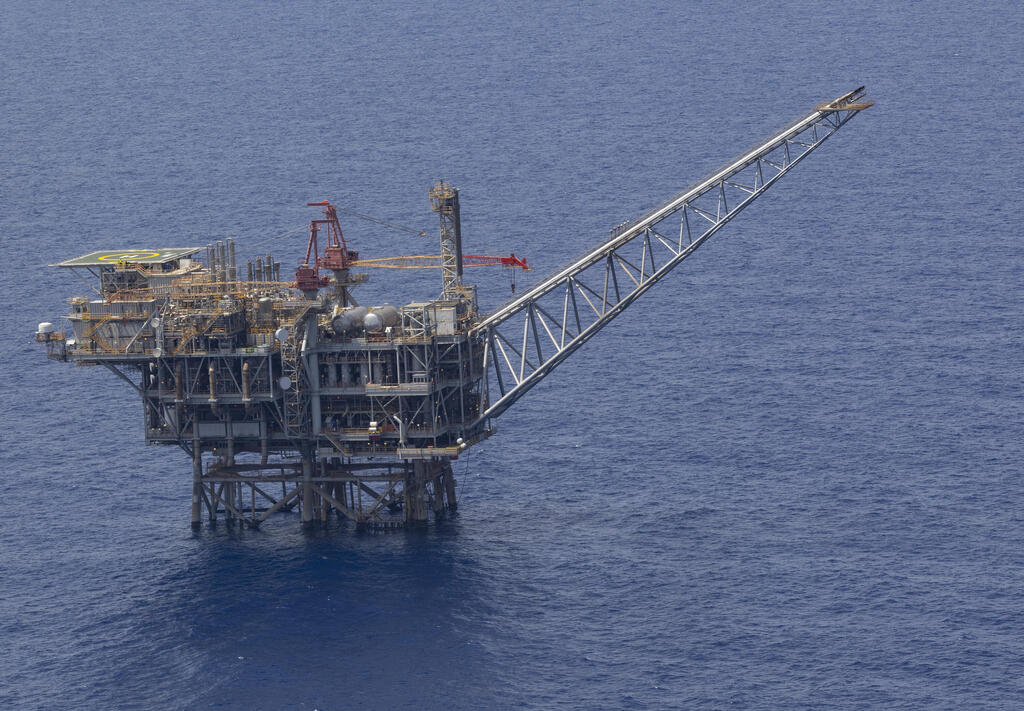
The Tamar natural gas platform
(Photo: Gil Nechushtan)
The report also pointed to about 400 million shekels, or roughly $110 million, in lost state revenues from royalties and taxes, as well as about half a billion shekels, or roughly $135 million, in lost output because of the decline in gas companies’ profits.
Most of the gas produced from Tamar is intended for the Israeli market, unlike the Leviathan field, where a significant share is designated for export to Egypt and Jordan. The dependence of Israel’s two neighbors on Israeli gas is enormous: Egypt is already dealing with a severe energy crisis, including planned blackouts.
During the war, Egypt and Jordan exerted heavy pressure on Israel and the United States to renew the gas supply, fearing a collapse in electricity supplies, mass protests and damage to regime stability.
Despite criticism from industry officials, Energy Minister Eli Cohen says the episode was a success story. “Throughout the war, the energy sector functioned flawlessly,” Cohen said.
“The forecasts for the energy sector spoke of the possibility that infrastructure and energy facilities would be hit in a way that would lead to power outages. They said there would be power outages for 48 hours. They asked me whether people would need to buy generators, and I said no, that we would be able to supply the economy’s needs — and indeed Israelis lacked neither gas, nor water, nor electricity.”
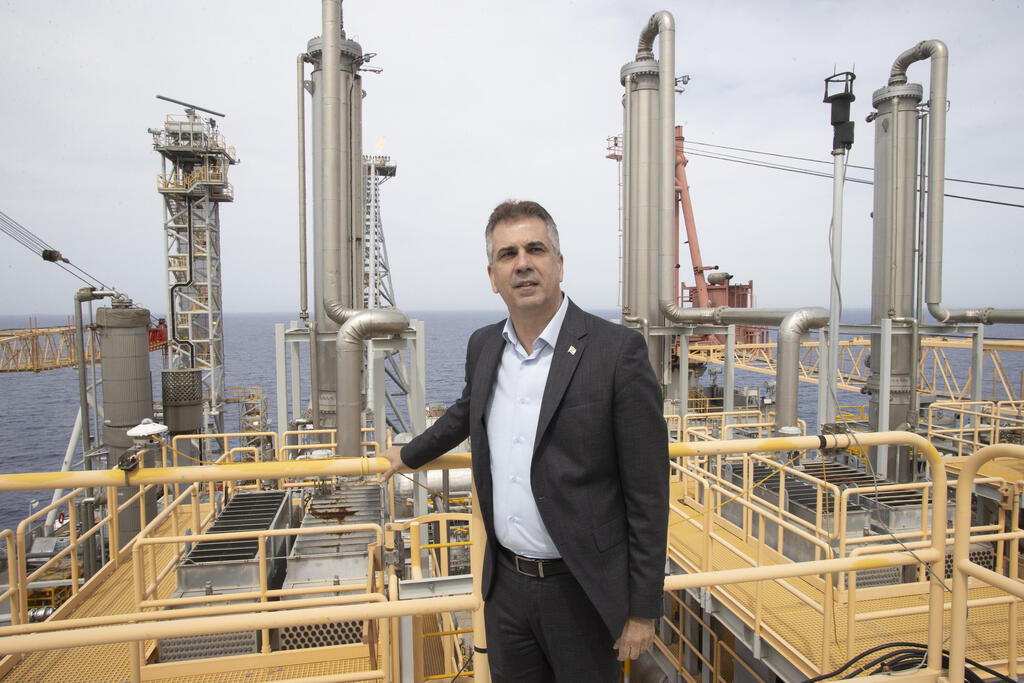
Energy Minister Eli Cohen
(Photo: Gil Nechushtan)
Cohen said there is an understanding that “Israeli gas is also very important for regional stability, because of the dependence Egypt and Jordan have developed on it, but risk management was needed, and the needs of the Israeli economy were always the top priority.”
The Tamar platform operates like a “floating factory,” made up of a complex network of tanks and processing towers that separate sand and liquids from the gas, while beneath the water, a remotely controlled technological “highway” is in operation.
The gas is produced from geological layers about 5 kilometers, or 3 miles, below sea level, where enormous pressure and high temperatures prevail. From there, it enters an underwater system of wellheads on the seabed, at a depth of 1,700 meters, or about 5,600 feet, and begins a 150-kilometer, or 93-mile, journey through giant pipelines laid on the seabed until it reaches the processing platform off Ashkelon.
Directly across from us, we can see the veteran Mari-B platform. It once supplied gas from the Yam Tethys reservoir and was taken out of service in 2013 when the field was depleted. Although it no longer produces gas, it remains an important logistical asset for Chevron and serves as a lodging and storage facility for work crews, who travel between it and the Tamar platform by small vessels.
For Chevron, Tamar is a massive profit engine feeding the local market and export agreements with Egypt and Jordan. But its presence there also gives Israel a kind of “American immunity” against security threats. The Leviathan platform, also operated by Chevron, resumed work only on March 24, almost a month after the war began. The Karish platform, operated by the British company Energean, remained shut down until the ceasefire took effect on April 8.
Investor concerns
The sequence of events and the decision-making process have raised questions about stability and predictability in the gas sector. On one hand, major industrial facilities such as Bazan continued operating. On the other, decisions were made to fully shut down offshore gas platforms, at times without detailed explanations or clear criteria. That was despite the enormous investment in protecting the platforms, estimated at about 3 billion shekels, or close to $1 billion, including the purchase of naval defense vessels from Germany and a range of advanced technologies.
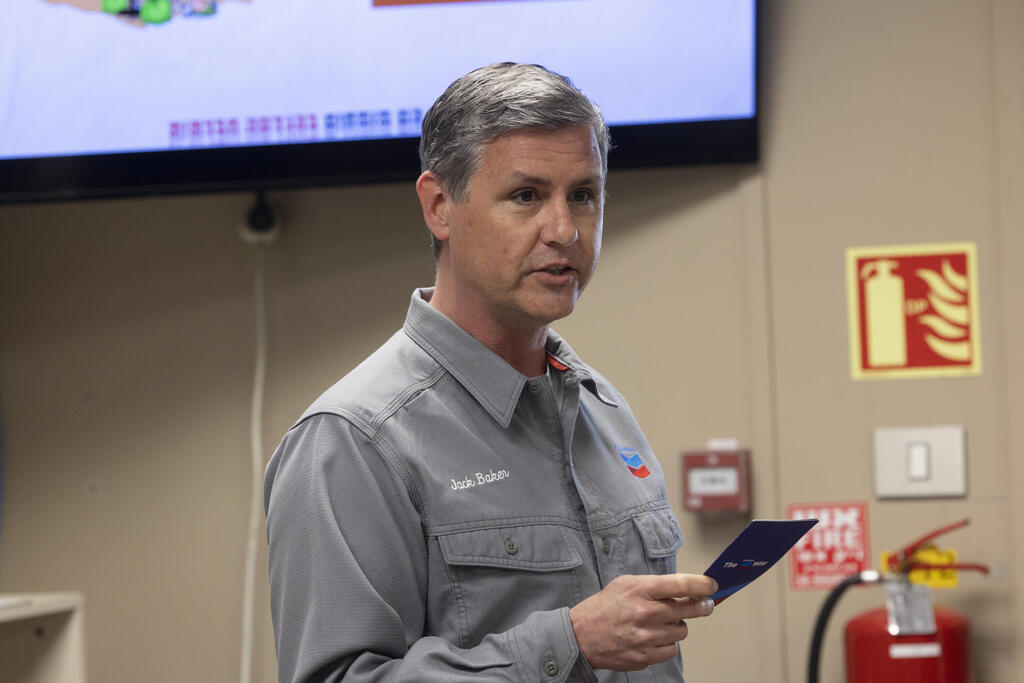
Jackson Baker, managing director for the Eastern Mediterranean at Chevron
(Photo: Gil Nechushtan)
The gap between the operating decisions remains disputed. Government officials attribute it to security considerations and the need to maintain energy continuity, while market sources point to the identity of the operators as a decisive factor, suggesting that platforms operated by U.S.-based Chevron were given priority over those operated by Britain’s Energean.
The Energy Ministry prioritized gas supplies for the Israeli economy. But a reality in which other platforms remain closed for weeks also affects the state’s ability to attract new investment. At a time when Israel is trying to draw international energy companies into new offshore exploration, weeks-long shutdowns risk sending a message of uncertainty about how the sector will be managed in the next crisis. For foreign investors, that kind of unpredictability could be seen as a significant risk and could damage the local market's appeal.
Cohen offers a different assessment. “I think foreign companies will continue to come here,” he said. “They will understand that we acted for safety reasons, based on professional considerations, and that we have high-quality defense systems capable of withstanding these threats. Energy facilities in Gulf states suffered far more severe damage, and fortunately that did not happen here.”
Cohen said the platforms’ locations determined which were kept open and which were shut down. “No one knew how the war would develop or when it would stop,” he said. “We were even prepared for the platforms to be shut down for a longer period, and we barely touched our reserves.”
Energy Minister Eli Cohen: "Natural gas is a strategic asset that brings billions into the state, lowers prices for consumers and contributes to regional stability. Therefore, my policy is to expand gas exploration."
A full platform shutdown carries broad economic and operational consequences. Still, the gas companies have not received an answer on financial compensation for losses estimated at hundreds of millions of shekels. Questions are also being raised over whether Israel will shut down the platforms every time the missile threat returns, and how billions of shekels spent on protecting them were not enough to allow operations to continue during wartime.
“We acted in accordance with the instructions of the Navy and military intelligence in order to minimize damage,” Cohen said. “I don’t know whether we will act the same way next time. In every event, we will have to manage the risks accordingly. The decision to shut down the platforms was made to protect them.”
He added that the gas itself had not been lost. “The gas remains in the fields, and the companies will continue extracting it now that they are active,” Cohen said. “We received a request for compensation from the companies. This is a legal issue, and we will examine whether it is justified or not and decide accordingly. Natural gas is a strategic asset that brings billions into the state, lowers prices for consumers and contributes to regional stability. Therefore, my policy is to expand gas exploration.”