

Oil prices plunged sharply following Wednesday night’s announcement of a ceasefire between the United States, Israel and Iran. Just hours earlier, as U.S. President Donald Trump’s ultimatum neared expiration, prices had surged above $110 a barrel: West Texas Intermediate (WTI) traded around $114 and Brent around $111. Immediately after the announcement, prices fell by nearly 20% to about $90, and are now trading near $96 for both benchmarks.
The war and the closure of the Strait of Hormuz had driven global oil prices up by more than $70 a barrel. In March alone, oil jumped 51% — the second-largest monthly increase since futures trading began in 1983. Gasoline prices in the United States crossed $4 per gallon, while a range of other costs, from food to airfare, rose in tandem.
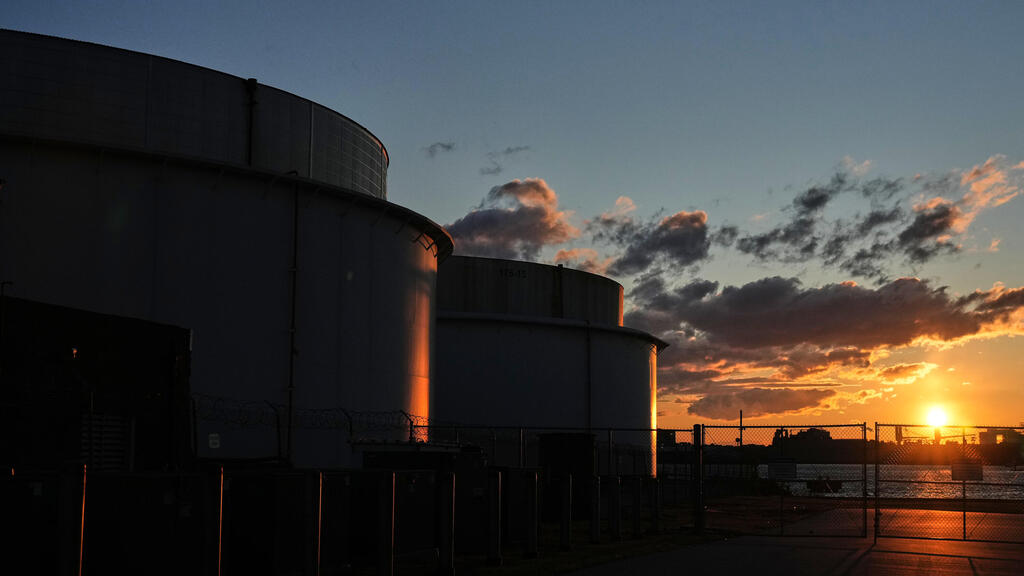
Crude oil stored in Baltimore, Maryland
(Photo: AP Photo/Stephanie Scarbrough)
Market fears centered on the possibility that prolonged disruption from the conflict would keep oil prices elevated and trigger a wave of inflation across the global economy. Trump’s threats to strike Iran’s power infrastructure heightened investor concerns.
According to the Associated Press, the current plan may allow Iran and Oman to charge fees on vessels passing through the Strait of Hormuz, based on a regional framework. Trump said the United States would help manage traffic congestion along the route. U.S. and Iranian representatives have been invited to meet Friday in Islamabad to continue negotiations toward a “final agreement,” Pakistani Prime Minister Shehbaz Sharif said.
Despite the recent drop, prices are not expected to return soon to prewar levels. “It would take something truly tremendous for us to get back down below $80 a barrel,” Jason Schenker, president and chief economist at Prestige Economics, told Bloomberg. “But almost anything going wrong in these ceasefire talks could very quickly put us back above $100.”
The near-total closure of the strategic shipping route — which typically carries about one-fifth of the world’s oil and liquefied natural gas supply — has rattled energy markets. WTI crude remains more than 40% higher than before the conflict erupted in late February. U.S. administration estimates suggest reduced shipments could keep more than 9 million barrels off the market during April.
“This was a market that had been starved of good news,” Josh Gilbert, an analyst at eToro, told Bloomberg. “We’ve seen an instant selloff in crude, pulling back 16% to under $100 as markets price in the prospect of the Strait of Hormuz reopening. It goes to show how much geopolitical risk was baked into crude, and how quickly it can unwind when there’s a credible path to de-escalation.”
The easing of tensions also led to a surge in trading volumes. About 240,000 Brent contracts changed hands in the first hour of trading, compared with just a few thousand in a typical session. Still, physical traders remain cautious, waiting for clearer signs that the ceasefire will hold before seeking cargoes from the Gulf.
“Oil can fall further as key details of a ceasefire deal are provided to the market,” said Vivek Dhar, an analyst at Commonwealth Bank of Australia. “How much Iran pushes its hand will be closely watched and may limit further material falls in oil prices.”
European natural gas prices, which saw strong demand during the conflict, also fell sharply, down about 20% to roughly €44 per megawatt-hour. Since the war began and the Strait of Hormuz was closed — a route for roughly one-fifth of global oil and LNG supply — European gas prices had risen about 55%. The crisis was exacerbated by historically low gas reserves in Europe, at just around 30% of capacity after a harsh winter, pushing the Dutch TTF benchmark above €60 per megawatt-hour in mid-March.