

When President Donald Trump visited Israel following the war and addressed the Knesset, Galit Meyran, CEO of the Israel-America Chamber of Commerce (AmCham Israel), watched from her Tel Aviv home with a smile “wider than the Mississippi.” Appointed just months earlier, she saw the timing as nothing short of ideal.
“My husband Gil saw how I lit up at every sentence Trump said about his vision for the region and told me, ‘I know exactly what you're thinking,’” she recalled. “The momentum was incredible — I couldn’t have hoped for better professional timing.”
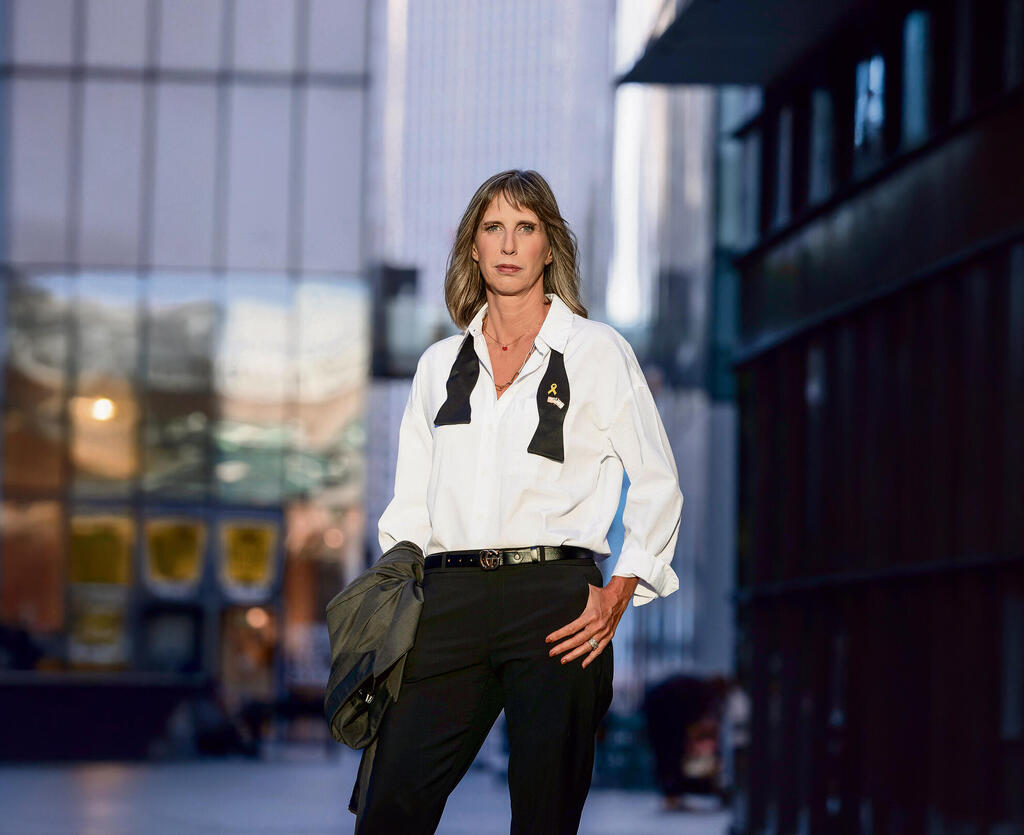
(Photo: Avigail Uzi)
Two weeks later, under a ceasefire and renewed talk of regional cooperation, Meyran was at the White House participating in roundtable talks with senior U.S. officials, including representatives from the State and Commerce Departments. She describes the mood in Washington as one of unambiguous optimism, fueled by Trump’s push to revitalize U.S.-Israel ties and expand the Abraham Accords.
Now, speaking for the first time since assuming her post in July, Meyran is revealing a surge in interest from major American companies looking to do business in Israel. “There’s an enormous appetite in the U.S. to collaborate with Israeli innovation — across tech, defense, agriculture, health, energy and infrastructure,” she said.
AmCham Israel, under her leadership, represents over 150 firms — from multinationals like Microsoft, Google, Amazon, Chevron and Citibank to Israeli giants such as Teva, Amdocs and Strauss, along with hospitals, academic institutions and startups.
“We’re not lobbyists or dealmakers,” she said. “But we’re the central platform linking Israeli private industry with U.S. counterparts. We work directly with American economic attachés and federal agencies to help Israeli firms break into the U.S. market and overcome regulatory hurdles.”
One major issue currently on the agenda is Trump’s new 15% tariff on Israeli-manufactured goods. Meyran said AmCham is actively working with Israel’s Economy Ministry and U.S. officials to address the issue.
“There’s a shared interest in reducing these tariffs,” she said. “The talks have been positive, and we’re hopeful for a solution.”
Amid tensions with local U.S. officials — including New York City Comptroller Brad Lander’s call to cut business ties with Israel — Meyran remains undeterred. “Macroeconomic policy is set in Washington, not by city governments,” she said. “Our ties in New York remain strong. Boycotts won’t work — and they won’t last.”
She also brushed aside political noise from progressive U.S. candidates critical of pro-Israel groups, saying, “We’re focused on business, not politics. We care about return on investment, not headlines.”
Looking ahead, a major Israeli economic delegation is scheduled to visit the U.S. in early 2026 to deepen ties in trade, tax policy and investment. Meyran said top areas of U.S. interest include defense tech, artificial intelligence, infrastructure and healthcare innovation.
Joint U.S.-Israel health programs are already saving lives, she said, including tumor board consultations to improve cancer treatment outcomes and Ultrasight — an AI-driven cardiac diagnostic tool developed by Weizmann Institute and NYU that allows non-technicians to perform ultrasounds.
A former senior executive at Teva, Meyran, 52, is a mother of four and married to an El Al pilot. She said the transition from the pharmaceutical industry to leading AmCham came at the right time. “Teva was a great chapter, but I was ready to lead — and to serve the country.”
Despite previously serving on AmCham’s board, she stresses she earned her role. “I went through six interviews like everyone else.”
With strong support from her family, Meyran said her home has always encouraged ambition. “My kids told me, ‘Run forward. Be everything you want to be. We’ll be fine.’ That’s the message I pass to the next generation.”
Her daughter, she proudly notes, is now in pilot training — “and when the school invites parents to speak about their jobs, my kids always say, ‘We’re bringing Mom.’”
On the issue of women in leadership, Meyran is candid: “In 2025, it’s improving — but not enough. Women hesitate to apply unless they meet 100% of the criteria. Men don’t.”
She urges women not to hold back. “This is a global world. If your company is global, travel is part of the job. Say yes. Your kids are watching. Equality starts at home.”