

The labor shortage that worsened after the start of the war in Gaza is transforming Israel’s retail and food production sectors. In major supermarket chains such as Shufersal, Rami Levy and Hatzi Hinam, workers from Thailand, Sri Lanka and India can now be seen stocking shelves, arranging produce and even serving in butcher departments. This follows the government’s allocation of quotas allowing businesses to independently bring in foreign workers for commerce and industry.
The industrial sector, including food production, received a quota of about 18,000 foreign workers over the past year, According to Calcalist. The commerce and services sector, which includes supermarket and fashion chains, was allotted more than 26,000 workers. Some have already arrived in Israel and begun working, while others are still in recruitment and training stages.

Foreign worker recruitment is usually done through bilateral agreements. But because Israel has not yet signed such agreements with several countries, companies must obtain approval to bring in workers privately. This method allows firms to hire specialized recruitment agencies to find suitable candidates. Carrefour went further by sending an Israeli team to Thailand to conduct in-person interviews with thousands of applicants. Selected candidates entered a training program at a local supermarket, learning tasks such as meat cutting and shelf stocking, as well as basic Hebrew vocabulary to help them communicate upon arrival in Israel.
Carrefour Israel CEO Michael Luboshitz said the company’s decision to manage recruitment and training directly was made in line with Carrefour’s global standards. “We want to meet each candidate to ensure they fit our needs and can meet Carrefour’s expectations, especially in the fresh produce departments,” he said. “By training them in their home country, they can integrate immediately upon arrival.”
Filling the gaps left by local workers
Among the first to benefit from the new policy were poultry processing plants, which traditionally employ Palestinian and Arab Israeli workers. Many struggled to maintain consistent attendance after the war began. They were followed by major food producers such as Tnuva, Osem, Neto, Baladi and Mey Eden.
The retail and services sectors, covering supermarket chains like Shufersal, Rami Levy, Yohananof, Victory, Carrefour and Machsanei HaShuk, were also granted quotas for foreign workers for the first time. Quotas were distributed not only to food retailers but also to fashion and leisure chains. Fox received 160 workers, discount chains Jumbo and Max Stock were allocated dozens each, and H&M brought in 100.
“We finally have workers who want to work”
Employers describe the shift as a major relief. “We got workers who actually come to work,” said the CEO of a major retail chain. “No more morning calls from store managers saying five cashiers called in sick. The workers are focused, there are no arguments, and productivity is up.”
A food company executive echoed that sentiment, adding that shrinkage from damage and theft has dropped significantly. Still, employers acknowledge challenges stemming from language barriers, which limit foreign workers to basic tasks to avoid safety risks.

Five cashiers called in sick
(Photo: Gettyimages)
While business owners appreciate the improved reliability, they complain about high employment costs. “Since Palestinian workers were barred from entering, the shortage worsened, leaving us no choice but to hire foreign workers,” said one major company CEO. “But the state shouldn’t burden us with excessive costs. We pay minimum wage while in Dubai they pay a third of that, and on top of that we’re hit with taxes and fees that drive expenses up.”
Heavy financial burden on employers
Recruitment starts with a one-time registration fee of 360 shekels per worker and a bank guarantee of 8,500 shekels. Each year, companies must renew visas for another 8,500 shekels per worker. Additional expenses include service fees, around 2,000 shekels monthly, to agencies that manage workers’ housing and banking needs. From their paychecks, employers can deduct between 305 and 560 shekels for housing, depending on location, 107 shekels for utilities, and 77 shekels for medical insurance, which costs 234 shekels per month.
Despite the financial strain, demand for foreign workers remains strong. “We hired 100 workers out of a 300-person quota, and if I could get 2,000 more, I’d sign right now,” said one retailer. “There’s simply no alternative because Israelis don’t want to work in supermarkets.”
Expanding quotas to meet demand
A growing shortage of truck drivers has also been reported, though hiring them requires special approval from the Transportation Ministry. As the labor crisis deepened, the government approved an additional quota in July 2024 for the commerce and services sectors. The quota took effect two months later, and in November, the Economy Ministry invited employers to apply for permits. About 700 companies employing 115,000 Israelis requested a total of 32,000 foreign workers.
Ultimately, 6,400 permits were distributed: 950 for auto garages, 450 for cleaning companies, and the remainder among retailers and service providers. About 2,000 foreign workers have already arrived, with another 2,000 expected soon.
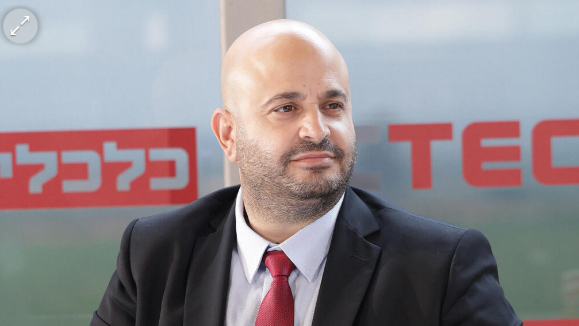
Economy Ministry Director-General Moti Gamish
(Photo: Orel Cohen)
In response to the growing demand, Economy Ministry Director-General Moti Gamish approved an expanded quota of 19,800 workers for the commerce and services sectors, in addition to unused slots from earlier rounds. Of these, 13,500 are under private recruitment and the rest under bilateral agreements still being negotiated. The new allocation includes 9,800 workers for retail and services, 3,000 for cleaning, 2,000 for event halls and 900 for building services.
Gamish said, “The Economy Ministry considers foreign worker recruitment essential to maintaining Israel’s growth and productivity. Over the past year we have worked to expand quotas and bring thousands of new workers to Israel. Yet there is still a significant shortage across industries. We are streamlining recruitment processes and reviewing fees to ease the burden on employers. Our goal is clear: to ensure a stable, skilled workforce that allows Israeli businesses to continue growing and competing globally.”