


Your first weeks in Israel often come with small financial surprises. A card is declined when it should work. A fee appears on your account without warning. A landlord asks for a document you have never heard of.
This is Part 1 of a two-part guide to help you navigate those early challenges and avoid common financial mistakes. Most of these moments come down to one thing, the system works differently.
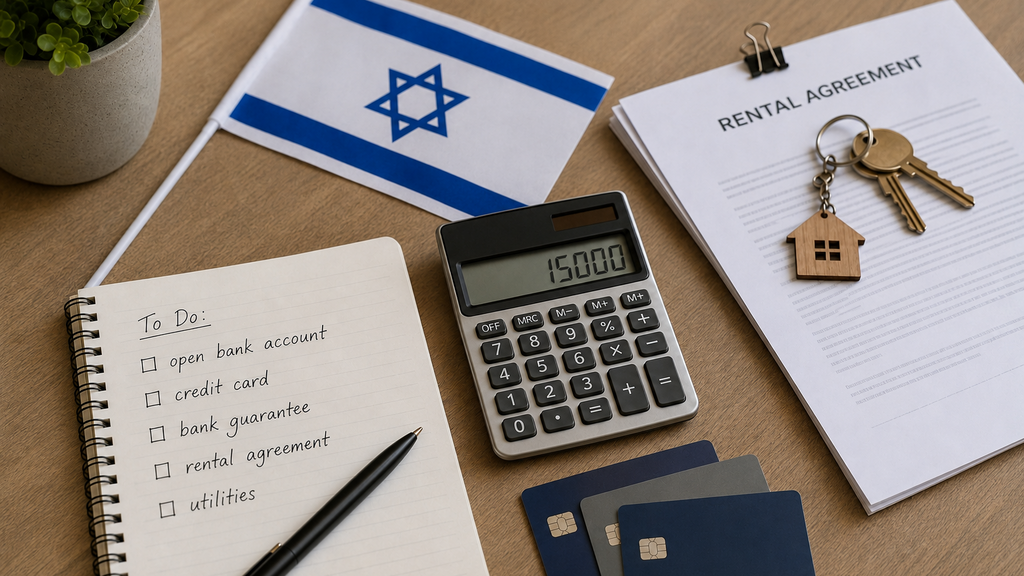
Gila Yosef, a veteran bank manager who has worked with new immigrants across several branches and now heads Bank Leumi’s Netanya branch, has spent years helping newcomers navigate those gaps through outreach programs and one-on-one guidance. “The things that seem obvious to Israelis are not obvious to olim,” Yosef said. “They are new to the country and don't necessarily know how to deal with the bureaucracy behind the financial system".
Credit cards do not work the way you think
One of the biggest misunderstandings is how credit cards operate in Israel. Charges are usually collected automatically in full on a fixed date the following month. “Olim don’t always understand this process,” Yosef said. “They buy something and come back to the bank stressed, saying, ‘I didn’t pay.’ We explain that all the credit card purchases will be charged automatically.” This gap often leads to confusion in the first weeks. A new immigrant might make several purchases, see no immediate deduction and assume nothing has been charged, only to be surprised when the full amount is withdrawn at once on the billing date.

'The things that seem obvious to Israelis are not obvious to olim'
(Photo: Shutterstock)
Yosef’s advice is to learn as early as possible how the credit card billing cycle works. Know your billing date, check your available credit regularly and keep track of spending from the start. Even if you divide a purchase into installments, the total amount still counts against your card limit until it is repaid. She also recommends reviewing your first monthly statement carefully, ideally with a banker, to understand how transactions are listed, when they are processed and how installment payments appear.
Another key point is to avoid relying on assumptions from your home country. In Israel, things often work differently. Missing the billing date or misunderstanding how charges are grouped can quickly lead to an overdraft exceeding the credit limit, or even transactions being declined as a result. Taking the time to understand how your card works in the first month, Yosef said, can prevent many of the most common and costly mistakes later on.
A credit limit is not a payment plan
Another common mistake is focusing only on the monthly installment rather than the total transaction. “They don’t understand why they can’t make a 15,000 shekel purchase if they are only paying 1,000 a month,” Yosef said. This confusion often stems from the way installment payments are presented. While the monthly charge may seem manageable, the credit card company still considers the full amount of the purchase when checking whether it fits within the card’s limit.
To avoid this, Yosef advises thinking in terms of total available credit, not just monthly payments. Before making a large purchase, check how much credit remains on your card, not how much you expect to pay each month. She also recommends leaving a buffer rather than using the full limit. Ongoing charges such as subscriptions, phone bills or standing orders can reduce available credit without always being top of mind. If the limit is fully used, even small additional transactions may be declined.

Shopping
(Photo: Yael Ciechanover)
This is often explained by separating the concepts clearly. The credit card limit is the ceiling for total spending, while installments only determine how the payment is spread over time. Understanding that distinction early can help prevent frustration at the point of purchase. Yosef also encourages new immigrants to monitor their accounts regularly through the banking app, which in bank Leumi exclusively is available also in English and allows users to track transactions, check limits and see upcoming charges in real time.
For many, using the app in English makes it easier to understand how the system works and avoid mistakes. If anything is unclear, she recommends asking for a breakdown of the account structure and reviewing the first statements with a banker. A short meeting in the first month, she said, can help clarify how limits, installments and billing cycles interact, and reduce the risk of hitting the limit unexpectedly.
Renting may require a bank guarantee
Many new immigrants are surprised when landlords ask for a bank guarantee instead of a standard security check. “While requesting a bank guarantee (rather than a postdated cheque for instance) is quite common in Israel, it might not be so widespread in other countries and many “olim find this confusing,” Yosef said. A bank guarantee usually means setting aside a significant sum of money, often equivalent to several months’ rent, which the landlord can claim under certain conditions without the prior consent of the renter. For someone new to the country, this can feel both unclear and financially restrictive.
To prevent delays or missed opportunities, Yosef advises addressing the issue early in the rental process. Do not wait until you have already chosen an apartment. Ask the landlord in advance what type of guarantee is required and provide those details to your bank before signing any legal document. Banks often step in to explain the requirement and, in some cases, coordinate directly with landlords to ensure the wording and conditions are correct. This can help avoid back-and-forth and reduce the risk of losing the apartment due to technical issues.
 Gila Yosef, Netanya Branch manager at Bank Leumi Photo: Micha Loubaton
Yosef also stresses the importance of understanding the terms of the guarantee. Know exactly how much money needs to be set aside, how long it will be held and under what conditions it can be used. For new immigrants managing limited funds, locking away a large sum can affect their overall budget, so it is important to plan accordingly. If the requirement is difficult to meet, she said, it is worth asking the bank about possible alternatives or structured solutions.

'Ask the landlord in advance what type of guarantee is required'
(Photo: Shautterstock)
In some cases, banks can help find ways to meet the landlord’s conditions without placing unnecessary strain on the customer. Taking the time to clarify these details early can make the difference between securing a rental smoothly and facing last-minute complications in an already stressful transition period.
The first financial steps in Israel often come with a learning curve. Credit cards, rental requirements and basic account management may look familiar, but they operate under different rules.
Understanding those differences early can help prevent the most common and costly mistakes. As Yosef puts it, “It’s a different world. They need guidance.” Taking the time to ask questions and review the basics in the first weeks can make the transition smoother and more predictable.
Coming up in Part 2: Fees, everyday banking pitfalls and how to manage your money across currencies in Israel.
In cooperation with Bank Leumi
The provision of the services described is subject to the Bank’s terms and conditions; failure to meet loan or credit repayment obligations may result in the accrual of default interest and the initiation of enforcement proceedings
Services are given only in Israel
First published: 17:41, 05.17.26