

Oil prices plunged Wednesday following the Democratic Party's sweeping victory in the U.S. midterm elections and remarks by Vice President JD Vance blaming the Republican defeat on the war with Iran, while Israeli stocks fell sharply amid concerns over political uncertainty and regional security.
Brent crude, the international oil benchmark, dropped about 9% to $94 a barrel, while U.S. West Texas Intermediate crude fell roughly 8% to $88 a barrel.
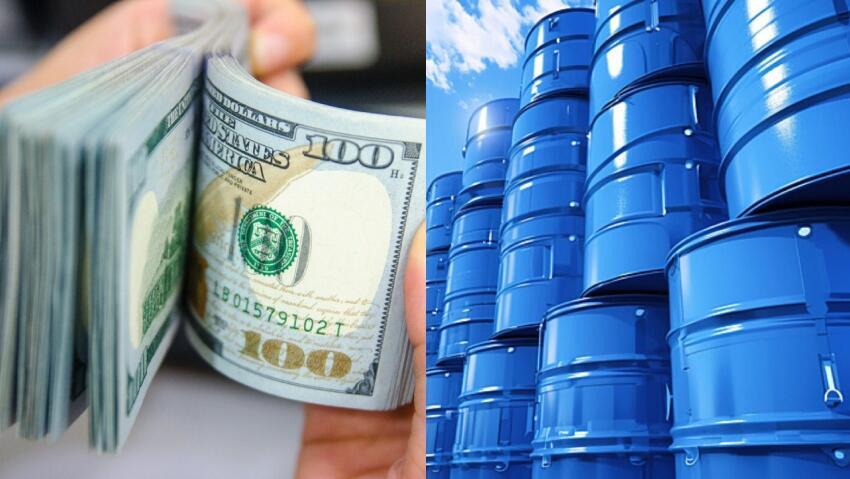
The selloff followed comments by Vance, who said the war with Iran was the principal reason Republicans lost control of Congress. His remarks appeared to reinforce expectations that the Trump administration could face mounting political pressure to bring the conflict to an end, potentially easing concerns about disruptions to global oil supplies.
In a lengthy post on X, Vance said polling had identified four main reasons voters who supported President Donald Trump in 2024 switched to the Democrats: the war, inflation and the cost of living, dissatisfaction with the administration's commitment to putting America first and Washington's relationship with Israel.
"The reason we lost is the war," Vance wrote, adding that Trump himself had acknowledged the conflict's political consequences.
Wall Street rallies as Democrats take Congress
U.S. stocks surged Wednesday as investors welcomed the election results, with major indexes posting strong gains following the Democrats' victory.
The Dow Jones Industrial Average rose 2.4% to 53,025 points, while the S&P 500 climbed 1.7% to 7,697. The technology-heavy Nasdaq Composite gained 2.1% to 25,892.
The Cboe Volatility Index, widely known as Wall Street's fear gauge, plunged 14.2% to 17.9, signaling a sharp decline in expected market volatility.
According to Reuters, investors were reacting to the Democrats' capture of majorities in both the House of Representatives and the Senate. CNBC reported that Trump's acceptance of the election results had helped remove a significant source of political uncertainty.
Technology giants led the rally. Amazon surged 7.2%, Microsoft gained 5.5%, Apple rose 5.2%, Alphabet advanced 3.5% and Meta climbed 1.5%.
Intel, however, slipped 1.2%.
Israeli companies listed on Wall Street delivered mixed performances.
NICE fell 5.7% to $100.20 following its earnings report, while defense contractor Elbit Systems declined 3.3%. Pharmaceutical giant Teva lost 1.2% and semiconductor equipment maker Nova slipped 0.9%.
Other Israeli technology stocks advanced, with Wix gaining 3.9%, Monday.com rising 3.5% and cybersecurity company Check Point climbing 1.2%.
Tel Aviv stocks slide nearly 2%
Israeli equities moved in the opposite direction from Wall Street, closing sharply lower Wednesday as investors weighed the implications of the U.S. election results alongside domestic political uncertainty and regional security risks.
The benchmark TA-35 index fell 1.96% to 3,969.53 points, while the broader TA-125 dropped 1.86% to 3,849.08. The TA-90 index, which tracks smaller companies, declined 1.9% to 3,484.82.

(Photo: Shutterstock)
At their lowest levels during the afternoon session, the major indexes were down more than 2%, although losses moderated slightly before the close.
The declines extended across nearly every major sector.
Defense stocks fell 2.81%, while the insurance index dropped 2.59%. Clal Insurance lost 3.17%, Phoenix Holdings declined 2.89%, Harel Insurance shed 2.6% and Migdal Insurance fell 2.53%.
The financial sector declined 1.95%, real estate stocks dropped 1.8% and the banking index lost 1.41%.
Among major banks, Israel Discount Bank fell 1.87%, Mizrahi Tefahot declined 1.51%, Bank Leumi lost 1.39% and Bank Hapoalim slipped 1.37%.
Real estate companies also weakened, with Melisron down 2.43% and Azrieli Group falling 1.86%.
Shares of Israeli companies traded on both the Tel Aviv Stock Exchange and U.S. exchanges weighed heavily on the benchmark index.
Elbit Systems fell 3.14% to 2,311 shekels, semiconductor manufacturer Tower Semiconductor dropped 5.13% and Nova declined 3.58%.
Teva lost 2.87% to 131.8 shekels, extending its decline following third-quarter earnings released Tuesday.
NICE plunged more than 11% during the session after reporting third-quarter results that exceeded analysts' expectations but announcing plans to cut its workforce by 5%. The stock later recovered some of its losses, closing down 3.2% at 323.3 shekels.
OPC Energy also posted a steep decline, falling 5.18%.
AudioCodes was among the day's biggest losers, tumbling 14.67% to 27.68 shekels, while semiconductor equipment maker Camtek dropped 7.76% to 330.3 shekels.
Renewable energy stocks buck downward trend
Despite the broad market selloff, Israeli renewable energy companies posted strong gains as investors anticipated that Democratic control of Congress could translate into greater U.S. support for clean energy.
Doral Energy surged 9.5% to 59.69 shekels, with trading volume totaling 121.8 million shekels.
Enlight Renewable Energy jumped 6.06% to 218.8 shekels, with turnover reaching 208.9 million shekels.
The gains reflected expectations that Democratic lawmakers could push for policies favorable to renewable energy development, even as the Republican administration remains in the White House.
Electra Real Estate also advanced sharply, climbing 7.39% to 15.84 shekels.
Dollar reaches highest level since January
The Israeli shekel also came under pressure Wednesday, with the dollar briefly climbing to its highest level against the Israeli currency since Jan. 20.
In early trading, the dollar reached approximately 3.177 shekels before retreating. The Bank of Israel's representative exchange rate was set at 3.157 shekels.
The euro climbed as high as 3.578 shekels, its strongest level since mid-April, before its representative rate was set at 3.55 shekels.
Analysts attributed the shekel's weakness to a combination of domestic political uncertainty, geopolitical tensions, interest rate differentials and fluctuations in global equity markets.
Yossi Fraiman, chief executive of Prico Risk Management, Finance and Investment, said institutional investors had increased their demand for foreign currency amid concerns about security developments and the political deadlock following Israel's election.
"The snowball effect of declines in U.S. stock markets, alongside fears of a security escalation during a period of political deadlock, is driving exceptional demand for dollars," Fraiman said.
He explained that institutional investors had been forced to purchase foreign currency to increase collateral and adjust their hedging portfolios in response to changes in asset values.
The erosion in investment holdings, combined with concerns about a possible security escalation, a budget crisis and political paralysis, had also encouraged greater caution among institutional and foreign investors, he said.
Those pressures were partly offset by exporters selling foreign currency to obtain shekels for salary and tax payments.
Fraiman said he believed the potential for further shekel depreciation was limited at this stage, provided U.S. equity markets avoided extreme volatility.
Analysts see buying opportunities despite volatility
Or Poria, chairman of Poria Finance, said the Democratic victory was shaking financial markets but could also create opportunities for investors.
"The Democratic victory is rattling the markets, but it could actually create buying opportunities," Poria said.
He attributed the shekel's recent decline to several factors, including interest rate differentials, Israel's indecisive election results, geopolitical tensions and recent losses in global stock markets.
Together, those developments had increased demand for foreign currencies and placed additional pressure on the shekel, he said.
Nevertheless, Poria maintained that the Israeli currency was likely to resume strengthening against major currencies over the medium and long term.
"We continue to believe that in the medium and long term, the shekel will return to a strengthening trend against the major currencies," he said.
He described the dollar's and euro's recent gains as potential opportunities to sell foreign currency and buy shekels rather than evidence of a lasting reversal in the currency's direction.