

U.S. Vice President JD Vance blamed the war with Iran and growing dissatisfaction with U.S. relations with Israel for the Republican Party's crushing defeat in Tuesday's midterm elections, saying many voters who supported President Donald Trump in 2024 had switched their allegiance to Democrats.
In a lengthy post on X, Vance argued that Republicans had misread the electorate by focusing on turnout rather than the growing discontent among their own supporters. He said polling conducted before the election had identified four major concerns driving former Trump voters toward Democrats: the war, the cost of living, the administration's commitment to putting America first and Washington's relationship with Israel.

"The reason we lost is the war," Vance wrote, adding that Trump himself had acknowledged the conflict's political consequences the previous evening.
The vice president's remarks offered a pointed assessment of the Republican defeat, which saw Democrats capture control of both the House of Representatives and the Senate, dealing a major setback to Trump's domestic agenda and leaving his administration facing the prospect of congressional investigations and legislative gridlock.
Vance said Republican strategists had spent much of the campaign examining the composition of the electorate, particularly whether enough voters who backed Trump in 2024 were returning to the polls.
Despite surveys suggesting a decisive Democratic victory, turnout figures initially offered reasons for optimism.
"In some states turnout was merely OK, in other states it was downright amazing, and in no state was it catastrophic," Vance wrote. "There was a genuine sense of optimism on our team: our people were showing up."
But Vance said he had consulted a data analyst who warned that strong Republican turnout would not necessarily translate into Republican votes.
"Our voters are turning out, but they may not vote for us," the analyst told him, according to Vance.
The warning proved accurate, the vice president said.
In Florida, for example, Vance said the electorate was nine percentage points more Republican than Democratic, only slightly less favorable to Republicans than in 2024.
"Undoubtedly there were places we could have done better on turnout," he wrote. "But the main problem is not turnout. The main problem is that many people who voted for Trump/Vance in 2024 voted for Democrats in 2026."
Vance acknowledged that Republicans would likely engage in extensive internal arguments over the reasons for their defeat, including criticism of the party's economic messaging.
One pollster he respected had suggested that Republicans failed to communicate their economic policies effectively in the final stretch of the campaign, he said.
"I'm sure that's true," Vance wrote. "But the real reason we lost is obvious to almost everyone."
Four reasons Trump voters abandoned Republicans
Vance described a conversation with another pollster, whom he called "one of the smartest people I know in politics," who predicted before the election that Republicans would lose the nationwide generic congressional ballot by 13 percentage points.
"I felt negative going into Tuesday, but even I was shocked by this," Vance wrote.
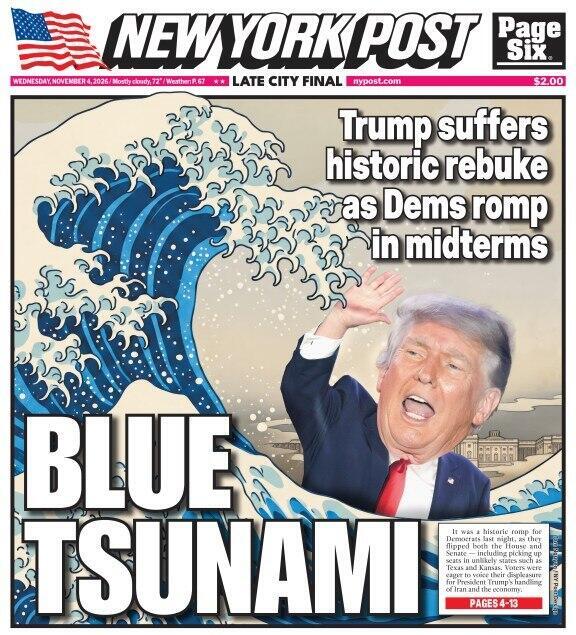
The New York Post cover mocking Trump and the Republican Party's historic midterm defeat
According to the vice president, the pollster had identified a substantial number of voters who backed Trump in 2024 but were angry with his administration and intended to vote Democratic.
When asked what would persuade them to return to the Republican Party, those voters overwhelmingly cited four priorities.
"End the war," Vance wrote, listing the first demand.
The other three were addressing the cost of living and inflation, putting America first and changing the United States' relationship with Israel.
The reference to Israel was particularly notable because it placed Washington's relationship with one of its closest Middle Eastern allies among the leading sources of dissatisfaction within Trump's own electoral coalition.
Vance did not specify what changes those voters wanted in U.S.-Israel relations or provide detailed polling figures for each of the four concerns.
"Our voters showed up. And the above four reasons are why many of them voted for Democrats," Vance wrote. "This is according to a pollster who nailed the results."
The vice president also defended conservative television personality Rachel Campos-Duffy, who had faced criticism from fellow conservatives for advocating a diplomatic resolution to the conflict with Iran.
"While many spent Monday attacking Rachel Campos Duffy for calling for a diplomatic resolution to the conflict, it turns out her political advice was sound," Vance wrote. "She's also a great person."
Vance rejects immigration amnesty as solution
Vance also warned against attempts by establishment Republicans to attribute the party's electoral losses to its hard-line immigration policies.
"In the next few months, there's going to be a lot of gaslighting," he wrote. "Expect to hear any number of establishment politicians say the solution to our woes is amnesty."
The vice president said he was willing to consider changes to immigration enforcement, including placing greater emphasis on employers who hire workers without legal authorization.
But he rejected proposals to grant legal status to immigrants living in the country illegally as a response to the election defeat.
"Anyone pushing amnesty is lying to you," he wrote.
Instead, Vance insisted that the party confront the consequences of the Iran war, which he identified as the overriding factor in the Republican defeat.
"If you'd like to argue it was worth it, that losing the Senate for the next 6 years was worth it, then do so," he wrote. "Argue it was a worthwhile cost to pay. Agree or disagree, that's at least honest."
The reference to six years reflected the length of Senate terms and the potentially lasting consequences of the party's loss of control of the chamber.
"But everyone knows why we lost," Vance added. "And any honest conversation about where we go from here must start there."
Despite his criticism, Vance closed his message with an appeal for Republican voters to remain politically engaged and support candidates who shared their views.
"I remain hopeful about our country," he wrote.
Addressing voters who had warned Republicans about the political consequences of their policies, Vance acknowledged their frustration.
"To the people who are pissed off and want to say, 'I told you so': you're right, you did tell us so," he wrote. "Take that energy into electing Republicans who share your worldview."
He urged others angered by the election results to channel their frustration into rebuilding the party.
"Let's take that anger and get back to the work of saving our country," Vance wrote.

Donald Trump Jr. and US President Donald Trump
(Photo: Mandel NGAN / AFP)
Donald Trump Jr., the president's son, who, like Vance, is regarded as an opponent of the war with Iran, shared the vice president's lengthy post on X, writing: "Every word of this is 100%."
The remarks came after Republicans suffered a historic defeat in Tuesday's midterm elections, losing control of both the House of Representatives and the Senate as Democrats scored upset victories in several traditionally conservative states.
The result marked only the fourth time since World War II that a party had flipped both chambers of Congress in a single midterm election, following similar upheavals in 1946, 1994 and 2006.
The previous such reversal came amid widespread frustration over the Iraq war. This time, the conflict with Iran and the resulting surge in gasoline prices, which has placed a heavy burden on American households, emerged as major sources of voter discontent.
According to AP VoteCast, roughly two-thirds of voters said they were angry or frustrated with the direction of the country, while six in 10 blamed Trump's policies, including his trade wars, for rising prices.
The Democratic wave also propelled several candidates sharply critical of Israel to victory, including Abdul El-Sayed, who won Michigan's Senate race and is set to become the first Muslim to serve in the chamber.
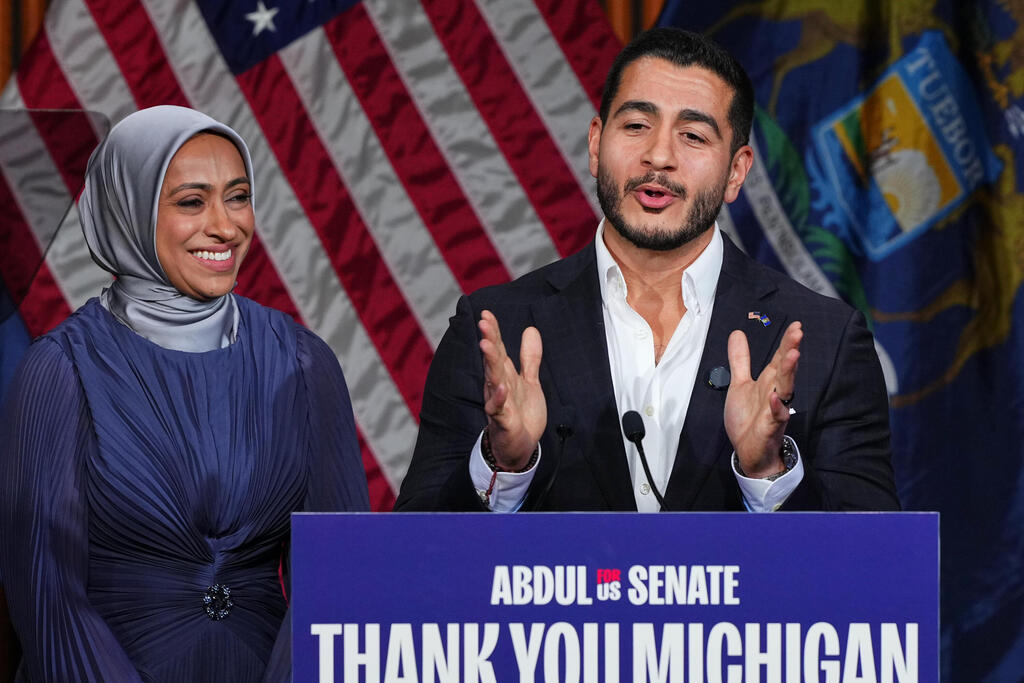
Michigan Senator-elect Abdul El-Sayed
(Photo: AP Photo/Julia Demaree Nikhinson)
Democratic control of Congress will significantly constrain Trump's legislative agenda during the remaining two years of his presidency and strengthen the party's position ahead of the 2028 presidential election. However, analysts cautioned that the results reflected widespread opposition to Trump and his policies rather than necessarily signaling renewed enthusiasm for the Democratic Party itself.
Vance's criticism of the Iran war followed a striking announcement by Trump just hours before polls opened, when the president said the United States would end its annual financial assistance to Israel at the close of 2026.
"I made a deal with Netanyahu that we're going to stop giving Israel $4 billion a year. We're not going to pay Israel anymore," Trump told Fox News. "They're fine with it. They don't need us."
Trump nevertheless described Israel as a "great ally" and said Washington would assist the country if necessary.
The president explicitly linked the decision to domestic political considerations, saying Republicans had been hurt by Democratic attacks over U.S. assistance to Israel and describing the issue as politically damaging to the party's election campaign.
Hours later, the scale of the Democratic victory became clear.
Meanwhile, CBS News reported that Trump had consulted advisers about whether Secretary of War Pete Hegseth, a prominent hawk and staunch supporter of the Iran war, should remain in his post.

US Secretary of War Pete Hegseth
(Photo: AP Photo/Jacquelyn Martin)
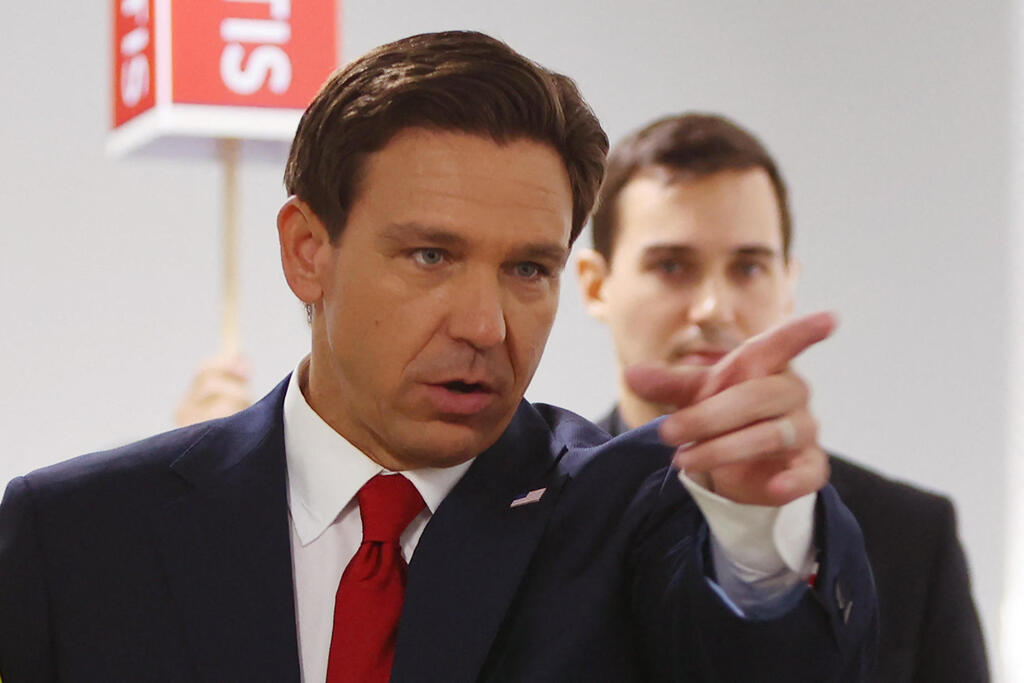
Florida Gov. Ron DeSantis
(Photo: Alex Wroblewski ,AFP)
According to the report, Florida Gov. Ron DeSantis emerged as a possible replacement.
DeSantis is set to leave the governor's office following the election of Republican Rep. Byron Donalds, who will become Florida's first Black governor and the first Black Republican elected governor in U.S. history.