

Every Tuesday for the past several months, about two dozen of the world's wealthiest people have joined a conference call. They receive updates on polls, advertisements and investigations into their opponents, and sometimes the call ends with a predictable request: Could you contribute a little more?
These are not political activists trying to raise donations of a few dozen dollars. Among the participants are people who founded some of the world's largest technology companies and invested in startups that became economic powerhouses. Their shared mission: to prevent California voters from imposing a 5% tax on their wealth.
Gallery
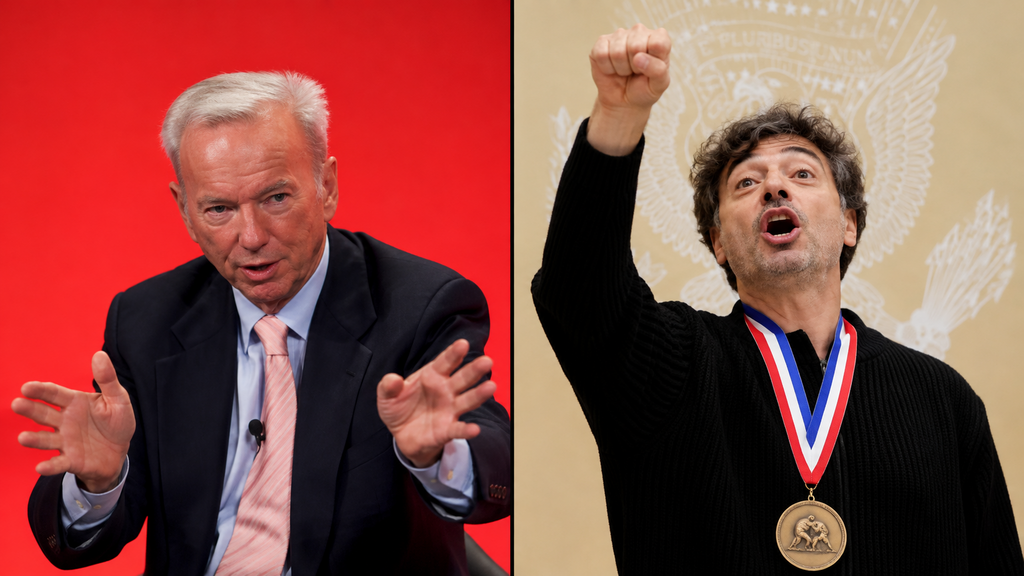
Eric Schmidt and Sergey Brin
(Photo: REUTERS/Evan Vucci, Jonathan Brady/Pool Photo via AP)
With just a week remaining before the vote, the scale of the billionaires’ campaign to defeat the tax is becoming clear. According to an investigation published Tuesday by The New York Times, about 80 donors have contributed more than $333 million to Building a Better California, an organization that has developed an extensive campaign to defeat the proposed tax.
They exchange internal documents, confidential presentations and donation records. One Silicon Valley investor compared the effort to assembling "The Avengers" from the Marvel movies: wealthy individuals who may disagree on virtually everything else but are willing to unite against a common enemy.
That enemy will appear on the ballot as Proposition 40. On November 3, California voters will decide whether to impose a one-time tax on the wealth of individuals worth more than $1 billion. It is not a tax on salaries or profits from stock sales, but on wealth itself, including shares and stakes in privately held companies.
The proposal applies to individuals who were California residents on January 1, 2026. The tax would begin to be collected in 2027, with an option to spread payments over five years at an additional cost. Real estate and ordinary retirement savings would largely be excluded from the calculation.
The initiative is being promoted by a health care workers union seeking to fund services affected by budget cuts under the Trump administration, particularly health insurance programs for low-income residents. Under the proposal, 90% of the revenue would go toward health care, with the remainder allocated to education, food assistance and collection costs.
Supporters estimate the tax could generate about $100 billion. For the billionaires, however, the threat extends far beyond their personal tax bills. If California, home to the American technology industry, begins taxing wealth rather than just income, other states could follow suit.
The campaign was initially spearheaded by Sergey Brin, Google's co-founder, who moved his residence and business operations to Nevada in late 2025 to avoid the proposed tax. This year, the Jewish billionaire contributed $102 million to the campaign in seven installments. But he has not donated any additional money since July, and his representatives have made clear to his partners that it is now their turn to pay.
Brin, whose fortune is estimated at about $260 billion, has previously expressed concern that California could embrace the socialism he fled as a child in the Soviet Union.
He is joined by former Google CEO Eric Schmidt, who has donated more than $40 million, veteran investor John Doerr, an early backer of Google and Amazon who contributed $40 million, and Patrick Collison, CEO of payments company Stripe, who gave $33 million.
For Collison, 38, who was born in Ireland, the fight is also a personal financial challenge. Most of his wealth is tied up in shares of Stripe, a privately held company valued at $159 billion. Such shares are far more difficult to sell than publicly traded stock to cover a tax bill that could reach billions of dollars.
The donor list also includes investors from major venture capital firms and founders of companies such as Reddit, food delivery giant DoorDash and financial technology and cryptocurrency companies Robinhood and Coinbase.
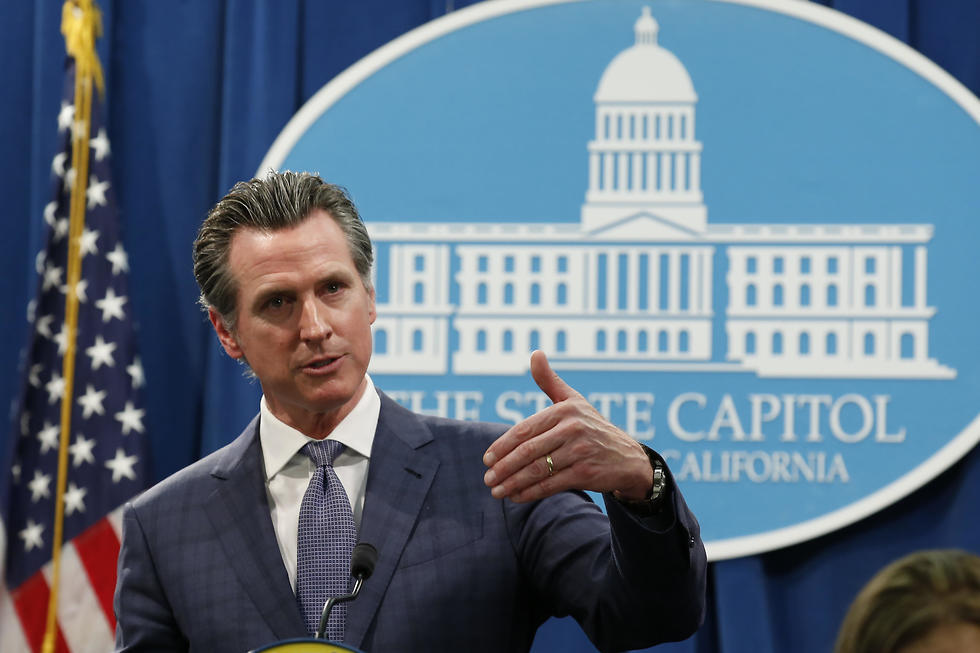
California Gov. Gavin Newsom opposes the tax
(Photo: AP)
But those are precisely the faces organizers do not want at the forefront of the campaign. An internal memo circulated by the group emphasized that people other than the billionaires themselves should be the public face of the fight.
The reason is straightforward: Polls commissioned by the organizers found that Californians have a negative view of the wealthy.
One solution was to hire an influencer marketing firm to produce content that would look more like news, with a left-leaning tone, and less like campaign propaganda. According to a presentation shown to donors, the goal was to reach Democratic voters more effectively, a group unlikely to readily identify with the cause of Silicon Valley's wealthy elite.
Most donations made in stock
The fundraising methods are also creative. Instead of writing checks, donors are being asked to contribute shares that have sharply increased in value. That allows them to donate appreciated assets without first selling them and paying capital gains tax.
According to the investigation, more than two-thirds of the donations received by the organization over the past six weeks came in the form of stock. Organizers have even asked some billionaires to contribute a certain percentage of their wealth, a relatively modest investment from their perspective if it succeeds in preventing a 5% tax.
The money is financing a massive advertising operation. Over the summer, the organization purchased up to $97 million worth of advertising time.
But the billionaires are not limiting themselves to persuading voters to reject the tax. They have also promoted Proposition 42, which would prohibit California from imposing new taxes in the future on ownership of financial assets and personal property.
If both measures pass and Proposition 42 receives more votes in favor, it could nullify the billionaire tax despite its approval by voters. A third measure, Proposition 41, could also derail it.
The battle cuts across political lines. Sen. Bernie Sanders and the California Democratic Party support the tax, but the state's Democratic governor, Gavin Newsom, opposes it and has even announced his support for Proposition 42.
Opponents warn that entrepreneurs will leave California, companies will face pressure to sell shares to finance tax payments and the state will lose future revenue.
In a new study, two Stanford economists estimated that the tax would generate only $28 billion to $36 billion and that an exodus of wealthy residents could cost the state more than the tax would bring in.
Economists who support the proposal, meanwhile, point to the surge in billionaire wealth, much of which stems from rising stock values that are not taxed until the shares are sold. According to their research, the combined wealth of California's billionaires increased by 144% between 2023 and 2025.
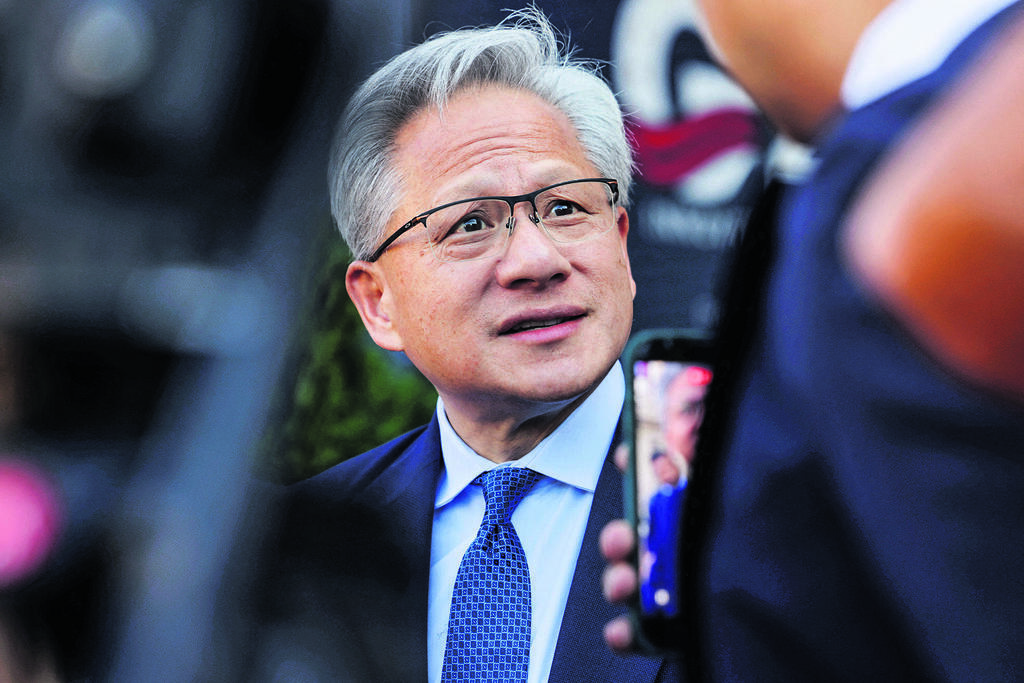
Nvidia CEO Jensen Huang says he is willing to pay
(Photo: Jonathan Drake/Reuters)
Not all billionaires are planning to flee. Mark Zuckerberg, who considered leaving California to avoid a potential tax bill of more than $11 billion, reached an unusual agreement with Meta.
The company will create new nonvoting shares that Zuckerberg can sell to pay the tax without losing control of the company. In exchange, he committed to living for eight years in the location of Meta's executive offices, currently California.
Nvidia CEO Jensen Huang recently said he has no problem paying more taxes as he earns more.
A September poll conducted by the University of California, Berkeley, found that 45% of voters supported the tax, 42% opposed it and 13% were undecided.
For the campaign's organizers, even a victory in California would not mark the end of the effort. In an internal document, they outlined their objective: to defeat the tax so decisively that other states would be deterred from attempting anything similar.
This month, organizers acknowledged to donors that they were still about $25 million short of their fundraising goal and that one donor was willing to contribute another $13 million if the others raised a matching amount.
Schmidt complained in private conversations over the summer that the organizers were complicating the fight by pursuing additional ballot measures instead of focusing on defeating the tax itself.
But his reservations did not make him any less willing to spend. Since then, he has contributed millions of dollars more, becoming the campaign's second-largest donor even though he does not agree with all of its tactics.