

Turpaz, the Israeli flavor and fragrance manufacturer, completed its 27th acquisition since 2017 last week, buying a 70% stake in French fragrance company Romessence for 22 million euro (about $25 million or roughly 88 million shekels). The deal is the latest step in an aggressive global acquisition strategy that has transformed the company into one of the standout success stories on the Tel Aviv Stock Exchange.
Behind the rapid rise is CEO Karen Cohen Khazon, 57, who took a small Holon-based business and, in less than 15 years, turned it into a global group valued at about 8 billion shekels (around $2.3 billion).
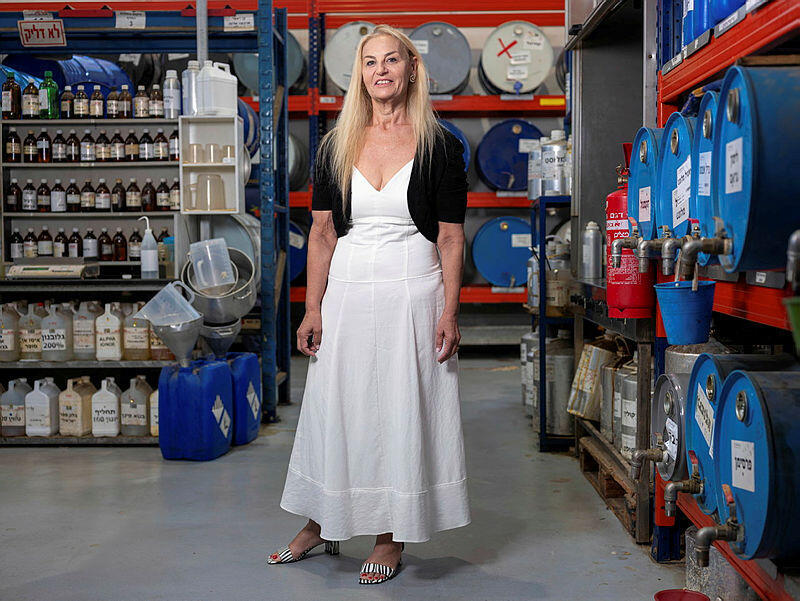
Turpaz develops and manufactures flavor and fragrance extracts and specialty ingredients for the food, beverage, personal care and toiletry industries. Consumers who have never heard the company’s name have likely encountered its products through the scent of fabric softener, the strawberry flavor in ice cream, the umami taste in snacks, the floral fragrance in deodorant or the flavoring in toothpaste.
Although Turpaz is an Israeli company, only about 5% of its sales come from Israel, with the remainder generated abroad.
The company has doubled its sales roughly every four years through a worldwide acquisition campaign. In 2024, it joined the TA-125 Index, which tracks the 125 largest stocks on the Tel Aviv Stock Exchange. Over the past three years, Turpaz shares have surged nearly 500%, while since its May 2021 IPO, the stock has climbed more than 840%, reaching a peak market value of approximately 8 billion shekels (around $2.3 billion).
In 2025, Turpaz reported revenue of $275 million (about 960 million shekels) and annual net profit of $22 million (around 77 million shekels). During the same year, the company raised $330 million (around 1.15 billion shekels) from institutional investors in an offering that drew excess demand of roughly 1 billion shekels (about $286 million). First-quarter 2026 results released this week continued the momentum, showing a 38.6% jump in sales.
The empire she built herself
Khazon’s personal story makes her unusual within Israel’s corporate landscape. She is one of only four women who control companies included in the TA-125 Index, alongside Ofra Strauss, Danna Azrieli and Liora Ofer. Unlike the others, who inherited family business empires, Khazon built hers from the ground up.
Holding a bachelor’s degree in chemistry and a master’s degree in economics, she previously headed the fragrance division at Agan Aroma.
In 2011, Khazon and partners purchased Turpaz for about 14 million shekels (roughly $4 million). At the time, it was a small fragrance extracts company in Holon owned by Nurit Bokshpan, generating annual sales of only $2.5 million (around 8.8 million shekels).
Since then, Khazon has acquired companies with complementary or similar businesses around the world. Turpaz now employs approximately 1,100 people, operates around 26 manufacturing sites — most of them overseas — alongside research, development and sales centers, and markets its products in about 90 countries to roughly 4,800 customers. Most of the company’s revenue comes from flavors used primarily in the food and beverage sectors.

A factory that Turpaz purchased in Hungary
(Photo: Hinka Zsolt)
“We specialize in sweet flavors for confectionery, baking, dairy, ice cream and beverage producers, as well as savory flavors for meat and snack manufacturers,” Khazon said. “We manufacture flavor and fragrance extracts and supply food producers worldwide. In personal care, we work with some of the world’s leading hair-product manufacturers. In fragrances, our clients include candle makers, personal care companies, hotels and more.”
“The first company I bought for Turpaz was in Poland, and I kept acquiring from there,” she said. “We now have factories in South Africa, Vietnam, India, Romania, Hungary, Poland, the U.S., England, France, Germany and Belgium. It’s incredibly exciting — we’re a global company. Building a company from $2.5 million into one approaching $300 million in revenue is not an easy challenge, but I’m not looking for easy.”
Despite its global footprint, she said maintaining the company’s Israeli identity remains a priority.
“It’s important to us that headquarters stay in Israel and that management remains Israeli, even though we’re spread across the world.”
Speaking about her decision to strike out independently, Khazon said: “In 2000, I decided that if I could create value for Agan, I could do the same for myself.”
Asked about her status as one of only four female controlling shareholders in the TA-125 Index, she said: “I believe people should be evaluated based on professionalism, not gender. I choose managers according to their abilities, regardless of whether they are men or women.”
On changes in the flavor industry, she added: “A lot has changed. Today you see flavors like salted caramel and umami, which belongs to the savory category.”
She summarized Turpaz’s long-term ambition succinctly: “Turpaz will become one of the world’s 10 largest flavor and fragrance companies. We’re not in the top 10 yet, but we’ll get there. People will keep eating, brushing their teeth and doing laundry. Everyone needs flavors and fragrances. It’s part of everyday life, which is why Turpaz will continue growing.”