

The sale of Israeli cybersecurity company Wiz to Google for $32 billion, completed Wednesday, is not only the largest deal in Israel’s history—it is also expected to have implications for the foreign exchange market.
According to estimates, the four founders—Assaf Rappaport, Roy Reznik, Yinon Costica and Ami Luttwak, who together hold more than 30% of the company’s shares—will have to pay roughly $2.5 billion in taxes. The founders’ proceeds are expected to arrive in the coming weeks, and in order to prevent disruption to the exchange rate, the Bank of Israel, the Tax Authority and the accountant general have formulated a framework under which the taxes will be paid in dollars.
Gallery
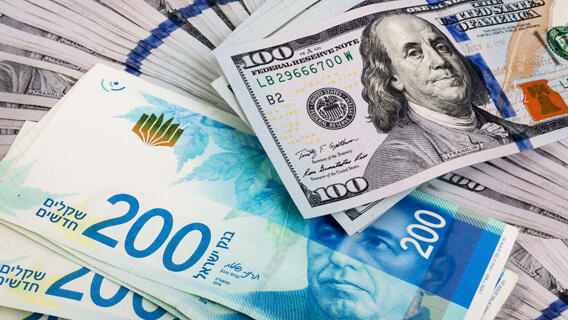
In a twist, the four Wiz founders will pay their taxes on the sale of the company to Google in dollars
(Photo: Shutterstock)
The exchange rate has swung sharply in recent weeks. In the first days of Operation Roaring Lion in Iran, the dollar dropped from about 3.12-3.14 shekels to roughly 3.06-3.07 shekels, and has since steadied around 3.1 shekels. Since April 2025, the shekel has gained about 18% against the dollar and against the currencies of Israel’s main trading partners, making it one of the strongest currencies in the developed world.
Against that backdrop, the Tax Authority’s move to collect taxes in U.S. dollars is highly unusual. It allows the government to receive tax revenue in dollars without immediately creating demand for shekels in the foreign exchange market. Had the entire sum been converted into shekels at once to pay the tax bill, the resulting influx of dollars into the local market could have driven the shekel even stronger.

The four founders who together hold more than 30% of the company’s shares will have to pay roughly $2.5 billion in taxes
(Photo: Avishag Shaar-Yashuv)
A stronger shekel could further hurt exports, one of the Israeli economy’s key growth drivers. The Bank of Israel could intervene by purchasing dollars, but such a move might also attract foreign speculators looking to profit from currency swings, potentially at the expense of exporters.
On Tuesday, the Finance Ministry lowered its growth forecast for the economy to 4.7% from 5.2%, citing the war, while still describing 2026 as a “turnaround” year in which Israel is expected to shift from war to recovery.
(Photo: Shalev Shalom)
When the shekel strengthens too sharply, it eats into the profitability of companies that operate in international markets. The Tax Authority’s decision, made at the Bank of Israel’s initiative, to collect the tax in dollars is meant to ease pressure on the exchange rate without requiring direct intervention in the foreign exchange market.
The funds will be transferred from the Tax Authority to the accountant general, who is expected to keep most of the money in dollars for the government’s ongoing needs, including servicing debt denominated in the U.S. currency.
Still, most of the proceeds — about 70% to 75% — will ultimately go to the founders, who live in Israel and are likely to convert part of the money into shekels for investments or asset purchases. Rappaport, for example, previously bought an estate in Rishpon for 40 million shekels.
Those conversions, however, are expected to take place gradually and in a more dispersed way, reducing the risk of a sharp shock to the foreign exchange market. At a time of war and global uncertainty, preserving favorable conditions for exports and employment is not only an economic goal, but also a strategic interest.