

The ceasefires in the war with Iran and Hezbollah have sharply reduced both military and civilian expenditures and are expected to lessen the need to breach the state budget in discussions set to take place immediately after Independence Day.
According to preliminary calculations, the daily cost of IDF operations has dropped from about 1 billion shekels ($337 million) before the ceasefires to less than 250 million shekels ($84 million) per day, or roughly 1.5 billion shekels per week ($506 million). The main reduction in defense spending stems from decreased use of costly munitions, fewer daily sorties by hundreds of aircraft for airstrikes, less wear and tear on military equipment, and the release of thousands of reservists.
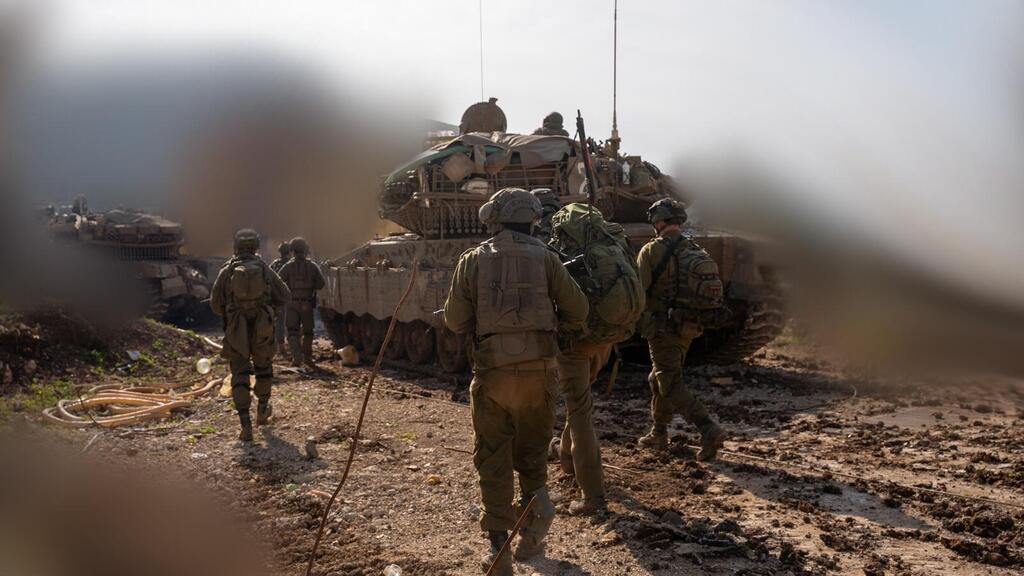
IDF soldiers in Southern Lebanon
(Photo: IDF)
Civilian costs have also fallen by hundreds of millions of shekels. Missile fire, which caused extensive property damage nationwide and especially along the northern border for about six weeks, has stopped. The number of workers on unpaid leave has declined, and direct and indirect losses to businesses that were fully or partially shut down have dropped by hundreds of millions of shekels.
The total cost of the 48-day war, from February 28 to April 16, is now estimated at 65 billion shekels ($22 billion). This figure includes military and civilian costs as well as broader economic damage, including reduced growth, higher unemployment, wartime inflation and lower state tax revenues due to decreased economic activity. The baseline cost, mainly defense and civilian spending excluding wider economic effects, is estimated by the Finance Ministry at about 35 billion shekels.
According to Defense Ministry demands, the defense budget will need to be increased by about 20 billion shekels ($6.8 billion) beyond the 144 billion shekels ($48.6 billion) already approved. That figure was itself raised by 32 billion shekels ($10.8 billion) from 112 billion shekels ($37.8 billion) at the instruction of Prime Minister Benjamin Netanyahu just before final approval of the 2026 budget at the end of March.
Of the additional funding now sought by the Defense Ministry — which would increase the budget deficit and lead to cuts in civilian ministries — 7 billion shekels would be allocated to the Rehabilitation Department due to the large number of casualties since Oct. 7, 2023.
A senior Finance Ministry official told Mamon and ynet that the current intention is to use only the 8 billion shekel reserve set aside in the 2026 budget for defense needs, “and to wait for final calculations, depending on the security situation and the durability of the ceasefire, before transferring additional funds to the defense establishment, which must first become more efficient and reduce its reliance on reservists, as set out in the state budget approved by the government and the Knesset,” Israel’s parliament.
A senior defense official rejected that approach outright, saying it was formulated before it became clear how far the war with Iran would expand and before large forces were deployed into Lebanon, where they remain for now.
On the civilian side, Finance Ministry officials said compensation to businesses has already reached about 7 billion shekels ($2.4 billion), while unemployment benefits for those on unpaid leave total about 700 million shekels ($236 million) so far, including 598 million shekels ($202 million) paid in the past week. Together with compensation for missile-related damage, the total cost exceeds 12 billion shekels ($4.1 billion), according to the ministry. An additional 1 billion shekels ($338 million) has been allocated for other war-related purposes, including support for local authorities and strengthening communities along the northern conflict line.
Bank of Israel Gov. Amir Yaron said over the weekend that ending the war and maintaining the ceasefire would significantly improve the economy, particularly by easing the damage to growth. The current situation is expected to lead to some increase in growth and improved economic conditions.
Economists in banks and investment houses said his remarks suggested there is a possibility the central bank could cut the benchmark interest rate by a quarter point to 3.75% (with the prime rate at 5.25%) as early as May 25, or, if not then, at the following decision scheduled for July 6.
At the request of Mamon and ynet, the Israel Tax Authority summarized the economic damage caused by missile fire across the country during the 48 days of the war against Iran and Hezbollah. The data show that 31,233 claims for damages have been filed so far: 20,280 for buildings, 7,381 for vehicles, 2,839 for contents and 733 for other damages, including to dairy farms, poultry coops and agricultural crops.
By region, 8,968 claims were filed in the Tel Aviv district, 8,335 in Ashkelon, 2,058 in the Acre and northern region, 640 in Tiberias, 341 in Jerusalem and 37 in Eilat.