

The Bank of Israel on Monday left its benchmark interest rate unchanged at 4.5% for the sixth consecutive decision, even as the country’s economy shows signs of recovery following months of military conflict and inflation volatility.
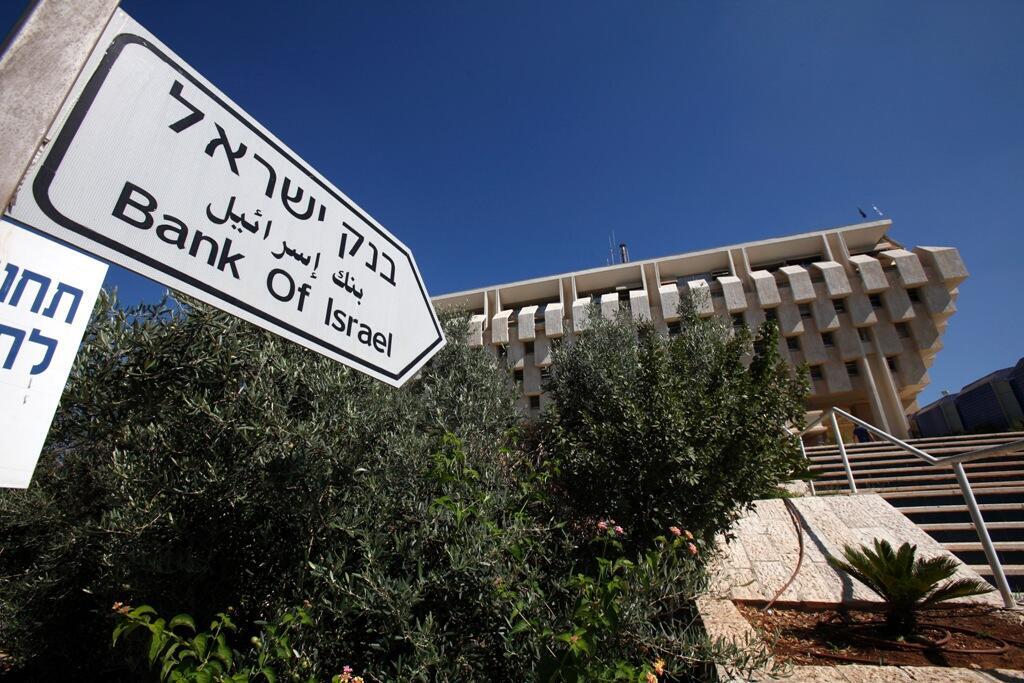
In a move that had divided analysts, the central bank opted to hold its key rate, maintaining the prime lending rate at 6.0%. The decision comes as Amir Yaron, Governor of the Bank of Israel, navigates a complex macroeconomic landscape shaped by geopolitical risk, inflation surprises, and post-war rebuilding.
“The removal of the threat from Iran contributes to the economy’s recovery,” Yaron said at a press conference following the announcement. “But inflation is still above target, and Israel’s risk premium remains elevated compared to levels before the Iron Swords war.”
Inflation uncertainty clouds rate path
Inflation continues to be a key variable in the central bank’s decision-making. The Consumer Price Index has swung unexpectedly in recent months—first spiking, then retreating—partly due to fluctuating airline ticket prices and potentially rising rental costs tied to housing damage from rocket fire in central Israel.
The Bank of Israel’s updated forecast projects inflation at 2.2% over the next four quarters through Q2 2026, in line with the previous outlook. For full-year 2026, inflation is expected to ease slightly to 2.0%, down 0.2 percentage points from the bank’s April projection.
Get the Ynetnews app on your smartphone: Google Play: https://bit.ly/4eJ37pE | Apple App Store: https://bit.ly/3ZL7iNv
Yaron addressed concerns over the impact of airfares on the CPI, noting that “the Central Bureau of Statistics’ new measurement method has amplified seasonal volatility. When many airlines are not flying to Israel, that’s clearly reflected in ticket prices—and it must be considered in index calculations.”
Rate cuts on the horizon
While holding steady for now, the central bank signaled a clear dovish tilt. According to Yaron, the Bank expects to deliver three rate cuts over the coming year, with the policy rate projected to decline to 3.75% by Q2 2026.
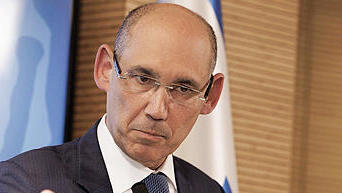
Governor Amir Yaron
(Photo: Kobi Wolf/Bloomberg)
GDP growth is forecast at 3.3% in 2025, slightly below the previous projection of 3.5%, while 2026 growth is now expected to accelerate to 4.6%, a 0.6-point upward revision. The fiscal deficit is projected to reach 4.9% this year, narrowing to 4.2% in 2025.
“The forecast was built on the assumption that the ceasefire declared at the end of Operation Rising Lion will hold,” the Bank said in a statement. The outlook also factors in a de-escalation in Gaza beginning July, assuming the current negotiations over a ceasefire agreement succeed.
Risks remain high
Despite signs of stabilization, the Bank emphasized elevated uncertainty around global trade policy and domestic fiscal planning. The report notes ambiguity surrounding U.S. import tariffs announced in April, and underscores the lack of clarity over Israel’s 2025–2026 state budget.
“Forecast uncertainty is unusually high, both geopolitically and in terms of U.S. trade policy,” the Bank said. “We’ve based our projections on assumptions developed by the Research Department, including expectations about future fiscal decisions.”