

On the Friday night when her son Omer was supposed to be released from Hamas captivity, Shelly Shem Tov shared an emotional post that resonated across social media. In it, she described how one year earlier, during the Torah portion “Mishpatim,” she had decided to begin observing Shabbat. Now, on the same week’s reading, her son had returned home.
“On this Shabbat, I will get to hug my Omer exactly a year later, and it’s amazing how everything aligns so precisely,” she wrote. “A year ago today we were invited to a Shabbat organized by the ‘Jewish Soul’ organization for families of the hostages. I’ll never forget it. It was the first Shabbat I ever kept properly, hosted by ultra-Orthodox families. We prayed, sang and shared a sacred day together. That Shabbat, I took it upon myself to keep the Sabbath.”
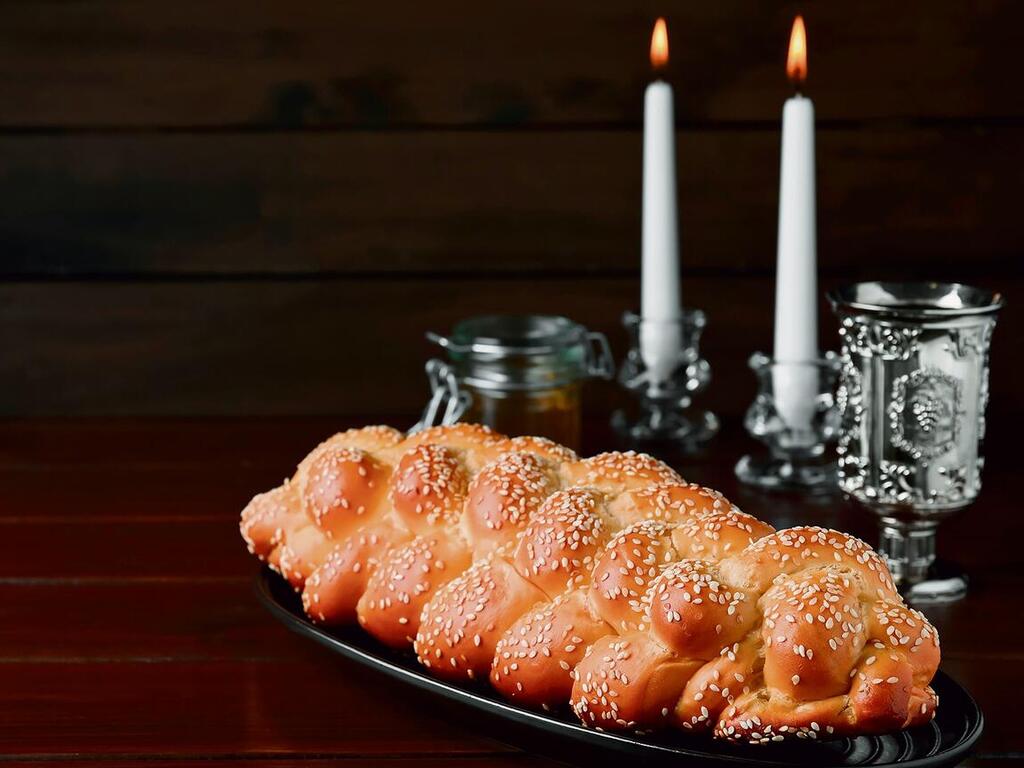
The transition from a secular household to full Shabbat observance was not easy. “My fear was that keeping Shabbat would take away my freedom,” Shem Tov said. “That I couldn’t go where I wanted. Preparing food without being able to reheat it seemed impossible. But Shabbat filled me with spiritual strength. Once I made the decision, the fear disappeared.”
Shem Tov is not alone. Among families affected by the October 7 massacre and the ongoing war, bereaved families, released hostages, the wounded and their loved ones, many have found themselves turning toward faith and Shabbat observance. It began with survivors of the Nova music festival, held on Simchat Torah, both secular and formerly observant. Then came the hostages’ families. Mothers like Merav Berger, whose daughter Agam was abducted, began observing Shabbat, alongside others who followed their lead. Stories also surfaced of hostages trying to keep Shabbat in Gaza’s tunnels: Agam refused to cook for her captors on Shabbat, Liri Elbag declined to turn off a light on Yom Kippur, and Daniella Gilboa translated and sang “Shalom Aleichem” in Arabic.
From trauma to tradition
Orit Meir, mother of released hostage Almog Meir Jan, said she began lighting candles after his abduction. Today, she distributes “Shabbat starter kits” to others who are beginning to keep the Sabbath. The kits are provided by Veshamru, a volunteer organization founded after the 2021 Meron disaster. Over the past year, it has distributed nearly 4,000 free kits, even in secular kibbutzim and military units. Each kit, worth between 770 and 970 shekels ($208–$262), includes the essentials found in observant homes: candlesticks, a hot plate, a water urn, timers, challah covers and trays, a Shabbat-mode refrigerator device, a havdalah set and light-switch covers to prevent accidental use.
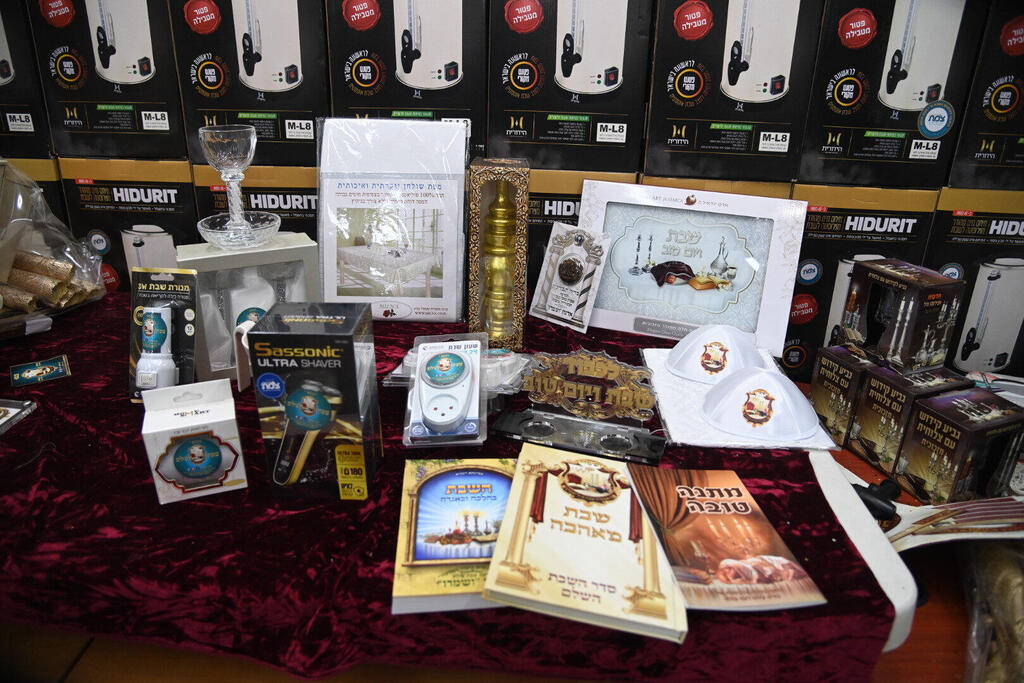
Veshomru: ,'hen a hostage comes home, demand surges'
(Photo: Sagi Yair)
The organization’s founder, singer and event host Avi Ben Israel, said demand spikes every time a hostage is released. “When Agam Berger came home, we distributed 150 kits,” he said. “In Eilat, we now hand out 20 to 30 kits a month. Who would have imagined?”
On Facebook, a group called “Secular Shabbat Observers” now has more than 12,000 members, with new ones joining each week. In one recent video, comedian Guy Hochman called on Israelis to keep Shabbat for the Torah portion “Zachor,” or “Remember,” to remind one another that “we are brothers in hardship.” In another, Agam Berger tearfully urged mothers and daughters to light Shabbat candles for the hostages’ safe return.
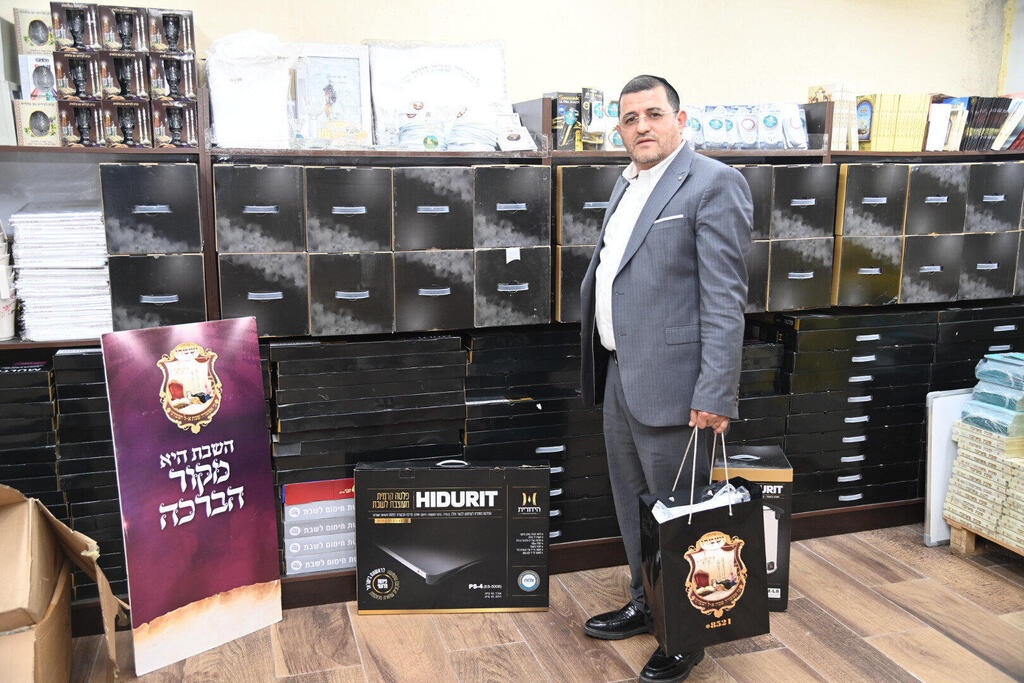
Avi Ben Israel. 'Who would’ve thought?'
(Photo: Sagi Yair)
Finding calm in the silence
For some, the change began with the war itself. Shahar Arad, 32, manager of the Big Kastina shopping center, said she came from a completely secular home. “We used to light candles before dinner, but not at the right time,” she said. “Then I met a man who keeps Shabbat, and during this terrible year, especially while serving seven months in reserve duty, I felt something protecting me. Now I light candles at the proper time, avoid driving unless it’s for family, turn off the TV and silence my phone except for emergencies. We read, talk and enjoy the calm we never had before.”
Margalit Peretz (Deri), daughter of Shas leader Aryeh Deri and a senior figure in the Jewish Soul organization, said she sees similar stories everywhere. “We pair secular and religious people for study sessions, and demand from secular Israelis is higher than ever,” she said. “We have about 20,000 study pairs now. The most common question we hear is, ‘Why did they kill us? What does it mean to be Jewish?’ Some hostages came back with powerful faith. Every week I visit soldiers at Sheba Medical Center. One father told me, ‘I saw Shelly Shem Tov’s post and decided to keep Shabbat.’ He’s not the only one.”
According to Peretz, one of the hardest adjustments for newcomers is dealing with free time without phones or social media. “At first it’s a shock, but then they learn the benefits of quiet,” she said. “The biggest clash in secular homes often starts when a hot plate enters the kitchen. It feels symbolic. Like a declaration.”
Faith meets commerce
The growing embrace of Shabbat observance has translated into a sharp rise in sales of Sabbath-related products. “For the first time, we’ve started selling Shabbat hot plates and water urns, and sales are strong,” said Yafit Levy, co-CEO of Rami Levy supermarket chain. Rival chains such as Osher Ad report double-digit growth in sales of Shabbat-related items, including candles, memorial lights and even pre-cut toilet paper.
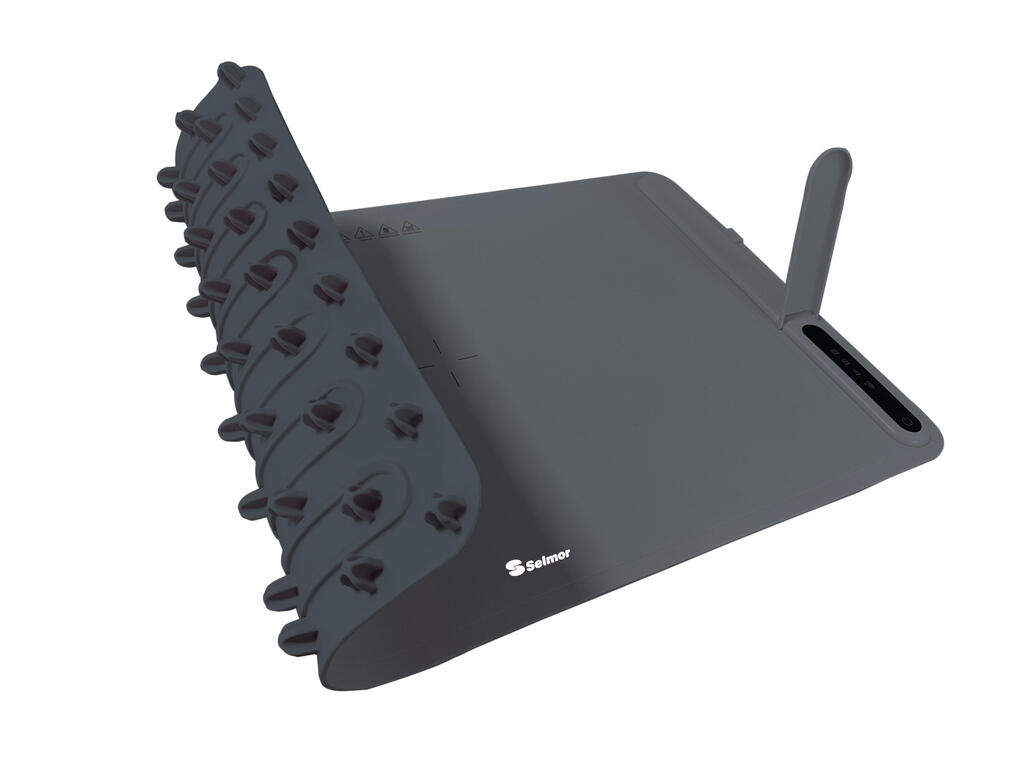
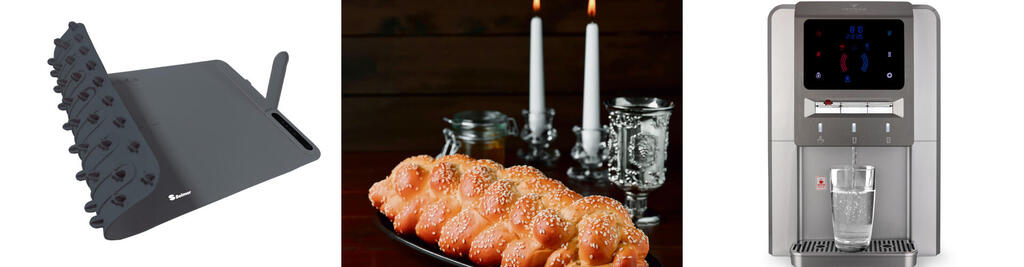
A foldable Shabbat hot plate by Selmor
(Photo:PR)
Adir Malka, CEO of Hidorit, an importer of premium Shabbat hot plates and urns, said he has received emotional calls from parents of soldiers and hostages. “It’s growing stronger,” he said. Nadav Zilberstein, deputy CEO of Traklin Electric, reported a 20 percent rise in sales of hot plates and water urns compared with early 2024. The latest trend, he said, is foldable hot plates introduced late last year. “We sold more than 50,000 foldable units in the first half of the year,” said Menashe Haim, vice president of Gold Line, which offers two models for four or six pots.
The Shabbat economy
“The Shabbat market moves impressive sums that are hard to estimate,” said Dudi Dror, CEO of Askria Research, which focuses on the Haredi market. “People buy fancier food and alcohol for their Shabbat meals. Appliances have become more sophisticated, and people replace them every couple of years instead of every decade. Many are moving from basic water urns to high-end water bars costing thousands of shekels.”
Safety concerns have also influenced buying habits. Traditional urns have caused burns among children, leading the Economy Ministry to issue warnings about unsafe devices. Companies such as Mei Eden have entered the Shabbat market with high-tech solutions. Its new “Rainbow” water bar automatically adjusts for Shabbat and holidays using the Hebrew calendar. The price ranges from 3,564 to 5,112 shekels ($962–$1,380), depending on warranty.

Shabbat-compatible water bar and Nespresso machine
(Photo: Chen Berkovich)
Meanwhile, Landwer Coffee launched the “Miniespresso NS,” a hand-operated espresso maker that uses air pressure, allowing observant users to enjoy coffee on Shabbat. The device costs 199 shekels ($54) and can use capsules from various brands. Originally aimed at campers, it has sold more than 1,000 units since being marketed for Sabbath use.
At the Tzomet Institute, which certifies technology for Shabbat use, the number of approval requests has more than doubled. “We used to receive around 200 requests a year. Now it’s closer to 500,” said Gil Gilad, head of the institute’s approvals department. “We’re even working on a fully automatic espresso machine with a built-in Shabbat timer.”
From toilet paper to takeoff
The shift has reached unexpected corners of daily life. Cleaning-products giant Sano reports an increase in sales of pre-cut toilet paper, with the category growing six percent in 2024 compared with the previous year.
Even airlines have joined in. Israir CEO Uri Sirkis said the carrier has begun scheduling flights suited for Sabbath observers. “This winter we launched flights that depart Friday mornings and return Saturday nights, after Shabbat ends,” he said. “They’ve been very successful in destinations like Batumi, Budapest, Rome and Debrecen. For example, in 2023 we sold 16,000 tickets to Budapest. In 2024 it was 30,000. By February 2025 alone, we’d already sold 17,000.”
A quiet revolution
No one knows exactly how many Israelis keep Shabbat today. The Israel Democracy Institute’s 2022 Religion and State Yearbook estimated that about one-third of Jewish Israelis observed Shabbat at the time, but there are no updated figures for 2025. Still, the social reality speaks for itself: more candles are being lit, more phones turned off and more homes discovering, sometimes for the first time, what it means to rest.