


During Operation Roaring Lion, a missile struck about 200 meters from the Chachos café on Geula Street in Tel Aviv. An hour later, the café reopened and resumed normal operations. “Everything in the area was closed, and suddenly a lot of people came because there was no competition. It wasn’t under good circumstances, but people were looking for a place to sit for a moment,” said Yuval Rei Koren, 32, the café’s owner.
Most businesses in the area have since reopened, though with reduced staff. “Sales have dropped because many people left the city, but those who stayed are coming. It gives a good feeling to provide a bit of sanity and routine in a time when there really is no routine,” Koren said.
Gallery
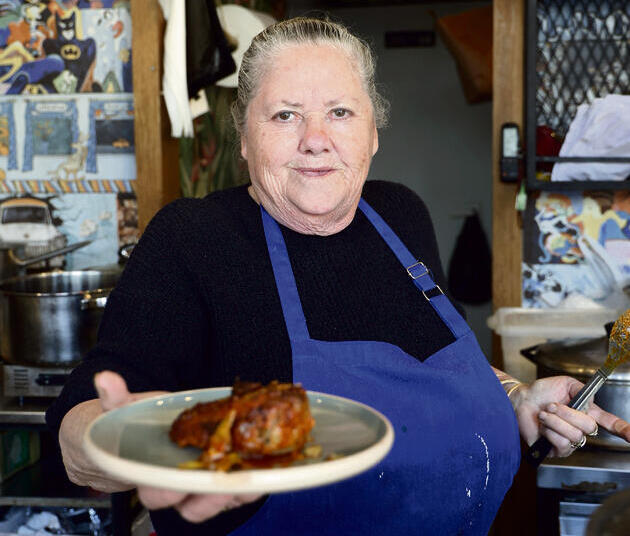
'Used to this reality,' says mother of Shahar Pelach, owner of Pelach restaurant
(Photo: Avigail Uzi)
Following public pressure, including from self-employed workers, the Home Front Command updated its civil defense guidelines. Starting at noon on Thursday, gatherings of up to 50 people are allowed, provided a standard protected space can be reached during an alert. Workplaces are also allowed to operate if employees can reach a proper shelter in time.
At the Carmel Market, the situation is more complicated. Bar Bettelhim, 30, from Ramat Gan, runs the food stand Dr. Potato, which sells fries, corn dogs and churros. According to him, activity at the market has almost come to a halt. “There’s no work. There are very few customers — a fraction of what we usually have,” he said in frustration. “There are employees, but I didn’t even ask them if they want to work because there’s no need right now. There simply isn’t enough work.”
At the vegetable stand Carmel 11, foot traffic is sparse. When a siren sounds, Isaac, who works there, simply leaves everything and runs to the nearest shelter. “I’m afraid to work, but it’s boring at home. So we work,” he said simply. “And people still need vegetables,” Isaac added with a smile.
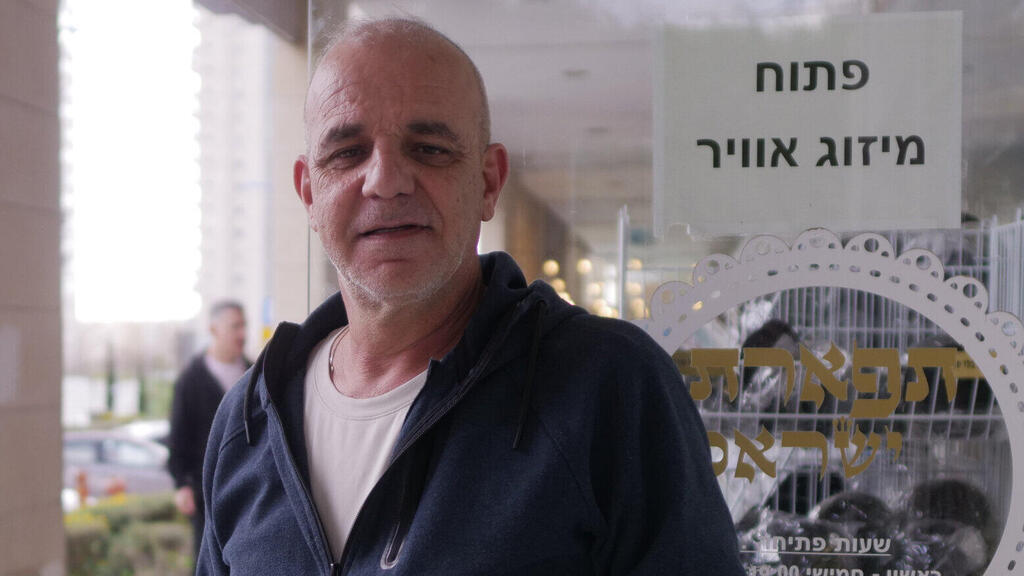
'I must try to help those who still need tefillin and a tallit or a holy book,' says Haim Israel, owner of the store Tiferet Israel
(Photo: Yaron Sharon)
The restaurant Hapelach, which serves homemade Tripolitanian cuisine, is also trying to stay open. The owner, Shahar Pelach, 38, from Tel Aviv, opened the restaurant about two years ago — just months after the outbreak of war. “My parents are the heart of the place,” Pelach said. “They’re responsible for all the cooking. It’s the food I grew up with at home.”
At the start of the week the restaurant was almost empty, but the eve of Purim brought a small moment of community. “We held a small happening here with neighbors and kids and lit a barbecue. We tried to celebrate Purim despite everything,” he said. The decision to stay open is also a statement. “We can’t let fear rule us. We’re already used to this reality. For two months we were under pressure about when this would happen, and once it did, even if people won’t admit it, many felt a kind of sigh of relief,” he concluded.
Afraid of the commute to work
Wednesday afternoon on Jabotinsky Street, the main street in Tirat Carmel, there was almost no car traffic to the businesses and restaurants located there. On Saturday, at the start of the war, a missile struck one of the city’s high-rise buildings. Since then, residents have realized they are not immune and must strictly follow police and Home Front Command instructions during the war.
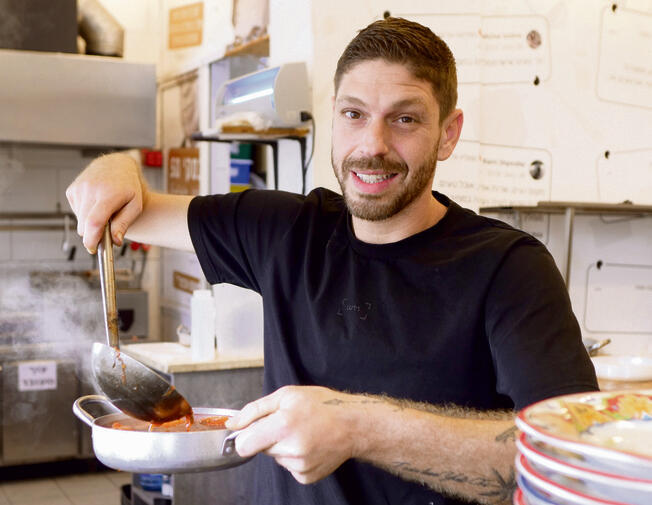
Shalom Akiva, owner of Cubbe Guetta
(Photo: Yaron Sharon)
Among the businesses still open is Cubbe Guetta, where owner Shalom Akiva smiles at the few diners who arrive. “On a normal day at this hour people are standing in line, and delivery drivers move constantly between private orders and offices in the area,” Akiva said. “Revenue has dropped to a quarter of what we normally make. It’s clear to me that I have to stay open to serve those who still choose to order.”
When Akiva is asked about government assistance, he begins to laugh. “I’m not counting on any help from the state. Economically I can’t wait for benefits from the government, which will take a long time anyway before I see any compensation if I see any at all. I’ve seen what happened in the past.”
Not far away stands the office of attorney Dror Cohen. “There’s almost no work because the courts are not holding hearings, except for urgent ones,” Cohen said. “My employees are at home, but I still have to pay salaries, property taxes, expenses, loans and whatnot — and there’s no income. And who even knows how long this will last.”
Cohen cannot rely on income from clients either. “Clients who were supposed to pay me are asking for delays as well, because they don’t have the money,” he said. “Everything is being postponed. The state will have to help us with various relief measures.”
Haim Israel, 57, the owner of Tiferet Israel, a shop selling religious articles and Judaica, is worried about traveling to his store in Tirat Carmel because of the distance he must cover each day from Givat Avni near Tiberias, where he lives. “It’s almost an hour’s drive,” he said. “But I have to come and try to help anyone who still needs tefillin, a prayer shawl or a holy book during these days. Hardly anyone is coming to the shop during the war. Business is down nearly 70%. The economic damage from this week is very severe.”
The alleys are all his
In Jerusalem, the situation is quite different. Somewhat surprisingly, daily life there continues even under Iranian missile attacks. In the city center, a considerable number of cafés remain open throughout the day — naturally becoming a kind of emotional, social and community support group for residents.
One such place is Cafe Liba on Schatz Street in the city center. Between coffee and pastries, the café has become an island of sanity amid the security tension.
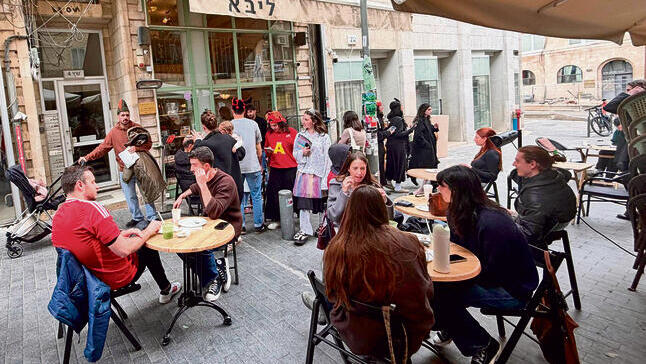
Cafe Liba is open for business in Jerusalem
(Photo: Roy Elman)
“We realized that people want to leave their homes a bit, sit down, grab a cup of coffee to go or a small sandwich,” said Eyal Tzur, the café’s owner. “We also make sure everyone goes to the nearby shelter and lock the place as soon as there’s a siren warning. That’s the situation right now — there isn’t much you can do about it.”
For Tzur, Cafe Liba is a kind of community. “People are connected to the place,” he said. “People love sitting here, they come to work on their laptops and they really form friendships here. You feel that the place is doing something for people.”
Most of the cafe’s employees are students, many of whom have returned to live with their parents — but Tzur has found a solution for that as well. “We reduced our opening hours. We’re open from about 8:30 in the morning until 3 p.m.”
And the best advice he can give customers? “On days like this, if you’re working on a laptop, it’s better to skip the headphones — from experience,” he said with a smile.