

Yossi Ofek, 62, is CEO of Teva Israel and also head of its Africa, Middle East and Ukraine cluster. He served in the Israeli Air Force's electronic warfare unit and holds bachelor's and master's degrees from the University of Derby. He is married with two sons and lives in Modi'in.
If you weren't working in management, what would you want to do?
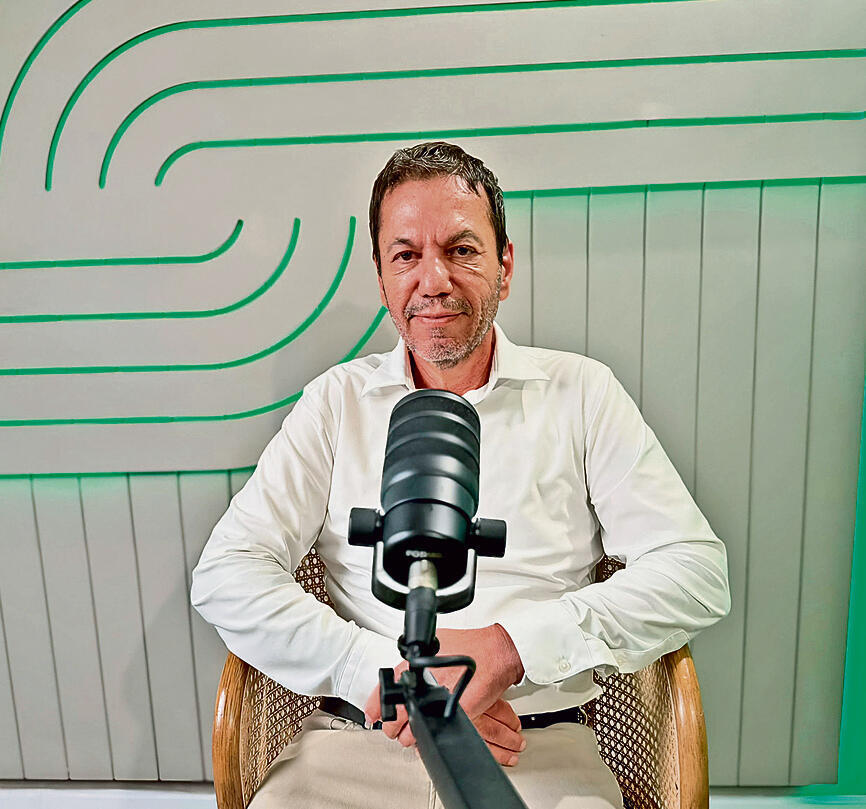
Teva Israel CEO Yossi Ofek
(Photo: BEPO)
"Real estate. Why is that the first thing that comes to mind? Because there's a creative side to it. You take an empty lot and turn it into a beautifully designed building where people actually live. There's also a certain thrill in the risk involved, a dopamine rush that comes with the whole process. That's what excites me, and it's why I make the occasional real estate investment alongside my job, although it's certainly not a major part of what I do. I'm interested in both commercial and residential real estate. Anything that combines the thrill of taking risks with design, creativity, getting things done and making money. There's a financial return, but there's also a personal reward."
What's the best business decision you've made as an executive?
"Hiring the people I work with at Teva Israel. Every one of them is better than me at something, whether it's understanding consumers or investments. I don't really see my job as traditional management. It's more like coaching a soccer team. It's about leadership, bringing people together and winning as a team.
"I'm also proud that we convinced Teva's global leadership to put Israel in charge of the company's global innovation efforts. What does that mean in practice? It means we find startups that can develop solutions to some of Teva’s biggest challenges. At the same time, we're giving Israeli startups a way to connect with Teva's global operations and the wider world."
And what's the business decision you regret most?
"Before taking on my current role, I was CEO of one of Teva’s subsidiaries when an opportunity came along to increase profits by tens of millions of shekels almost overnight, with virtually no investment or risk. But it didn't fit our strategy. We had to back down because we simply didn't have the capabilities to pull it off. It's not that we lost a huge amount of money, but the experience taught me an important lesson about strategic discipline."
What's the biggest myth about management that you've discovered isn't true?
"There's this assumption that a CEO can fire people and do whatever he wants. That's simply not the case. CEOs are human, too, and these things are difficult. We may be resilient and mentally tough, but that doesn't mean we don't struggle. Those are challenges we have to learn to deal with.
"I don't make the decisions at my company. My team does. I encourage people to make decisions and challenge them to think in directions I believe are right. But I don't sit through a discussion and then announce, 'I've decided.' And I certainly wouldn't make a decision without listening to anyone. At the end of the day, it's the team that decides. People think the CEO is the one who makes all the decisions, but that's simply not true."
You've worked at Teva throughout your career. Has that been an advantage or a disadvantage?
"I grew up at Teva. I've been through the company's highs and lows, and that gives me a certain advantage, but only to a point. If I could change one thing, I would have liked to work at a few other companies before becoming CEO. You learn from different managers and different industries, and I think that kind of experience is important."
Do you have a role model?
"Not one particular person. I'd rather borrow a little from lots of different people, and not necessarily from the business world. I'd love to play guitar a little like Avi Singolda, sing like Yehuda Poliker, whose music I absolutely love, and learn something about boldness from young entrepreneurs who have no experience but aren't afraid to take risks. I think you get a much better, richer mix by taking a little from different people rather than trying to be like just one person."
What gets you excited at work?
"When someone walks into a meeting who's modest but has big dreams and both feet firmly on the ground. Let's say they're offering a solution to a very specific problem. I don't want them telling me they're targeting a $40 billion market. I want to hear what their solution actually does. And I especially love it when it's a young person who's willing to take a chance. That kind of courage excites me. When I meet someone like that, I don't just get enthusiastic. I go around telling everyone how excited I am."
And what immediately puts you off?
"Arrogance. People who exaggerate what they're doing and make it sound far more impressive than it really is. Long, tedious presentations and people who can't get to the point. If I see an Excel spreadsheet with 10 tabs, I won't even open it. It's just depressing. And if I get an email with 20 people copied in, I lose interest. Chances are I'm not really needed in that conversation anyway."
What scares you?
"Health worries me to some extent. What do I mean by that? You reach an age when you start going for checkups, almost like a car that needs its annual inspection.
"At work, I see part of my role as CEO as managing people's energy. They come in motivated, full of enthusiasm and eager to get things done. What scares me is the possibility that their energy could slowly fade without me noticing, even though others can see it happening.
"On a national level, I'm worried about the lack of investment in Israel. Don't look at Nvidia. Look at the small startups that are trying to raise money and can't find it. I'm deeply concerned that, as a country, we'll rely on the success we're enjoying today rather than investing in what we'll need for the future."
There was a time when Teva also had a major impact on Israelis' financial well-being. Are people still angry about what the company's stock did to their investment portfolios?
"Fortunately, people have short memories. There was a time when having a Teva logo on your car could make things uncomfortable at a traffic light. We experienced that firsthand as employees. Today, everyone I meet seems to want to work at Teva. Israelis appreciate the company because it's been around since 1901. Sometimes that history is an advantage and sometimes it's a disadvantage, but there's a real legacy there."
What price have you paid in your personal life for your professional success?
"When I was a young manager, I thought the entire company rested on my shoulders. And naturally, my children were the first to suffer. You end up missing things like their first day of first grade. When I see people on my team making the same mistake and working late into the night, I tell them about my experience. I really believe you can make work and family life fit together. There's no reason to work around the clock."
What do you enjoy spending your money on?
"I'm not into designer brands. I wear Uniqlo because it's affordable, I drive a Chinese car and I have an Apple Watch instead of a Rolex. I'd much rather spend my money on good wine, coffee and restaurants. What I love about food is the curiosity it sparks. I want to know how a dish was prepared and what ingredients went into it. That's something I genuinely enjoy and am happy to spend money on."
Do you believe in God?
"The simple, honest answer is absolutely not. And I don't believe in his representatives here on Earth, either. I hope nobody gets upset with me for saying that. I respect people who believe, but that's not where I stand."