

The Tel Aviv Stock Exchange opened sharply lower Tuesday before paring losses, as markets reacted to Prime Minister Benjamin Netanyahu’s remarks on Israel facing “diplomatic isolation” and becoming a “super-Sparta,” as well as the IDF’s expanded ground operation in Gaza City.
The benchmark TA-35 index was down as much as 2.2% at the open but later eased to a 0.7% drop. The TA-90 and TA-125 each slipped 0.9% and 0.7% respectively. Sector indexes also declined, with banks down 0.9%, insurers off 1% and real estate sliding 1.1%.

In currency trading, the shekel was little changed, with the dollar steady at 3.34 and the euro at 3.93, roughly matching Monday’s official exchange rates.
Netanyahu acknowledged Monday that “we are entering diplomatic isolation. We will need to be super-Sparta.” The prime minister said Israel faces a challenging international situation and will need to adapt to “an economy with autarkic features.” He blamed the digital revolution for giving Israel’s adversaries, including “enemy states such as Qatar,” tools to exploit. Referring to Muslim migration to Europe, he said it “bends governments to their will.”
Later in the evening, Netanyahu sought to calm the panic caused by his remarks: “To all the doomsayers in the economy, at the end of the day, Israel has the strongest stock exchange in the world. The shekel has strengthened, the deficit has shrunk despite the war, and foreign investment in R&D is the highest in the world after the United States. Investing in Israel is the smart thing to do. What we will continue to do is expand investment in weapons production so we are not dependent on weak Western European leaders who surrender to extremist Muslim minorities in their countries. And that is exactly what we are doing.”
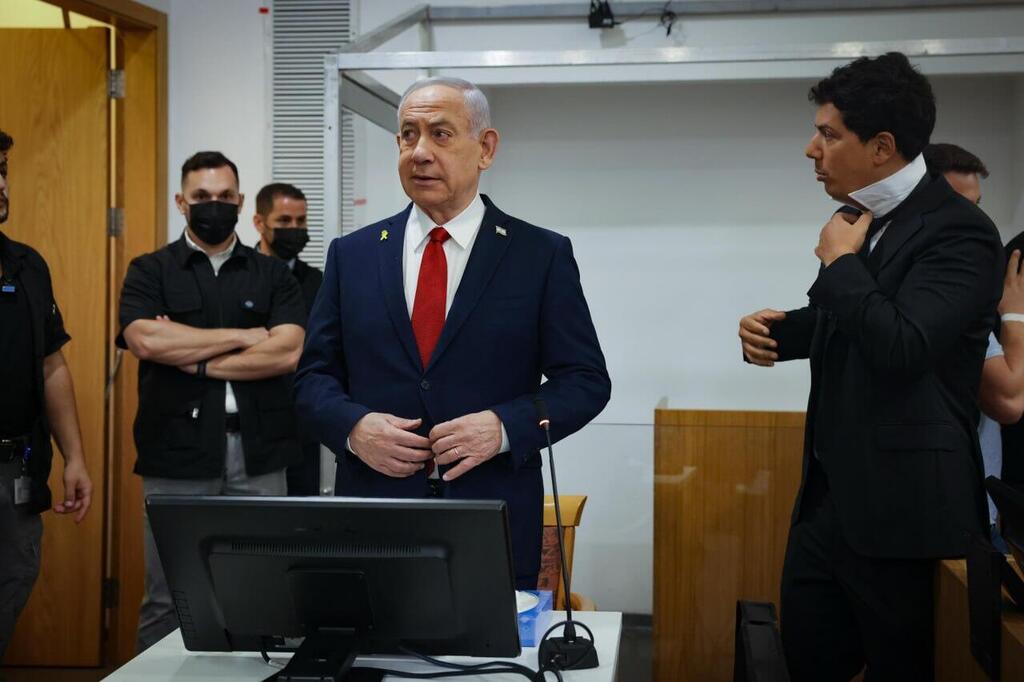
Prime Minister Benjamin Netanyahu in court on Tuesday
(Photo: Flash 90)
Or Poria, chairman of Poria Finance, said: “Leading currencies rose against the shekel following the prime minister’s statements about ‘Israel’s economic isolation’ (the ‘Super-Sparta’ plan), alongside stagnation in negotiations on a hostage deal and cease-fire, and the expansion of fighting in Gaza City. Gains were also recorded in trading of the euro and pound, which are approaching annual highs against the dollar, amid expectations of a U.S. interest rate cut that now seems almost certain. Expectations regarding the shekel remain unchanged: in the medium and long term the shekel is expected to continue strengthening against leading currencies, with an improvement in the geopolitical reality possibly triggering a rally in the short term.”
Yossi Fraiman, CEO of Prico Risk Management, Financing and Investments, said: “The prime minister’s remarks yesterday, that the Israeli economy is expected to be hurt by boycotts alongside the expansion of fighting in Gaza, contributed to the dollar’s strengthening against the shekel, even as expectations of a U.S. rate cut weighed on the dollar against major currencies worldwide. In our view, his remarks may signal the potential for the shekel to weaken beyond 3.4 to the dollar in the short term.
“Concerns over a sovereign bond market crisis are fueling demand for gold, which has surged above $3,700 an ounce. In our assessment, gold may continue in the short term toward $4,000 an ounce, serving as a safe haven in a period of uncertainty.”
First published: 10:40, 09.16.25