


Prime Minister Benjamin Netanyahu’s statement about Israel entering “diplomatic isolation” has already become a reality. But the isolation he refers to is not confined to the diplomatic arena. It is spreading like wildfire into many other fields: the economy, culture, science, academia, sports, tourism and beyond.
In the coming years, even after the war in Gaza ends, many around the world are likely to try to erase or cancel the brand name “Israel.” This will happen not only because of opposition to Israel’s actions in Gaza, but also because of a growing reluctance to be associated with a “toxic brand” that, in recent months, Israel has become. The fear is also driven by public opinion in many places, where Israel is increasingly rejected as part of the enlightened Western world.
For now, Israelis enjoy visa exemptions in many countries. But deteriorating ties could prompt some nations to cancel existing visa-waiver agreements, citing the need to ensure that applicants are not involved in “genocide” or other “crimes.”
South American countries, popular destinations for discharged IDF soldiers, may restrict entry to Israelis in general and to former soldiers in particular. Already, some troops have had their names and military service records exposed on social media — sometimes by the pro-Palestinian group Hind Rajab Foundation, which seeks to “hunt soldiers” — forcing them to leave countries quietly for fear of arrest.
Research funding that once flowed to Israeli scholars and institutions is also likely to shrink. Israeli scientists already report growing difficulties in maintaining partnerships with foreign universities. A silent boycott, in which emails go unanswered or invitations to conferences are withheld, is becoming more common and may intensify.
In culture, Israel is already deeply affected by boycotts: a petition signed by 4,000 filmmakers calls for refusing any cooperation with Israel, and Israeli bands are no longer being invited to international festivals — only a partial list of what is taking place.
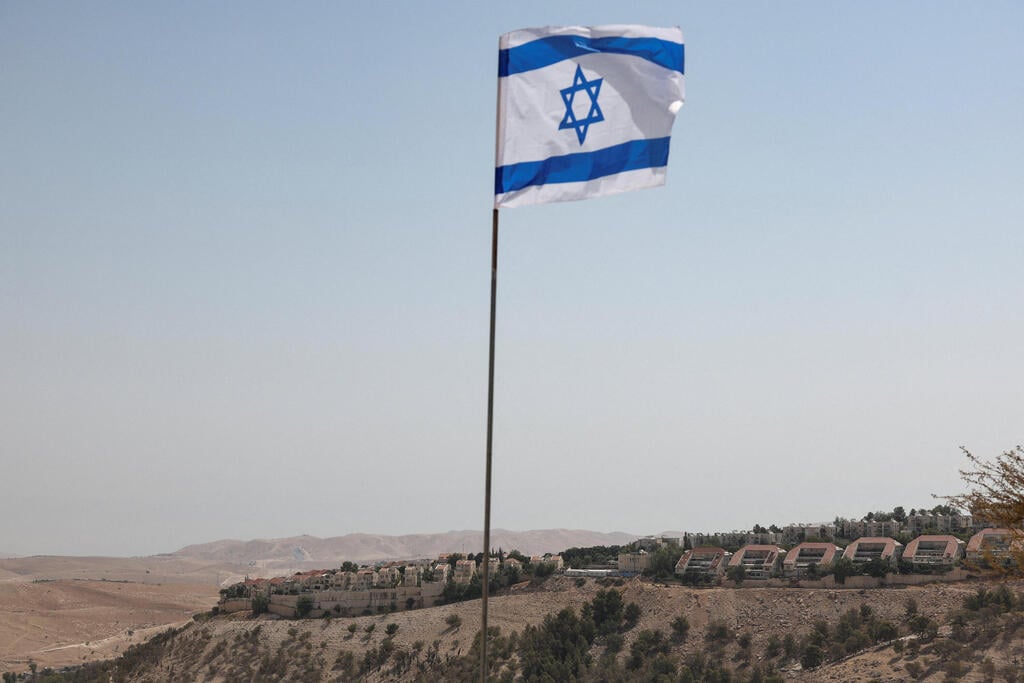
(Photo: REUTERS/Ronen Zvulun)
Tourism has collapsed entirely. Once an attractive destination for Europeans and others, Israel has disappeared from the global tourism map. The longer the war continues, the more Israel is erased from the minds of potential visitors.
Three areas are among the most painful for Israel: the economy, what Netanyahu has described as adapting to an economy with “autarkic features” and to be “Athens and super-Sparta”; sports; and culture.
Israeli exports — not only defense exports — are expected to suffer, with consumer boycotts driving Israeli products off supermarket shelves worldwide. In parts of Europe, Israeli mangoes have already been removed, hitting growers hard. Some countries may also stop exporting raw materials to Israel, as Turkey has already done. All of this will be felt deeply in Israelis’ pockets.
In sports, there are already efforts to block Israeli teams from competing in international tournaments. Unprecedented protests in Spain against the participation of an Israeli privately owned cycling team, Israel-Premier Tech, could prove only a preview. The peak could be Israel’s expulsion from the Olympic Games, as happened to Russia.

Is the Eurovision dream over?
(Photo: Alma Bengtsson/EBU)
At the Eurovision Song Contest, Israel’s participation has become a central question. The European Broadcasting Union is unlikely to forgo countries such as the Netherlands and Ireland, which have threatened to boycott the competition if Israel takes part. It is expected to propose compromises Israel may be unable to accept, such as the idea — reported Sunday by Ynet — of appearing under a neutral flag to resolve the crisis.
For now, Israel takes comfort in U.S. support, though that too could shift — and in any case is unlikely to be enough. “The U.S. is with us, and so are many other countries, but we currently face a focused problem in Western Europe,” Netanyahu said in a Foreign Ministry address. “We are acting and will continue to act to lift this siege. Just as we succeeded with the military siege, we will succeed with the diplomatic one.”
But Netanyahu’s statements did not include any acknowledgment of his government’s responsibility for the current crisis, instead blaming “Muslims in Europe” and the antisemitism he said they encouraged. Emmanuel Nahshon, a former head of Israel’s public diplomacy division who resigned in protest of government policy, called it a “clear ruse.” He said Netanyahu was “selling us a rationalization of his failure as a kind of fate, asking us to accompany him on a journey to the hell he is preparing for Israel and its citizens.”
Strategic consultant Avi Benayahu warned that Netanyahu’s “actions, failures and delusional statements are dragging Israel into an abyss it has never known. He endangers peace with Egypt and Jordan, the Abraham Accords, Israel’s ties with the free world, the Israeli economy and hope itself. Our beloved state of Israel is turning into a country in mourning, divided at home and shunned abroad. His speech reflects a spacecraft that has broken away from its base.”
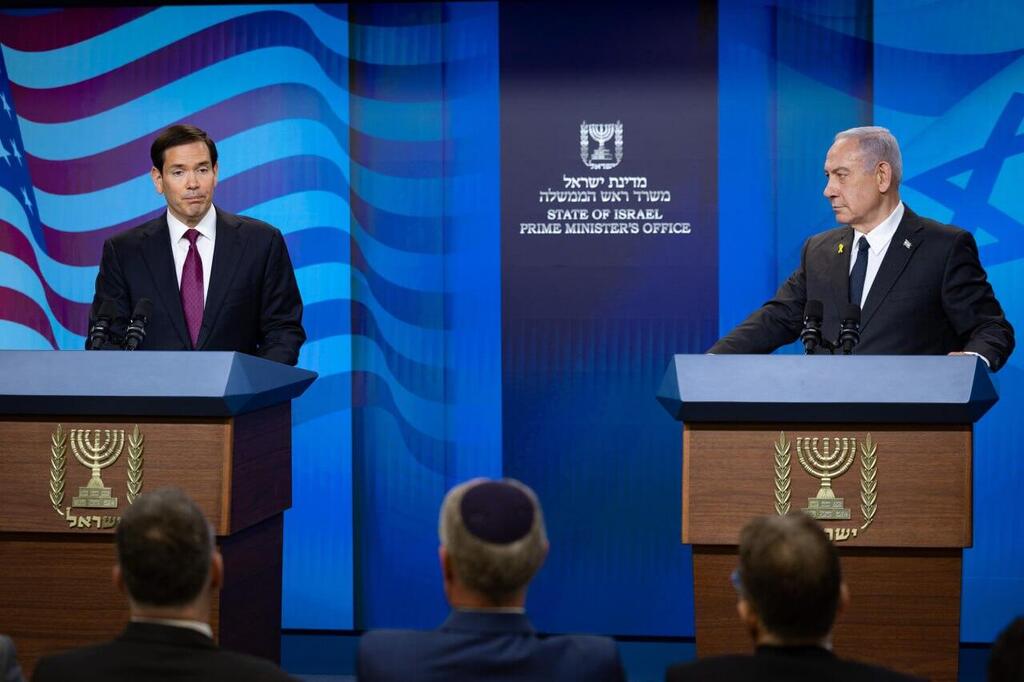
US Secretary of State Marco Rubio and Netanyahu in Jerusalem
(Photo: Chaim Goldberg/Flash90)
Alon Liel, a former director general of the Foreign Ministry, said Israel’s greatest fear is a Western consensus in favor of recognizing a Palestinian state — a move Israel would be forced to respond to. Such a response, he said, could include recalling ambassadors or shutting small embassies, or annexation moves that could damage relations with the United Arab Emirates and possibly end the Abraham Accords. Netanyahu, he argued, will have to choose between harming the accords or worsening ties with Europe.
“If 10 states recognize a Palestinian state, it will leave Italy, Germany and Japan in an unusual position,” Liel said. “There will be attempts to admit Palestine to the UN through a Security Council vote, and there is a limit to how many times Trump can veto it. If Palestine is admitted, Israel’s position will become even more complicated, as it will be seen as the occupier of a UN member state. For countries that recognize Palestine, it will also be easier to impose sanctions on Israel.”
Liel detailed the consequences of isolation: “Each country that announces it will not participate in Eurovision is a half-knockout. They can bar Israel from arms expos and sports events.”