

At 33, Elon Musk had already sold PayPal, founded SpaceX and become chairman of Tesla. At the same age, Mark Zuckerberg of Facebook had already amassed a fortune of more than $70 billion and ranked fifth on Forbes’ list of the world’s richest people. Larry Page and Sergey Brin had already taken Google public and acquired YouTube. At 33, Microsoft founder Bill Gates was already the world’s youngest billionaire.
Alex Bouaziz is not the first Israeli tech billionaire most people would think of if asked about the country’s biggest technology fortunes. Many would likely mention Assaf Rappaport, who at 33 had already sold Adallom to Microsoft, or Gil Shwed, who at that age had already taken Check Point public on Nasdaq. But Bouaziz, who is 33 if you were wondering, is firmly in that league, including when it comes to the billions attributed to him.
Gallery
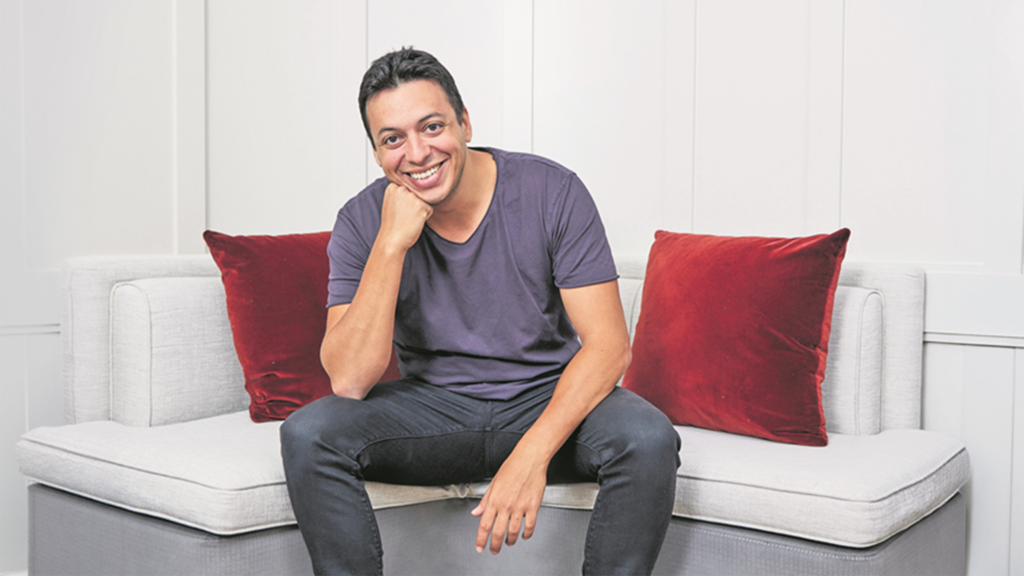
Alex Bouaziz. His estimated personal fortune of about $2 billion has made him one of only two Israelis on Forbes’ list of the world’s youngest billionaires
(Photo: Deel, Matt Writtle)
His estimated personal fortune of about $2 billion has made him one of only two Israelis on Forbes’ list of the world’s youngest billionaires. It has also placed him on Forbes’ overall billionaire ranking, at No. 43 among France’s wealthiest people and No. 35 among Israel’s wealthiest.
Alex Bouaziz is the co-founder, together with Shuo Wang, and CEO of Deel, an American-Israeli unicorn that develops an international human resources and payroll management platform. Seven years after it was founded, it has become a global leader in its field, with more than 40,000 customers in 150 countries and 7,500 employees. Its estimated valuation stands at about $17 billion and its annual revenue run rate has surpassed $1.5 billion. That figure is being published here for the first time, but it is reasonable to assume it will be higher a month from now. The company reported in June 2025 that its annual growth rate stood at 75%, with AI likely accelerating that pace even further.
For the record, a $17 billion valuation would make Deel the largest Israeli unicorn after Wiz was sold to Google for the massive sum of $32 billion. But in April, Vast Data entered the picture with a huge funding round that valued the company at $30 billion, leaving Deel in second place. If its stock offering takes place this year as scheduled, if its legal dispute with fierce competitor Rippling is resolved and if Wall Street is in a positive mood that week, its valuation could rise even further.
The question of whether Deel is an Israeli company is a separate matter. The company is incorporated as an American company in Delaware under the name Deel Inc. Deel has Israeli DNA: One of its founders is Israeli and most of its research and development is conducted in Israel through an Israeli subsidiary. The most accurate definition is an American-Israeli company.
Deel stands out in many ways. For example, it has no permanent offices. Thousands of its employees around the world work remotely, either from home or from various WeWork locations. It is also growing partly through a series of acquisitions. No fewer than 14 companies have been acquired by Deel at a rapid pace, five of them in 2024 alone. None of them, incidentally, are Israeli. The latest, German AI company Sastrify, was acquired just two months ago. Very soon, we will hear about the acquisition of the 15th company.
There is another unusual aspect to the company: Despite its rapid growth, Deel has been profitable since the third quarter of 2023. Technology companies typically do not prioritize profitability. Every dollar that comes in goes toward development and expanding sales. To finance continued growth, companies raise capital. Deel has raised about $1 billion to date across six funding rounds, but the next stage is likely to be different. Its latest fundraising round this year — $300 million from a group of leading venture capital funds — may truly have been its last. The company has more than $1 billion in cash reserves, and the round put hundreds of millions of dollars into the pockets of founders and shareholders. They do not need more money. The next step is a U.S. listing, which is planned before the end of the year.
French-Israeli-American
We meet Alex Bouaziz in the lobby of a luxury Tel Aviv hotel where he is staying. He owns apartments in Israel, Paris and Dubai, but appears completely comfortable in hotels and on airplanes. The conversation takes place in English, even though he studied and lived in Israel for several years, and he says his Hebrew is not bad. He moved from France to Israel alone at 17 and went on to study engineering at the Technion, but he never fully connected with Israel’s informal “sachbak” culture. When he founded Deel, he joined the American Y Combinator accelerator rather than an Israeli incubator, and his funding came from American investors. He loves Israel but does not feel entirely that he belongs.
I thought we would speak Hebrew. How is your Hebrew?
“Not bad, but not good enough. I studied in Israel, but the studies were in English. I studied in Jewish schools in Paris, and surprisingly the second language of instruction after French was Hebrew. But a business conversation like this is a little more complicated. And I also don’t know how much you would enjoy my French accent.”
The French accent is noticeable even when he speaks quickly in English, adding charm to the sentences he fires off one after another. He says he loves speaking French, but English is his main working language and he is better at telling Deel’s story in English. It is often said that companies succeed when their CEOs are good storytellers. Bouaziz is a good example.
Tell me about your childhood.
“I was born and raised in Paris. My grandparents came from North Africa. On my mother Corinne’s side, they came from Tunisia, and on my father Philippe’s side, from Algeria. They immigrated to France with nothing, like many North African Jews. My maternal grandfather was an electrician. My paternal grandfather worked in the subway system for 30 years, and my grandmother worked in a market. They had eight children, and my father was the youngest. It was very important to my grandmother that all her children receive an education, and all my uncles and aunts are doctors and nurses. My father is the black sheep because he became an engineer.”
Where did you live?
“I grew up in Paris’ 19th arrondissement with three younger sisters. It may not be the most luxurious neighborhood in Paris, but it was a fairly Jewish neighborhood and a good environment to grow up in. Paris was a wonderful place to live, but from the time I was a small child there was always some antisemitism. ‘Some’ is an understatement. In Paris, you grow up constantly looking back, especially as a Jewish child. I say it was the best place I could have grown up, but maybe other people would disagree.”
What do you think about your grandparents’ decision to immigrate to France rather than Israel? The opportunities available here for North African immigrants generally did not include medical or engineering studies.
“I think they benefited from France’s immigration system, which helped them, and they also contributed a lot to the country. We are very proud to be French, and if it were not for France, I would not be sitting here. But a large part of the family education came from my grandmother, who was a strong figure and wanted all her children to go to university. I think the French education system helps you — if you are talented and work hard — reach things that would not be possible in most other countries. I think moving to France shaped my education and who I am, and I will always be grateful for that. I will always be French at heart, and so will my children.”
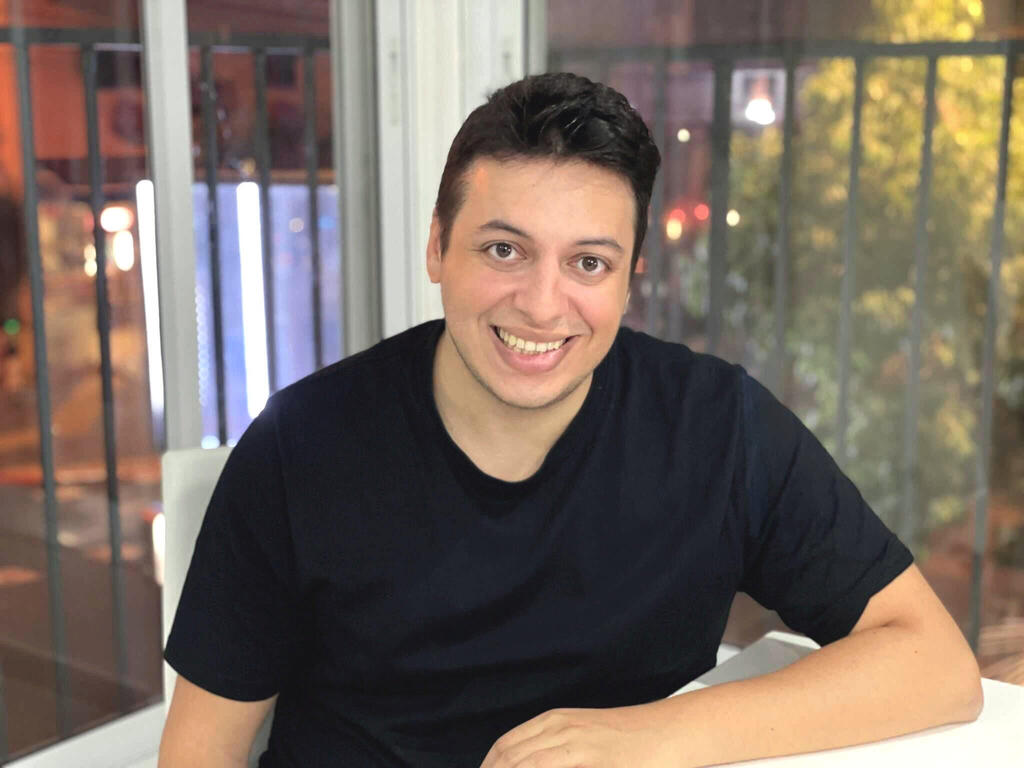
Bouaziz, 33, is married with one child and another on the way
(Photo: Deel)
Bouaziz, 33, is married with one child and another on the way. To understand the full picture, it is worth remembering that he grew up in a family that was financially comfortable. His father, Philippe Bouaziz, is the founder and chairman of French software company Prodware, which was previously traded on the Paris stock exchange at a market value of $250 million. Through a holding company he owns, Bouaziz’s father bought Prodware back at the beginning of the year. In addition, he founded the Israeli investment group Sharona Partners together with Alex. It was among Deel’s earliest investors. Philippe is deeply involved in Deel, initially serving as the company’s CFO and today as chief strategy officer and head of mergers and acquisitions.
Back in 2009, Alex showed exceptional academic ability and completed his high school diploma at 16. As the son of an engineer, he planned to continue studying engineering.
“My father gave me great advice,” he says. “He told me: ‘If you don’t know what you want to do, studying business at 16 is not the right thing.’ Engineering made sense in terms of shaping the way I think, solving problems and thinking deeply.”
Bouaziz decided to study engineering, but not in France. It was the first turning point in his life — moving from France to Israel. He immigrated to Israel alone and enrolled in engineering studies at the Technion, in English.
It is very unusual for a 16-year-old to move alone to another country, isn’t it?
“I did not want to study engineering in France. I wanted to do something different. The United States was a little far away, so I compromised with my parents and decided Israel was the right place. The best school in my opinion was the Technion.”
Bouaziz wanted to study computer science, but the only program offered in English was environmental engineering.
“That is how I became an environmental engineer, and it was a great stroke of luck.”
In 2013, Bouaziz was accepted into a master's program at MIT in the United States. One of his sisters also began studying at the Technion, and his parents decided it was the right time to reunite the family in Israel. They planned to come for a year and decide what to do next. They have remained in Israel ever since.
Where are you based today? Where do you feel at home?
"I'm somewhere in between. I travel a lot for the company. Unfortunately, I don't have a straightforward answer. I have apartments in several places — Paris, Israel and the United Arab Emirates. Look, I grew up in Paris. I know the country well. I love my nationality, being a French citizen. I love the culture. I'll always feel at home in France. But at the same time, Israel does a great deal to make Jews feel at home, and it definitely feels a little more like home to me here."
The idea that started it all
Then came Bouaziz's second major turning point, when he left Israel for Massachusetts to study at MIT. His academic focus remained environmental engineering, but he spent his free time taking business courses at the MIT Sloan School of Management and nearby Harvard Business School. There he met Shuo Wang, a Chinese-born mechanical engineering student at MIT who was part of the university's French-speaking social circle.
"She was incredibly smart, and we always got along very well. We spent a lot of time together during that period."
The next step was London, where Bouaziz planned to pursue a doctorate in water and environmental engineering.
"I wanted to start working, but my father said, 'Wait. Before you go to work, maybe start a Ph.D.'"
But his studies at Imperial College London no longer inspired him.
"It didn't feel like the dynamic I was looking for. It's actually pretty funny because my father also dropped out of his Ph.D. program, so he couldn't really argue with me. I felt I was ready to take on the business world."
That became the third turning point: returning to Israel to try to build a technology company.
He says he experimented with several ventures in content, cryptocurrency and video, but most were unsuccessful. Even Lifeslice, a company that developed a video app connecting friends around the world and generated revenue, failed to take off. But during that period he learned an important lesson about managing employees overseas.
"I had employees all over the world — Serbia, Ukraine — because I couldn't afford to hire engineers in Israel. But I struggled to pay them."
That unresolved problem eventually became the product behind his next company.
At the same time in Beijing, Shuo Wang was facing similar challenges while building a company in China.
"I called Shuo and said, 'Hey, I think there's something really interesting here. Let's work on it and see what we can build.' So we decided to create the first version."
Armed with an idea and a modest amount of technology, they applied to Y Combinator, the world's best-known startup accelerator. To their surprise, they were accepted.
That marked the fourth turning point. The two moved to California, joined the accelerator's program and founded Deel in 2019, receiving the fund's initial investment.
Why did you go to Y Combinator? Most people in your position would have gone to an Israeli accelerator and raised money from Israeli venture capital funds.
"That's the story of my life. I'm very unconventional, both for American investors and for Israeli investors. I didn't serve in the military. I wasn't in Unit 8200. Investors usually want to fit you into boxes, right? This one was in 8200. That one came from the Talpiot program. It's the same with American investors. I'm French, North African. I'm not Israeli. I'm not American. I don't fit into any box. I have a very strong profile, but I don't belong in any category."
'Money doesn't matter to me'
So what exactly does Deel do?
It offers a payroll and human resources platform designed for global workforces. Companies today employ people in multiple countries, each with different laws governing payroll, regulation, benefits, employment terms, performance reviews and equipment management. Deel enables companies to manage all of that across 150 countries.
When Israeli retail chain Fox pays the monthly salary of an employee in the Philippines, it does so through Deel. When U.S. grocery delivery company Instacart wants to pay 7-Eleven couriers in Mexico, it also uses Deel.
Deel offered an efficient and affordable solution to a real problem that had very few solutions when the company was founded. That allowed it to become a mainstream business platform. The technology began as a solution for hiring freelancers in remote locations, but over the years it expanded to include recruiting, work visa processing, software access management and equipment shipping. Increasingly, major corporations are adopting Deel as their primary payroll and HR platform. That enterprise segment already accounts for 15% of the company's revenue.
"Most HR software built over the past 30 years doesn't really fit the way we see the world," Bouaziz says. "At Deel, we have 7,000 employees in 120 countries, and we don't even have offices. We represent what the future of work can look like for many companies."
Your latest funding round valued the company at $17.3 billion. You're now Israel's second-largest privately held company. How does that make you feel?
"It doesn't matter to me. What matters is building a great business that helps my customers."
Come on. There has to be some pride in that. You came here as a new immigrant, and today you've become a symbol of Israeli high-tech success.
"Honestly, no. I really mean that. I look at our products, and it hurts because I know how much better they can become. That's what I focus on. We're really not good at patting ourselves on the back or celebrating."
Would you describe Deel as a family company? Your father works there, and so do your three sisters.
"Not really. Out of 7,000 employees, seven or eight are members of my family. The only person who works directly with me is my father, who is now the company's chief strategy officer."
What's it like working with your father every day?
"We're lucky to have him. As long as he doesn't want to retire, we'll try to keep him with us. I love working with him, and I think it's created an incredible relationship between us, one that many fathers and sons would love to have. People ask me, 'How do you do it? I could never do that.' But I think I've become more effective because my father built amazing things. He lets me make my own mistakes. He says, 'Alex is the CEO. He's the one who makes the decisions,' even when those decisions go against what he thinks."
What happens around the family holiday table?
"We're always talking about work, but it never affects our family relationships. Even if we get angry and yell at each other, 10 minutes later we're talking about something unrelated to business and the anger is gone. We've built a really great dynamic."
I look at you and think that at 33 you could already retire after everything you've accomplished. Was your age ever an obstacle?
"Never. I started university when I was 16, and most of the students were three years out of the military and had already spent a year traveling in South America. I was always the youngest person in school. I respect people who are older than me and value experience, but talent has nothing to do with age. Many of the decisions I made when I was young are decisions I think I would still make today. There's real value in the naivete of building a company."
The road to an IPO
In many interviews, Bouaziz has repeated the same ambition: to build a $100 billion company that dominates the global market. Early on, that goal sounded more like wishful thinking than a realistic business forecast. Over the past year, however, it has come much closer to reality, forcing difficult strategic decisions.
One option is to remain a privately held company financed by private markets. Another, and perhaps more likely, is to pursue an initial public stock offering. Going public offers significant advantages in terms of stability, transparency and the confidence of customers and investors. But it also carries the risk that the public market may assign the company a lower valuation than expected.
"We're not in a rush to go public. The company is only seven years old, and we have the metrics for growth. The sky is the limit in terms of how much we can grow," Bouaziz says. "Deel can become a business worth more than $100 billion if we execute properly. That has nothing to do with whether we're public. My friends at Databricks and Stripe are building $100 billion businesses while remaining private. I'm not saying that's what we're considering. I think being a public company has many advantages, and it also has many disadvantages."
In practice, however, Deel has been taking all the necessary steps toward an IPO. In November 2025, the company appointed Joe Kaufman, formerly a senior executive at Intuit, as chief financial officer and president. Such an appointment is a prerequisite for beginning the public listing process. Reports in the United States revealed that in February this year, Deel confidentially filed a draft registration statement (Confidential S-1) with the U.S. Securities and Exchange Commission. The documents valued the company at $17.3 billion, matching its most recent fundraising round. Given the company's revenue growth since then, the valuation could ultimately be even higher. According to market estimates, the IPO itself could take place in the fourth quarter of the year, after regulators complete their review and the summer vacation season ends.
If there is one issue weighing on the company and threatening to delay those plans, it is the legal battle with American HR software company Rippling, one of Deel's biggest and strongest competitors.
In March 2024, Rippling sued Deel, alleging corporate espionage. According to the complaint, a Rippling employee named Keith O'Brien was allegedly paid $6,000 a month by Deel to spy on his employer. Deel countersued, arguing that O'Brien acted under pressure from Rippling and gave false testimony. The company is now seeking to have that testimony excluded. Deel has also alleged that Rippling itself planted a spy inside Deel and attempted to extract confidential information from additional employees. These legal battles are being fought in three separate jurisdictions around the world. While the allegations make for sensational headlines, both companies face genuine legal risks.
Beyond the lawsuits themselves, the greater threat to Deel is a U.S. Department of Justice investigation into suspected corporate espionage and computer intrusion. If Deel were ultimately found liable, it could face substantial financial penalties and serious reputational damage.
All of this has cast a shadow over Deel's plans to go public. Its confidential IPO filing is now undergoing intense scrutiny by the SEC. The existence of a federal criminal investigation by the U.S. Department of Justice, along with allegations of corporate espionage, requires the company to disclose significant legal risks. According to market assessments, the SEC could delay the IPO until the situation becomes clearer or is resolved through a settlement. There are also indications that the affair has already affected investor sentiment. On secondary markets, Deel shares have reportedly traded at a discount of about 17% compared with the company's official valuation. Major underwriters and institutional investors tend to shy away from this kind of publicity, which could result in an IPO at a substantially lower valuation. It also raises the possibility that the offering will be postponed.
The entire episode sits uneasily with the image Bouaziz wants to project. He downplays the significance of the dispute.
"I can't say much about ongoing litigation while it's still underway. As you know, many companies end up in legal disputes from time to time. It happens when competitors want to hurt each other and generate a little PR noise. That's just part of business."
Why didn't you address the issue publicly and explain what happened?
"I'm not particularly interested in PR tactics or attempts to smear people through the media. I'm not someone who enjoys legal disputes. I'm an engineer. I want to build things. But I don't have a choice, and we're not going to let people harm us."
First published: 21:01, 07.31.26