

The Government Companies Authority has ended its review of the original proposed acquisition of Israeli shipping company Zim Integrated Shipping Services by Germany’s Hapag-Lloyd and Israeli private equity firm FIMI Opportunity Funds, effectively sending the parties back to the starting point, ynet's sister publication Calcalist has learned.
The authority notified Zim on Tuesday evening that it would no longer consider the transaction under the original structure. If Zim, Hapag-Lloyd and FIMI want to pursue a revised deal, they will have to submit a new application and begin the approval process again.
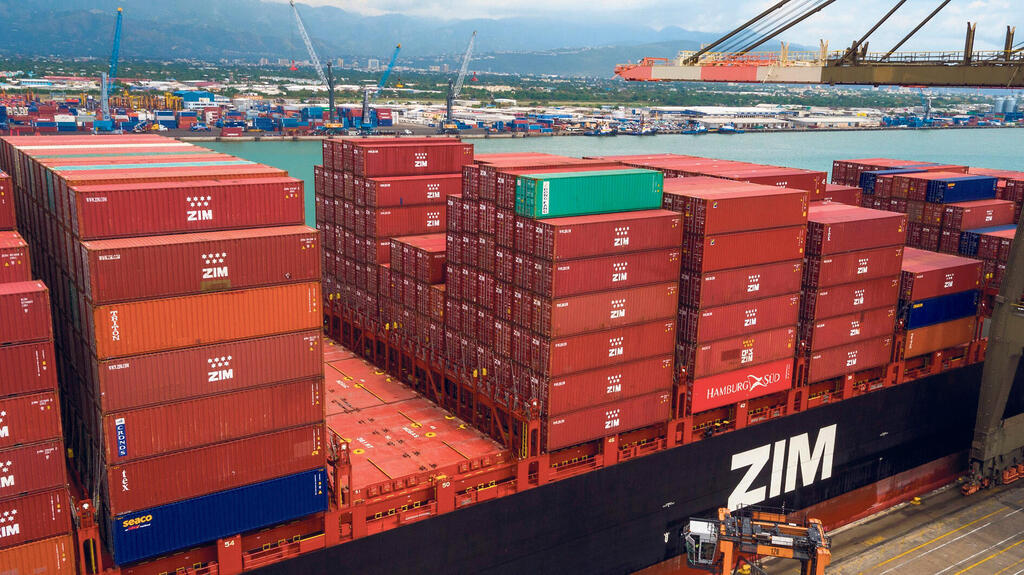
(Photo: Zim)
The authority said any new proposal must first receive formal approval from the boards of Zim, Hapag-Lloyd and FIMI.
The decision means Zim’s board will now have to decide whether to continue negotiations with Hapag-Lloyd and FIMI on a new transaction structure or seek other potential buyers for the company.
The authority’s announcement came after Hapag-Lloyd and FIMI indicated that they wanted to seek approval for a revised structure but had not yet submitted a formal proposal. The move ends the government’s consideration of the original transaction even though the parties still have several months to satisfy the conditions required to complete the deal.
Government approval is required because the Israeli state retains a “golden share” in Zim, giving it special rights over certain decisions involving the strategically important shipping company. Those rights are intended to protect essential Israeli interests even though Zim is privately owned and publicly traded.
The conditions attached to the golden share have prompted opposition to the proposed transaction from the Finance Ministry, Prime Minister’s Office and other relevant government ministries.
The Government Companies Authority administers the state’s golden share and is responsible for gathering the positions of the various ministries before determining whether the transaction can proceed. The authority has not formally rejected a sale to Hapag-Lloyd and FIMI, but its decision takes the original structure off the table for now.
In its letter to Zim, the authority said government agencies had spent months examining the proposal since the shipping company submitted its request for approval in March.
“Since Zim submitted its request for approval of the transaction in March, the relevant state authorities have worked to formulate their professional positions regarding the proposed transaction structure and invested considerable resources in doing so,” the authority wrote. “The positions of the various government ministries were submitted to the authority, and the examination of the original structure is in its final stage.”
The authority said Zim’s latest correspondence raised the possibility that the parties would submit a substantially different transaction structure.
“Because the required documents were not submitted by the deadline as requested, I am announcing the termination of the process that began in recent months regarding the original structure,” the authority wrote. “We consider the application submitted regarding the original structure to no longer be valid, and its review has ended.”
The authority said the parties had submitted only a list of principles for a possible new transaction rather than a binding proposal.
“Since you submitted only a list of principles and not a binding document, which you say will take time to prepare, I hereby inform you that the handling of all your requests concerning the Zim transaction has ended,” it said.
The authority left open one narrow route for reviving the original transaction, saying Zim could submit a new application based on that structure by Oct. 6. Zim and Hapag-Lloyd are not expected to do so because of the broad government opposition to the original proposal.
If Zim, Hapag-Lloyd and FIMI instead pursue a different structure, the authority said any new application must be complete and detailed, include all information concerning the revised transaction and have formal approval from the boards of Zim and the prospective buyers.