

AliExpress, Israel's most popular Chinese shopping platform, is opening its marketplace to businesses registered in Israel ahead of Sunday's Singles' Day sales event. The move will allow local merchants to establish stores on the platform and sell products directly to Israeli consumers, marking a significant expansion of the company's operations in the country.
The announcement follows the launch of AliExpress's Elite loyalty program for Israeli shoppers and signals a broader effort to strengthen the company's position in the local market.

Members of the Alibuy shopping community on Facebook and Telegram have already been informed that, beginning November 1, the AliExpress website and app will feature products labeled "Ship from Israel."
The initial selection is expected to include Jager bicycles and a wide range of Xiaomi products, including smart desk lamps, wet-dry vacuum cleaners, hair clippers, portable speakers, security cameras, headphones, smartphones, electric toilet seats, air fryers, electric scooters and electric bicycles.
According to Alibuy manager Yaniv Porat, prices have not yet been published, but he expects them to be attractive enough to compete with existing retailers.
"There are no prices yet, but they'll definitely be good, otherwise nobody will buy," Porat said. "For example, Jager bicycles are expected to cost around 4,500 shekels (about $1,440), compared with their regular price of 6,000 (about $1,900) shekels or more in Israel."
Can Israeli sellers compete with Chinese prices?
The challenge for Israeli merchants entering AliExpress will be competing with the low prices offered by Chinese sellers, something that may prove difficult.
Their primary advantage will be faster domestic delivery, although shipments from China already reach Israeli consumers in approximately one week. Another potential benefit is the ability to sell heavy or bulky products that are generally more difficult and expensive to import directly from China.
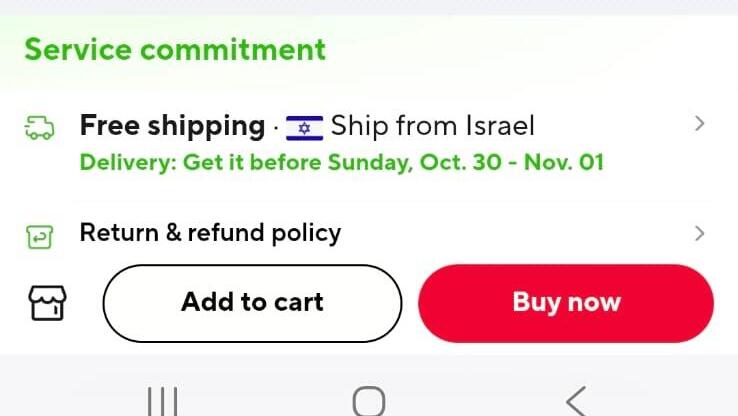
(Photo: Screenshot)
AliExpress said the initiative is expected to expand the range of products and brands available to Israeli consumers while reducing delivery times for goods shipped domestically.
"This move represents a further expansion of AliExpress's local operations and is expected to increase the variety of products and brands available to Israeli consumers, alongside shorter delivery times for products shipped from within Israel," the company said.
For Israeli businesses, the platform offers access to an established and extensive customer base, supported by AliExpress's existing infrastructure for payments, logistics, marketing and customer service.
During the initial phase, the seller registration process will focus on selected categories, including home appliances, consumer electronics, automotive electronics, office supplies, maternal and baby products, and fast-moving consumer goods.
Participation will be subject to AliExpress's quality, service and compliance requirements. Every business seeking to join the platform will undergo a review and approval process before being permitted to sell.
"At this stage, the initiative focuses on strengthening AliExpress's local product offering and connecting Israeli businesses with consumers in the domestic market," the company said.
Will AliExpress succeed where Amazon failed?
This is not AliExpress's first attempt to establish a local commercial presence in Israel. The company previously operated warehouses in the country and sold discounted products through them, but the initiative was eventually halted following intervention by the Israel Tax Authority.
The latest move also recalls Amazon's unsuccessful attempt to establish a localized marketplace in Israel in 2019.
At the time, Amazon launched a domestic shipping service that allowed Israeli importers and retail chains to sell products directly to local consumers through its website, with prices displayed in shekels and a Hebrew-language interface. Under that arrangement, Israeli sellers handled storage and delivery within the country rather than shipping products from Amazon warehouses in the United States or Europe.
However, the initiative gradually faded by late 2021. Because Amazon did not establish warehouses in Israel, local suppliers offered relatively high prices, making their products less attractive than goods ordered directly from the United States.
AliExpress is now attempting a similar model, betting that its popularity among Israeli consumers, established customer base and extensive logistics infrastructure will help local sellers compete.
Whether Israeli merchants can offer prices competitive enough to attract shoppers accustomed to ordering directly from China remains the central question.