

Three years after the Oct. 7 massacre, as the security investigation into the "Qatargate" affair concerning alleged ties between close advisers to Prime Minister Benjamin Netanyahu and Qatar is still underway, Shomrim has revealed that Qatar continues to transfer funds to Israeli nonprofits. Moreover, since 2023, the amount of money flowing from Qatar to Israel has risen sharply.
An examination found that an Israeli nonprofit based in Haifa, the Arab Culture Association, received 17.8 million shekels (around $5.0 million) in overseas donations between 2020 and 2025, accounting for more than 95% of its revenue. Most of the money came from a charity called The Galilee Foundation, which is registered in London but receives most of its income from Qatar.
Behind the flow of funds from Doha to London and from there to Haifa are brothers Azmi and Marwan Bishara. The former, Dr. Azmi Bishara, is a former Knesset member who has lived in Qatar since fleeing Israel during a covert investigation into suspicions that he assisted Hezbollah during the Second Lebanon War. Bishara was also among the founders of Al-Araby Al-Jadeed, a London-based news outlet that serves as a platform for promoting narratives aligned with the Qatari government. His brother, Dr. Marwan Bishara, lives in England and, among other roles, is a regular commentator for the long-established Qatari broadcaster Al Jazeera, which is barred from broadcasting in Israel.
Azmi Bishara runs the Arab Center for Research and Policy Studies, based in Doha. The center provides funds to the British foundation whose board chairman and one of its founders is his brother Marwan. From there, the funds are transferred to their final destinations, nonprofits in Israel, including the Arab Culture Association mentioned above. The nonprofit was co-founded and managed by the brothers' late sister, Dr. Rawdat Bishara.
By analyzing the Haifa nonprofit's files at the Registrar of Associations, financial reports from the foundation in England and publications by the Arab Center in Doha, Shomrim traced the path of money that was recorded in Israel as donations from England. The findings point to a sharp increase in the amount of Qatari money flowing through this route beginning in 2023.
In 2022, Marwan Bishara's British foundation received $181,000 from his brother Azmi's center in Doha, an amount that accounted for one-quarter of the foundation's total income that year. In 2023, the sum surged nearly tenfold to $1.8 million. In 2024, it rose further to $2.1 million and in 2025 it stood at $1.6 million.
Bishara's institute in Doha is defined as an independent private institution. Founding documents published by the Qatari government indicate that its annual budget is about 20 million shekels (around $5.6 million). It also has financial ties to the Qatari government. For example, a master's degree program established by the institute is funded primarily by the Qatari government. The London foundation, meanwhile, in addition to receiving funds directly from the institute, earns interest from an investment fund donated by the emir of Qatar, with the proceeds used primarily for a scholarship program for students in Israel, according to the British foundation's financial reports for 2023 and 2025.
The connection between the London foundation and Doha can also be seen in the British foundation's $2.5 million investment portfolio. Alongside shares in Western companies, the portfolio includes bonds issued by two Qatari entities controlled by the emirate. In this way, funds originating in Qatar reach Israel and are recorded there as donations from an English charity.
The word Qatar does not appear, but the money does
The Arab Culture Association, whose 2025 budget stood at 3.3 million shekels (about $930,000), 90% of which came from overseas donations, regularly submits its financial reports to the Registrar of Associations at the Justice Ministry and has received a certificate of proper management.
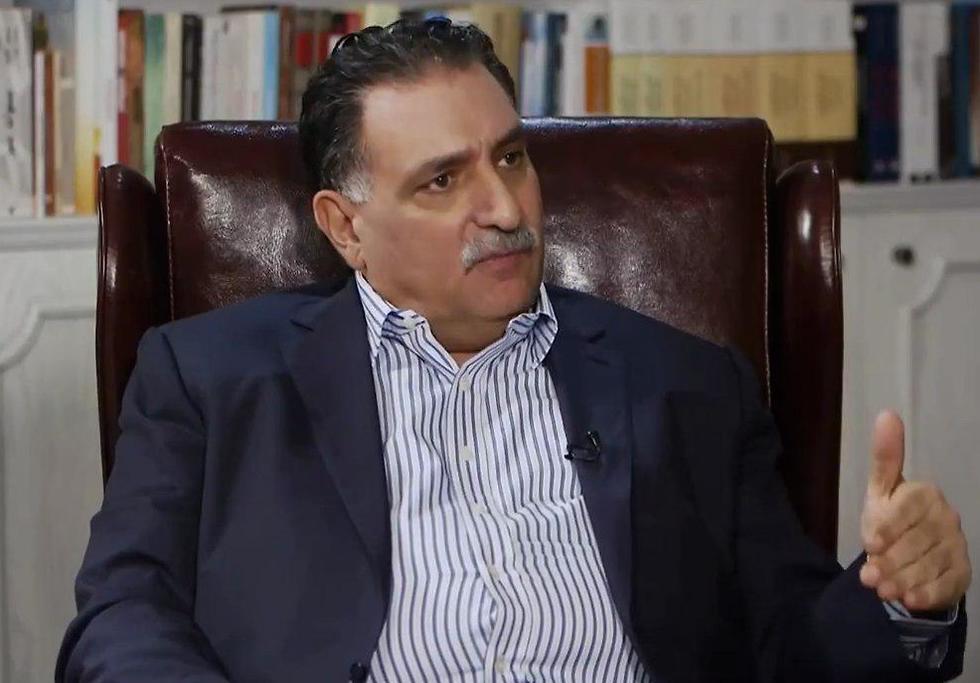
Dr. Azmi Bishara
The certificate is official confirmation that the organization complies with the required rules and operates transparently. The nonprofit's documents do not contain the words "Qatar" or "Arab Center for Research and Policy Studies." Regulations governing nonprofits require them to report the identity of donors but not the sources of their money. Thus, in this case, because there is no legal requirement to disclose the sources of the British foundation's funds, reporting the foundation as the donor rather than the institute in Qatar appears to meet the registrar's technical requirements.
The nonprofit did not report to the Registrar of Associations that one of its board members and authorized signatories, Dr. Mahmoud Muhareb, also serves as a research fellow at Bishara's institute in Doha — the funder of the London foundation, which in turn donates to the Haifa nonprofit. Such a connection would presumably have appeared if there had been a requirement to disclose the path taken by the money.
"This is the use of money-laundering methods, not in the illegal sense of the term but in the sense of trying to conceal the source of the money. There is concealment here, not absolute concealment, but concealment," Brig. Gen. (res.) Sima Vaknin-Gil, former director general of the Ministry of Strategic Affairs, told Shomrim about a year and a half ago.
Book fairs, performances and Nakba tours
The stated goals of the Arab Culture Association in Haifa, according to documents submitted to the Registrar of Associations, are "the establishment and operation of cultural clubs, support for scientific research and encouragement of cultural creation in Israel." Online, the organization can be seen carrying out extensive activities focused on issues of Arab identity, including book fairs, performances and festivals, "Nakba tours" of Arab villages and communities displaced in 1948 and, as a flagship initiative, scholarships named after the late Bishara sister.
The scholarships are awarded to hundreds of Arab-Israeli students studying at universities and colleges in Israel. Each scholarship is worth 3,000 shekels (about $850) and recipients are required to participate in enrichment workshops and lectures on Palestinian identity and history as well as volunteer activities.
The scholarship program in Israel was described in a report by the Galilee Foundation in London last year as "the foundation's flagship program." The report said the program "provides life-changing scholarships to disadvantaged Palestinian citizens in Israel ... encourages them to engage with local communities and connect with their Palestinian heritage." According to the report, 1,300 students had received scholarships by that point.
The report also said the foundation supports a scholarship program at the Palestinian Al-Quds University, the construction of a cultural center in Haifa operated by the Arab Culture Association, the Adalah human rights organization and specifically its report examining how universities in Israel "systematically suppressed the freedom of expression of Palestinian students following Oct. 7."
The British foundation also supports 17 Palestinian-Israeli researchers through the Arab academic center Mada al-Carmel, the Baladna youth organization in Jaffa, children from Gaza and others.
As Netanyahu put it: 'Qatar is a complicated country'
To examine and assess information collected from open sources, Shomrim consulted experts from the Institute for the Study of Global Antisemitism and Policy (ISGAP), which has spent the past decade exposing Qatari funding and Muslim Brotherhood movement infrastructure in the West. Vaknin-Gil, the institute's acting director, said that even if there is seemingly no legal problem with the way the funds are transferred, the approach to money originating in Qatar should change.
"This is exactly the method used by those who want to transfer money while remaining behind the scenes, or alternatively by those who want to receive money without having to deal with various issues of visibility — using intermediaries," she said. "Therefore, if you want to systematically expose charitable funds — it is clear to us that they are intended to support defined objectives or serve an extremist ideology, in this case Qatar's — an investigative audit should be conducted that examines all the supply chains, both visible and indirect."
Vaknin-Gil describes Qatar's involvement in education, welfare and academia around the world and in Israel as "soft power," aimed at embedding the ideology and agenda of Qatar and the Muslim Brotherhood. To combat the phenomenon, she said, it is necessary to begin with the basic question: "How do you define Qatar?"
She criticized the fact that "Qatar is currently not defined as an enemy state under any of the four laws in Israel that allow for such a designation," saying this is the case "when it is clear to everyone that it is not a friendly country. On the contrary, it is a 'disruptive' state actor in the Middle East and global arenas, and an emirate that has made it its goal to harm the State of Israel."
Earlier this month, Shomrim mapped how Qatar has established a network of economic and security influence over Israel through its holdings in companies and infrastructure with ties to Israel — from energy and aviation to shipping, cybersecurity, finance and Iron Dome interceptors. According to Vaknin-Gil, "If the Israeli government changes the definition of Qatar — whether to the stricter designation of an 'enemy state' or alternatively to a country with various restrictions on diplomatic or business ties, as was recently decided in the context of defense exports — it will be easier to expose the flow of money and stop it."
The Galilee Foundation and the Association for Arab Culture did not provide comments.