

As fears grow that artificial intelligence could replace millions of workers, experts say some skills remain uniquely human and are likely to retain their value even as AI becomes more powerful.
“The skills that are most resistant to displacement by AI are the ones that are the most distinctly human,” Maria Flynn, president and CEO of the nonprofit Jobs for the Future, told The Associated Press. “Some of those things are relationship building, conflict resolution, the ability to guide and motivate other people and ethical judgment.”

Even technical job postings often emphasize communication skills and initiative, she said.
Flynn describes these abilities as “durable skills” — capabilities that remain valuable despite economic shifts, technological change and labor market disruptions.
“We think, especially now, in this time of AI advancement, that it’s the durable skills that really make a worker genuinely valuable at work, regardless of what tools and technology are available,” she said.
Empathy: Experts say understanding body language, reading between the lines and recognizing emotions remain areas where humans outperform machines.
Nursing is one example. Marco Iansiti of Harvard Business School said AI cannot replace the human care nurses provide. “I remember times when I was sick in the hospital and the nurse was like the godsend,” he said. “Would I have let a robot do the same thing? No. There was a human connection there that I found very valuable.”
AI, however, can help with administrative tasks such as filling out forms, potentially freeing nurses to spend more time with patients.
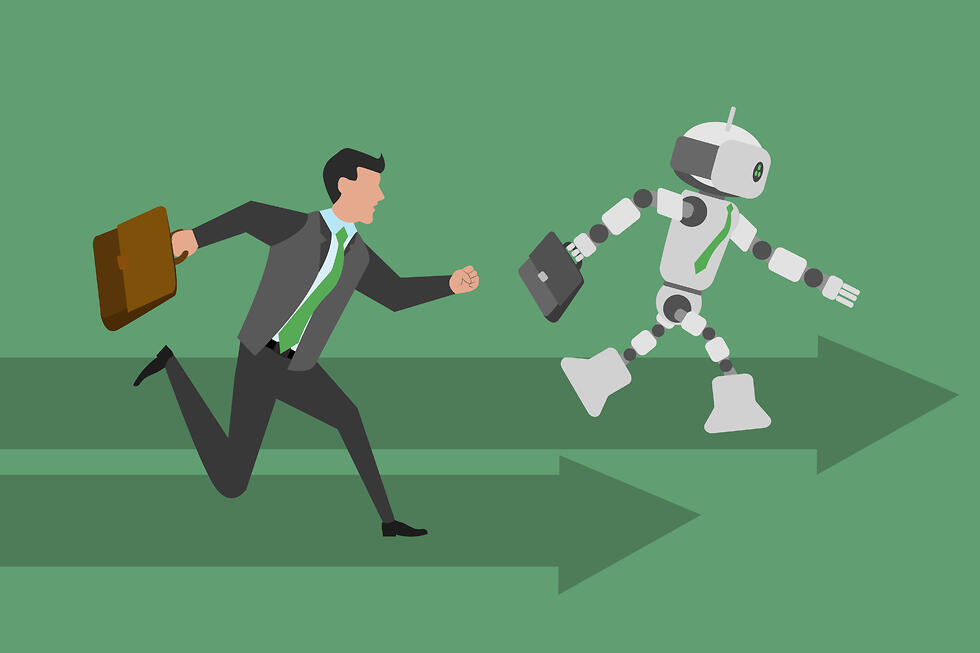
(Illustration: Shutterstock)
Nurturing relationships: The ability to build strong personal ties with co-workers, clients and stakeholders is another skill experts believe AI will struggle to replicate.
Interpersonal skills are particularly important in sales but also prove valuable when conflicts arise. “Having that human in the loop to manage those expectations, to ease any ruffled feathers, to build the type of relationships that are needed, to expedite good work, is still going to be critical,” Flynn said.
Colleen Adler, a human resources expert at consulting firm Gartner, said conflict resolution is among the most sought-after skills for managers. “There is still a tone to AI that does not yet mimic human connection,” Adler said. “That could change; I don’t think we’re there yet.”
Critical thinking: AI systems can process information and generate responses rapidly, but speed sometimes comes at the expense of accuracy.
Amalia Kaufman of the University of California said human expertise remains essential. “You have to have the cognition and the critical thinking and the subject matter expertise to make sense of it, and to know when it’s wrong,” she said. “You have to check your facts.”
Experts say AI models are also designed to satisfy users, which can sometimes lead them to produce inaccurate information. That makes human judgment and professional knowledge increasingly important.

(Photo: Shutterstock)
Having a conscience: The ability to distinguish right from wrong and make decisions based on personal values remains fundamentally human, experts say.
“Gut feelings are something you feel in your gut. It’s not just a pattern of information that’s going through your brain,” Iansiti said. “It is actually an emotional reaction that is intrinsically different from the way that AI operates. At least this generation of AI.”
Although safeguards can be built into AI systems, he said they cannot replace human moral responses.
Judgment calls: Experts also point to creativity and decision-making in ambiguous situations as uniquely human strengths.
“We don’t believe that’s something that’s going to be replicated by artificial intelligence,” said Heather Stefanski, director of learning and organizational development at consulting firm McKinsey. “If we’re all just using the AI answer to problem-solve, how are you really going to be distinctive?”
Flynn said humans make decisions based on judgment informed by experience and accumulated knowledge, while AI relies on data and often struggles with gray areas. For now, the ability to see all angles of an issue and add context remains a form of intelligence that people possess to a greater extent than AI, she said.