

Could two unusual tax measures be introduced in the coming days to ease pressure on businesses and households? The Finance Ministry has begun discussions on a proposal to cut fuel taxes by at least 50 agorot per liter, aiming to prevent the price of 95-octane gasoline from exceeding NIS 8 per liter as early as next week.
At the same time, the Israel Tax Authority is reviewing an urgent request from manufacturers and exporters to allow them to pay taxes in U.S. dollars instead of shekels.
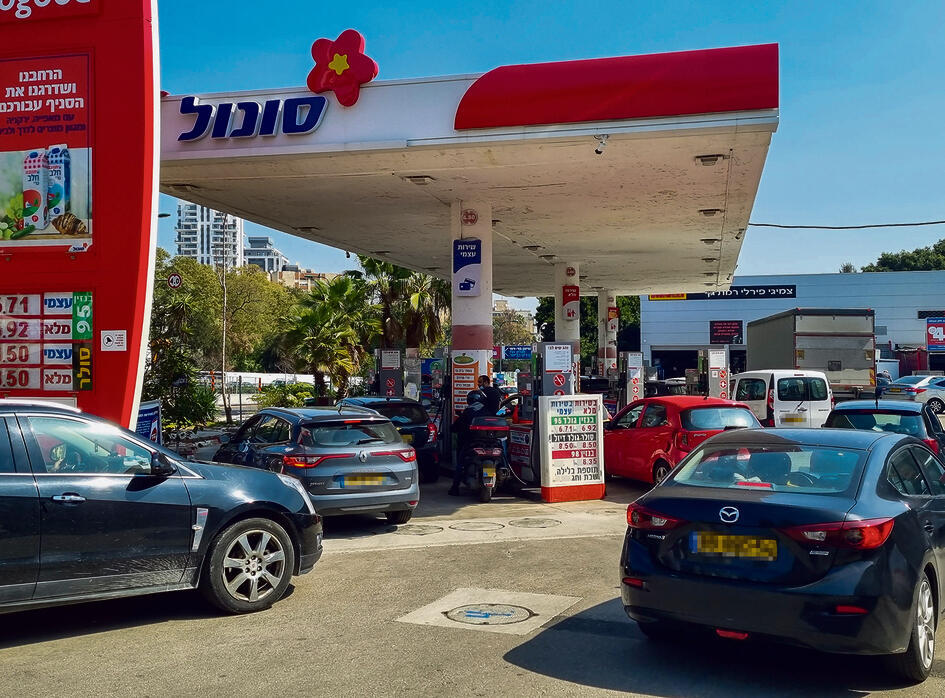
Gas station
(Photo: Yariv Katz)
The sharp rise in global oil prices, now above $100 per barrel compared with $68 before the outbreak of the war with Iran, could push the price of self-service 95-octane gasoline up by more than one shekel next week. That would bring it above NIS 8 per liter for the first time in 14 years.
Such an increase would immediately drive inflation higher by at least one full percentage point, given fuel’s broad impact across the economy, including manufacturing, transportation, shipping, aviation, and electricity and water prices. It could also lead to higher municipal taxes.
Ynet has learned that in recent days, senior Finance Ministry officials have begun discussing a proposal to reduce the fuel tax by at least 50 agorot starting April 1, Passover Eve, in an effort to prevent an inflationary spiral that could also prompt the Bank of Israel to raise interest rates again, possibly at its next decision.
The price of 95-octane gasoline rose by 14 agorot on March 1 to NIS 7.02 per liter. The shekel has also weakened, with the dollar rising by about 2%-3% since the war began. According to expert estimates, under current conditions, fuel prices in Israel could reach about NIS 8.10 per liter starting next Wednesday, an increase of more than one shekel.
Fuel prices have already climbed by 10% to 30% in the U.S. and other countries. Similar increases are expected in parts of Europe and East Asia, both for industrial fuel and at gas stations.
Prime Minister Benjamin Netanyahu supports a temporary reduction in fuel prices. A decision is expected this week on whether to cut the tax by 50 agorot or even a full shekel, as was done in 2022 by then-Finance Minister Avigdor Liberman. Current Finance Minister Bezalel Smotrich maintained a tax reduction of up to 50 agorot per liter throughout 2023 before canceling it in January 2024.
Meanwhile, manufacturers and exporters are pushing for a change they describe as groundbreaking, allowing taxes to be paid in dollars rather than shekels. The Tax Authority has not yet ruled out the proposal.
In a formal letter to Smotrich, Manufacturers Association President Avraham (Novo) Novogrotzky called for a fundamental change in tax policy for Israeli export companies. He warned of a growing imbalance stemming from the gap between exporters’ revenues, typically in dollars, and their requirement to pay taxes in shekels.
“This situation harms industry, increases currency volatility and undermines the competitiveness of the entire economy,” Novogrotzky wrote.
He noted that export companies are currently forced to convert large sums from dollars to shekels at fixed tax payment dates, creating artificial demand for the shekel and unnecessary volatility in the foreign exchange market. He also argued that reporting and calculations in shekels generate artificial exchange-rate differences, inflate profits and lead to taxes that do not reflect real economic activity.
The result, he said, is direct harm to exporters and local industry, especially at a time when the shekel continues to strengthen.
Novogrotzky proposed expanding Section 130A of the Income Tax Ordinance to allow export companies that report in dollars under international accounting standards to keep books and file taxes in their functional currency, regardless of ownership structure.
He said such a move would eliminate built-in discrimination between companies with foreign investment and Israeli firms operating in the same sector, while enabling the collection of “true tax” based on economic performance rather than currency fluctuations.
Similar policies are already in place in countries such as Singapore and Ireland, he noted. His letter also cited past cases in which taxes were paid directly in foreign currency, including major deals involving Mobileye and Wiz, arguing that such a move is not only feasible but also necessary in extreme conditions.