

Google has received approval from the European Union’s antitrust authority for its $32 billion acquisition of Israeli cybersecurity company Wiz, removing the final major obstacle to completing the deal. U.S. regulators had already cleared the transaction.
European regulators ruled that the acquisition would not raise competition concerns. "Google stands behind Amazon and Microsoft in terms of market shares in cloud infrastructure, and our assessment confirmed that customers will continue to have credible alternatives and the ability to switch providers," EU antitrust chief Teresa Ribera said in a statement.
The European Commission, which serves as the EU’s antitrust enforcement body, said that any information Google acquires as part of the deal would not be commercially sensitive and could also be examined by other cybersecurity software companies.
Gallery
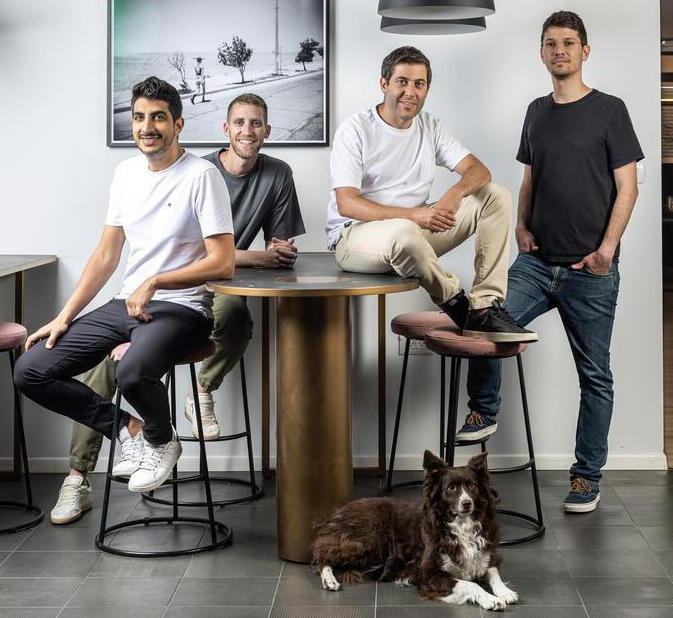
Wiz CEO Assaf Rappaport, Chief Product Officer Yinon Kostica, Chief Technology Officer Ami Luttwak, and Chief R&D Officer Roy Reznik
(Photo: Avisag Shaar-Yishuv)
The deal, announced in March 2025, will strengthen Google’s presence in cybersecurity and in the cloud computing market, where it competes with larger rivals Amazon and Microsoft.
In recent years, technology deals have come under heightened regulatory scrutiny amid concerns that such transactions could entrench the market power of tech giants and shut out smaller competitors. In this case, however, the European regulator was persuaded that the acquisition would not harm fair competition.
The EU’s approval marks a significant milestone for Google as it seeks to bolster its position in the rapidly expanding cloud computing market and signals a major strategic bet on the fast-growing cybersecurity sector. While the EU decision was the largest hurdle facing the deal, approvals are still required in smaller markets such as Australia and South Africa. Estimates suggest those approvals will be granted in the coming days following the EU’s decision.
Each founder expected to earn $2 billion–$3 billion
On March 18, after lengthy negotiations, Google’s parent company Alphabet formally announced the acquisition of Wiz for about $32 billion. It is the largest acquisition ever of an Israeli company and also the biggest deal Alphabet-Google has ever completed, surpassing its previous record purchase of Motorola Mobility in 2011 for $12.5 billion. Until now, the largest sale of an Israeli company was Mobileye, which Intel acquired in 2017 for about $15 billion.

Wiz. One of the richest and most stable high-tech companies in Israel
(Photo: Brandon Luckain: Lucky Shot Media - courtesy of Wiz)
The transaction is an all-cash deal and, once approved by regulators, is expected to generate between $2 billion and $3 billion for each of Wiz’s four founders: CEO Assaf Rappaport, Chief Product Officer Yinon Kostica, Chief Technology Officer Ami Luttwak, and Chief R&D Officer Roy Reznik. Wiz’s 1,800 employees are also expected to benefit significantly through some of the largest “sale and retention” bonuses ever distributed in Israel. According to estimates, long-tenured employees could receive sums reaching millions of dollars, while more junior staff would receive bonuses of “only” hundreds of thousands of dollars.
Wiz is considered one of Israel’s wealthiest and most stable high-tech companies, with most of its employees based in Israel, even though it is registered as a U.S. company headquartered in New York. Sources close to the company have previously said the deal with Google is not expected to lead to layoffs; on the contrary, Wiz plans to accelerate its hiring pace.
For Alphabet-Google, the acquisition of Wiz will significantly strengthen its position in cloud computing in general and cybersecurity in particular—an area currently dominated by rivals Microsoft and Amazon. Notably, Microsoft’s main cybersecurity center, which generates the highest revenues in the sector worldwide, is located in Herzliya, just minutes from Wiz’s headquarters. Before founding Wiz, CEO Assaf Rappaport served for five years as CEO of Microsoft Israel.
In its official explanation of the acquisition, Google wrote that “the expanding role of AI, together with the adoption of cloud services, has dramatically changed security for customers and made cybersecurity increasingly important.”