

The war between the United States and Israel against Iran, along with Iran’s blockade of the Strait of Hormuz, has reduced global oil and gas supply and driven a sharp rise in energy prices. The increase is expected to impact household bills and broader inflation, but it is already being felt most immediately at the gas pump.
To ease public frustration over rising fuel costs, governments and organizations have taken steps to limit price increases. For example, the 32 member states of the International Energy Agency agreed to release 400 million barrels of oil from reserves, while Germany is nearing a decision to allow gas stations to raise prices only once per day.
Gallery
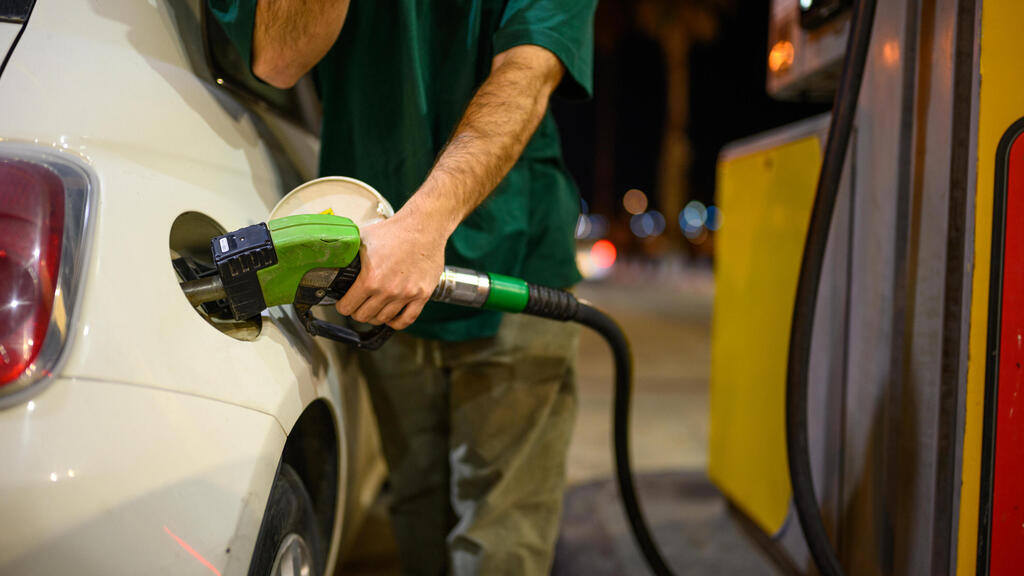
Refueling a car has become a complex phenomenon in many countries
(Photo: Alexi J. Rosenfeld/Getty Images)
Slovakia has been hit particularly hard by supply disruptions from both fronts. In addition to Iran, explosions along the Druzhba pipeline — which carries Russian oil through Ukraine to Slovakia and Hungary — have reduced supply. To prevent steep price hikes, the government together with major oil companies capped fuel prices. The move triggered a rush at gas stations, leading to restrictions such as a €400 cap per fill-up and a ban on filling plastic containers larger than 10 liters.
However, the price cap also created a new phenomenon: “fuel tourism.” While diesel in Slovakia costs about €1.50 per liter, prices in neighboring Poland and the Czech Republic stand at around €1.75, and in Austria at €1.95. As a result, Slovak gas station owners say Austrian and Polish drivers have been “draining” their supplies.
In response, Slovakia introduced what it called “affirmative discrimination,” requiring drivers with foreign license plates to pay higher prices based on the average fuel cost in neighboring countries.
Meanwhile, gas station owners in Germany near the Austrian border report the opposite problem, with pumps sitting idle as drivers cross into Austria for cheaper fuel. A similar trend has emerged in Spain, where French drivers are crossing the border to refuel, causing long lines in border towns.
Across Asia — a region more heavily affected by disruptions in oil exports — governments have begun imposing stricter measures. South Korea capped fuel prices for the first time in 30 years, Thailand banned oil exports, Bangladesh closed universities to reduce energy consumption, and Pakistan shortened the workweek to four days, with many employees asked to work from home. In the Philippines, public transportation fare increases have been frozen and temporary free rides introduced, though a decision on suspending fuel taxes has yet to be made.
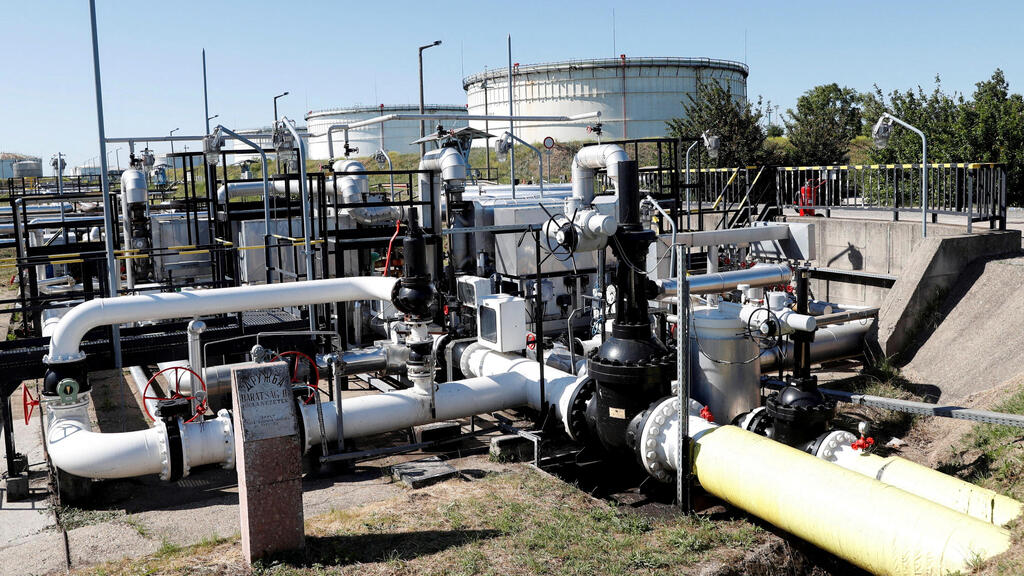
A facility on the Druzhba oil pipeline in Hungary where oil flows from Russia via Ukraine
(Photo: Bernadett Szabo/File Photo/Reuters)
Iran has allowed oil and gas tankers bound for India to pass through the Strait of Hormuz, partly to maintain strategic ties with New Delhi and partly because shortages have left Indian households and businesses struggling to cook. Cambodia (68%) and Vietnam (50%) have recorded the largest fuel price increases globally since the war began.
The heavy impact on Asian markets reflects their near-total dependence on oil passing through the Strait of Hormuz. Japan, for example, imports 95% of its oil from Gulf states, but has so far managed better due to large reserves.
Canada, which has seen the steepest fuel price increases in the Western world (up 28%), said it will combat rising costs by releasing reserves and tightening regulation, including requiring greater transparency from gas station operators on costs, pricing and profits. Other Western countries, such as Australia, have announced targeted budgets to help households reliant on heating fuel.
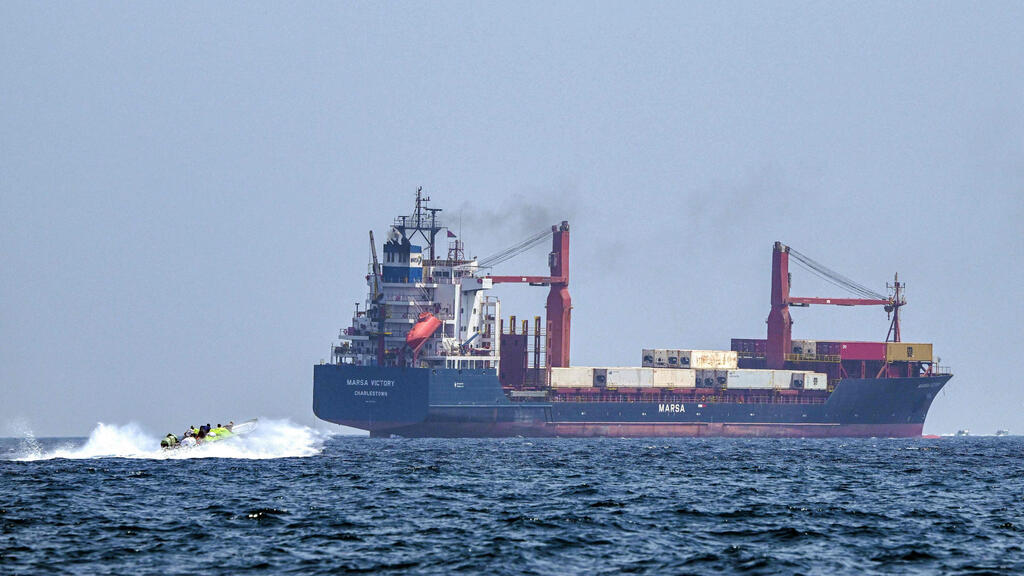
A ship traverses the Strait of Hormuz near Oman
(Photo: Giuseppe Cacace / AFP)
In Italy, the government approved an emergency decree to cut fuel prices by €0.25 per liter for 20 days, a measure worth about €1 billion aimed at bringing prices below €1.90 per liter. It also includes stricter oversight, mandatory daily reporting by oil companies and enforcement measures against violations.
In Greece, where fuel prices have reached about €2 per liter in Athens, the government is working at the international level to stabilize the market, including meetings with the International Energy Agency in Paris. Authorities also have emphasized the need for price transparency and tools for consumers to compare gas station prices.
In Pakistan, the crisis has led to extraordinary austerity measures, including the cancellation of the national Independence Day parade due to fuel shortages and high import costs.