


For someone who loves to post and voice an opinion on virtually everything, Elon Musk has maintained complete Twitter silence on the Jeffrey Epstein investigation files. As it becomes increasingly clear that Donald Trump was a very close friend of one of the most reviled sex offenders ever, Musk’s silence has grown ever louder. It is especially deafening given that in early summer, during the brief period when it appeared he and Trump were on the brink of a breakup, Musk tweeted: “It’s time to drop the really big bomb: Donald Trump is in the Epstein files. That’s the real reason they haven’t been made public.”
Musk deleted that tweet a few days later and apologized for it. Not because it was false, which today is clearly not the case, but because he remembered that his path to becoming the world’s first trillionaire runs through securing more and more contracts with the U.S. government. That cannot happen if he is at odds with the president.
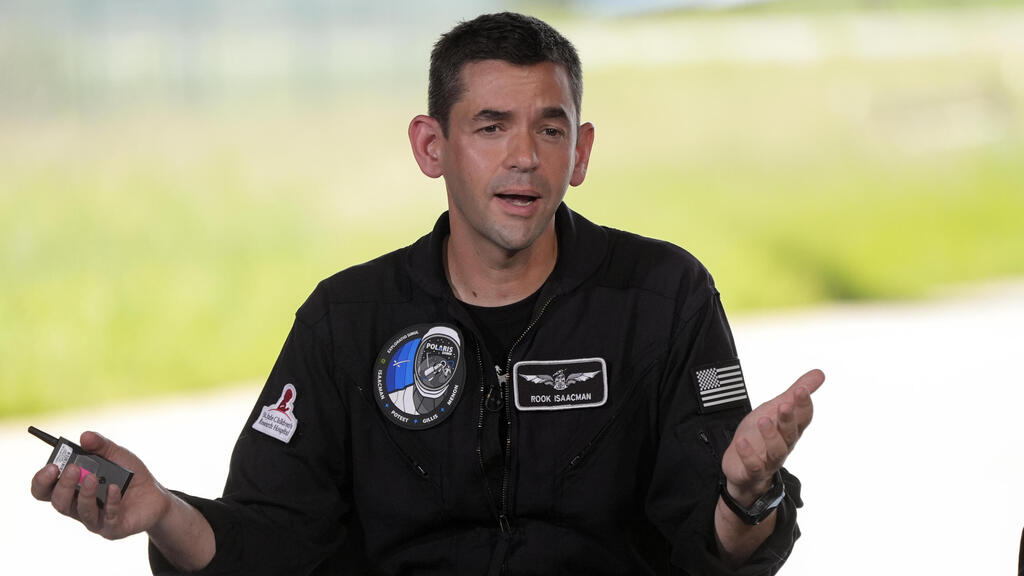
Last week, Musk was handsomely rewarded for his months of silence when the Senate approved the appointment of billionaire Jared Isaacman as NASA administrator. Before his confirmation, Isaacman was the most significant private customer of Musk’s SpaceX. His road to the coveted post was marked by ups and downs, all tied to the fluctuations in Musk’s relationship with Trump. It is a story of a man who reached a senior government role through a culture so corrupted that it has become somewhat unfairly difficult to remember that, on his own merits, he is a perfectly worthy appointment.
Part of several historic spaceflights
Jared Isaacman is an American Jew born in New Jersey in 1983. At just 16, he dropped out of school to found digital payments company Shift4 Payments in his parents’ basement. The company grew significantly, with Isaacman serving as chairman and CEO. At the same time, he built an aviation career: jet pilot, air show pilot with extensive flight hours, and founder of Draken International, a private fighter jet company that trains air force pilots. He sold most of his stake in the company in 2019. According to Forbes, his net worth is estimated at $2 billion, ranking him around 1,600th among the world’s wealthiest in 2024.
In 2021, Isaacman financed and personally led Inspiration4, the first all-civilian commercial spaceflight in history. The mission also raised more than $250 million for St. Jude Children’s Research Hospital. Three years later, he led Polaris Dawn, during which the first-ever private spacewalk by a civilian crew was carried out. Both missions flew aboard SpaceX spacecraft, earning Isaacman a reputation as a bold risk-taker.
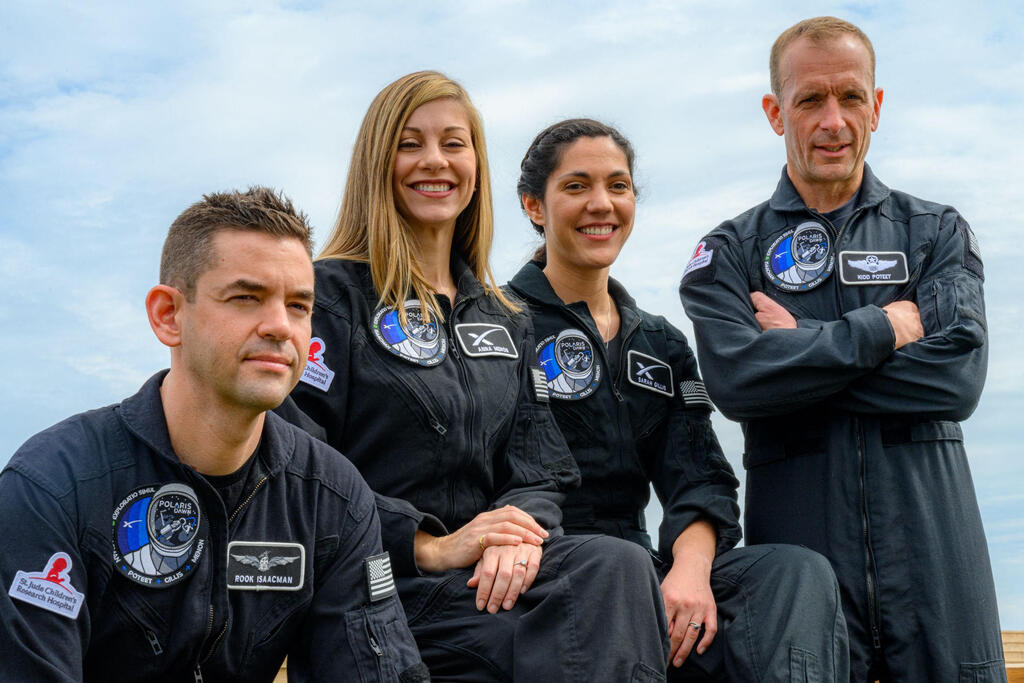
Jared Isaacson, right, led the Polaris Dawn mission
(Photo: Polaris Mission for AFP)
Space is a genuine passion for Isaacman, who is also respected among experts. From that standpoint, he would have been considered a strong appointment even under a Democratic president. Trump announced his selection in December 2024, and the response was almost universally positive. Like nearly all Trump appointments, it carried risks of conflicts of interest, but it at least looked like out-of-the-box thinking: a professional who understands space in the 21st century, is connected to NASA and genuinely values what it represents nationally.
The Senate vote on Isaacman’s confirmation was initially scheduled for early June and seemed a foregone conclusion, with several Democrats expected to support it. But in late May, just days before the vote and at the height of tensions between Trump and Musk, Trump withdrew the nomination. The White House cited disagreements over NASA’s direction. “It is vital that the next leader of NASA be fully aligned with the ‘America First’ agenda,” White House spokeswoman Liz Houston said. “A new nominee will be announced directly by President Trump soon.”
No alternative candidate was announced, and Trump later explained that the real reason for canceling Isaacman’s nomination was exactly what everyone had suspected, not the official White House line. “Elon Musk asked that his close friend Isaacman get NASA,” Trump said. “At first I thought Isaacman was very good, but I was surprised to learn he was a Democrat who had never donated to Republicans. I also think it’s inappropriate for a very close friend of Elon, who was in the space business, to run NASA, when NASA is such a large part of Elon’s companies.”
Trump, of course, is highly flexible in his views on conflicts of interest. In any case, Isaacman’s nomination was scrapped, Musk took the hint and went back to tweeting about transgender issues. Isaacman, for his part, understood that the cancellation was not really about him and spent the following months engineering a comeback. He even managed to meet Trump, who ultimately decided the appointment would benefit him both professionally and politically.
In November, the president resubmitted the nomination to the Senate, describing Isaacman as “a successful business leader, philanthropist, pilot and astronaut,” highlighting his hands-on experience in private spaceflight and his passion for space exploration. All of that had been true six months earlier as well.
‘This is simply corruption’
Isaacman’s appointment as NASA’s 15th administrator was approved by the Senate in a 67–30 vote, with several Democrats joining Republicans. The confirmation hearings, however, were not without landmines. Democratic senators repeatedly pressed him on his ties to SpaceX. Sen. Edward Markey of Massachusetts sharply criticized SpaceX for refusing to disclose how much Isaacman paid the company for his spaceflights. “This is highly suspicious. SpaceX could reap billions from having a NASA administrator friendly to it,” Markey said. “The American people need to know how financially intertwined Isaacman and Musk’s SpaceX really are. Sometimes, if it looks like corruption, sounds like corruption and smells like corruption, it’s simply corruption.”

President Donald Trump made the appointment at Musk's request
(Photo: Eric Hartline-Imagn Images)
It is well known that Musk holds extensive government contracts, most of them tied to SpaceX and NASA. Their total value is estimated at about $15 billion, including a roughly $2.9 billion contract to develop a lunar landing vehicle. SpaceX also has several contracts with the Defense Department, and just last week the Pentagon announced an agreement with Musk’s xAI startup to integrate the controversial Grok chatbot into military systems.
Financial disclosures show that Isaacman’s relationship with SpaceX is worth more than $50 million to the company. He himself reported capital gains of more than $5 million from an investment in SpaceX. At the hearing, Isaacman said: “I led two space missions with SpaceX because it’s the only organization that can send astronauts since NASA’s shuttles were retired. In that sense, my relationship with SpaceX is no different from NASA’s.”
Another line of questioning concerned Trump’s decision to renominate him. Sen. Gary Peters of Michigan noted that Isaacman had recently donated about $2 million to a Trump-aligned super PAC. Isaacman replied that he made the donation when he “briefly considered” a political career earlier this year. “I’ve been relatively apolitical, moderate with a rightward lean, so it’s not surprising that I support the Republican Party,” he said, despite having donated to Democrats in the past.
The confirmation revived the fact that most of the space establishment, public and private alike, supported him from the outset. “With decades of experience as an entrepreneur, business leader and pioneer of commercial space, Isaacman is ideally suited to lead NASA during this critical period in the agency’s history,” said Dave Cavossa, president of the Commercial Space Federation. A coalition of 36 former NASA astronauts said: “Most importantly, Jared has a genuine passion for space exploration and real admiration for NASA as an American institution. He will bring renewed energy to NASA.”
NASA to continue commercializing
One official who was less enthusiastic about the appointment was Transportation Secretary Sean Duffy, who had served as acting NASA administrator and worked hard to permanently bring the space agency under his department’s umbrella. That effort put him at odds with Musk after he accused SpaceX of missing deadlines and began courting its competitors. Publicly, of course, Duffy welcomed Isaacman’s appointment.
Isaacman takes office at a critical moment for NASA. On the day he was sworn in, Trump signed an executive order directing the agency to return astronauts to the moon by 2028 and begin developing a permanent lunar base by 2030, ahead of China, while also laying the groundwork for future Mars exploration. “We are facing another space race,” Isaacman said after his swearing-in. “Within the next three years we will land American astronauts on the moon again, but this time with infrastructure that will remain.”
He also pledged to emphasize nuclear power in space, which he said would be key to exploration beyond the moon, including future missions to Mars.
The next phase of NASA’s return-to-the-moon program, known as Artemis, could launch as early as February. Artemis II will send four astronauts on a 10-day flight around the moon to test the launch system and the Orion spacecraft. It will mark the farthest humans have traveled into space since the Apollo program ended in 1972. Artemis III, to follow, is expected to land astronauts near the moon’s south pole.
NASA is also expected to continue its push toward commercialization. SpaceX and Jeff Bezos’ Blue Origin will play critical roles in the lunar return effort, and Isaacman said other private space companies will also take part. He is just 42, and while he would never say it out loud, even to himself, there is little doubt that Isaacman dreams that if all his plans succeed, one day he too will reach the moon.