

The massive betting market surrounding Israel’s election on Polymarket was turned upside down overnight. Just before polls opened, bettors on the platform, which has become enormously popular over the past year, gave Gadi Eisenkot a 56% chance of becoming Israel’s next prime minister, compared with just 27.5% for Benjamin Netanyahu.
Hours after the exit polls were released, Netanyahu had taken the lead. Meanwhile, more than $70 million had flowed into this market alone, making it one of the largest political betting markets ever recorded for a country outside the United States.
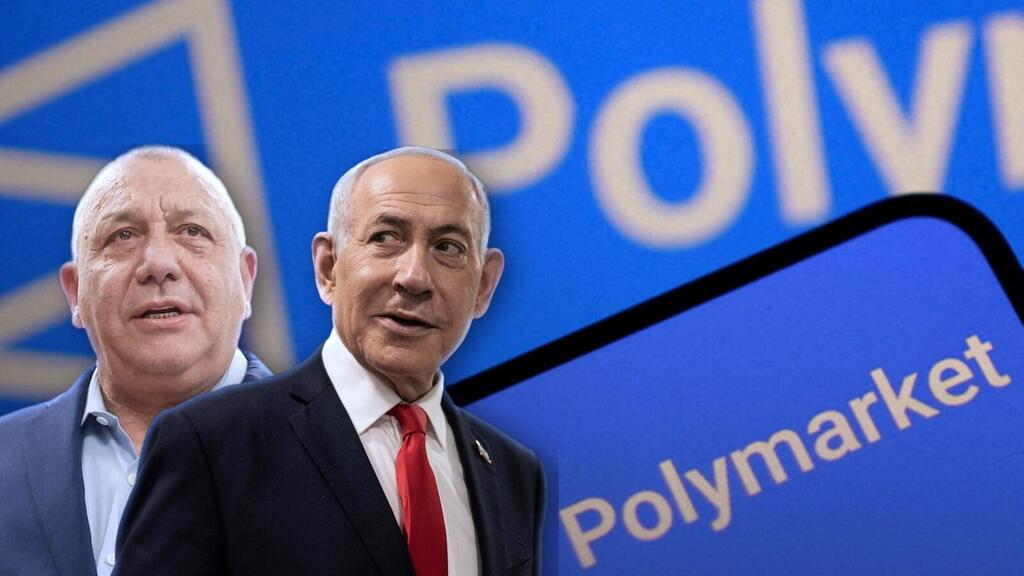
Gadi Eisenkot and Benjamin Netanyahu
(Photo: Dana Kopel, Dado Ruvic, Jewel Samad/Pool Photo via AP)
On the morning before Election Day, trading volume on Polymarket’s Israeli election market stood at $54.2 million. Several days earlier, it had already been reported that the market had surpassed $55 million. Trading intensified overnight, pushing total volume to approximately $70.8 million. The contract betting on Netanyahu becoming the next prime minister alone accounted for more than $23.1 million of that amount. As of Wednesday morning, Polymarket showed trading volume of $73 million in this market.
An entire network of related betting markets emerged around the main contest. Approximately $14 million was traded on which party would become the largest in the Knesset, Israel’s parliament, while about $6 million was wagered on the number of seats Likud would win. Another market, tracking when Netanyahu would leave office, accumulated trading volume of approximately $125 million.
There were also much smaller markets, involving tens or hundreds of thousands of dollars, on voter turnout, which party would finish third, the number of seats won by Ra’am and Otzma Yehudit, and even whether the election would produce a hung parliament.
On the eve of the election, the picture in the prediction markets was clear. On Polymarket, Eisenkot had a 56% chance of becoming prime minister, Netanyahu 27.5%, Naftali Bennett 10.5% and Avigdor Liberman 1.5%. On Kalshi, Polymarket’s main competitor, the figures were nearly identical: 55% for Eisenkot, 26% for Netanyahu and 12% for Bennett. Just a week earlier, Eisenkot’s chances on Polymarket had stood at approximately 49%, and his surge in the final days reinforced the impression that bettors were anticipating a political upset.
Bettors also favored Likud’s rivals in the race to become the largest party. Eisenkot’s Yashar! party was given a 73.5% chance of winning the most seats in the Knesset, compared with just 26% for Likud. In the market predicting Likud’s seat total, the favored outcome was 20 to 24 seats, with a 42% probability. Bettors assigned a 31% chance to Likud falling below 20 seats.
Netanyahu leads in race to receive mandate to form government
The prediction markets’ performance against the actual election results has been mixed. On the fundamental question of which party would win the most seats, the markets got it wrong: Bettors gave Yashar! a 73.5% chance, but Likud is on course to finish first. Predictions of a Likud collapse also failed to materialize. Its projected result of 27 seats, according to the exit polls and vote count, is higher than the range favored by bettors.
What the markets did correctly anticipate was a close contest. They now project that neither political bloc will secure a parliamentary majority, precisely the outcome indicated by the exit polls.
The reversal came as soon as the exit polls were published. Following their release, Netanyahu surged into the lead with a 48% chance of remaining in office, while Eisenkot plunged to 33.5%, Bennett fell to 7% and Liberman stood at 2.7%.
By Wednesday morning, Polymarket gave Likud a 99% chance of emerging as the largest party. The probability of Likud winning 25 to 29 seats exceeded 90%, while the likelihood of any coalition securing a majority stood at just 2% to 3%.
In the market predicting who would receive the first mandate to form a government, Netanyahu led Eisenkot by 59% to 41%. Bettors also correctly anticipated voter turnout: They assigned a high probability to turnout reaching at least 74%, and the figure stood at 77.7% when polls closed, the highest recorded at that point on Election Day since 1999.
The main betting market remains far from settled. Under Polymarket’s rules, it will close only when a prime minister is appointed and officially takes office following the election. As a result, although Netanyahu is leading, his probability of winning remains below 50%.
The markets anticipate a prolonged period of coalition negotiations in Israel, assigning a 60% probability to a hung parliament. In a separate market predicting whether Netanyahu will leave office by the end of June 2027, bettors put the chances at approximately 41%.
Polymarket odds are not based on public opinion polls. They are determined by the prices of contracts bought and sold on the platform, reflecting bettors’ expectations at any given moment. In Israel, with tens of millions of dollars wagered, those expectations shifted dramatically overnight.