

More than 550 Christian leaders from 51 nations traveled to Israel during Sukkot and the third anniversary of the October 7 attacks, joining Israelis in Jerusalem for days of prayer, remembrance and solidarity. But beyond the ceremonies and international gatherings, participants said it was their personal encounters with Israelis affected by the attacks that would remain with them long after returning home.
Led by Bishop Robert Stearns, founder and president of Eagles’ Wings, the 10-day delegation brought together religious leaders from Africa, Asia, Europe and the Americas. Their visit included Awake Jerusalem, an evening of music and prayer at the Tower of David, and the October 7 solidarity gathering organized by Friends of Zion at the Southern Wall in Jerusalem’s Davidson Center.
The gathering, organized by Friends of Zion founder Dr. Mike Evans in partnership with Sylvan Adams, president of World Jewish Congress Israel, brought together approximately 2,000 participants, including released hostages, bereaved families, wounded Israelis and international supporters of Israel. It also formed the centerpiece of a 24-hour broadcast connecting communities around the world.
For Stearns, the delegation's participation was about more than showing support at a public event. It was an opportunity to build lasting relationships between Christian leaders and the Israelis whose lives had been transformed by the attacks and their aftermath.
“October 7 reminded us that genuine friendship is not measured by what we say when times are easy, but by whether we show up when times are hard,” Stearns said. “True friendship means coming close, listening, and refusing to walk away.”
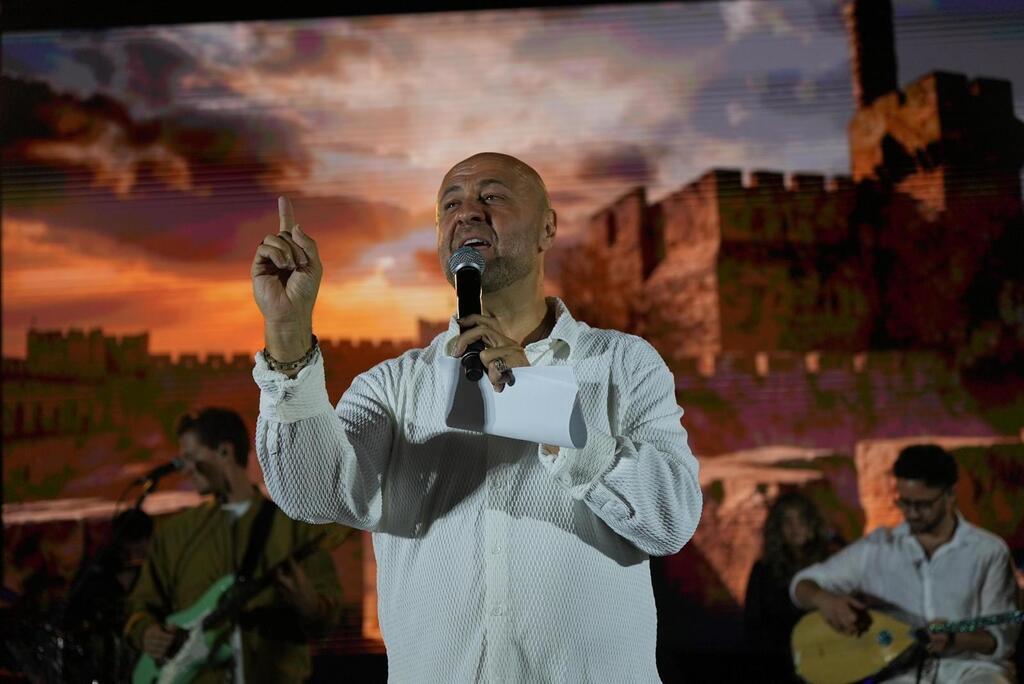
Bishop Robert Stearns. The gathering was part of a 10-day Eagles’ Wings delegation that brought more than 550 Christian leaders from 51 nations to Israel
(Photo: Dudu Koren)
He emphasized that the relationships formed during the visit should continue long after the delegation's departure.
“We want Christian leaders who come to Israel to build real relationships with real people — relationships that endure long after they return home. Then they can speak not merely from information, but from personal experience, and stand with people they now know as friends.”
Beyond the headlines
For many participants, the visit offered an opportunity to understand Israel beyond the images and reports they had encountered in their home countries.
Dr. Gibson Anduvate of Kenya said meeting families affected by October 7 had given the delegation a more personal understanding of the events.
“As Kenyans and as Christians, we understand the importance of standing with people in difficult times,” he said. “Coming to Israel and meeting families affected by October 7 has made this much more personal for us. We will return to Kenya with the stories we have heard and with a deeper understanding of what Israelis have experienced.”

The gathering brought together approximately 2,000 participants
(Photo: Dudu Koren)
Rev. Dr. Reinaldo Dos Santos of Brazil similarly described the responsibility that comes with hearing firsthand accounts of loss and survival.
“The stories we hear here are deeply personal,” he said. “Meeting people who have lived through October 7 and its aftermath gives us a responsibility to remember what they have told us and to share those experiences when we return to Brazil.”
For Dos Santos, visiting Israel also carried a religious significance rooted in the connection between Christian faith and the land of the Bible.
“For Brazilian Christians, coming to Israel is an opportunity to connect our faith with the land where the biblical story took place,” he said. “Being here also allows us to hear directly from Israeli families and understand what they have experienced rather than viewing these events only from afar.”
Bishop David Sobrepena of the Philippines expressed a similar sentiment.
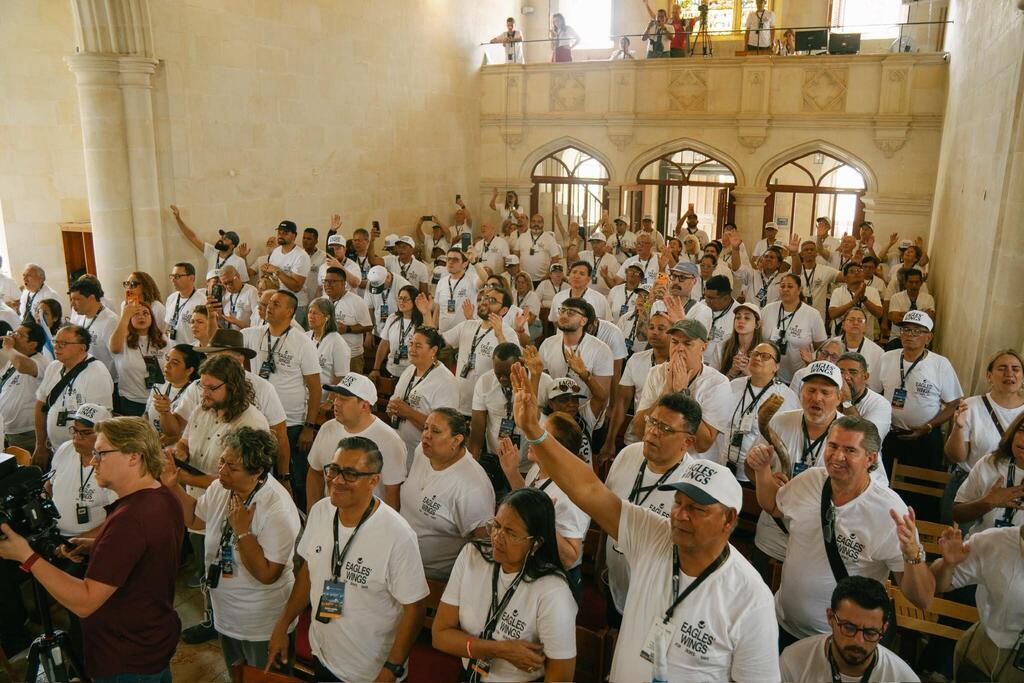
The Christian delegation was one part of a much larger international initiative marking three years since the Hamas-led attacks of October 7, 2023
(Photo: Dudu Koren)
“For Christians in the Philippines, the opportunity to come here and pray in Jerusalem is deeply meaningful,” he said. “We also come to listen to the people of Israel and to carry their stories back to the churches and communities we serve.”
Stearns said these encounters were central to the delegation's purpose.
“When these leaders return to their churches, they will not be speaking only about what they have seen on a screen,” he said. “They will have met people, heard their stories and walked through places that have been at the center of what Israel has experienced since October 7.”
A message of unity from Africa
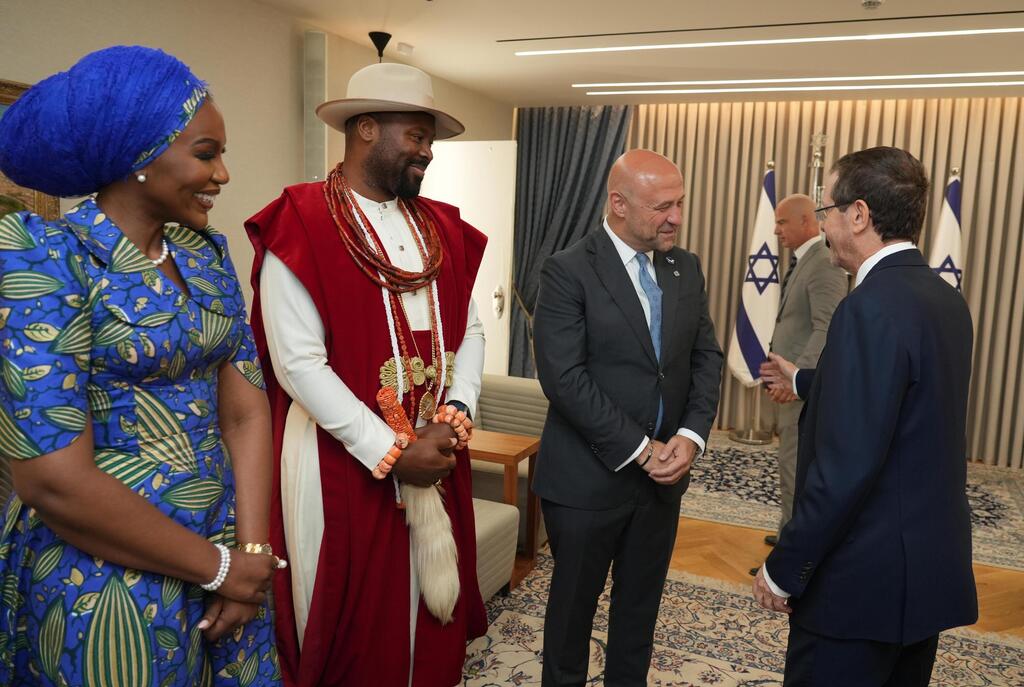
Among the visiting dignitaries was His Royal Majesty Ogiame Atuwatse III, the Olu of Warri, a traditional monarch from Nigeria, who spoke about the ability of Jerusalem to bring together people from different cultures and backgrounds.
Reflecting on the religious and ethnic diversity of his own country, he said that communities often focus on what separates them rather than what they share.
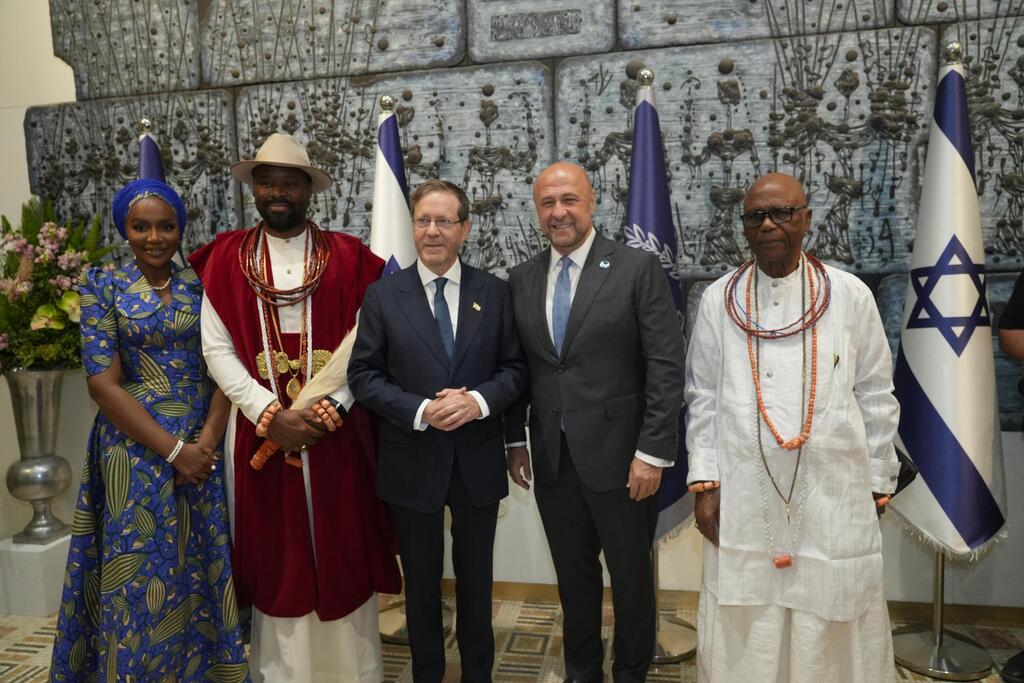
From left: Olori Ivie Atuwatse III, Ogiame Atuwatse III, the Olu of Warri, President Isaac Herzog and Bishop Robert Stearns during a meeting at the President's Residence in Jerusalem
(Photo: Dudu Koren)
“Nigeria is a very diverse nation: There are many tribes, many cultures, a couple of religions, but sometimes people are very focused on the division,” he said. “But if we all yield ourselves, we can produce a really beautiful tapestry. That's the appeal that Jerusalem has. There is so much more that unites than divides.”
The Nigerian monarch said the visit also presented an opportunity for African leaders to develop their own understanding of Israel and share it with others.
“Our presence here is an opportunity to build relationships and to understand Israel through direct experience,” he said. “As African leaders, we can bring what we learn here back to our own communities and continue the conversation from a place of firsthand knowledge.”
Dr. Emmanuel Nuhu Kure, a Nigerian Christian leader associated with Throne Room Trust in Kafanchan, Kaduna State, spoke of his commitment to standing with Israel in the face of continuing security threats.
For Kure, however, the most lasting impression came not from the speeches or public ceremonies but from the people he met.
(Photo: Dudu Koren)
“What stayed with me most was not a speech or a statistic, but meeting people whose lives were changed on October 7,” he said. “When you hear their stories in person, you understand why being here matters. We will take those stories home with us and share them with our churches and communities.”
Prayer, music and a shared connection to Jerusalem
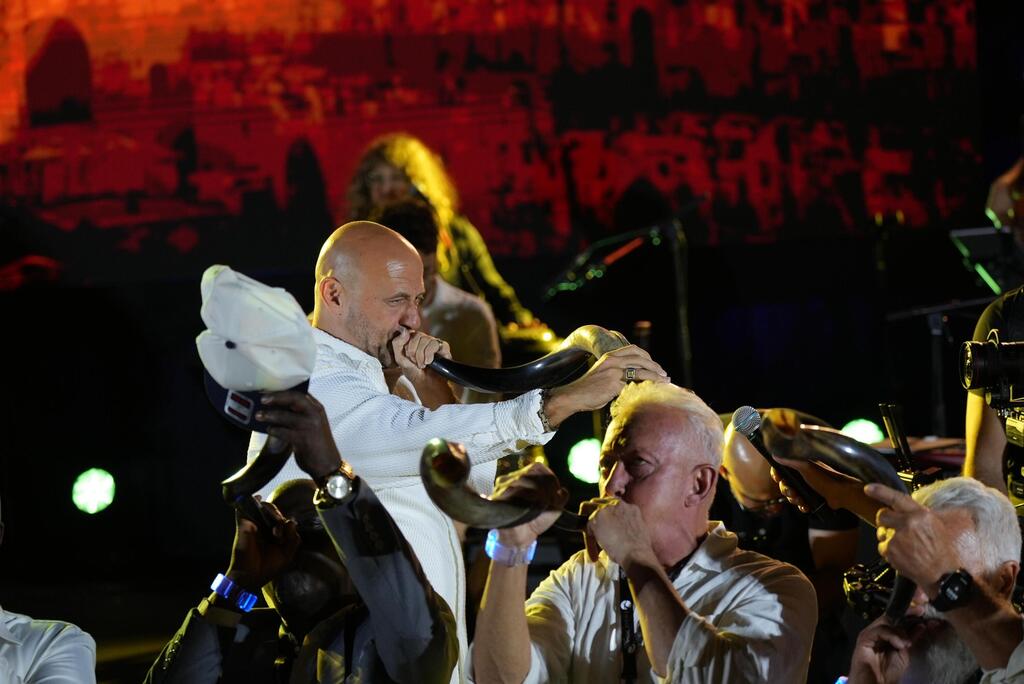
The delegation's visit also included Awake Jerusalem, a gathering at the Tower of David that brought Christian artists and leaders from around the world together for an evening of worship, music and prayer.
The event opened with the Shema, one of Judaism's central prayers, and featured musicians from several countries. At one point, members of the international delegation sounded shofars, traditional Jewish ritual horns, together in communal prayer.
The setting carried particular meaning for participants who viewed Jerusalem as both a place of biblical history and a living center of faith.
“We came to Jerusalem to worship and pray, but also to stand together as Christians from many nations,” Stearns said. “There is something very different about praying for Israel when you are here among the people and in the land itself.”
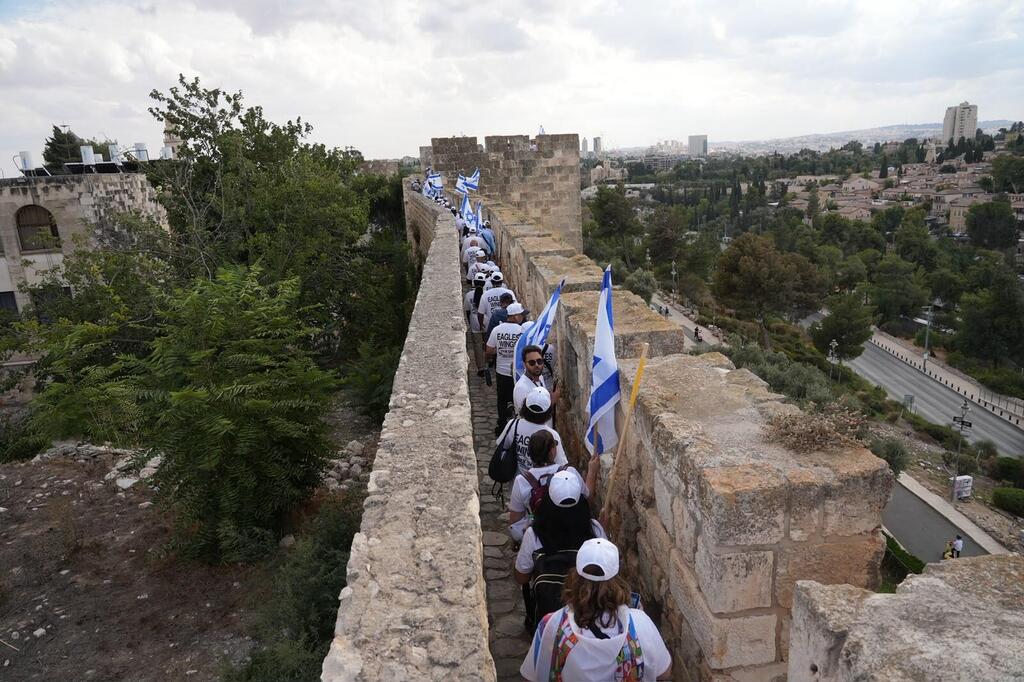
For the visiting Christian leaders, the journey was an expression of faith and solidarity
(Photo: Dudu Koren)
Apostle Daps Dalyop Gwom, one of the participating Christian leaders and artists, spoke about the connection between praying for Jerusalem and seeking healing in communities around the world.
“To seek the peace of Jerusalem is to align my heart with God's longing for the world,” he said. “I cannot separate her streets from the streets of my own city, nor her tears from the tears of my own people.”
He added: “My prayer is that forgiveness would flow like a river, and that enemies would discover they are neighbors. For where forgiveness flows, peace takes root, and where peace takes root, nations can heal.”
His words reflected a recurring theme among participants: that solidarity with Israel could coexist with a broader message of reconciliation and healing across national and religious boundaries.
Carrying the stories home
The Christian delegation was one part of a much larger international initiative marking three years since the Hamas-led attacks of October 7, 2023.
Friends of Zion founder Mike Evans, who organized the central solidarity gathering, previously told ynet Global that his objective was to reassure Israelis that they had not been abandoned by the international community.
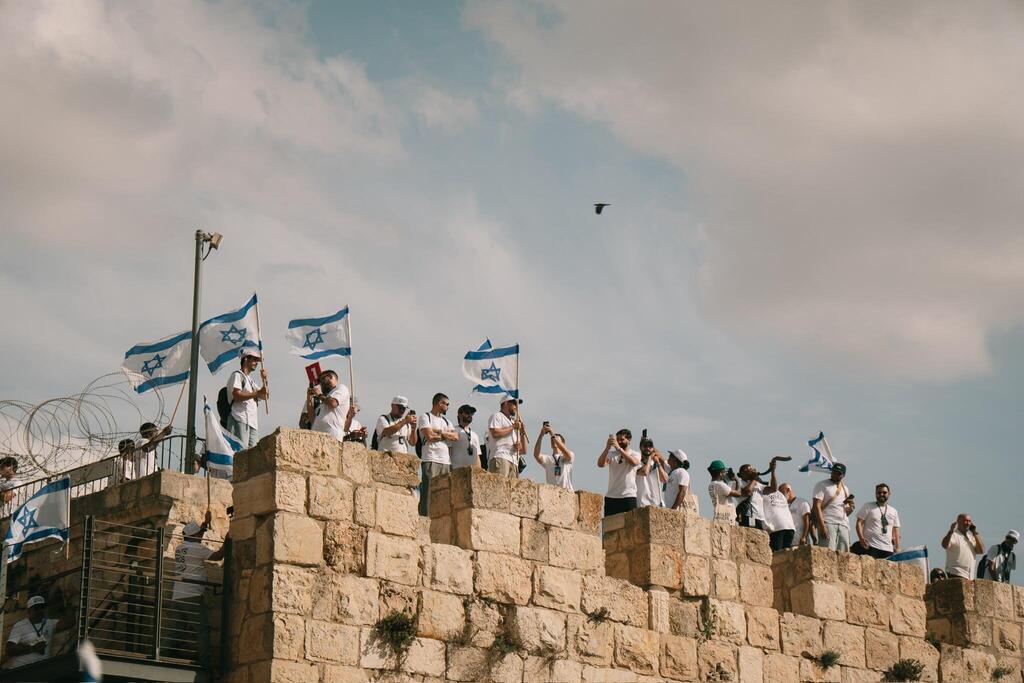
'To seek the peace of Jerusalem is to align my heart with God's longing for the world'
(Photo: Dudu Koren)
“We're trying to show them that the world is with you,” Evans said. “You're not alone. You have many friends.”
While the Friends of Zion initiative involved communities in more than 120 countries, Stearns' delegation represented a separate gathering of Christian leaders from 51 nations who traveled to Israel in person.
For Stearns, the significance of bringing such a diverse group together lay not only in their presence in Jerusalem but in the influence they could have after returning to their respective countries.
“More than 550 leaders from 51 nations represents a remarkable gathering of the global Christian community,” he said. “They have come from very different countries and backgrounds, but they share a desire to understand Israel firsthand and to build relationships with its people.”
As the delegation prepared to carry its experiences back to churches and communities across the world, its leaders emphasized that the stories they had heard in Israel would not remain confined to Jerusalem.
For the visiting Christian leaders, the journey was an expression of faith and solidarity. For the Israelis they encountered, it offered the possibility that their experiences of October 7 and its aftermath would be heard by audiences far beyond Israel's borders.
First published: 05:51, 10.13.26