

The audience that arrived at Menora Mivtachim Arena in Tel Aviv on Wednesday night for Boy George's concert probably expected a generous helping of 1980s British pop: the biggest hits from his heyday, covers of other artists' classics and one flamboyantly dressed star stealing the show with his eccentric appearance. I'm not talking about George, but about the saxophonist who went wild with seemingly endless solos.
That saxophonist, dressed in white shorts and a red beanie, insisted on stealing the spotlight even during George's duet with Israeli singer Ivri Lider on "Do You Really Want to Hurt Me," which came relatively early in the evening. Before inviting his guest onstage, the British singer apologized that the two had not had enough time to rehearse together. Lider, however, fit comfortably into Culture Club's massive 1982 hit, which received an arrangement with electronic touches. The band itself seemed unsure how to bring the performance to an end.
Boy George performs 'Do You Really Want to Hurt Me' in Tel Aviv


In retrospect, that should have been a clue to the evening's artistic direction: a loosely structured show led by an artist who seemed a little too comfortable onstage. Boy George understands the situation in Israel perfectly well, and he is not shy about taking advantage of the vacuum left by international performers who have largely stopped coming here. When you're among the few who still dare to support Israel, fly in and hold a press conference at the memorial site for the victims of the October 7 massacre, the rewards are considerable.
For this particular week, George seemed to become our hero. If you're not convinced, look up the social media footage of him with Rachel from Ofakim.
We can politely acknowledge that Boy George's glory days are behind him. But given the shortage of international acts visiting Israel, aside from Azealia Banks' residency and occasional appearances by hip-hop stars from the early 2000s, and Israelis' excessive fondness for a good nostalgia party, local audiences will take what they can get.
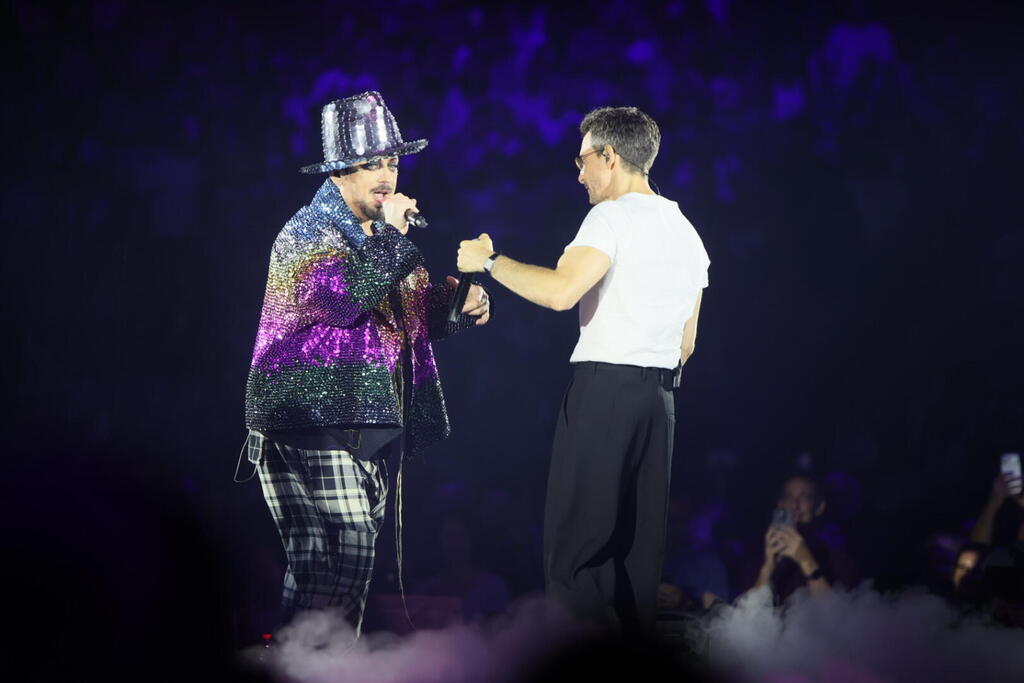
The concert itself was far less dramatic than the publicity tour surrounding it, moving between a handful of highlights and plenty of filler. At first, when George appeared onstage, the audience erupted in enthusiastic applause. Known for his extravagant fashion sense, the British singer wore a glittering fringed jacket, a matching top hat and checkered pants. Surprisingly, he opened with Prince's "Purple Rain," accompanied by calls of "Shalom, Israel!"
Throughout the show, he moved between other Culture Club hits, including "Move Away," "Church of the Poison Mind" and "It's a Miracle," which got the audience on its feet. But the response was noticeably cooler during less familiar or less energetic songs, such as "Skinhead Stomp," a relatively recent Culture Club release, and a later cover of the Rolling Stones' "Sympathy for the Devil."
Audience members, ranging from people who grew up with the music of the 1980s to their younger relatives, remained seated through those numbers, patiently waiting for another recognizable hit.
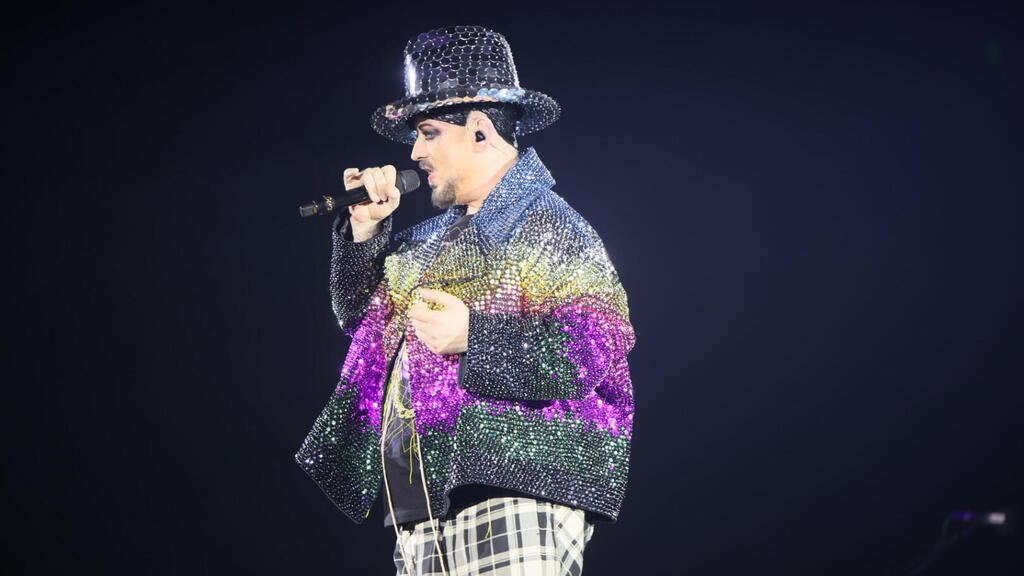
Boy George performing at Menorah Hall in Tel Aviv
(Photo: Mickey Schmidt)
As they soon discovered, the wait would be a long one. Between practically every song, George launched into lengthy speeches that ranged from attempts to stir emotion ("Raise your hand if you miss someone who went to war and never came back") to jokes with himself and the audience. At times, he behaved as though he were hosting a talk show in which he played both interviewer and guest.
At one point, he singled out a young fan and engaged in an exhausting back-and-forth until he finally figured out how to pronounce the boy's name: Tal. The audience screamed when he eventually got it right. "I'm turning into my grandmother," he said afterward, amused and apparently aware of his own peculiar behavior onstage.
All that talking weighed heavily on the concert's momentum, stretching the show to more than two hours and 15 minutes.
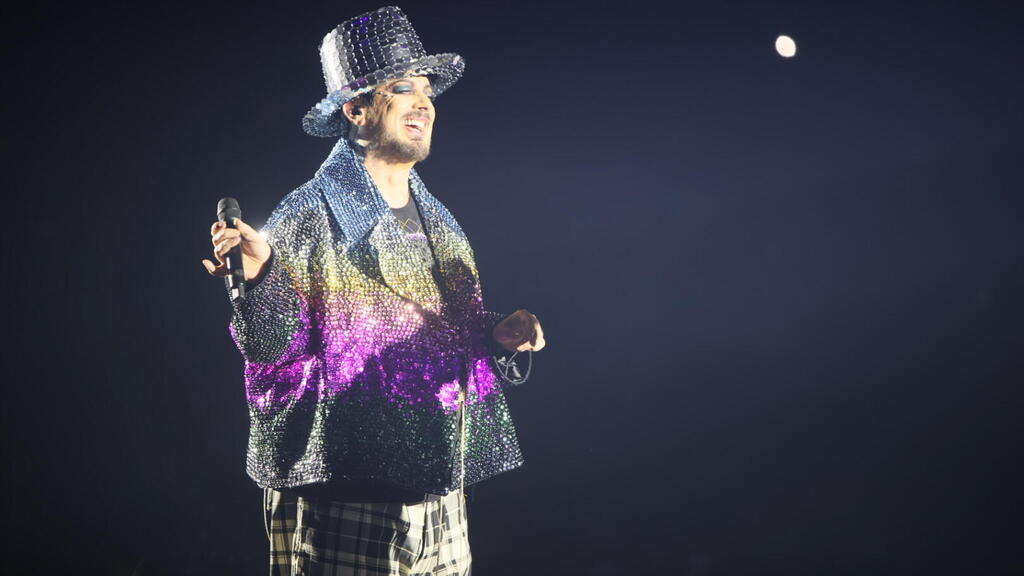
Boy George connects with his Israeli audience
(Photo: Mickey Schmidt)
Still, when George actually sang, he sounded good. The three backing vocalists accompanying him were also outstanding, and at times were not afraid to outshine the star himself. I could have forgiven the endless chatter if George hadn't also left out several of his finest songs with Culture Club. "Victims," which my friend had been hoping to hear, not to mention his beloved 2010 collaboration with Mark Ronson, "Somebody to Love Me," were cruelly omitted from the setlist.
After more than two hours, those audience members who had managed to hang on were finally about to get what they had been waiting for: "Karma Chameleon," of course. But George knows that once he sings it, nobody in the arena will have a shred of attention left to give.
His decision to tease the upbeat hit and then slip in "We Will Dance Again," the song he wrote in memory of the Nova festival massacre victims, turned out to be a rewarding and moving surprise. The audience was visibly touched, joining George in dancing to the reggae rhythms and cheering every time he sang, "I stand with the Jews," at a time when nobody seems to want to sit with us.
Boy George performs 'We Will Dance Again' in Tel Aviv
(Video: Omer Tessel)
And then it struck me: It's so obvious why Boy George loves the Israeli audience. Just like him, we're outsiders.
George has never hidden the difficulties he faced on his path to success. Even on a night when he was celebrating with thousands of fans, he made sure to remind everyone that he had been canceled and cast aside before, and had survived to tell the tale.
"I survived the seventies, and I survived the nineties without being famous," he told the crowd. And here he is today, proving that the party never really ends.
If there's one thing worth taking away from this concert, it's the hope that no matter how bleak things may seem, perhaps we, too, can survive this period and make it to brighter, more glittering days.