

When Murad Awadallah, 55, from the village of Ein Naqquba west of Jerusalem, used to pass by the nearby Yad Vashem museum, he thought the Holocaust was “a closed club of today’s elite — people who came from Germany and other European countries. We, the Arabs, did not enter the museum, because we didn’t know what it was about or what it had to do with us,” he recalls. “For me, it was an internal discourse among Jews, unrelated to me.”
When were you first exposed to the Holocaust?
“I first heard about the Holocaust from my father, may he rest in peace. My respected father had a tailoring shop and was also a mediator and chairman of the local council in Ein Naqquba. He also knew Israeli politicians. He told me about a friend he worked with — an Auschwitz survivor who had a number tattooed on his arm. Later, in 11th grade, I studied a lesson on the Holocaust as part of Land of Israel studies and Jewish history — just to check a box, studying between seven and 14 pages in the history books. That was it. On Holocaust Remembrance Day we heard the siren, and as I said, when we passed by Yad Vashem, we didn’t know what it was.”
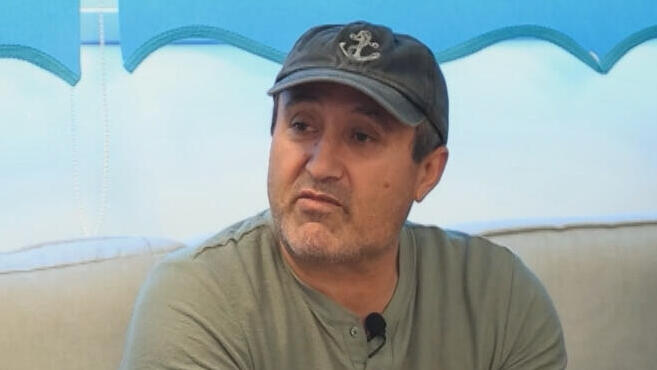
Years later, Awadallah became a lawyer fluent in five languages, working with the Foreign Ministry and teaching Arabic and Islamic culture. Then, eight years ago, an unexpected job offer changed his life — and his relationship with the tragedy of the Jewish people.
“In 2018, a friend named Nati Brooks told me there was a job tailored for me — and that it was important I start working at Yad Vashem. I asked him, ‘How am I connected? I don’t know anything about the Holocaust,’ but he said I would learn and connect. And that’s what happened.”
Awadallah applied and was accepted as coordinator for Arabic-speaking audiences at Yad Vashem, where he was responsible for guides, development, content and adapting materials into Arabic.
“As I immersed myself in the Holocaust, I realized there is something we Arabs do not know," he explains. "I consider myself an informed person, aware of what is happening in the country. And suddenly I saw that we are missing something significant: I realized I live among people I do not know, and that there is something they understand, a language they speak, that I do not. We Arabs, whether we intend to or not, make mistakes and hurt those we speak with through Holocaust denial, even when that is not our intention. I understood that the Holocaust is not properly accessible to Arabs.”
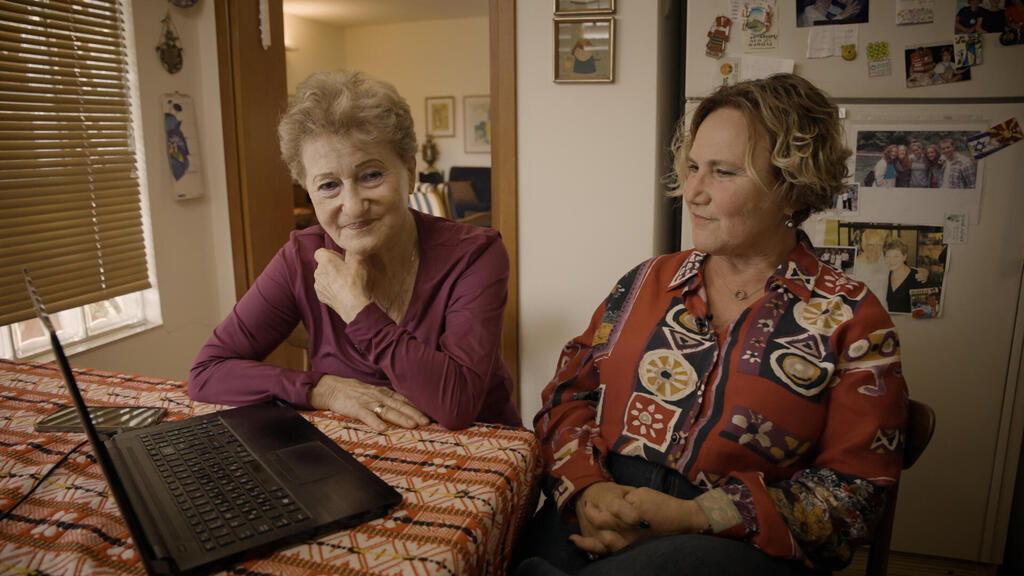
Holocaust survivors and Arab Israelis meet; from 'Besa - A word of honor'
(Photo: Courtesy of Kan)
So what did you do about it?
“I made it my goal to speak with all the relevant officials, so that we would not just check a box regarding Arab students’ knowledge, but actually begin to create change and bring the Holocaust into awareness. I started looking for partners and became responsible for the field. I found the ‘Atidna’ movement — Tony Nassar and the late Dalia Fadila, together with Amit, co-CEO — and they took it upon themselves to send Arabic speakers to the March of the Living. At a school in the Al-Sayyid community in the Negev, they began holding an annual Holocaust Remembrance Day ceremony and bringing students together with Holocaust survivors. That is definitely a change.”
How did your extended family and village respond to your new role?
“In my family, in the village and among some friends, people raised eyebrows, but were also curious. They didn’t understand why I was interested in the subject, but asked to visit Yad Vashem, and when they heard about the Holocaust they understood more. Some friends cut off contact with me as long as I work in this field, because, in their words, ‘because of the Holocaust the State of Israel was established and the Nakba happened, and to this day we are paying the price.’”
Do you remember your first visit to a concentration camp?
“When I started at Yad Vashem in 2018 I went to Auschwitz and then to Stutthof. When I set foot in Auschwitz for the first time, I saw darkness and blood. In Stutthof I saw bones inside a glass case of black ash — white within black is an image that never leaves me. I will always see it.”
How did Holocaust survivors respond to you?
“They were very emotional, and so was I at every meeting. It was moving and powerful for both sides. I invited them to speak with students from different schools and colleges, so they could hear the survivors and experience it firsthand.”
How did working at Yad Vashem change your life?
“The implications of the Holocaust affect all our lives — how a seemingly enlightened and normative society like Germany, which upheld human rights and minority communities, became violent, hostile and murderous, while there were still people there who did not accept that violence. A society that championed democracy became one that promoted segregation, racism and tyranny. Today’s generation must try to prevent that paradox, or at least reduce the ability of such racism to take over our lives and discourse.”
'There have been many cases of genocide in history, but there is only one Holocaust'
In 2023, Awadallah left Yad Vashem to establish himself as an entrepreneur and social influencer. He now oversees Arabic-language tours at the Israel Museum in Jerusalem while developing independent projects. One result is the documentary “Besa — A Word of Honor”, directed by Avi Sofer and produced by Itzik Nakash, which is being broadcast Monday evening on the Kan public broadcaster for Holocaust Remembrance Day.
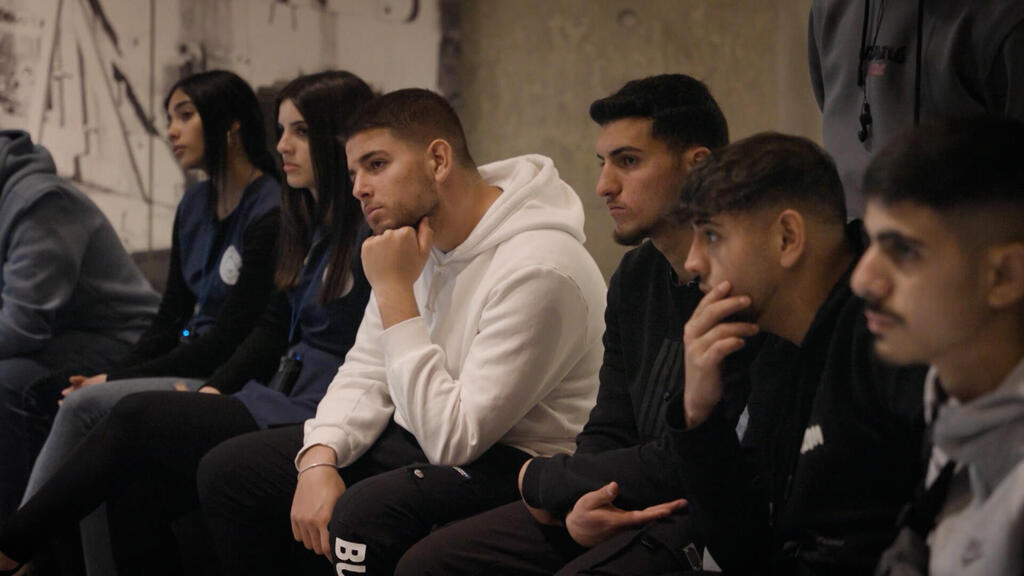
Bringing together Arab and Jewish teens in 'Besa'
(Photo: Courtesy of Kan)
In the film, Awadallah brings together Jewish and Arab teenagers — high school students from Ein Naqquba alongside students from nearby villages and kibbutzim — for a journey exposing them to a lesser-known story of Muslim rescue during the Holocaust: in Albania, where the code of “Besa” dictated that if you host someone, you do everything to protect them. As a result, about 2,000 Jews were saved in Albania during World War II. In the film, students also hold a Zoom conversation with descendants of Albanian Righteous Among the Nations.
“The film was shot at the end of 2023, with the outbreak of the war and into early 2024. It was very difficult to film after October 7, but also fascinating — the intensity of the discourse and how Jewish students view Arabs and vice versa. At first there was a lot of mutual suspicion and caution, but young people are influenced by what they are fed through the media and social networks, to which they are highly exposed. We had to do a lot of preparation and carefully examine the content we presented.
“I wanted the students to become future ambassadors, to speak about the Holocaust and the value of shared life, how important it is that we live in this country and share one destiny. Now, during the war with Iran, we saw that missiles do not distinguish between Arabs and Jews, Ashkenazim and Sephardim, secular and religious. Even if we do not agree on everything, we all share one fate and live here together. It is important to understand and know one another, and everyone must recognize the other’s pain. No one has a monopoly on pain.”
Why did you choose to focus on the rescue of Jews in Albania?
“There are many reasons. First, we looked for the good people in Europe who acted. Albania became a refuge for Jews fleeing neighboring countries. Albanians saved not only Jews they knew but also those from other countries — that shows their greatness. It is a story that is not told and does not receive sufficient exposure. Another reason is that Arabs and Albanians share much in common — Islamic values.
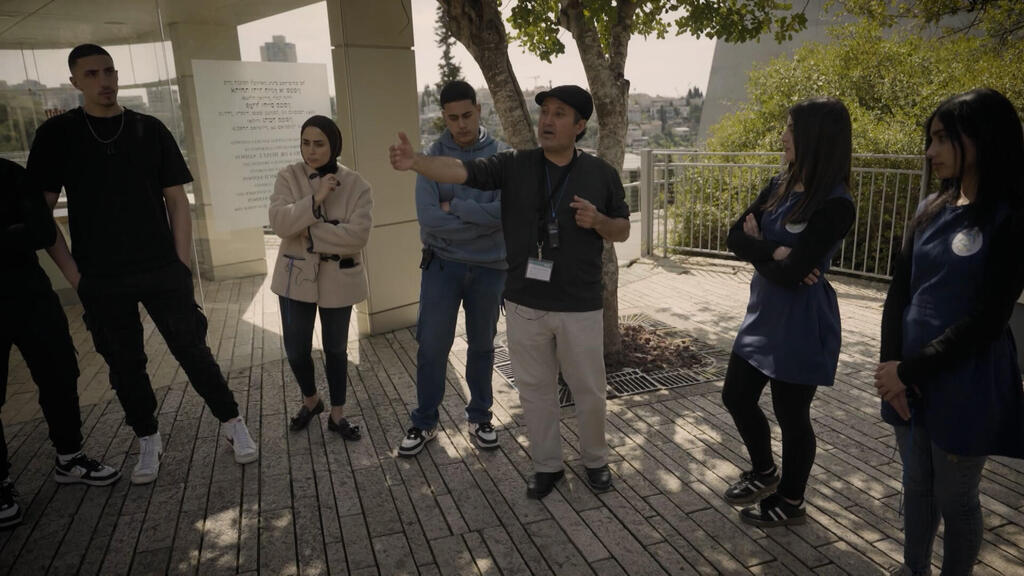
Training future ambassadors to the Arab community: From 'Besa'
(Photo: Courtesy of Kan)
“The meaning of the word ‘Besa’ is to keep a promise. In Arabic we have similar expressions: ‘to help someone who has been wronged’ and ‘I enter your home under your protection.’ In Arab society, if someone seeks my protection, I am willing to sacrifice myself to ensure they are not harmed. It was important for me to tell this untold story of the rescue of Albanian Jews to the entire country and to the residents of my village.”
The documentary also addresses the history of Ein Naqquba. In 1948, the village of Bayt Naqquba was captured by Palmach and Haganah forces during Operation Nachshon. Some residents, including Awadallah’s grandfather, fled to Jordan. Others were relocated to the village of Sataf and later settled on the outskirts of Abu Ghosh.
“In 1962, the state gave the residents of Bayt Naqquba alternative land at the site of the current village, which was already inhabited. It was not common for the state to allow us to build another village, especially near Highway 1, a major artery. That is how Ein Naqquba was established. In 1967, after the Six-Day War, the state sent two trucks to Amman to bring back residents who had fled to Jordan. My grandfather also returned. Today, our generation believes in remembering the past but living in the present.
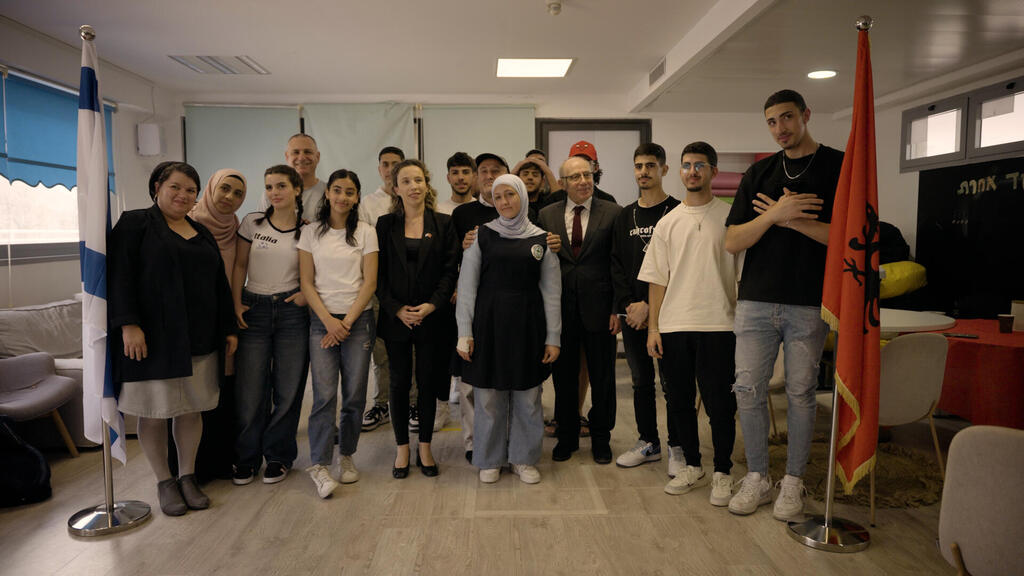
From 'Besa-A word of honor'
(Photo: Courtesy of Kan)
“Personally, I took my children to see the area and the house where their grandparents were born in Bayt Naqquba, which is now Moshav Beit Nekofa. It is important to remember the past without being trapped by it, and to continue living and looking forward.”
Do you feel there has been a change in Arab society’s attitude toward the Holocaust?
“In principle, we cannot measure it. But I feel a slight change on the ground. There are people who reject any mention of the Holocaust, and others who are willing to listen and admit they do not know what Jews went through. When students from my village met Holocaust survivor Annie Alteratz and the family of Albanian rescuer Nuro Hoxha in the film, and visited Yad Vashem — you see the compassion they feel for what they heard and saw. They were filled with pride in the Muslim rescuer’s family and in the shared values.
“Learning about the rescue of Jews in Albania can give Arab youth a sense of pride in the Muslim side of the rescue. At the same time, it is important to note that there were also Christians in Albania who saved Jews.”
Today, especially after Oct. 7, the term 'Holocaust' is frequently used in discourse, along with comparisons and labels such as 'Nazi' and 'fascist.' What is your view?
“People tend to take something and minimize it, appropriate it or exaggerate it. After October 7, Yad Vashem issued a statement I agree with — making comparisons diminishes the Holocaust. There have been many genocides in history, but there is only one Holocaust. What is the Holocaust? It is the systematic search for Jews everywhere, not just in a specific area. I do not engage in comparisons and do not diminish any other genocide, but I do not deal with that. I speak about the Holocaust as an attempt to destroy a people everywhere.”
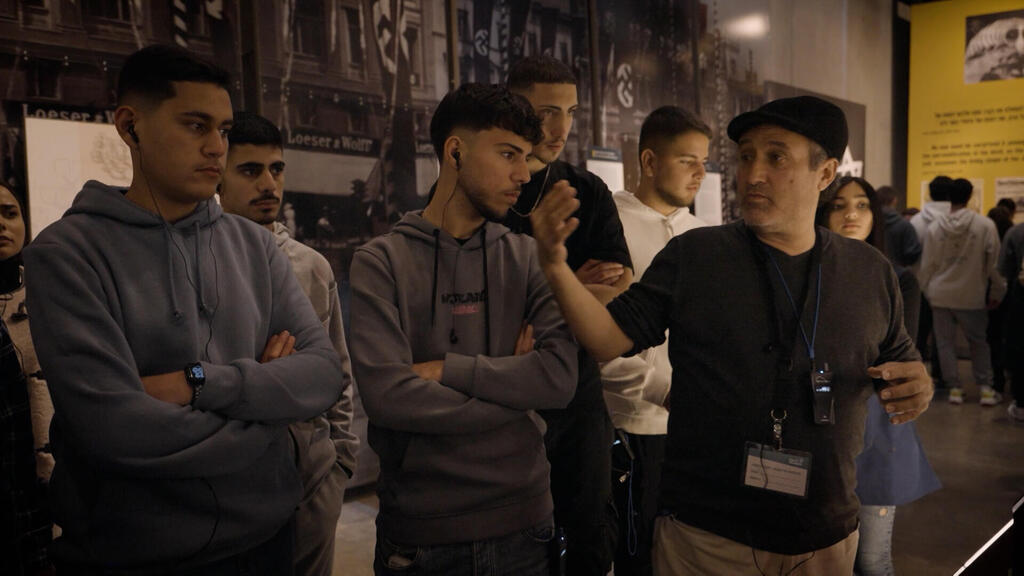
Awadallah: ' I speak about the Holocaust as an attempt to destroy a people everywhere'
(Photo: Courtesy of Kan)
As part of his work, Awadallah also confronts Holocaust denial, including among Muslims. He cites, among other things, the documented meetings and correspondence between Haj Amin al-Husseini, the Grand Mufti of Jerusalem, and Heinrich Himmler, a key architect of the Final Solution.
“A lot of politics is attached to the connection between the mufti and the Nazis. Jews use it and Arabs use it, each for their own side. But I quote from the mufti’s own diary: he wrote that during one of his meetings with Himmler in June 1943, Himmler told him that the Germans had already managed to kill up to three million Jews — and al-Husseini had not known about it. I tell this story to Holocaust deniers.”
Awadallah is now seeking funding for his next project — a documentary about the rescue of Jewish orphan children who fled the fighting around Leningrad and were saved by residents of the Circassian village of Besleney in the Caucasus. “When the Germans arrived in Besleney and put a gun to one villager’s head, no one informed on them. Even those who did not help did not betray them or provide information.”
What should we learn from the Holocaust?
“We must learn from the past so as not to allow those who try to return us to a dark world to succeed. This is a universal lesson for the entire world. We must cut off the ability to drag us back into dark times. We need to learn how to live together. Yes, there are disagreements — even my brother and I cannot agree on everything, and it is legitimate to disagree, even argue — but not violently. We must eradicate racism, violent discourse and divisive rhetoric of superiority. The Aryans claimed superiority over other nations, and we must not claim superiority or ownership over anything in comparison to others.”