

Last December, Jewish Hollywood actor and director Jesse Eisenberg (“The Social Network,” “Now You See Me”) fulfilled an ambition he had nurtured for years: donating a kidney. One of his kidneys was removed and transplanted into a person who needed it.
“Look, I hate being in the public eye. I find it so embarrassing, but I married a woman who really spends her life helping people, so I feel I have a certain responsibility. I thought, ‘Maybe I should talk about donating a kidney because maybe it could influence other people,’” Eisenberg said during an interview at the Karlovy Vary International Film Festival, held in the colorful Czech spa town. “Why did I donate? It was just a feeling of responsibility. I feel like I’ve been given so much in my life, including two kidneys, and I felt a need to give.”
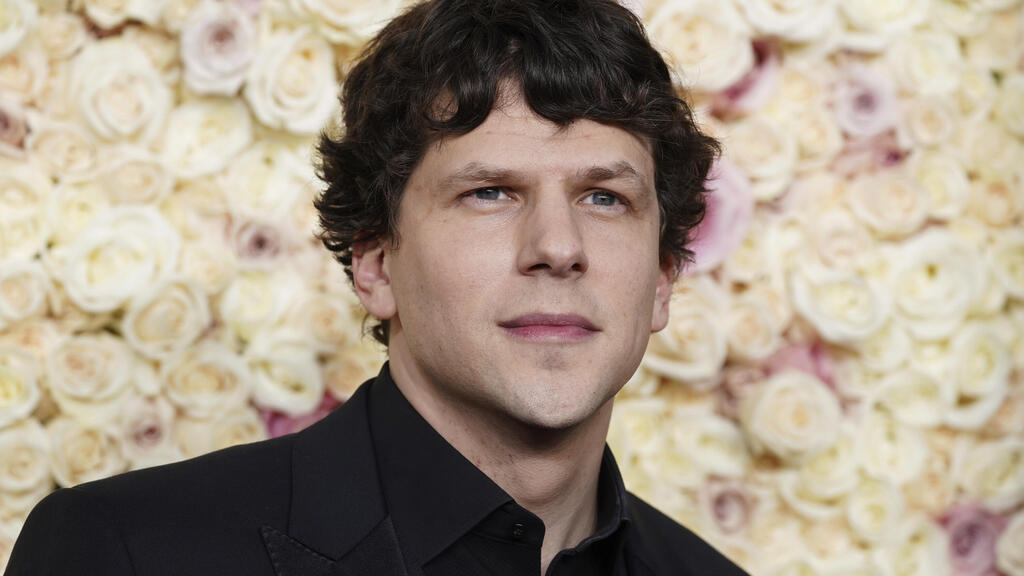
Who received your kidney?
“I don’t know. It was anonymous. The tragedy is that there are 90,000 people on the waiting list, and when you donate to one, there are still 89,999 people dying.”
How do you feel now?
“After two weeks, I no longer felt anything. It did not even cross my mind anymore. People who donate kidneys tend to live longer than their non-donor peers because donors undergo such an extensive battery of tests that only very healthy people qualify.
“I have a perfectly healthy life, and it was very easy. I feel great — 100%, even 101% — because I have a little more pep in my step. And I’m a little lighter.”
During his visit to the festival, Eisenberg received the Festival President’s Award. In his acceptance speech, he said he was excited to receive Polish citizenship the following week.
“I want to spend more time in Poland because of my family heritage,” he said. “My family lived in Eastern Europe for more years than it has lived in America.”
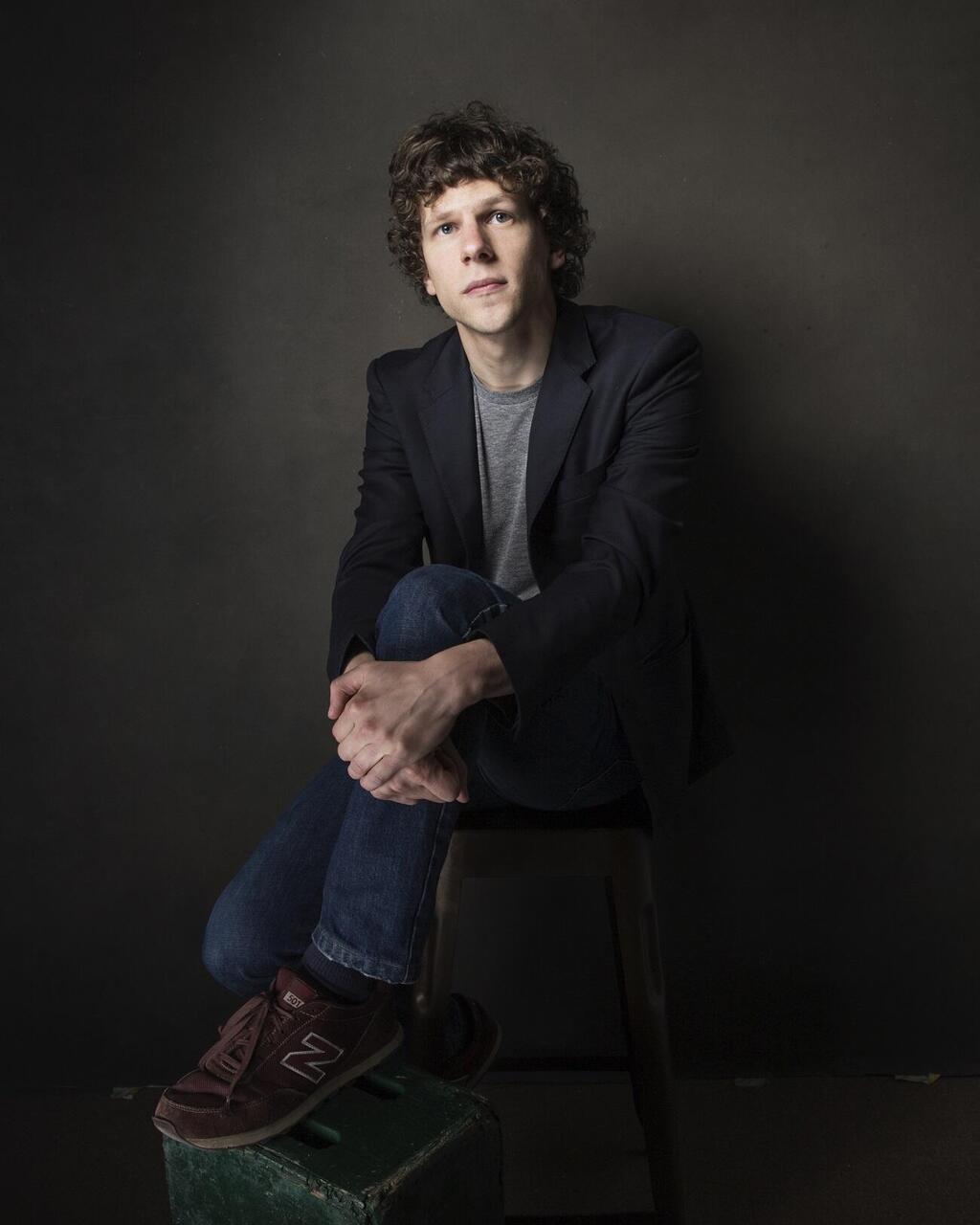
Jesse Eisenberg
(Photo: AP)
In an interview after the ceremony, held on July 4, America’s 250th Independence Day, I asked whether obtaining Polish citizenship was in fact a political act given the situation in the United States. Eisenberg rejected the suggestion.
“No. Not at all. Zero. Zero-point-zero percent,” he said. “I grew up American. America saved my family’s life. My wife is a teacher in five public schools in New York City, and her students live much more difficult lives than I do. We feel our responsibility is not to flee a political situation we may disagree with, but to help people who are in greater distress during a difficult political period.
“For me, getting Polish citizenship was entirely about a spiritual connection to this place and an attempt to reconnect with somewhere my family lived for hundreds of years. It was completely personal.
“I would very much like to work in Eastern Europe. One of the things I noticed while filming ‘A Real Pain’ in Poland was the emphasis on the art itself. In the United States, there is greater emphasis on economics. Even when you make a small, personal film in America, you still have to include commercial elements that will make it attractive to audiences.
“Here, people are more likely to take risks and make things that are more unusual and more artful. As a writer and director, that is an enormous relief for me.”

Jesse Eisenberg
(Photo: AP)
The kidney donation story illustrates how unusual Eisenberg is in the Hollywood landscape. When we meet in “Beethoven,” the secret meeting wing of the elegant luxury hotel Pupp, he comes across as charming, funny, neurotic, warm, candid, highly attentive and entirely free of pretension or nonsense. He also avoids social media.
“There is something very absurd about the concept of celebrity,” he said. “The public wants something that is unknowable. The public does not judge you according to how hard you worked. It does not judge you according to how many years you trained or how many hours you stood in the shower rehearsing your monologues. The public is reacting to something ineffable.”
‘For me, being Jewish has always been a positive thing’
Unlike many actors, directors and creators who avoid mentioning their Jewish identity, particularly since October 7, or even saying the word “Jewish,” Eisenberg, the son of Jewish educators who grew up in New Jersey and Queens, speaks frequently about his roots and Jewish identity. He describes his humor as “Jewish humor” and says it was influenced by Jewish writers such as Sholem Aleichem.
Antisemitism has intensified in recent years. Have you experienced it personally?
“Listen, I have a very, very unusual life, and I’m in a real minority in that, for me, being Jewish has always been a positive thing,” he said. “Because I grew up with Jewish humor and sometimes played Jewish characters. I received some good roles.
“For me, I’ve only had positive experiences of being Jewish. But I understand that my experience is probably not everyone’s experience, and I cannot speak for those other experiences. I’ve never experienced anything that made me feel I had to be afraid of my identity.”
Eisenberg also addresses his roots in his writing. His play “The Revisionist,” about an American Jewish writer visiting a relative who survived the Holocaust, was based on one of his own relatives — Maria, his grandfather’s first cousin, who survived the Holocaust and died of COVID-19 in 2020.
“Maria Gruber lived in Krasnystaw, a small town in the Lublin region of southeastern Poland,” he said. “She survived the Holocaust by hiding in basements in Lviv, but her family was murdered in front of her, and her brother was shot in the cemetery in Krasnystaw.
“I stayed with her several times. She was an amazing woman. Since then, I have been somewhat obsessed with her because I cannot believe I have a personal connection to someone who experienced real historical trauma.
“Like many American Jews — I do not know how you feel, but I assume it is similar for you — I am simply obsessed with that part of history.”
Two years ago, Eisenberg released “A Real Pain,” a film he directed that achieved considerable success. It follows two Jewish American cousins, played by Eisenberg and Kieran Culkin, who won the Oscar for supporting actor, as they travel to Poland at the request of their late grandmother. During the trip, they visit the old Jewish cemetery in Lublin and the Majdanek concentration camp.
“When you grow up as I did in suburban New Jersey, you do not worry about where your food will come from,” Eisenberg said. “You think about self-fulfillment and joining the art world. Then you realize, ‘Our ancestors, our grandparents had to run from Nazis,’ and it is simply insane.
“I’ve become preoccupied with my own privilege compared with what our families went through. That is exactly what ‘A Real Pain’ is about — two cousins trying to come to terms with their past. One of them has kind of fallen apart.
"So you ask yourself: How can you possibly fall apart when your grandparents survived by the skin of their teeth?"
You won many awards and were nominated for an Oscar for the “A Real Pain” screenplay. What was the Oscars experience like?
“My father is a very wise person, and he told me, ‘If you have an experience like that once or twice, it is already an enormous success. You’re in the top 0.00001% of people in the arts if you get to go to the Academy Awards and sit anywhere in that building.’ That is how I view all these things. I had no expectation of being there.”

From 'A Real Pain'
(Photo: PR)
When our conversation turns to Israel, Eisenberg prefers to evade the subject.
“I don’t know anything about politics,” he insisted. “I know about making jokes about musical theater because that’s my life. Why am I even in a position where people ask me about American politics?
“Current politics in America is simply so far removed from my life. I live in New York and make a living from art, which is like winning the lottery 1,000 times in a row.”
Eisenberg has friends and distant relatives in Israel.
“In 2014, I arrived in Israel just as Operation Protective Edge began in Gaza for the premiere of my play ‘The Revisionist’ at the Beit Lessin Theater,” he said in a previous interview. “I did not feel in danger. Yes, it was a very strange time to visit, but nonetheless informative.”
‘Even though I’m associated with Facebook, I have zero connection to it’
Eisenberg, 42, began performing on stage at age 7. He later appeared in the television series “Get Real.” In 2002, he made his film debut in “The Emperor’s Club.” That was followed by Wes Craven’s horror film “Cursed,” “The Hunting Party” with Richard Gere and “Zombieland.”
Then came his breakout film, David Fincher’s “The Social Network” in 2010, in which he played Jewish American entrepreneur Mark Zuckerberg, the founder of Facebook. The performance elevated Eisenberg’s status and earned him Golden Globe and Oscar nominations.
“When I played Zuckerberg, he was not well known, so the film seemed like a fairly strange undertaking,” Eisenberg said. “No one really knew who he was and he did not appear much in public, so he mainly seemed like an interesting character. Things have changed since then. Then he became famous.”
Eisenberg revealed that he declined to appear in a new film about Zuckerberg, the anticipated follow-up to “The Social Network,” directed by Aaron Sorkin.
“Even though I’m associated with the company because of a movie, I have zero connection to it,” he said. “I never signed up or got an account because it always kind of scared me that a company could have all of your information.”
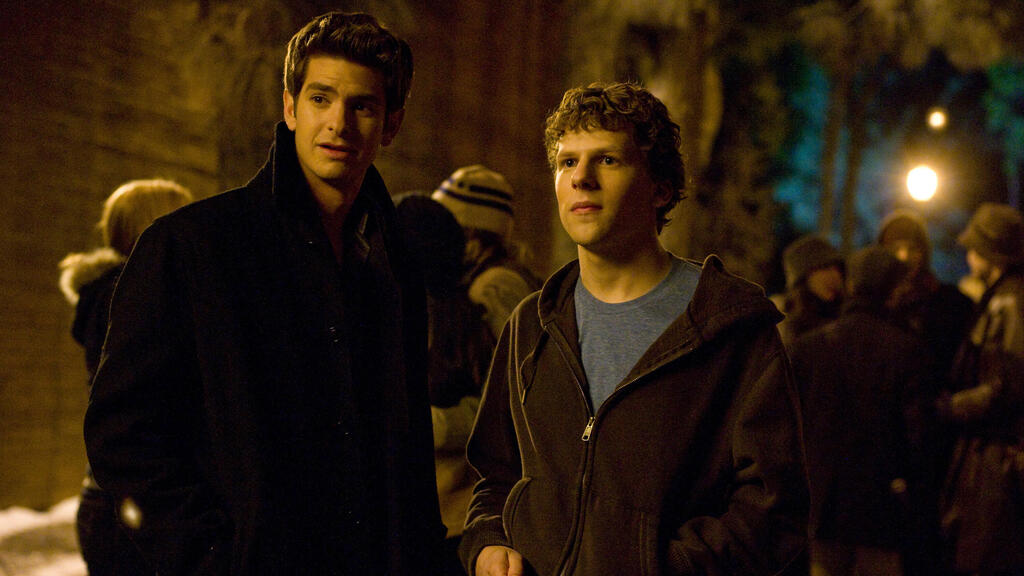
From 'The Social Network'
(Photo: Courtesy of yes)
Eisenberg’s filmography also includes major productions such as the comic-book films “Batman v Superman: Dawn of Justice” and “Justice League,” in which he portrayed Lex Luthor, the colorful, megalomaniacal and malicious supervillain, with a creepy and eccentric edge. Gal Gadot appeared alongside him as Wonder Woman.
“Gal is great,” he said during one of our previous meetings. "I can’t believe we come from the same genetic code."
In recent years, Eisenberg has also become closely associated with the “Now You See Me” trilogy. The first film, in which he played an illusionist, was released in 2013 and unexpectedly earned $350 million. The second, released in 2016, brought in a similar sum, and the third, released in 2025, earned about $250 million.
How do you explain the success of the “Now You See Me” films?
“I have no idea,” he said. “I have no sense at all of what will be commercially successful and what will not.
“When we filmed the first ‘Now You See Me,’ I kept thinking, ‘I cannot believe I am in this movie.’ It felt like I had been called up to play with an NBA team. The camera moved in every direction. We were all wearing suits. I kept thinking, ‘Where am I?’
“I felt as though I had come from another planet where everyone was depressed, and suddenly I found myself in this cool movie playing an arrogant, self-confident character. I enjoyed it so much.
“It’s the only character in which I get to stand up straight and wear a nicer outfit. I hope they make ‘Now You See Me 4.’ I cannot wait. I’ve never felt happier on a movie set than when I was playing that part.”

From 'Now You See Me 3'
(Photo: Courtesy of United King Films)
At this fall’s festivals, Eisenberg will appear with “The Debut,” a new film he directed that is set in the theater world. He also wrote its music and songs. Julianne Moore stars in the lead role.
“I wrote the part for her, but it is based on my own experiences,” he said. “The film is set in New Jersey in 1990, exactly when I began working in theater.
“I loved acting in the theater, but I was also terrified. It was the only place where I felt comfortable in my own skin and, at the same time, the place where I felt the greatest fear because I loved it so much. I was terrified because an audience had come to see me.”
Eisenberg also occasionally appears in television series. In the Disney+ miniseries “Fleishman Is in Trouble,” he played a doctor whose wife disappears, leaving him with their children.
This year will also bring the series “Bream Gives Me Hiccups,” based on Eisenberg’s short stories about a boy who publishes restaurant reviews.
Eisenberg said the plays and screenplays he writes often feature malicious characters whom he portrays in a human light. He also enjoys examining American ignorance and the way Americans know little about people from other countries.
‘I don’t think of myself as a victim’
Alongside writing, directing and acting, Eisenberg enjoys being a father to his 9-year-old son, Banner.
“I spent the first 33 years of my life worrying about myself,” he once told Newsweek. “And a lot of these concerns were just narcissistic, self-involved, fantastical problems that I created to just ruin my life. Then I spent the next years of my life worrying about real things, worrying about another person. And I know it sounds like a self-serving excuse, but it's made me a lot happier.”
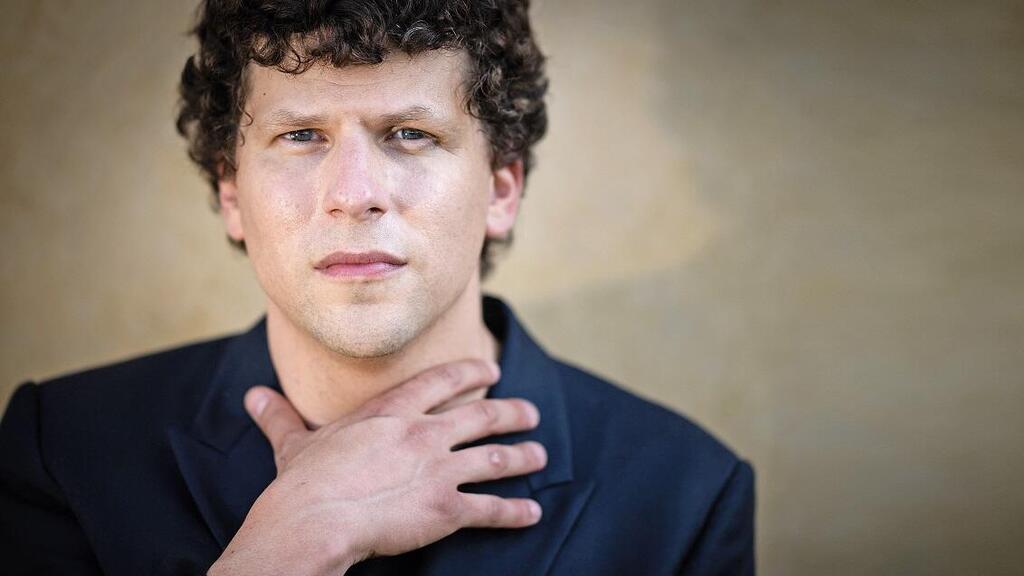
Jesse Eisenberg
(Photo: AFP)
Despite his many professional pursuits, Eisenberg finds time to volunteer. In the past, he volunteered at a shelter for battered women run by his mother-in-law. Today, he helps immigrants in New York.
“They are struggling because of immigration,” he said. “They live in homeless shelters, their lives are genuinely at risk, and they sometimes have to leave because a shelter is expected to be raided the next day. We try to help them find lawyers.
“I have wealthy friends who walk around thinking they are suffering because some people don’t like them. They move through the world as if they are the victims, and I want to tell them: ‘There are real victims. There are victims now, not in some fantasy future. We need to devote our time to them, just as when we were the victims, we wanted people to think about us.’
“That is why I do not think of myself as a victim in any way. I don’t think of myself as disadvantaged or put upon, and I do not dwell on how people will look at me or whether they will be angry with me because of my background.
“It does not even cross my mind because there are people facing far more immediate distress. How could you look at them and think they are better off than I am?”
‘I grew up on Woody Allen films and never dreamed I would appear in them’
In a sharp change of subject, it turns out Eisenberg is also an avid basketball fan.
“There is one NBA coach, Gregg Popovich. He coached the San Antonio Spurs. Do you know him? I find him the most fascinating person on the planet,” Eisenberg said.
“He’s this tough coach, but he cries sometimes and talks about the plight of America. Yet he’s also a terrifying coach who is so mean to journalists. People like that fascinate me because they are known as very hard people but also have enormous hearts.”
You must have been happy when the New York Knicks recently finally won the NBA championship.
“I love basketball in general, but I do not have one favorite team. I simply like underdogs, and the Knicks were the underdogs this year. God, it was thrilling — thrilling to be the underdog and win.”
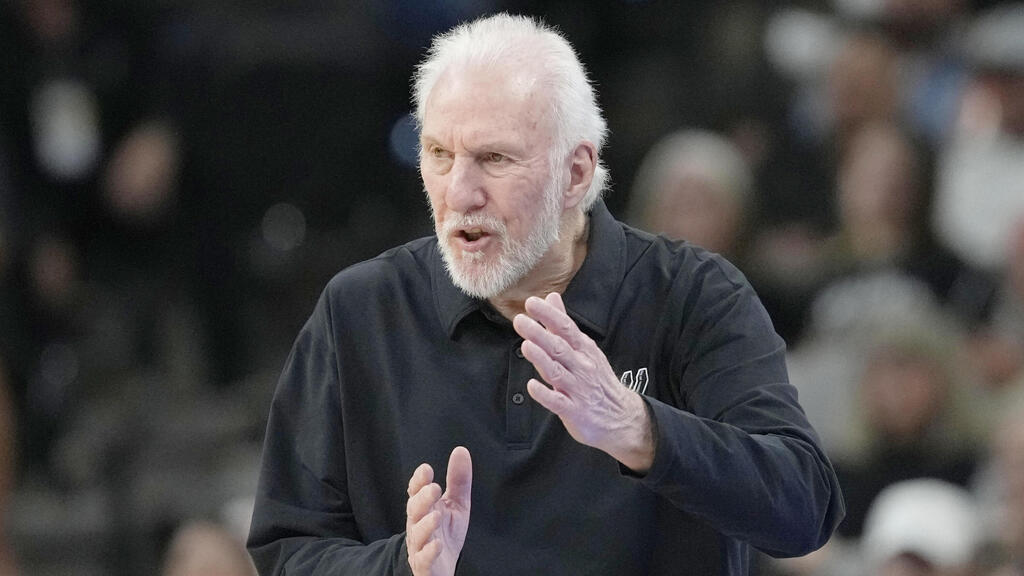
Gregg Popovich
(Photo: Eric Gay/AP, File)
And it is impossible not to discuss Woody Allen. When Eisenberg was 16, he read humorous pieces written by Allen and drew inspiration from them. Several years later, Eisenberg received a letter from Allen, asking him to star in “To Rome With Love” in 2012. Eisenberg gladly accepted. Four years later, Allen sent another letter offering him the lead role in “Café Society.” Again, he agreed.
“I grew up on his films and never dreamed I would appear in them,” Eisenberg said. “I even thought that if I were in them, I would only ruin them. And then I appeared in two.”
In the decade since “Café Society,” an increasing number of actors who worked with Allen have expressed regret, particularly in light of repeated allegations that he sexually assaulted his adopted daughter, Dylan Farrow. Other stars have said they would no longer appear in his films.
So when I asked Eisenberg about cancel culture, of which Allen has been one of the most prominent targets, he protested.
“God, you always do this,” he said. “You started with a question about Israel and ended with Woody Allen.
“I’d rather talk about donating a kidney than my opinions about movies or canceled famous people, because maybe more people would donate kidneys if they heard about it.
“When people ask me about ‘cancel culture,’ I prefer to talk about our responsibility as people in the public eye. We have some responsibility to try to put something positive into the world.”