

Images of tens of thousands of Iranian women protesting around the world in recent days, celebrating the freedom of their sisters still living under the Islamic Republic, have reignited one of the most contentious debates of recent years: is the chador — the black garment that covers the body and head — a tool of oppression or of empowerment?
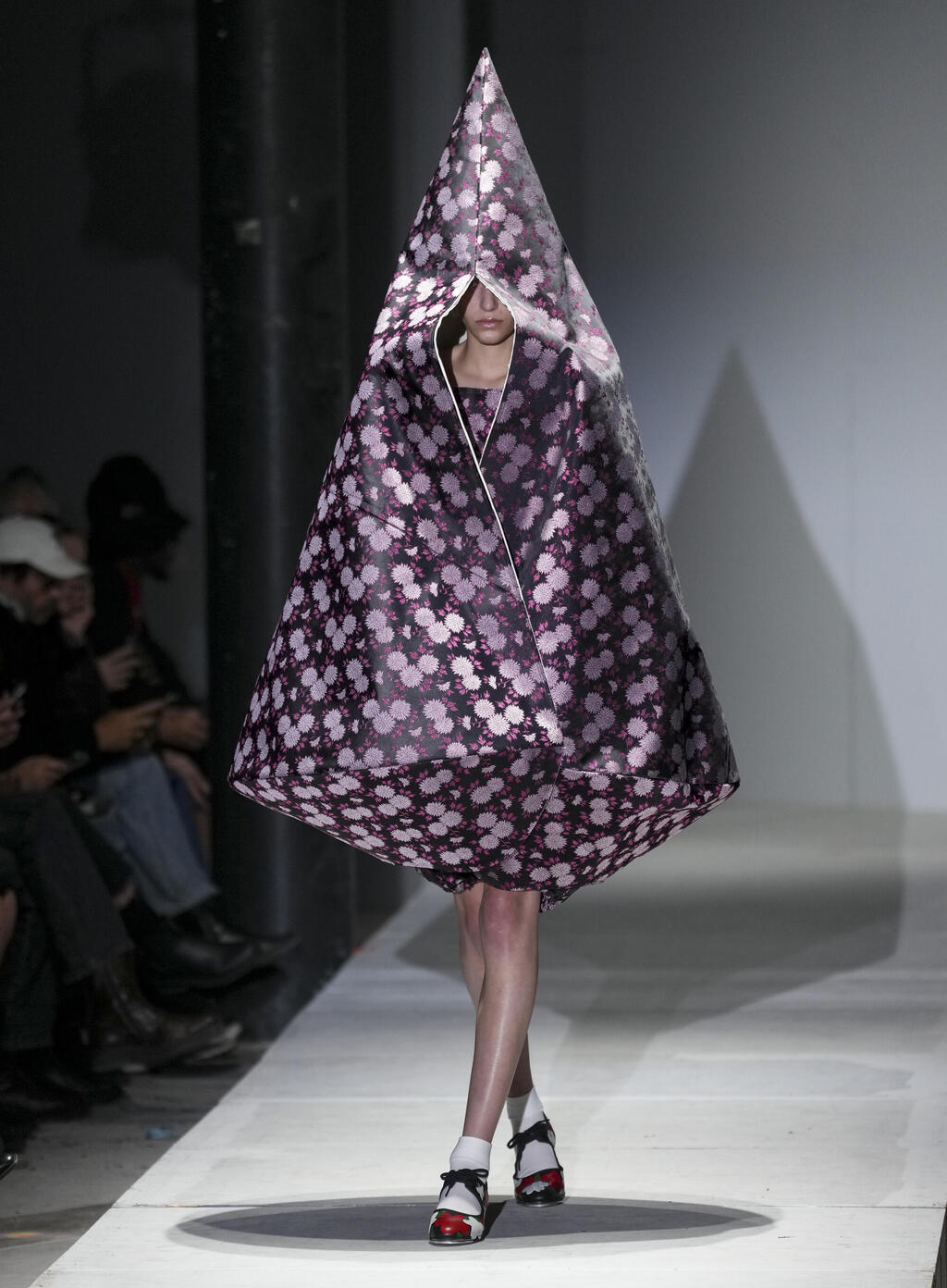
A design interpretation of the chador at the Comme des Garçons show
(Photo: Scott A Garfitt_Invision_AP)
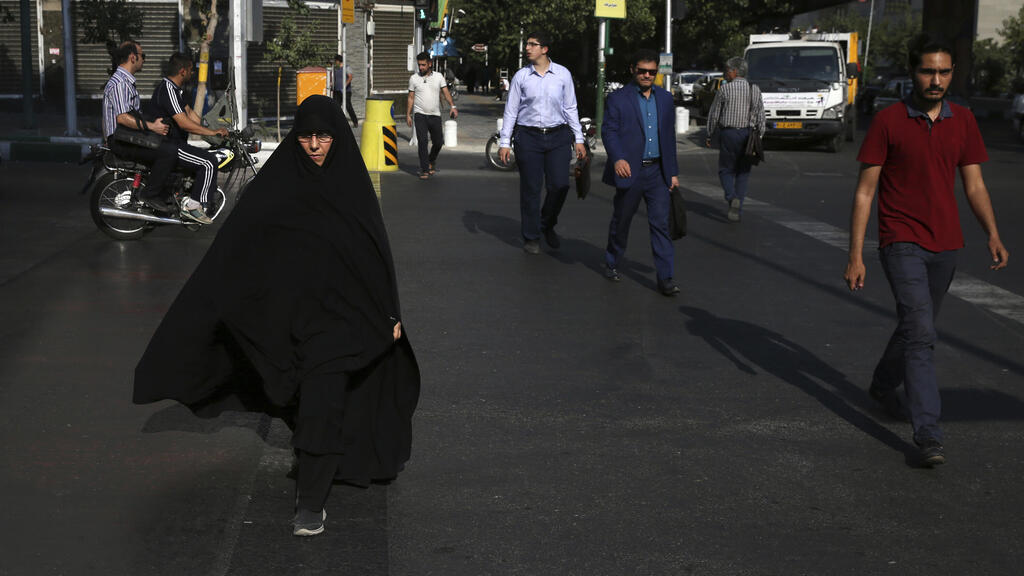
Since 1983, women in Iran have been required to cover their hair and bodies in public. The chador became a symbol of ideological loyalty to the revolution and is particularly associated with conservative circles, older women and religious institutions. However, the law does not specifically require wearing a chador; women may instead wear a hijab (head covering only) in accordance with Islamic modesty codes.
Since the United States and Israel launched their attack on Iran on Saturday, images have circulated online showing women in Iran protesting religious oppression. One widely shared video — an older clip that has recently resurfaced among regime opponents — shows young women without head coverings confronting a morality police officer on a train who attempts to enforce the regime’s strict dress code.
The confrontation escalates as passengers begin shouting “Death to Khamenei” and “No to harassment,” openly defying the regime. To the officer’s surprise, the women stand united and eventually force her to leave the train carriage — a bold and rare act of public resistance that has become increasingly visible in the past two years.
'The chador can also be seen as anti-modesty'
More than just a simple black garment, the chador has long been framed as a symbol of oppression and control over women’s bodies. Yet the Western perspective, some scholars argue, also creates a blind spot.
Dr. Rachel Getz-Salomon, head of the Fashion Department at the University of Haifa, rejects the notion that the garment is inherently oppressive and points to its complexity.
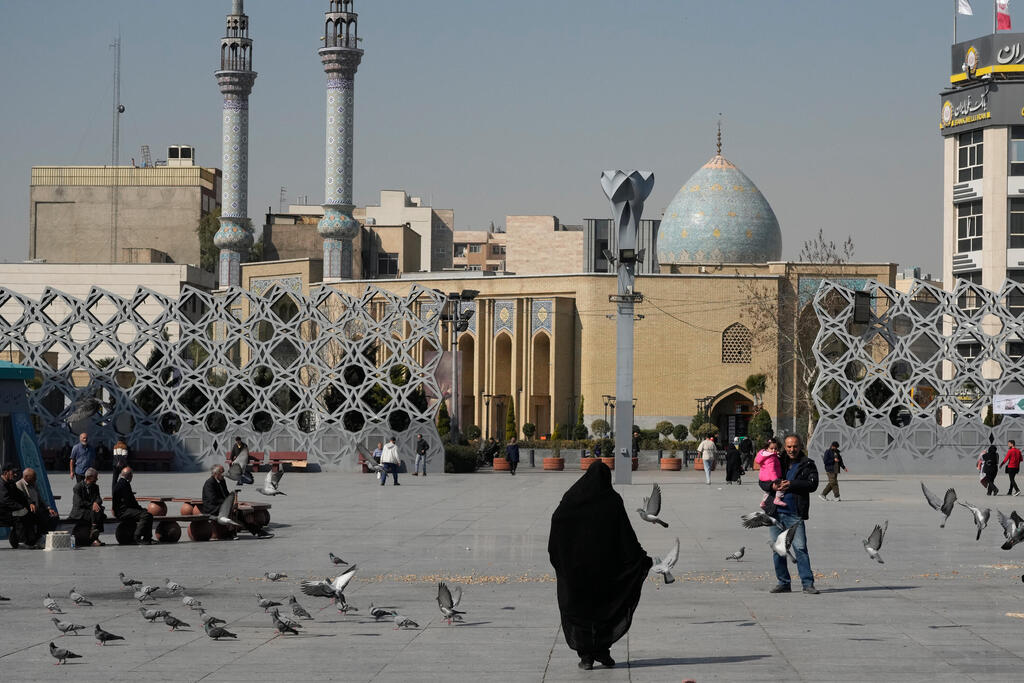
Women wearing chador in Iran
(Photo: Vahid Salemi/AP)
“In my doctoral dissertation — 'Fashion and Memory: The Skirt – Material, Form and the Experience of the Self' — I studied garments that create a space around the body, a kind of private sphere,” she explains. “Many of the women I interviewed described how the skirt surrounds and protects them, creating space for themselves.”
“The chador is not only a gendered object but a religious gendered object, and as such it is engaged in making identity visible in public space,” she says. “That means it’s not only resistance or a gendered political statement — it’s also constantly signaling who I am.”
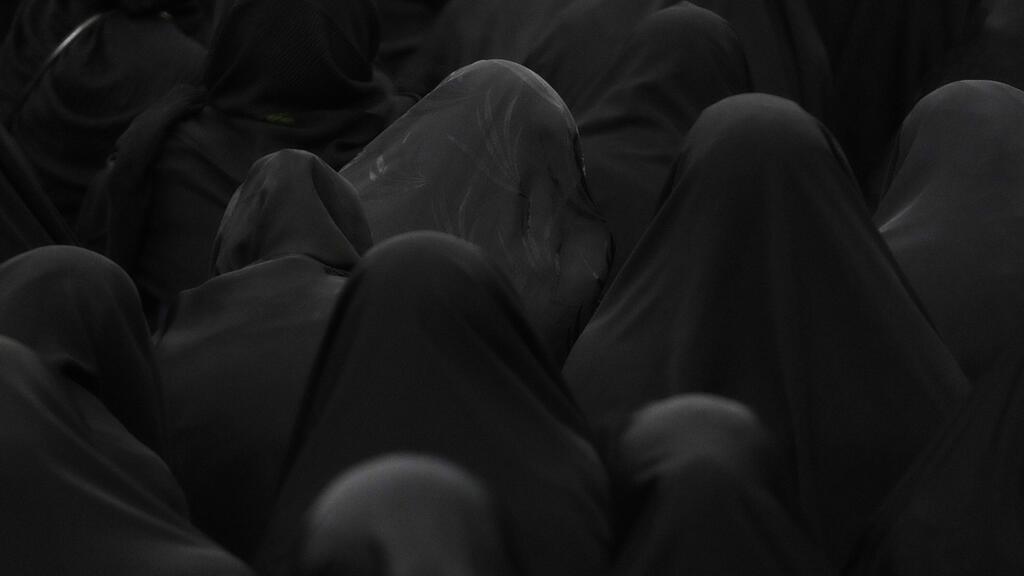
Women wearing chador in Iran
(Photo: Vahid Salemi/AP)
Getz-Salomon also points to the garment’s duality. On the one hand, it conceals the wearer; on the other, it makes her highly visible.
“In that sense, the chador can also be seen as anti-modesty, because it is so prominent in the public space, even if you’re covered from head to toe,” she says. “It’s not so different from a woman wearing a leopard-print thong. In both cases, she becomes an object that invites attention. The attention is different — but in the end it’s the same.”
'The command didn’t come from women'
A very different and unequivocal view of the chador as a tool of oppression is expressed by Sharona Bond Matarasso, a creative director and styling lecturer at Shenkar College. Born in Tehran, she immigrated to Israel with her family at age four shortly after the rise of the ayatollahs’ regime.
“I remember the word chador from my childhood in Iran,” she recalls. “During the Shah’s era, there was great freedom for women, and women in my family wore bikinis, miniskirts and had long loose hair.”
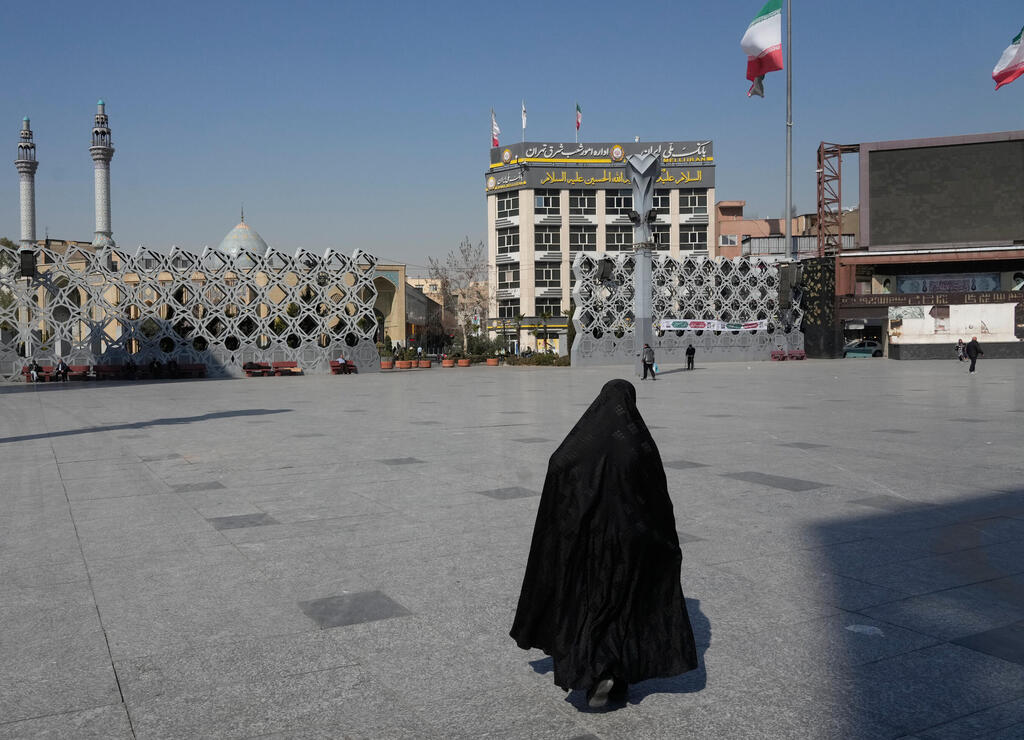
Clothing that became the symbol of the regime
(Photo: Vahid Salemi/AP)
“The command to wear the chador didn’t come from women — it came from male control,” she emphasizes. “There are women who believe it is a personal choice, but it’s something imposed by patriarchy.”
She compares it to practices in some ultra-Orthodox Jewish communities. “It’s similar to women who shave their heads and wear wigs because they believe ‘a king’s daughter’s honor is within.’ In m y view that’s not independent choice but a reality they were born into.”
A garment older than Islam
The roots of the chador predate Islam by centuries. During the Achaemenid Empire in the 6th century BCE, elite women already followed dress codes covering the head and body as a symbol of modesty and social status.
After the Muslim conquest in the 7th century, the garment acquired a clearer religious interpretation and developed into the wide cloak covering the head and body that is known today.
For centuries it remained part of Iran’s cultural norms, particularly in cities and conservative communities. In 1936, however, Reza Shah Pahlavi banned the chador as part of a Westernizing modernization campaign — a move many women saw as an attack on their identity. The ban was lifted after his abdication in 1941, and wearing the garment once again became a matter of personal choice.
That changed with the rise of Ayatollah Ruhollah Khomeini, when women were required to cover their hair and bodies in public. The black chador became both a symbol of ideological loyalty to the regime and a charged object representing identity, control and protest in contemporary Iran.
Beyond Islam
Covering the body and head is not unique to Islam. In Israel, particularly in certain neighborhoods of Jerusalem, women from the sect known as Keter Makchut have in recent decades appeared in public fully covered from head to toe.
Similar cross-religious parallels were explored in the exhibition “Veiled View: Unveiling Local Dress Codes," curated by Noam Baram Ben-Yossef, which was presented at the Israel Museum in 2019.
Fashion’s fascination with the chador
Western fashion has also flirted with the chador over the years, often as a critique of female oppression.
In spring 1998, British-Cypriot designer Hussein Chalayan presented his collection "Between," examining the status of Muslim women and how a seemingly simple detail — such as the length of a hemline — can carry profound meaning.
The final scene of the show featured six models standing side by side, each wearing a chador of a different length. The first reached the floor; each subsequent one was shorter until the final model stood completely nude.
“The idea of nudity is like nature, and total covering is like death,” Chalayan told The New Yorker. “And inevitably it also becomes a statement about women’s roles.”
Ironically, images of the nude body were later censored on fashion websites and social media.
“Chalayan is one of the most brilliant conceptual designers in the fashion world,” says Getz-Salomon. “When you mark a woman in public space, you constantly signal that ‘this is not an ordinary person,’ that she is always subject to male law — to the way men decide to frame women’s bodies in space.”
“In the end,” she adds, “it doesn’t matter whether the woman is completely covered or completely exposed.”
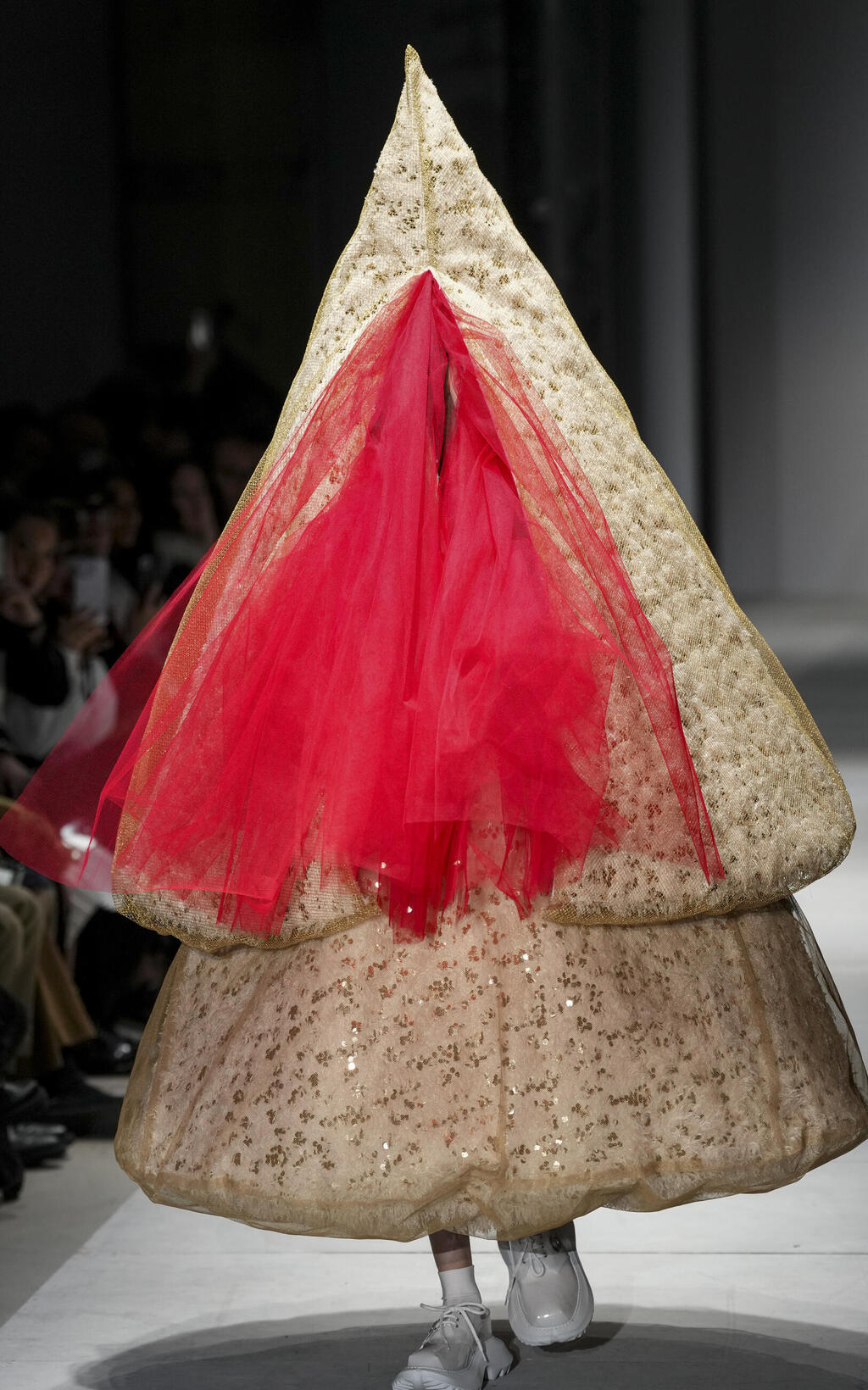
Chador at the Comme des Garçons show
(Photo: Scott A Garfitt_Invision_AP)
Between fashion and protest
Another collection often interpreted as conceptually referencing the chador was created by Rei Kawakubo, founder of Comme des Garçons. In October 2024, amid women’s protests in Iran, the brand presented “Uncertain Future,” a sculptural collection in which models wore cone-shaped garments with narrow openings revealing only their faces.
The aesthetic and conceptual exploration of the chador has also influenced Iranian-Israeli musician Liraz Charhi, who performs in Persian around the world. In music videos for her songs “Zan Bezan” and “Injah,” she appears wearing a colorful chador, infusing the garment with a liberal spirit while maintaining its traditional form.
A decade ago, she first wore a chador in a music video for the Persian version of “Love Me Like You Do,” from the film "Fifty Shades of Grey."
“We translated the song into Persian because it’s very sexy,” she said in an interview at the time. “We decided to go all the way with that sexuality and created a fantasy world of a woman wearing a chador and singing about love inside a mosque. It’s quite provocative — we wanted to spark interest.”
She added that many Iranian women send her photos of themselves wearing chadors with messages such as “Good luck,” “Go for it,” and “You bring us pride.”
What comes next?
It is still too early to predict how the current conflict will end or what its consequences will be for women’s dress codes in Iran. The seeds of change from recent years are already visible, and images of Iranian women burning their veils have received strong support in the West.
Bond Matrasso recalls meeting an Iranian woman while vacationing in Spain last year who told her that enforcement of modesty laws in Iran had recently loosened somewhat.
“Will it change?” she asks. “It depends on who takes power. The Revolutionary Guards still hold significant power and influence.”
Getz-Salomon, however, hopes the chador will not disappear entirely from public space, arguing that religious women should remain free to wear it according to their beliefs.
“A place that allows the full spectrum of women — those who choose to cover their bodies and those who choose to reveal them — that, to me, is real freedom,” she concludes.