


Something strange is happening on Broadway. Manhattan’s theater district remains the place where dreams are written, composed and staged every night. During the latest season, the industry shattered revenue records with more than $1.89 billion in ticket sales. Attendance reached 14.66 million, nearly matching pre-pandemic peak levels. Audiences came to see major brands like “Hamilton,” “Chicago” and “The Lion King,” alongside plays starring George Clooney, Keanu Reeves, Daniel Radcliffe, Adrien Brody and Tessa Thompson. Crowds have largely returned, ticket prices have risen and box offices are full. Yet Broadway’s economic model, especially for new musicals, is no longer working.
The average ticket price jumped to a record $129, significantly higher than London’s West End average of roughly $81. Good seats easily pass the $200 mark, while premium seats for sought-after productions can climb to $1,500. But strong box office numbers do not necessarily mean profit. Of the 18 commercial musicals that opened last season, not one has yet recouped its investment.
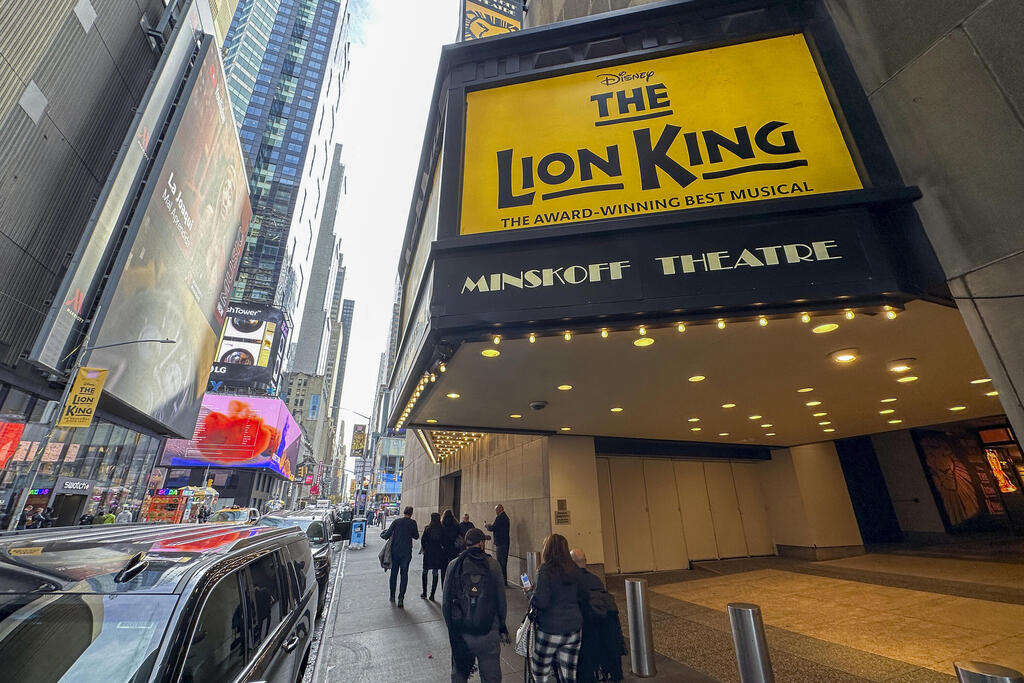
Behind the red velvet curtains, makeup and smiles operates an astonishingly expensive financial machine where even record-breaking sales do not guarantee survival. Many fear the industry is now facing one of the worst economic crises in its history. To understand it, one must dive into the numbers, the history and the rules of the game — including how tourists can survive New York theater prices without selling a kidney on Amazon before the show.
Running a musical can cost $800,000 a week
On the surface, everything looks fine. Around Times Square, it feels like stepping into a loud parallel universe: blinding neon lights, crowds of tourists packed onto sidewalks, tourists fresh from shopping at Uniqlo and giant billboards promising the cultural experience of a lifetime. Most people do not follow theater gossip the way they follow Hollywood drama, understandably so. How much can one talk about glamorous productions most people will never see without a 12-hour flight to New York? Yet for many visitors, the theater district becomes an essential stop almost immediately after landing.
The term “Broadway” has become a kind of open brand, but in reality it is a strict geographic and technical definition set by the Broadway League — the association of theater owners and producers — together with the Tony Awards organization, the theater equivalent of the Oscars. To qualify as an official Broadway production, a show must perform in one of 41 professional theaters with at least 500 seats located in Midtown Manhattan’s theater district or Lincoln Center. These productions are eligible for Tony Awards.
Below Broadway sits the world of Off-Broadway, with theaters containing between 100 and 499 seats, and below that Off-Off-Broadway, consisting of smaller, more experimental indie venues less interested in pleasing busloads of tourists. Some swear that is where the real magic happens.
Economic control of the 41 theaters is far from decentralized — an important detail for discounted ticket lotteries discussed later. Theater owners charge productions fixed rent plus a percentage of gross ticket sales, usually between 6% and 7%. Even before rent, the weekly operating cost of a major musical now ranges between $650,000 and $800,000. It is a brutal starting point for any new production.
Since the end of the COVID-19 pandemic, 46 new musicals have opened on Broadway, collectively raising around $800 million from investors. Only three have recouped and turned a profit: “MJ the Musical,” “& Juliet” — the modern, feminist and, it must be admitted, highly entertaining spin on Romeo and Juliet using Max Martin’s pop hits — and “Six,” essentially a pop concert about Henry VIII’s six wives. All three productions acknowledged they survived largely thanks to federal aid and tax incentives worth tens of millions of dollars following the pandemic, assistance that is no longer available to new productions.
The past season illustrated just how risky Broadway has become. Lavish productions like “Tammy Faye,” “Boop!” and “Smash” each cost more than $20 million and closed within less than four months, leaving investors empty-handed. Even familiar brands collapsed. The $26 million revival of “Cabaret,” which transformed the theater into a Berlin nightclub, shut down at a massive loss. “Gypsy,” with a $19.5 million budget, failed to recoup, and even Tony-winning “Sunset Boulevard” could not recover its $15 million investment.
Legendary composer and producer Andrew Lloyd Webber put it bluntly: “Broadway is not a business anymore. The statistics are terrible. I am very worried. I look at the economics of this, and I just don’t see how it can sustain.”
Hollywood stars are Broadway’s safest bet
Shorter dramatic plays featuring Hollywood stars have become Broadway’s hottest commercial success over the past year. They are relatively cheap, do not require costly orchestras and rely on limited runs that create a sense of exclusivity and urgency.
George Clooney shattered box office records with “Good Night, and Good Luck,” while Denzel Washington and Jake Gyllenhaal did the same with “Othello.” Adrien Brody, Tessa Thompson and Tony nominee Daniel Radcliffe continue drawing audiences willing to pay steep prices to see movie stars up close.
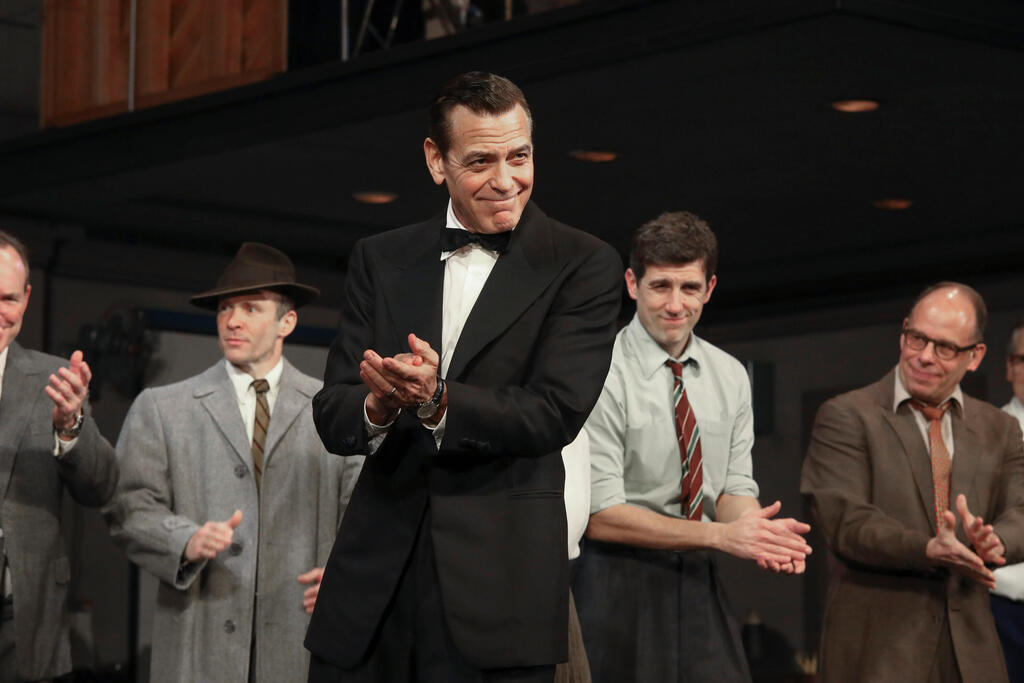
George Clooney on Broadway
(Photo: Andy Kropa/AP)
The neighboring Metropolitan Opera has fallen into a similar financial crisis, forcing it to withdraw $120 million from its endowment fund, suffer a credit downgrade and cancel a major Saudi deal. Management responded with layoffs, salary cuts for executives and reducing the number of productions next season to the lowest level since 1980. Despite acclaimed productions and rising attendance, revenues remain weak.
London has become Broadway’s testing lab
Broadway is unusual because it operates in a deeply commercial environment fueled by tourism, sky-high ticket prices and an industry dependent on keeping theaters full. Compared with London, the difference is striking. Productions running simultaneously in both cities, such as “Harry Potter and the Cursed Child” or “Stranger Things,” often cost more than twice as much in New York.
The reasons go beyond greed. In the United States, producers bear the cost of private health insurance for workers, unlike Britain’s public healthcare system. Construction materials, sets and labor are also more expensive in New York.
Above all, Broadway operates under unusually powerful unions by American standards. These unions often inflate production costs through minimum staffing rules. The musicians’ union, for example, requires producers to hire a fixed number of musicians based on theater size rather than artistic need, meaning productions may pay full salaries to musicians who barely perform. Large theaters are required to employ at least 18 or 19 musicians even if the show itself only needs five.
Meanwhile, the actors’ union requires productions to employ backup performers known as swings on full salaries. These protections safeguard artists’ livelihoods but also drive weekly operating costs to enormous levels, costs that are ultimately passed directly to audiences through ticket prices.
The result is a serious problem in New York theater’s production pipeline. Producers are increasingly hesitant to develop new musicals from scratch in New York and instead prefer London as a cheaper testing ground. Productions that prove successful in the West End later arrive on Broadway with built-in prestige, publicity and stronger odds of survival.
Much like the music industry, Britain has become a seal of quality and creativity before crossing the Atlantic into America’s commercial machine. That is why many of Broadway’s current hits either originated in Britain or underwent major development there first.
The Jewish brothers who reshaped Broadway
But Broadway cannot survive on plays alone. Musicals are its growth engine. They can run for years or even decades, like “The Lion King,” “Wicked” and “The Phantom of the Opera.” They attract most of the tourist audience, which often prefers visually dazzling musical spectacles over heavy Shakespearean dialogue. As cringe-worthy as some melodramatic songs may occasionally feel, they are essential not just for storytelling but for the industry itself.
Musicals employ more musicians, dancers, actors and technicians, while generating massive revenue through touring productions, merchandise and licensing rights for schools and theaters worldwide. If their economic model fails, the entire system loses its anchor.
Broadway’s concentrated industry structure was shaped in part by the Shubert brothers, Jewish immigrants from Eastern Europe who began operating theaters in upstate New York before expanding into Manhattan in the early 20th century. They fought the old theater monopoly and built a theater empire. To this day, the Shubert Organization remains Broadway’s largest theater owner.
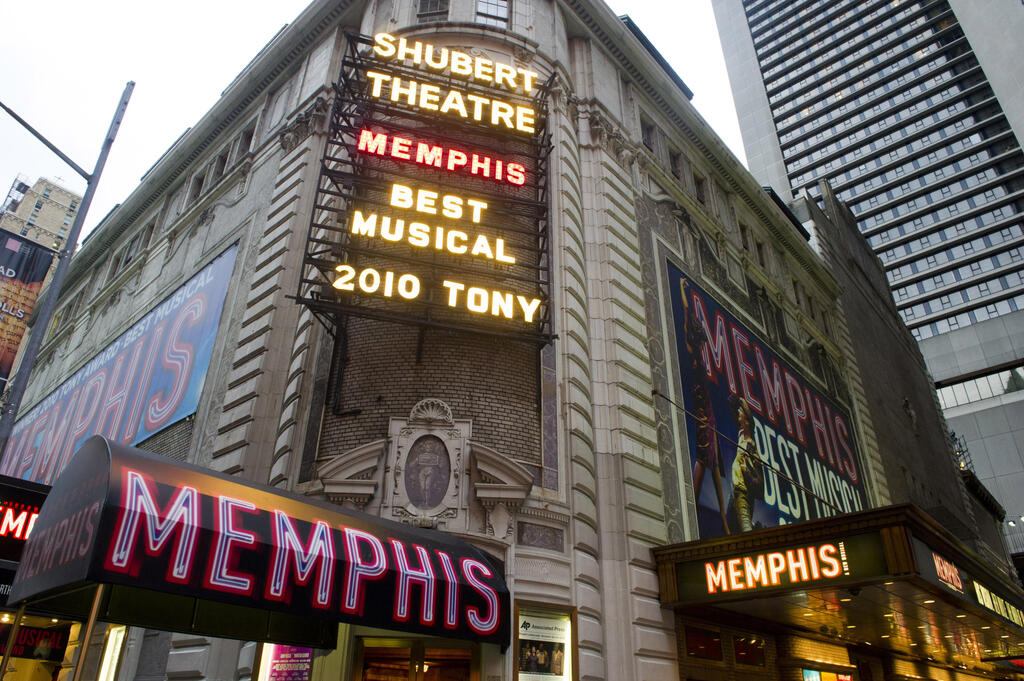
Schubert Theater
(Photo: Charles Sykes/AP)
Alongside them stood Jewish entrepreneurs such as Oscar Hammerstein I, the Prussian-born impresario who helped transform Times Square into a theater hub, and his grandson Oscar Hammerstein II, who wrote “The Sound of Music” with fellow Jewish creator Richard Rodgers.
Jewish influence on Broadway extends far beyond real estate and business. Much of Broadway’s language was written by Jewish creators or children of Jewish families, from George Gershwin and Irving Berlin to Leonard Bernstein, Stephen Sondheim, Richard Rodgers and the creators of “Fiddler on the Roof.” Even productions now seen as quintessentially American, such as “West Side Story” and “The Sound of Music,” emerged from the same tradition of immigration, assimilation, social anxiety and extraordinary commercial talent.
The hidden gold mine: theater bars
Beyond theater owners and creators, Jews also came to dominate one of Broadway’s biggest hidden profit engines: theater bars and drink stands. Theater corporations earn millions of dollars each night selling alcohol to captive intermission audiences.
Among those who recognized this gold mine early was Lenny Lowengrub, husband of Israeli artist and designer Ilana Goor. Lowengrub founded the Theatre Refreshment Company, which still controls exclusive beverage concessions in all 17 Shubert Organization theaters.
The wine may be mediocre, the cocktails outrageously expensive and painfully sweet, but the business model is marketing science at its finest. Each production features its own themed drink menu designed to tempt audiences into opening their wallets. “Harry Potter” offers color-changing potions, “Beetlejuice” serves the “Daylight Come Rum” cocktail and “Death Becomes Her” features an “immortality potion.”
Disney saved Times Square
For those bars to thrive, however, Times Square first had to undergo a dramatic transformation. During the 1970s and 1980s, the theater district became associated with poverty, crime, drugs, adult movie theaters and strip clubs. Tourists and locals alike avoided the area after dark and Broadway itself was dying.
The unlikely savior was Disney. Following the success of “Beauty and the Beast,” the company realized it needed a permanent Broadway home. It found one in the historic but neglected New Amsterdam Theatre on 42nd Street.
After investing tens of millions of dollars into renovations, Disney launched “The Lion King” there in 1997, changing New York’s economic history. The production not only shattered box office records but also poured enormous capital into restoring abandoned theaters and revitalizing the surrounding streets. The “Disney effect” cleaned up the neighborhood, transformed it into a safe family entertainment district and drove local real estate prices to the levels seen today.
How tourists can survive expensive Broadway: the full guide
Lotteries: tickets for the price of lunch
Most productions offer daily lotteries for discounted tickets, usually priced around $35 to $50. Lotteries are generally limited to two tickets per person and are managed through several major platforms based on theater ownership.
TodayTix also runs its own lottery system for many in-demand productions alongside regular discounted ticket sales. Telecharge handles many Shubert theater lotteries. It is worth registering between midnight and 10 a.m. because there are often two separate drawing rounds.
Lucky Seat allows users to enter for multiple future dates. Broadway Direct manages lotteries for major hits including “The Lion King,” “Wicked” and “Aladdin.” Theatr is a resale marketplace where sellers are only allowed to list tickets at face value or lower.
Once selected, winners typically receive between one and three hours to claim and pay for their tickets. Some productions send tickets by email immediately, while others require in-person pickup with identification to prevent scalping.
Broadway insiders claim you improve your odds by requesting a single ticket rather than a pair. When the system is left with one unsold seat, it will skip people requesting two tickets and award it directly to solo applicants.
Legitimate discount websites include BroadwayBox and Playbill Discounts. Prices are not always the absolute cheapest, but they provide a reliable way to buy ahead without lottery stress.
Rush tickets: for early risers
Rush tickets are sold at prices similar to lotteries from the moment theater box offices open in the morning. Popular productions may require lining up very early in person.
Many productions reserve specific seats for students, so if you know one, bring them along. Telecharge also offers digital Rush tickets online beginning at 11 a.m. If the site freezes or claims tickets are unavailable, keep refreshing — eventually something usually appears.
One important detail: if you buy a Rush ticket online, you will be blocked from purchasing another Rush ticket for three days, though regular lotteries remain available.
TKTS booths
The famous TKTS booth beneath Times Square’s red steps sells same-day tickets — or next-day matinee tickets — at discounts of up to 50%. The big secret: free seat upgrades at intermission
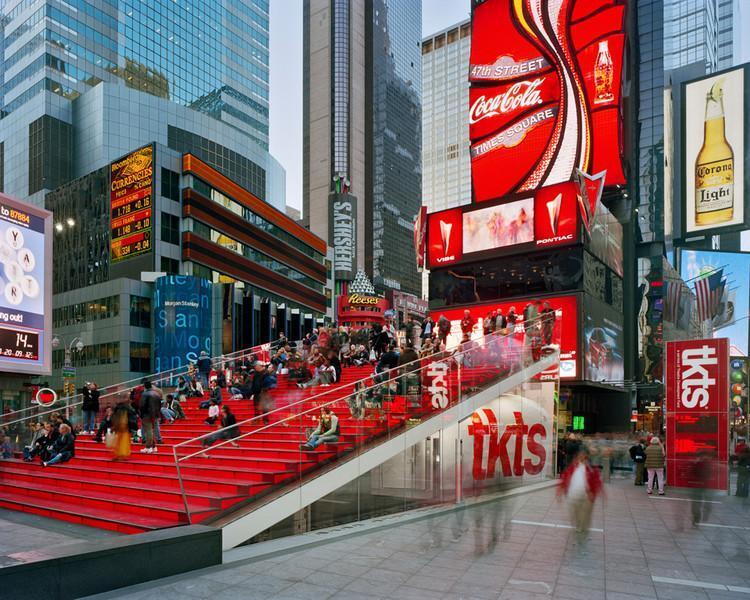
TKTS Times Square booth
(Photo: Times Square District Management Association)
It may sound like classic Israeli chutzpah, but on Broadway it is entirely acceptable. If you bought a poor seat and notice better empty seats during intermission, you can quietly move. Just use common sense. If you purchased a balcony ticket, do not attempt sneaking into front-row orchestra VIP seating worth hundreds of dollars.
Don’t expect refunds. Broadway is far less flexible than it was immediately after the pandemic. In most cases, if you miss the show, your money is gone unless the production’s specific policy says otherwise.
Late arrivals and phones: this is America. Shows start on time. Latecomers are only seated during designated breaks. Phones ringing or recording during performances will quickly attract an usher with a flashlight.
There is no formal dress code, but theaters are heavily air-conditioned even during summer, so bringing a light sweater is recommended.
Food and drinks from home: officially, most theaters ban outside food and drinks in order to push audiences toward their expensive concessions. In reality, security guards are unlikely to care if you “accidentally” forgot a water bottle, small snack or miniature whiskey bottle in your bag.
Terms every Broadway visitor should know
Before buying tickets, it is worth checking seat views on sites like A View From My Seat or SeatPlan, which feature real audience photos rather than generic seating charts.
Be careful with ticket sites that appear official but are not. The safest approach is to begin at the production’s official website and follow links to authorized sellers such as Telecharge, Broadway Direct, SeatGeek or Ticketmaster. The exact same ticket may appear on Google through resellers at double the price before fees.
Do not rely on Mondays — on Broadway, that is typically the “dark day,” when most productions do not perform.
“Previews” are performances before the official opening night and before critics publish reviews. Tickets are sometimes cheaper, but the production may still change significantly.
“Standing Room” tickets, available at some theaters, provide standing spots behind orchestra seating at very low prices.
Broadway
(Photo: Daniel Edelson)
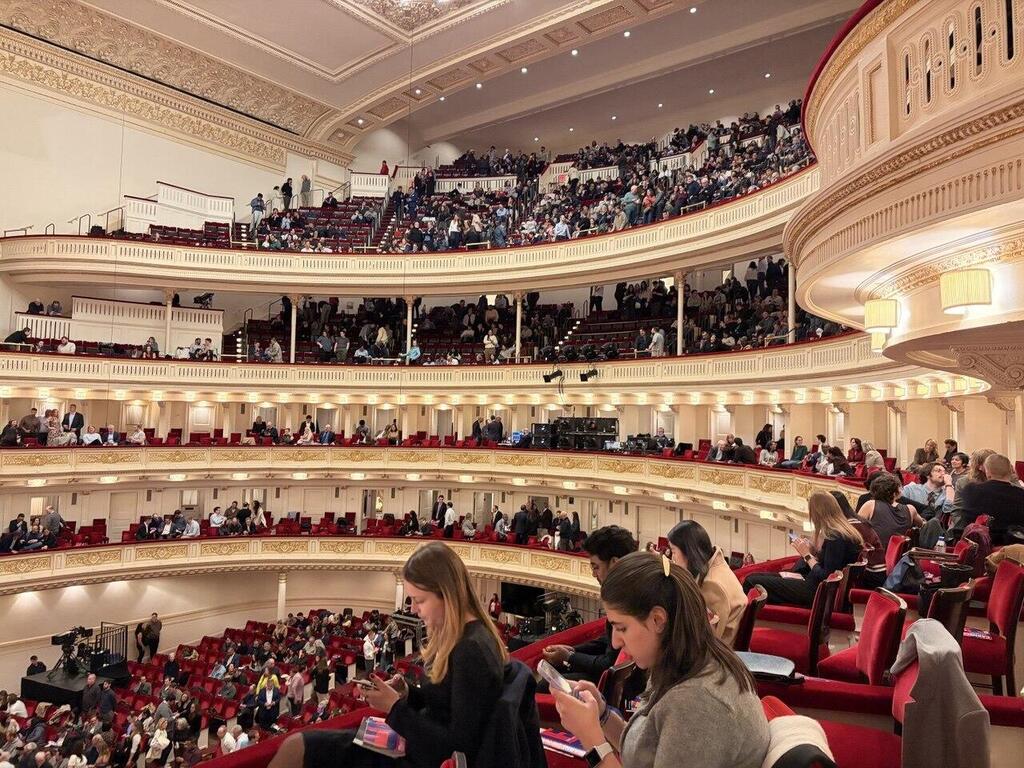
Understanding seating sections also matters: orchestra: the main lower section closest to the stage; mezzanine: the first elevated section, often offering the best overall view; balcony: the upper and cheaper level; “nosebleeds”: extremely high and distant seats; family circle: an especially high upper level in larger theaters
A “matinée” is an afternoon performance, usually on Wednesday, Saturday or Sunday around 2 p.m. Prices are not always cheaper than evening shows, but the atmosphere is calmer and audiences tend to be older, making it an easy way to fit theater into a busy New York itinerary.