

Return to the battlefield: After years away from frontline service, during which the Jeep name was largely associated with secondary vehicles for senior officers — whether the locally built Jeep Storm produced at the Nazareth factory or, more recently, the Wrangler that replaced it — Jeep may be set to return to Israel's battlefields.
Israeli armored vehicle manufacturer Plasan and off-road engineering company Asfir recently unveiled the Barak, a combat vehicle based on the production Jeep Gladiator pickup. The purpose-built platform is designed for combat units carrying out a broad range of missions that require high mobility and, above all, exceptional reliability. It is also expected to be offered in the British Army's future competition to replace its aging Land Rover Defender fleet.
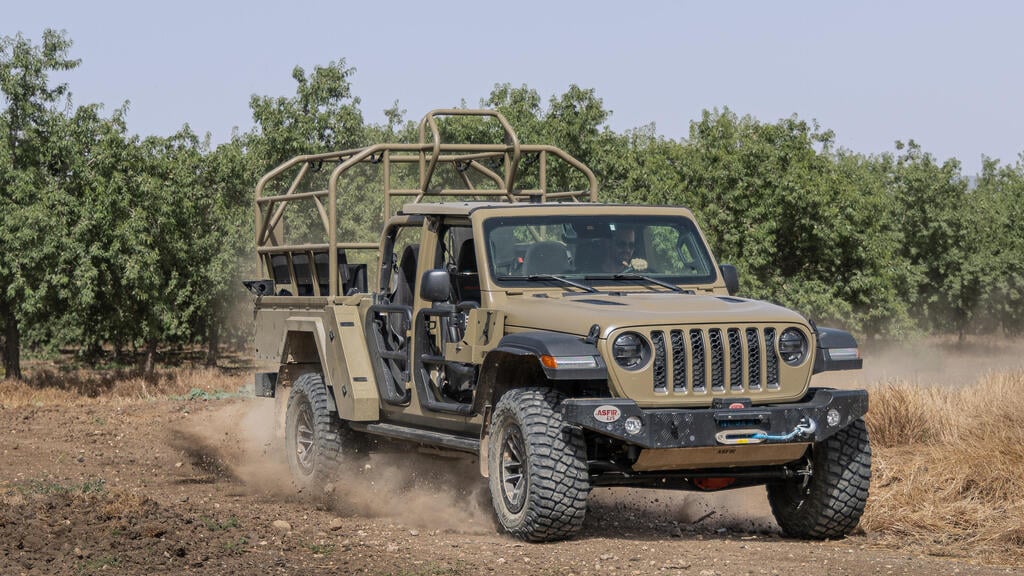
The Barak will be available in several configurations, including a troop carrier with seating for nine soldiers (or up to 11 in emergencies), a casualty evacuation vehicle and a version carrying four soldiers with space in the cargo bed for mission-specific equipment. It is intended for a wide range of roles, from border patrols to special operations units, and can be transported by Sikorsky CH-53 Sea Stallion heavy-lift helicopters thanks to removable roll bars. A protected version for operations in the West Bank is also expected later.
A combat pickup: The vehicle is based on the Jeep Gladiator, the pickup version of the current Wrangler JL, using the off-road-focused Rubicon trim as its starting point. The cargo bed has been converted into a troop compartment fitted with a dedicated roll cage mounted directly to the ladder frame. Much of the original cab bodywork has been removed and replaced with new doors and a roof incorporating a central machine gun position, along with military-spec seating.
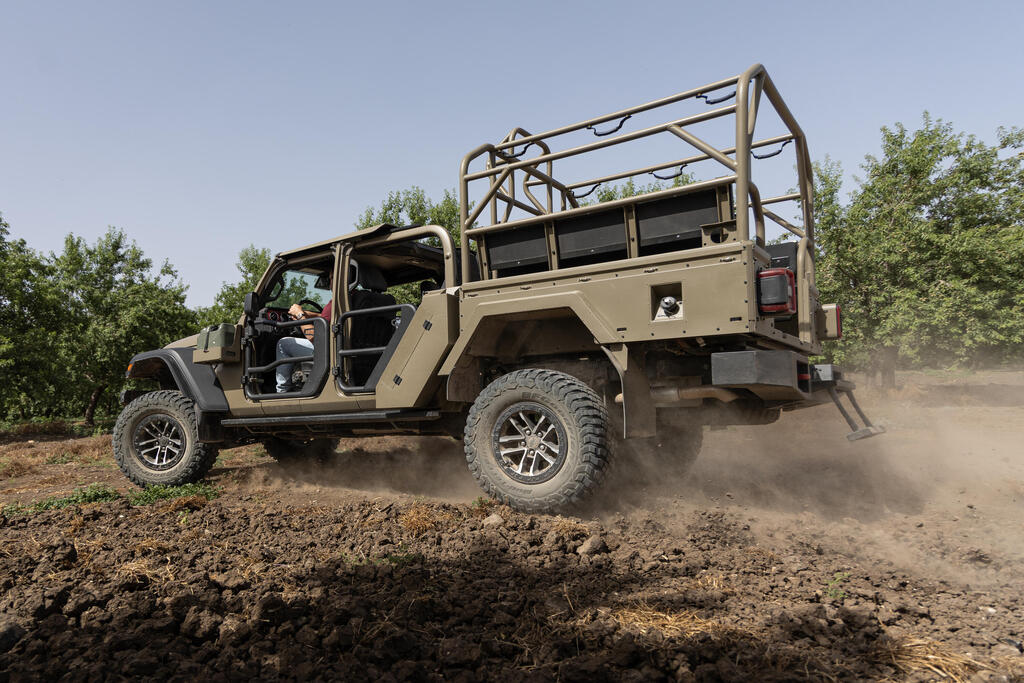
The vehicle is based on the Jeep Gladiator, the pickup version of the current Wrangler JL, using the off-road-focused Rubicon trim as its starting point
(Photo: PR)
The drivetrain remains unchanged, using Jeep's long-serving 3.6-liter Pentastar V6 gasoline engine producing 285 horsepower, paired with an eight-speed automatic transmission and a transfer case offering rear-wheel drive for road use, four-wheel drive for off-road driving and a low-range gear. Like the Rubicon, it features front and rear locking differentials, a disconnecting front sway bar for increased suspension articulation and lower gearing, with a 4:1 low-range ratio and a 4.10 final drive ratio.
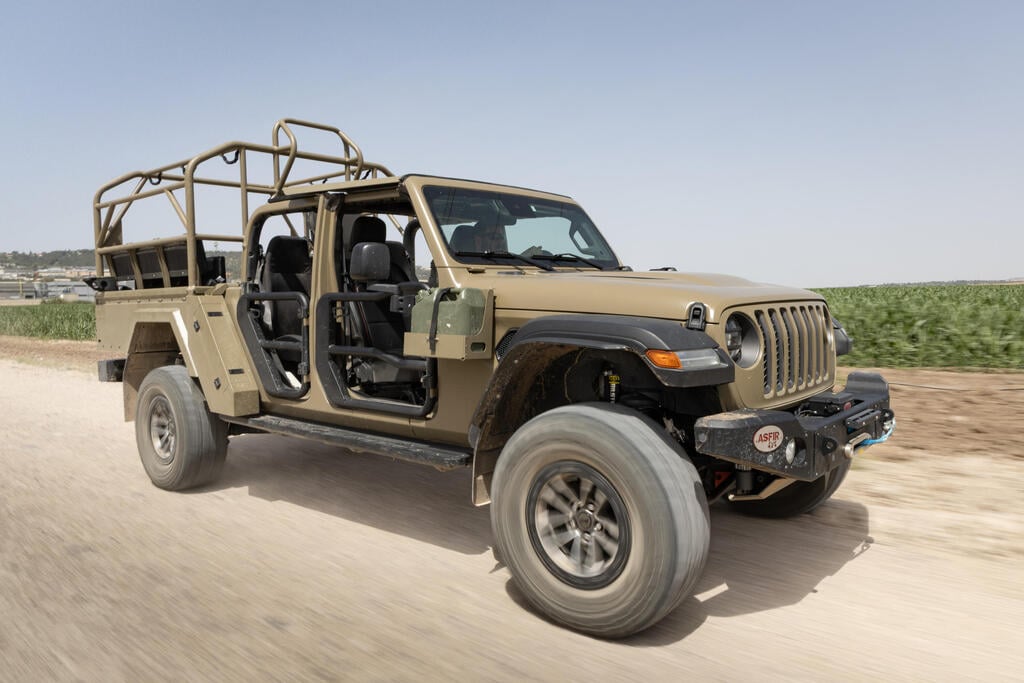
Plasan's new off-road combat vehicle makes a strong impression
(Photo: PR)
To increase payload capacity to one metric ton — 400 kilograms more than the standard Gladiator — the ladder frame has been reinforced, particularly at the rear, while the axles have also been strengthened. The original suspension has been replaced with Eibach springs and 2.5-inch Bilstein 8100-series shock absorbers. The standard 33-inch tires have been replaced by 35-inch tires mounted on 17-inch wheels.
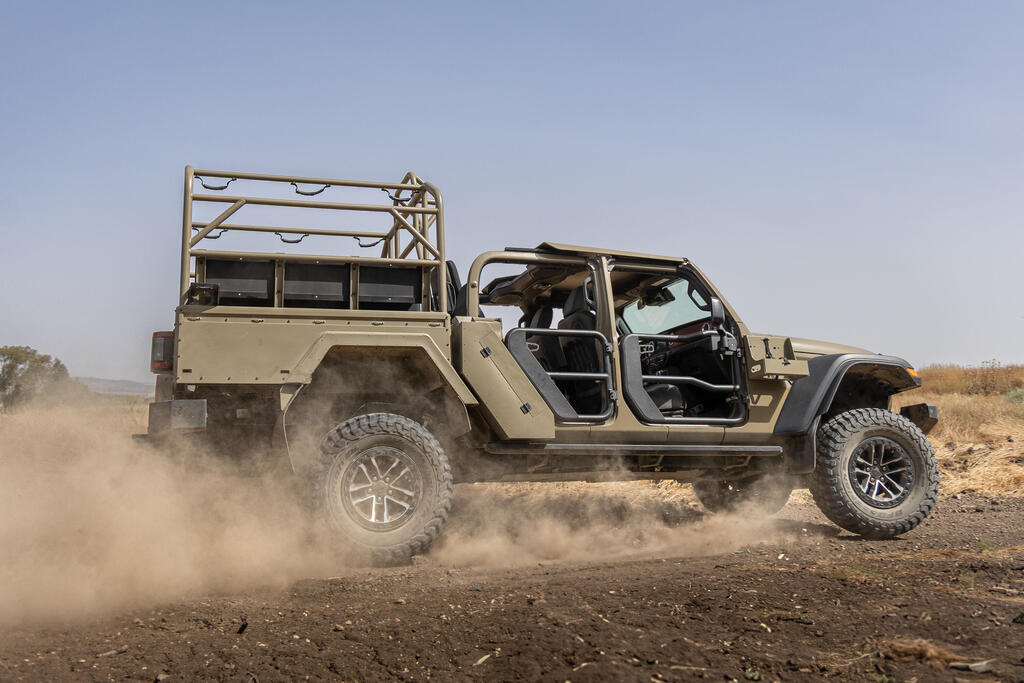
It appears to address one of the main shortcomings of other vehicles the IDF has evaluated for similar missions: reliability
(Photo: PR)
Our take: Plasan's new off-road combat vehicle makes a strong impression. At the very least, it appears to address one of the main shortcomings of other vehicles the IDF has evaluated for similar missions: reliability. Because it is based on the platform of a well-established automaker already familiar to IDF maintenance crews, it is likely to prove more dependable than more specialized alternatives.
It is also expected to cost significantly less than more exotic options such as the Zibar, although Plasan has not yet disclosed pricing.
We're in favor.