


It is hard to argue with those who believe the Toy Story franchise should have ended with Toy Story 3 in 2010. It could have been the perfect farewell to cowboy Woody, voiced by Tom Hanks, space ranger Buzz Lightyear, voiced by Tim Allen, and the rest of their friends.
That wonderful film had everything: sharp jokes, deeply moving moments and even flashes of horror as the toys came within a step of destruction. Its ending brought the story full circle, with Andy, now grown and heading to college, passing his toys on to a 5-year-old girl named Bonnie.
But when corporate profits are involved, especially when the corporation is Disney, it is ridiculous to expect such a successful film series to simply stop. Toy Story 3 could have been the perfect ending, but as the saying goes, the perfect is the enemy of the good, or in this case, the very good.
Even if Toy Story 4 in 2019 was slightly weaker than its predecessor, and Toy Story 5 shows roughly the same level of quality as the fourth film, this remains Pixar’s most successful film series. That is true in the craftsmanship of the animation, with a reported budget of about $250 million, in the humor and emotion its characters provide and in its ability to formulate ideas that remain relevant to both young viewers and adults.
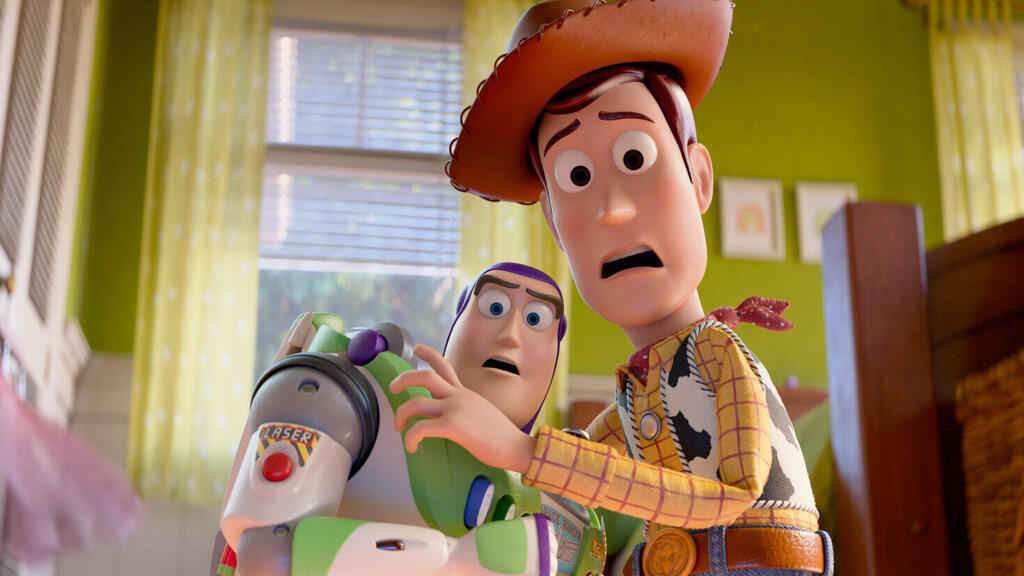
Although it is possible to watch the fifth film without remembering everything that came before, and after all, 31 years have passed since Toy Story, it contains quite a few elements built on that history. Many popular franchises use flattering, lazy callbacks, repeating lines or gestures to give fans a quick thrill. In Toy Story, these references deepen the characters and their relationships.
And yes, the irony is obvious: these are digitally animated characters shaped like toys, yet they are granted a depth that many live-action heroes lack.
Toy Story 4 ended with Woody separating from the toys belonging to Bonnie. He chose to reunite with his love, Bo Peep, voiced by Annie Potts, becoming a “lost toy” no longer bound to serving a child. He left the leadership of the toy group to cowgirl Jessie, voiced by Joan Cusack, and in Toy Story 5, she functions as the main character.
Do not worry, Woody returns during the film and joins the adventure, even if he now comes with a small bald spot and a middle-aged belly.
It is hard to forget Jessie’s backstory as it was presented in Toy Story 2 in 1999. Set to When She Loved Me, the film gave us a heartbreaking montage about the doll abandoned by her growing-up child, Emily. That trauma of abandonment continues to echo through Jessie, and the new film offers a beautiful closing of the circle with that moment from her past. But Toy Story 5 is not only about her private story. It is about the threat of abandonment facing all toys.
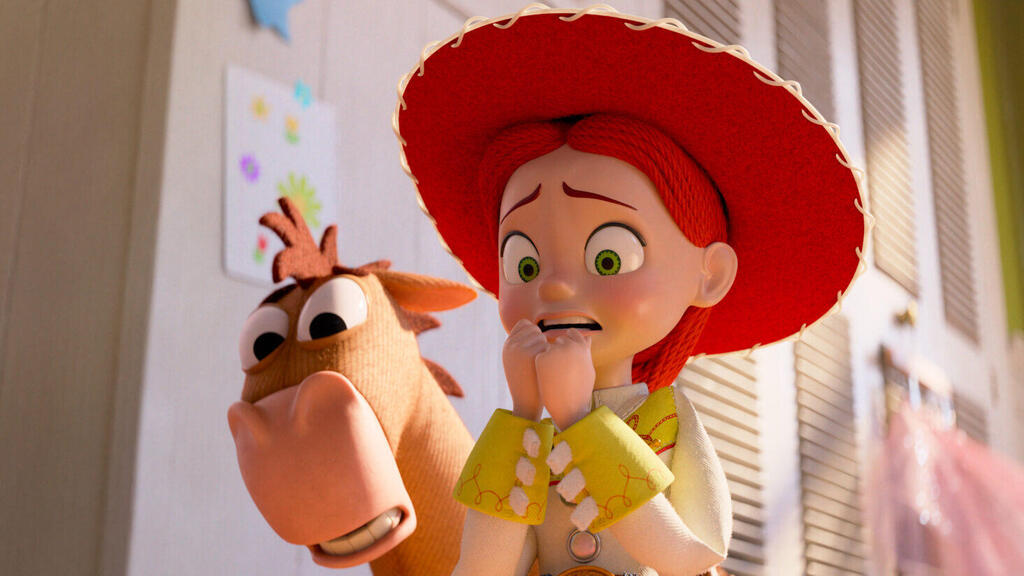
From Toy Story 5
(Photo: Courtesy of Forum Film)
The films in the series have repeatedly explored the emotional price toys pay when they are left behind. These abandonments carried real emotional depth because they paralleled distance and separation in human relationships, especially between parents and children as children grow up.
Toy Story 5 adds a new angle: the effect of abandoning toys on the children themselves. In a world of digital toys and social media, is there still a need for toys made of plastic and fabric? What is the price of a childhood lived in front of screens, where friendships, or imitation friendships, are shaped on social networks, and where a child’s imagination is subordinated to apps?
Bonnie is now 8 years old. At the beginning of the film, she plays enthusiastically with her toys. We enter the space of her imagination, designed in an organic, more naive animation style than that of the “external reality.” Pixar has often been criticized for not daring to depart from its polished-to-perfection digital animation style, but the shift here serves as an illustration of what may be lost when children become enslaved to screens and apps.
It should be said clearly: the film does not take a simplistic position that rejects every digital device and every interaction with one. Its message is about trying to combine and balance the old and the new, in a way that fits the emotional messages of the previous films about cooperation, overcoming trauma, finding meaning and growing.
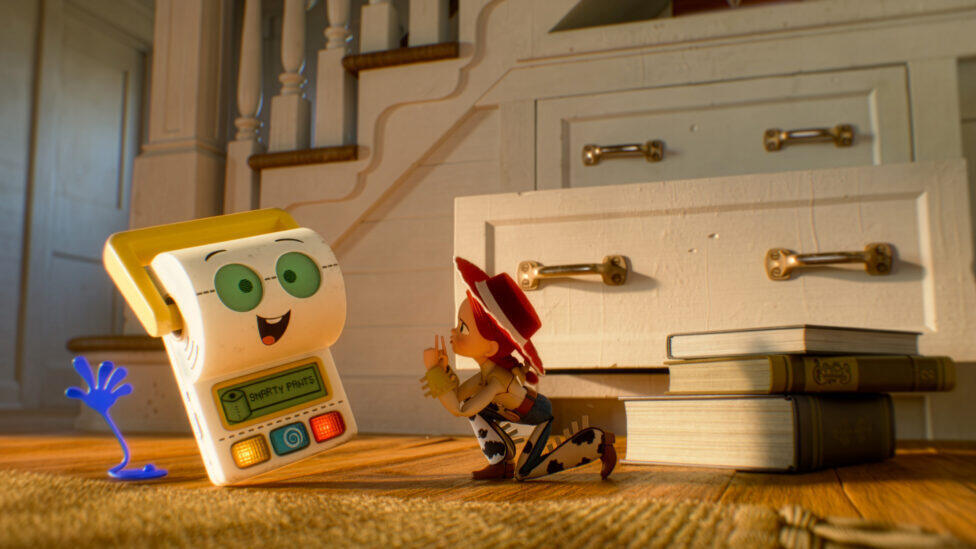
Screens are fine, in moderation: From Toy Story 5
(Photo: Courtesy of Forum Film)
Shy Bonnie discovers that children her age mock her for continuing to play with old-fashioned toys. To help her fit in socially, her parents buy her a “Lilypad,” a children’s tablet with a green frog-like cover, blinking eyes on top and matching little feet below.
The tablet, voiced by Greta Lee, turns out to be an arrogant character convinced that it meets all of Bonnie’s needs and makes all the other toys unnecessary.
The old toys are now stored in the garage at Bonnie’s parents’ house. Jessie and her loyal horse Bullseye sneak out to accompany Bonnie to a sleepover with girls her age, an event in which the girls sit silently in the same room, absorbed in what is happening on their tablet screens instead of communicating directly and playing together. There is a solution to Bonnie’s loneliness, but it is not found in friendships through a tablet.
On the toy front, which remains the main plotline, Jessie begins cooperating with a trio of abandoned digital toys from the early childhood of a girl named Blaze, voiced by Mykal-Michelle Harris. The most prominent of them is a potty-training device named Smarty Pants. Conan O’Brien delivers a particularly funny vocal performance as the sarcastic but good-hearted character.
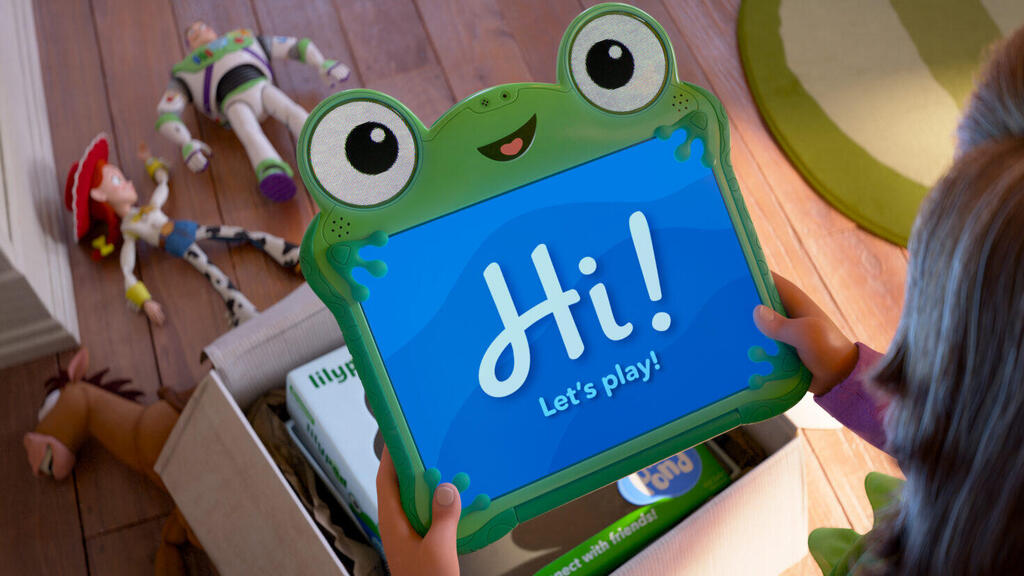
From Toy Story 5
(Photo: Courtesy of Forum Film)
Among the dozens of toy characters that have accumulated since the first film, many continue to appear in later installments, including this one. The story needs a mechanism that can isolate many of them so the plot does not lose focus. The upside is that it allows funny supporting characters to have their moment in scenes with the main characters without exhausting their presence.
That applies whether it is Hamm the piggy bank and Rex the dinosaur from the first film, the pretentious theater actor Mr. Pricklepants from the third, or Canadian stuntman Duke Caboom from the fourth.
On the Buzz Lightyear front, the film continues the implied romance between him and Jessie, which began taking its first steps 27 years ago. Now he is looking for an opportunity to propose marriage to Jessie. There is nothing to say, the toys certainly take their time.
At the same time, there is a plotline involving 50 advanced Buzz Lightyear dolls making their way from the deserted island where their shipment fell to the place where the rest of the toy characters are located. There is some recycling here of Buzz’s founding situation as someone who believes he is truly a space ranger, only this time it applies to an entire platoon. It is an easy subplot to identify as excessive, but it does enable a sophisticated action scene in the film’s climax.
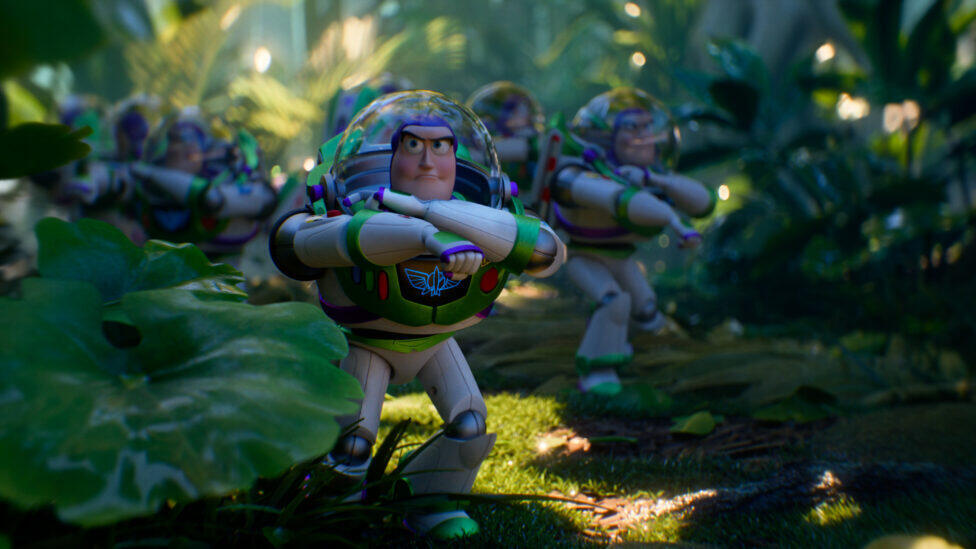
There’s never enough Buzz Lightyear: From Toy Story 5
(Photo: Courtesy of Forum Film)
The film is directed by Andrew Stanton, whose creative presence in the Toy Story series has been the most consistent of anyone’s. Stanton directed the 2008 masterpiece WALL-E, the Finding Nemo films from 2003 and 2016, and the ambitious but failed live-action film In the Blink of an Eye, released earlier in 2026.
Stanton was also a co-writer on every Toy Story film, and no one remembers the history of these characters better than he does. Here he writes and directs alongside McKenna Harris, who identifies with they/them pronouns and is making their directorial debut.
Anyone who read that last sentence and braced for an anti-woke reaction can relax. Pixar has internalized that it does not need to push progressive values in a way that triggers conservative backlash. Instead, the film offers polished, enjoyable entertainment and messages worthy of the attention of both younger and older viewers.
The result may not equal the emotional heights of the third film, but Toy Story 5 proves that this veteran franchise still has something to say, and that it can still move us.
First published: 23:23, 06.18.26